
Cubanelle vs Poblano: How Thin Walls and Broad Shoulders Change the Cooking
Cubanelle is the better sweet, thin-walled pepper for quick frying, sandwiches, sofrito, and raw use. Poblano is broader, earthier, and better for roasting, peeling, stuffing, rajas, and green sauces.

Cubanelle Pepper
MediumPoblano Pepper
MediumQuick Comparison
| Attribute | Cubanelle Pepper | Poblano Pepper |
|---|---|---|
| Scoville evidence | 100-1K SHU | 1K-2K SHU |
| Heat Tier | Medium | Medium |
| vs Jalapeño | n/a | n/a |
| Flavor | sweet and mild | earthy and rich |
| Species | C. annuum | C. annuum |
| Origin | Cuba | Mexico |
Is Poblano Hotter Than Cubanelle?
Both peppers are mild, but poblano is usually warmer. Cubanelle runs 100-1,000 SHU, while poblano is commonly 1,000-2,000 SHU in the reference ranges used by the New Mexico State University Chile Pepper Institute.
Their ranges meet at 1,000 SHU, so the hottest Cubanelle and mildest poblano can feel similar.
At the midpoints, poblano is about 2.7 times hotter than Cubanelle. That multiplier helps with a first substitution, but it cannot predict a specific fruit because cultivar, maturity, weather, and plant stress create natural variation.
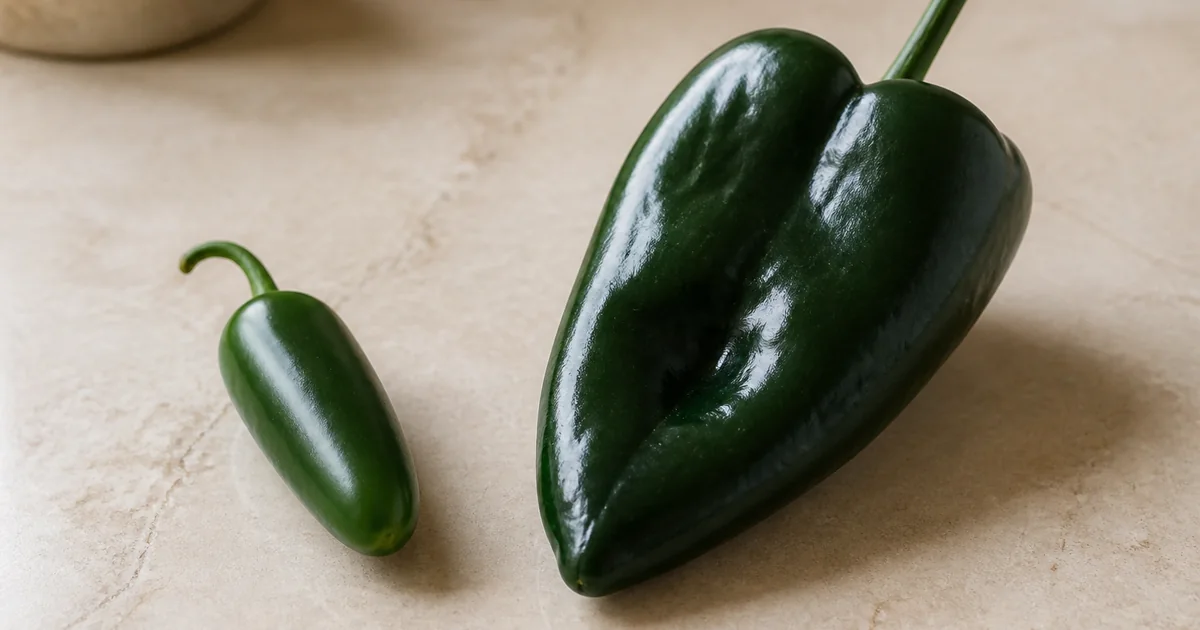
Neither belongs in the same heat class as a typical jalapeno, which commonly starts above the upper poblano range.
The heat also arrives within different amounts of flesh. A large, thick-walled poblano spreads its capsaicinoids through more pepper than a thin Cubanelle, so one whole fruit is not a precise heat unit.
Removing loose seeds changes texture more than heat because the Chile Pepper Institute identifies the inner placental tissue as the main capsaicinoid site.
For a heat-sensitive table, Cubanelle provides the safer margin and can often be eaten raw without noticeable burn. Poblano adds gentle warmth that becomes more apparent around the inner ribs.
Taste a small cooked piece before seasoning the full dish, especially when a poblano will be blended into a sauce.
Ripeness can move flavor and perceived heat in either pepper. A mature red Cubanelle tastes sweeter than a pale green one, while a ripe poblano sold for fresh use may be warmer and fruitier than the dark green version most shoppers recognize.
Cooking fat, dairy, starch, and total serving volume spread capsaicin differently, so compare the peppers inside the finished recipe rather than judging a raw bite as the final result.
Wall Thickness And Prep
The practical difference is thin-walled frying pepper versus broad roasting pepper. Cubanelle is elongated, pale green to yellow-green, and relatively thin, while poblano is broad-shouldered, dark green, and sturdy enough to hold a filling.
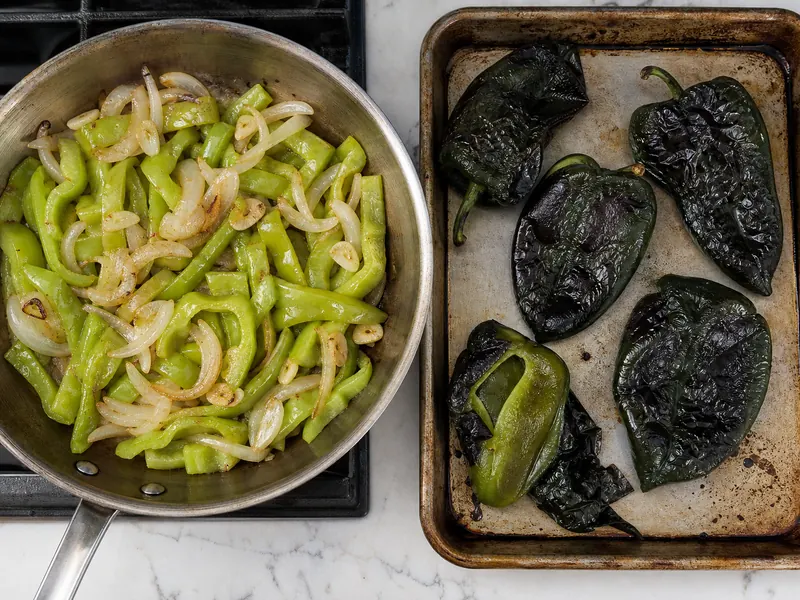
Thin Cubanelle walls soften quickly in a skillet and do not need a separate peeling step for most recipes.
Poblano skin becomes easier to remove after blistering and steaming. Rick Bayless's Mexican cooking technique chars the surface, encloses the pepper briefly so steam loosens the skin, and then peels it before cutting or stuffing.
Roasting changes both texture and flavor, but it is optional for Cubanelle and often central to poblano preparation.
A Cubanelle can be stuffed, although its narrow cavity holds less filling and its softened walls tear more easily. Poblano's broad shape and attached stem make it the stronger shell for chiles rellenos.
If a recipe asks you to char, steam, peel, and fill the pepper, that sequence points to poblano rather than Cubanelle.
Wall thickness also controls water release and browning. Cubanelle strips make broad contact with a hot skillet and soften before onions burn, while a whole poblano benefits from intense surface heat that blisters its tougher skin without drying the interior.
After steaming a roasted poblano, peel away loose char with your fingers or a towel instead of rinsing aggressively, which preserves more roasted aroma for the sauce or filling.
How Do Cubanelle and Poblano Taste Different?
Cubanelle tastes sweet, grassy, and lightly fruity, with a clean flavor that remains mild after cooking. Its thin flesh absorbs olive oil, onion, garlic, tomato, and sausage drippings quickly.
Poblano tastes greener, earthier, and slightly more bitter when raw, then grows richer after roasting.
The charred skin is removed, but the roasting step leaves toasted aroma in the softened poblano flesh. That depth supports cream sauces, soups, rice, tacos, and fillings without requiring strong heat.
Lidia Bastianich's Italian cooking uses sweet frying peppers with oil, onions, sausage, and sandwiches, a role that fits Cubanelle's quick-softening texture.
Rick Bayless uses roasted poblano strips in rajas and other Mexican dishes where the chile's earthy flavor should remain recognizable. Cubanelle would add sweetness and bulk there but would not reproduce the roasted character.
Color does not indicate identical flavor, so replacing a pale Cubanelle with any green pepper can move the dish toward bitterness or heavier vegetal notes.
Acid affects the two peppers differently in practice. Vinegar brightens fried Cubanelle and supports pickling, while lime or cultured cream can balance the earthy edge of roasted poblano without masking its deeper flavor.
A sweet bell pepper can copy some Cubanelle sweetness but not its thin texture, and an Anaheim can approach poblano's use more closely than Cubanelle when roasting structure matters.
Culinary Uses
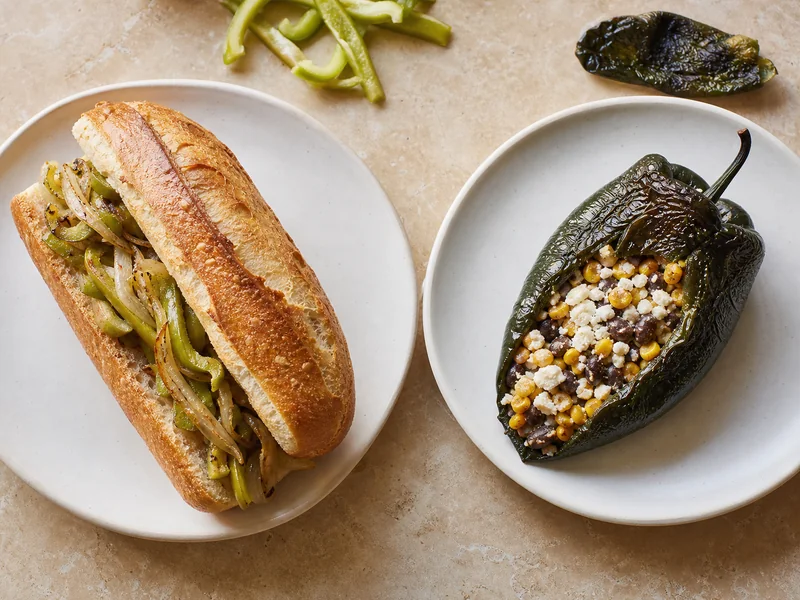
Choose Cubanelle for fast pan cooking. It suits fried peppers and onions, sausage sandwiches, sofrito-style bases, omelets, pizza toppings, salads, relishes, and quick pickles.
Slice it lengthwise, remove the stem and inner ribs as needed, and add it early enough to soften without losing all structure.
Choose poblano for roasting, peeling, and stuffing. Its broad cavity works for cheese, beans, picadillo, corn, or rice, while roasted strips work in rajas, soups, sauces, and casseroles.
Under a broiler, turn poblanos until the skin blisters on every side, then cover them briefly before peeling.
Fresh poblano and dried ancho are different forms of the same chile, but they are not interchangeable in every recipe. Drying replaces fresh green notes with dried-fruit and cocoa-like aromas and removes the moisture needed in a fresh stuffed pepper.
Use ancho when a sauce specifically needs a soaked dried chile, and use fresh poblano when the recipe needs a flexible wall or roasted green flesh.
Cubanelle can be blistered whole, but its thin wall cooks faster and can collapse before developing the same roasted body. That makes a skillet or grill basket easier to control than a long broiler treatment.
Poblano can be sliced and fried, but it needs more time than Cubanelle and may retain a firmer skin unless it is roasted and peeled first.
In a sofrito-style base, dice Cubanelle evenly so it softens with onion and garlic instead of leaving large crisp pieces. The pepper contributes mild sweetness and vegetable body without turning the base into a hot sauce.
For rajas, roast and peel poblano before cutting it into strips, then combine it with onion and cream or another recipe-specific sauce so the chile remains the main earthy element.
Can You Substitute Cubanelle for Poblano?
Substitute by volume and cooking method, not pod count. One large poblano may contain as much usable flesh as two smaller Cubanelles, but actual size should decide the amount.
For a sauteed dish, start with two small Cubanelles for one large poblano and expect a sweeter, softer result.
| Recipe job | Better first choice | If you swap |
|---|---|---|
| Quick frying with onion | Cubanelle | Give poblano more time or roast first |
| Stuffing and baking | Poblano | Use two Cubanelles and handle gently |
| Raw salad or sandwich | Cubanelle | Slice poblano thinly and expect earthiness |
| Roasted sauce or rajas | Poblano | Add Cubanelle for bulk, not equal flavor |
When poblano replaces Cubanelle, use equal trimmed weight, cook it longer, and taste for bitterness before adding acid or salt. A small amount of sweet pepper can restore body if the poblano dominates.
When Cubanelle replaces poblano, do not add smoked paprika automatically because roasted poblano is earthy rather than strongly smoked. Char part of the Cubanelle or add a compatible roasted ingredient only when the recipe can support it.
For chiles rellenos, wait for poblano if structure matters. A Cubanelle version can still be good, but it should be treated as a thinner stuffed frying pepper rather than a texture match.
For fried peppers or a sausage sandwich, Cubanelle is worth seeking because its quick collapse and sweetness are the point of the dish.
Equal trimmed weight is more reliable than equal pod count for soups, sauces, and sauteed vegetables. Weigh after removing stems and damaged areas, then adjust cooking time because the same weight of thin Cubanelle exposes more surface to the pan.
For stuffing, compare cavity size before preparing the filling so two narrow Cubanelles do not receive the amount planned for one broad poblano and split during baking.
Shopping And Storage
Buy Cubanelles that feel firm and look glossy, usually pale green or yellow-green with no leaking spots. Curved or slightly wrinkled shapes are normal, but collapsed shoulders indicate declining texture.
Choose poblanos that feel heavy for their size and have broad, intact walls without soft patches around the stem.
Refrigerate both peppers dry and unwashed until use, then inspect them before cooking. Moisture trapped in a sealed bag speeds surface decay, while a loose produce bag or breathable container reduces condensation.
If a Cubanelle must remain crisp for a raw dish, use it before it begins to soften. A slightly softened pepper can still work in a cooked sofrito or skillet preparation if it has no mold or off odor.
Roast poblanos shortly before use for the best texture or refrigerate peeled flesh in a covered container for a planned meal, freezing strips only for cooked sauces and soups where a softer thawed texture is acceptable.
Wash the peppers immediately before prep rather than before storage. Dry the surface well before frying or broiling because clinging water slows browning and can cause hot oil to spit.
Keep raw-pepper knives and boards away from ready-to-eat food until they have been washed with dish detergent. Even these mild varieties can leave capsaicin residue that irritates eyes or sensitive skin.
Which Should You Choose, Cubanelle or Poblano?
Pick Cubanelle for sweet, quick frying and poblano for earthy roasting or stuffing. Heat is secondary because both stay mild enough for most diners.
Cubanelle is the better fit for sandwiches, sausage and peppers, sofrito, salads, and weeknight skillets where thin walls save time.
Poblano is the better fit for chiles rellenos, rajas, roasted cream sauces, soups, and any preparation that depends on a broad wall and peeled roasted flesh. Its dried ancho form also opens a separate group of sauces that Cubanelle cannot duplicate.
When the recipe gives a preparation clue, follow that clue first and adjust quantity or heat only after the texture is right.
Cubanelle Pepper vs Poblano Pepper FAQ
- Chile Pepper Institute - New Mexico State University
- University of Illinois Extension
- Capsicum - USDA GRIN Taxonomy
- Rick Bayless - Roasted Poblano Techniques
- Lidia Bastianich - Italian Frying Pepper Cooking