
Datil vs Habanero: Does Florida's Pepper Taste Sweeter?
Datil and habanero share heavily overlapping extra-hot ranges, so neither name predicts the hotter pod. Choose Datil for its sweet fruity tang and St. Augustine sauce identity, or habanero for a brighter aromatic chile that fits salsa, marinades, and general hot sauce.

Datil and habanero share the same species and overlapping extra-hot ranges. Datil brings a sweet fruity tang and St. Augustine sauce identity, while habanero brings a brighter aromatic profile and a slightly higher published ceiling.
- Species: Both are C. chinense
Datil Pepper
Extra-HotHabanero
Extra-HotQuick Comparison
| Attribute | Datil Pepper | Habanero |
|---|---|---|
| Scoville evidence | 100,000 to 300,000 SHU | 100,000 to 350,000 SHU |
| Heat Tier | Extra-Hot | Extra-Hot |
| vs Jalapeño | 38x hotter | 44x hotter |
| Flavor | fruity and sweet | fruity and citrusy |
| Species | C. chinense | C. chinense |
| Origin | USA | Mexico |
Is Datil Hotter Than Habanero?
The useful heat answer is a tie, because the published ranges overlap. University of Florida IFAS lists Datil at 100,000 to 300,000 Scoville heat units, while its Scoville reference places habanero at 100,000 to 350,000 SHU.
Those endpoints do not predict the exact pod in your hand. UF/IFAS Extension in Putnam County sent locally grown Datils for HPLC analysis and reported 61,500 SHU for green fruit and 123,000 SHU for orange fruit grown under the same conditions.
That trial gives ripeness a practical role without turning one small study into a universal conversion. A ripe Datil can carry roughly twice the measured capsaicinoid heat of a green pod from the same trial, yet another plant or harvest can land elsewhere in the broader range.
Habanero has a slightly higher published ceiling, but that does not make every habanero hotter than every Datil. Treat both as extra-hot peppers and control a recipe by seeded weight, batch size, and gradual additions rather than by the pepper name alone.
For a one-cup sauce, begin with a deliberately small measured amount and blend before adding more. Do not double Datil simply because it tastes sweeter, since sweetness can soften the impression of heat without removing capsaicin.
Is Datil Sweeter Than Habanero?
Datil is the sweeter, softer-edged choice in this pair. UF/IFAS Gardening Solutions describes its flavor as a sweet, fruity tang, which explains why the pepper can support tomato, vinegar, and brown sugar without disappearing behind them.
Habanero brings its own fruit character, but the Chile Pepper Institute describes the orange habanero group through a distinctive aroma and flavor associated with peppers grown extensively in Mexico's Yucatán Peninsula. In a sauce, that aromatic fruit character often reads brighter than Datil's rounder sweetness.
Both peppers are Capsicum chinense, according to the Chile Pepper Institute's species guidance. Shared species helps explain the family resemblance, while cultivar, maturity, and growing conditions still produce different pod shapes and flavor balance.
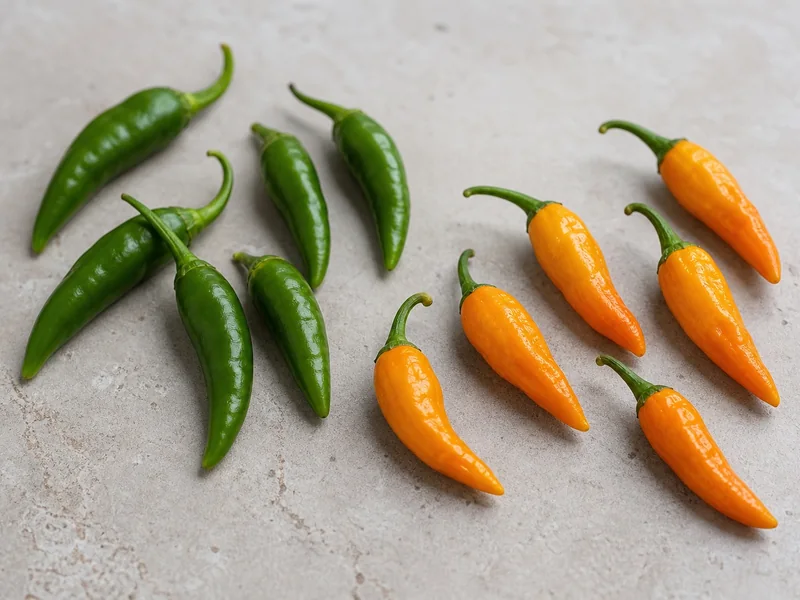
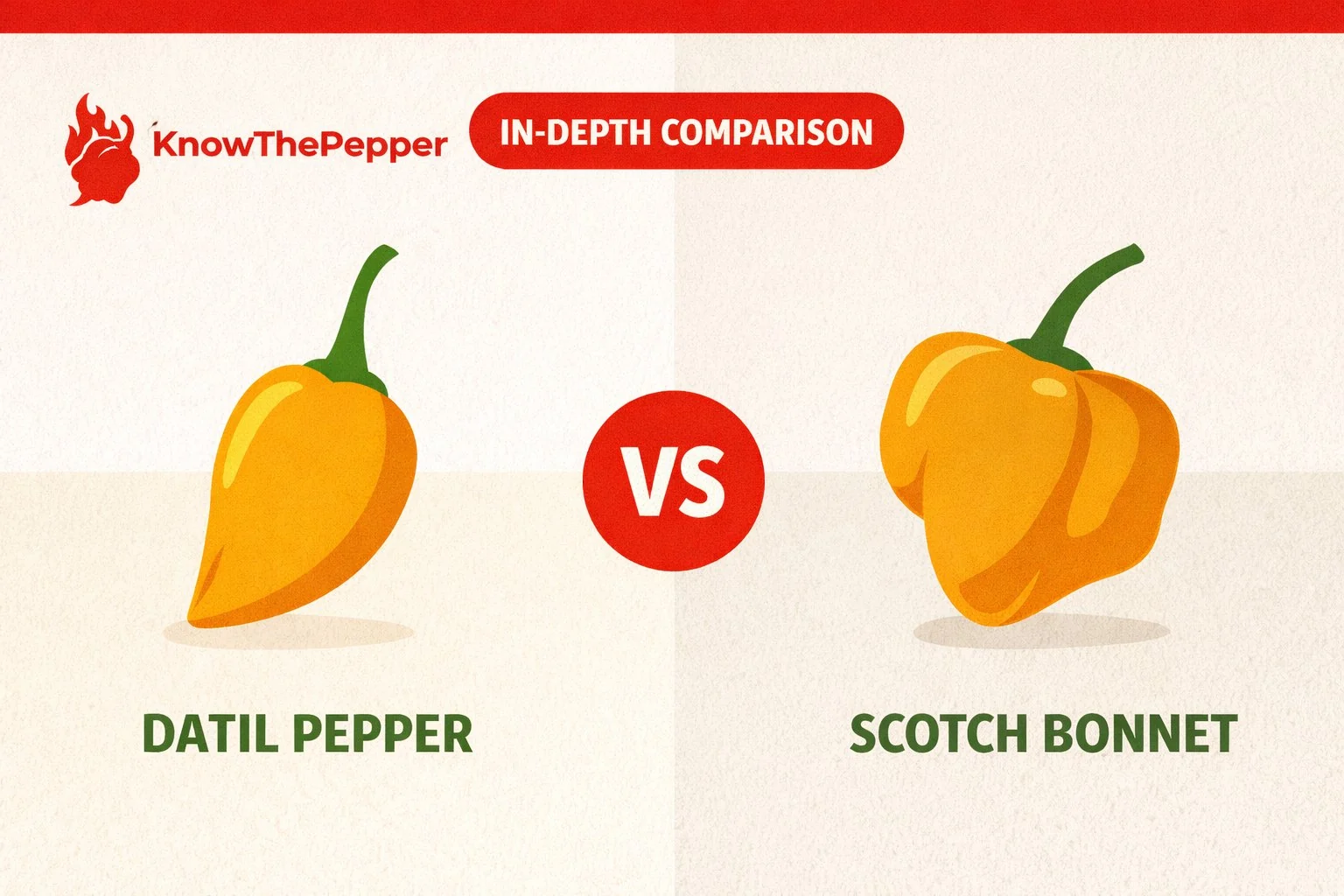
The pods also give a visual clue before cooking. A ripe Datil is small, tapered, and golden orange, while a typical orange habanero is squat and lantern-shaped, so match seeded weight rather than pod count when switching between them.
UF/IFAS reports that true Datil fruit changes directly from green to orange. That color change matters because the Putnam County HPLC trial measured more capsaicinoid heat in the ripe orange sample, so green Datil should not be treated as a color-equivalent substitute for ripe fruit.
When Should You Use Datil Instead of Habanero?
Choose Datil when the dish depends on St. Augustine's sweet-hot sauce tradition. UF/IFAS Gardening Solutions describes a typical Datil sauce built with brown sugar, ketchup, tomato paste, and Datil peppers, and it also names chowders, jams, jellies, and hot sauces as established uses.
That ingredient pattern fits fried seafood, Minorcan-style chowder, table sauces, and glazes because the pepper arrives inside a sweet, tomato-rich, acidic frame. The decision is about the finished balance, so bottled Datil sauce and raw Datil cannot be exchanged spoon for spoon.
Choose habanero when the recipe wants a fresh aromatic chile that will be paired with fruit, citrus, onion, or vinegar. Its shape makes it easier to identify in ordinary produce displays, and its broader published heat ceiling still belongs in the same cautious dosing range as Datil.
For a tomato-based Datil sauce, replacing the pepper with habanero preserves the heat class but changes the center of the flavor. Taste before adding sugar, because a recipe that already includes brown sugar and ketchup may not need any extra sweetness.
For salsa, marinade, or a fresh chile paste, habanero is usually the more direct choice when regional Datil character is not the point. Datil earns the spot when its sweet tang and Northeast Florida identity are part of what the cook intends to serve.
| If the dish needs | Better starting choice | Reason |
|---|---|---|
| St. Augustine-style tomato and vinegar sauce | Datil | UF/IFAS identifies the pepper with this sweet-hot regional sauce tradition. |
| Fresh salsa or citrus marinade | Habanero | Its aromatic fruit character works without copying Datil sauce. |
| Minorcan-style chowder | Datil | UF/IFAS names chowder among the pepper's established Northeast Florida uses. |
| A heat-class substitute | Either, by seeded weight | Their official Scoville ranges overlap across most of the band. |
Which Should You Pick, Datil or Habanero?
Pick Datil for a sauce, chowder, relish, or glaze where sweet pepper flavor and St. Augustine identity belong in the result. Pick habanero for an aromatic fresh chile that can carry salsa, marinade, and general hot-sauce work without copying a regional Datil recipe.
Do not choose by a claim that one is reliably milder. Their official ranges overlap from 100,000 through 300,000 SHU, and UF/IFAS field data shows that Datil maturity alone can change the measured result substantially.
If the recipe names Datil, using Datil protects both the expected flavor and the regional ingredient. If the recipe only asks for an extra-hot fruity pepper, habanero is a sensible substitute when you control the amount by seeded weight.
The shortest answer is practical. Datil is the sweeter regional specialist, while habanero is the broader aromatic workhorse, and neither should be handled as a predictable low-heat option.
Substitution
Start near 1:1 by seeded weight, not by pod count. The peppers occupy nearly the same published heat band, while their shapes and individual sizes make a pod-for-pod rule unreliable.
When habanero replaces Datil, keep the original recipe's sugar, tomato, and vinegar unchanged for the first blend. Add sweetness only after tasting, since a St. Augustine-style sauce may already contain brown sugar and ketchup.
When Datil replaces habanero, expect a sweeter and rounder result even if the heat feels similar. Reduce other sweet ingredients only when the finished sauce actually tastes out of balance.
A bottled Datil sauce is a seasoned condiment, so it cannot replace fresh habanero at the same measure. Check its ingredient list and account for its vinegar, tomato, salt, and sugar before changing the rest of the recipe.
Wear gloves, keep both peppers away from eyes, and clean the knife and board after prep. Heat by seeded weight is the starting control, but tasting a tiny diluted portion is the only useful way to adjust a particular batch.
Datil Pepper vs Habanero FAQ
- UF/IFAS Extension St. Johns County: Datil Peppers and the Fall Festival
- UF/IFAS Extension: Datil Peppers
- UF/IFAS Extension Putnam County: HPLC Datil Pepper Trial
- UF/IFAS Gardening Solutions: Datil Peppers
- UF/IFAS Gardening Solutions: Peppers by Scoville Units
- New Mexico State University Chile Pepper Institute: Growing Tips and Species
- New Mexico State University Chile Pepper Institute: Habanero Types