
Anaheim vs Poblano: Which Mild Chile Works Better?
Choose Anaheim pepper when the chile will be chopped into eggs, casseroles, burgers, or mild green chile sauce. Choose poblano when the pepper needs to hold stuffing or bring deeper roasted flavor to the plate. Their heat ranges overlap, but shape and flavor decide the final choice.

Anaheim Pepper
MediumPoblano Pepper
MediumQuick Comparison
| Attribute | Anaheim Pepper | Poblano Pepper |
|---|---|---|
| Scoville evidence | 500-2.5K SHU | 1K-2K SHU |
| Heat Tier | Medium | Medium |
| vs Jalapeño | n/a | n/a |
| Flavor | mild, grassy-sweet, lightly earthy when roasted | earthy and rich |
| Species | C. annuum | C. annuum |
| Origin | USA | Mexico |
Which Is Better for Stuffing, Anaheim or Poblano?
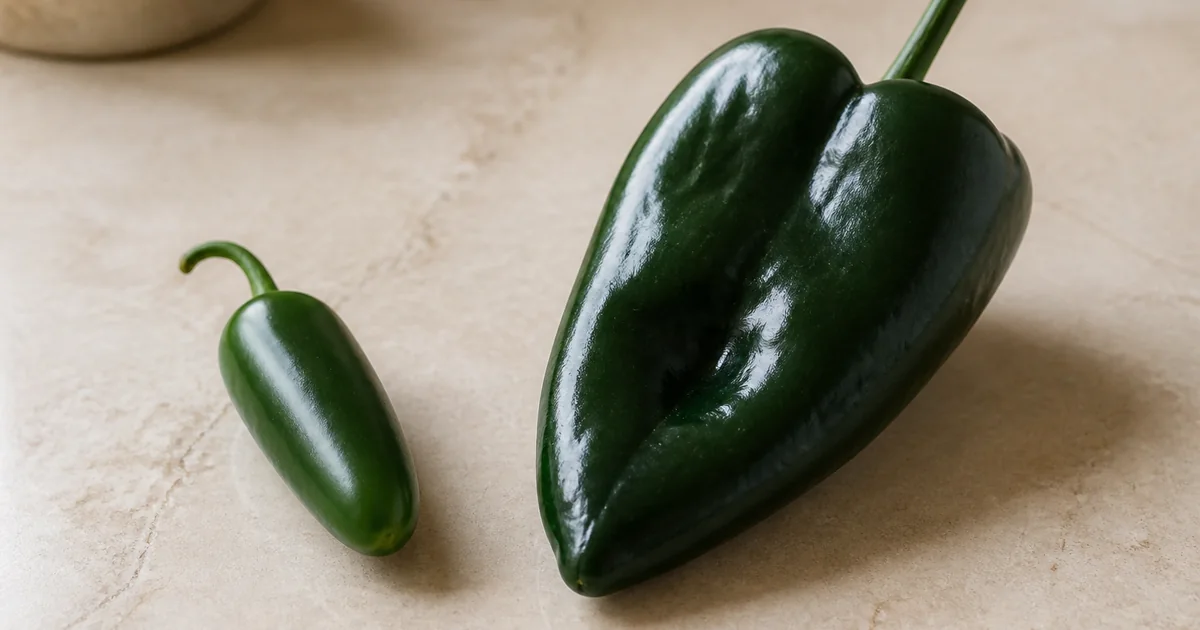
If the pepper has to hold filling, start with poblano. Its broad shoulders and thicker walls make it the better shell for chiles rellenos, cheese stuffing, and roasted halves that still need shape on the plate.
If the pepper will be chopped into a pan, Anaheim is usually easier to live with. The pods are longer, milder, and less bulky, so they roast quickly, peel easily, and spread through eggs, burgers, casseroles, quesadillas, and green chile sauce without taking over.
Whole-roasted serving also pushes the choice toward poblano. A plated roasted poblano still feels like a complete pepper.
A roasted Anaheim more often wants to be sliced, folded, or tucked into something else.
That is the main split.
Poblano acts like the featured pepper. Anaheim acts like the more flexible supporting pepper.
Both can roast well, but they do not carry the same kind of dish.
So before you look at SHU, decide whether the pepper is the container or the seasoning.
The New Mexico State University Chile Pepper Institute identifies both as Capsicum annuum, but pod geometry changes the work at the cutting board. A typical poblano gives a wide cavity for layered fillings, while an Anaheim gives longer strips with less trimming for tacos or omelets.
Is Poblano Hotter Than Anaheim?
Anaheim usually lands around 500 to 2,500 SHU. Poblano usually lands around 1,000 to 2,000 SHU.
On paper that looks close, and in many meals it is.
The difference is consistency. Anaheim often tastes milder and cleaner across a batch, while poblano can surprise people because one pepper feels almost sweet and the next one carries a sharper edge near the placenta and ribs.
The numbers also hide how people use the peppers. Anaheim often gets chopped and spread through a whole pan, so a small heat jump repeats in every bite.
Poblano more often stays as strips, slices, or one stuffed piece, which changes how that heat gets delivered.
That is why a family-size casserole or chopped filling often feels safer with Anaheim. When the recipe spreads the chile through every bite, a little less variability helps.
The published ranges overlap from 1,000 to 2,000 SHU, so neither name guarantees the hotter bite.
For guests who need predictable mildness, remove the white ribs from several Anaheims and mix the diced flesh before it reaches the pan.
How Does Roasting Change Anaheim and Poblano?
Anaheim gets soft, mild, and a little grassy-sweet after roasting. Once peeled, it disappears nicely into chopped green chile dishes, soups, burritos, and simple sauces where you want roasted pepper flavor without too much weight.
Poblano deepens more. Roasting pulls out an earthy, richer note that stands up in rajas, cream sauces, corn dishes, and plated stuffed peppers.
Even when chopped, it usually tastes darker than Anaheim.
The skin question matters too. Both peppers benefit from charring and peeling, but poblanos ask for it more because the thicker skin can turn leathery in a finished dish.
Anaheim can be more forgiving when you are just dicing the roasted flesh into a pan.
If the dish lives on chile flavor alone, poblano often gives more back. If the dish needs a milder roasted green layer, Anaheim usually fits better.
A broiler or open flame should blister the skin rather than cook the pod until it collapses.
Steam the charred peppers in a covered bowl for about 10 minutes, then peel without rinsing away the roasted juices that carry much of the aroma.
Can You Substitute Anaheim for Poblano?
In chopped cooked dishes, Anaheim can replace poblano 1:1 more easily than the reverse. A tray of enchiladas, a breakfast scramble, or a pot of beans can usually absorb the swap if you accept a lighter, less earthy result.
Stuffed peppers are another story. Anaheim is often too narrow for a true poblano role, and the walls do not hold the filling the same way.
Using poblano in place of Anaheim can also make a mild green chile dish feel heavier than planned.
Sauces sit in the middle. Roasted Anaheim can stand in for poblano in blended green sauces if you want less bitterness and less risk.
Roasted poblano can stand in for Anaheim when you want deeper flavor, but the sauce may need more acid or stock so it does not turn muddy.
Canned and frozen products matter here too. Canned diced green chile often behaves closer to Anaheim than to poblano.
If you want the fresh roasted poblano effect, canned chile is not a clean substitute.
That is why recipe position matters. If the pepper is one ingredient among many, the swap can stay honest.
If the pepper is the visual center of the dish, the shape and flavor gap gets obvious fast.
Weight gives a cleaner swap than pod count because poblanos are commonly broader and heavier. Start with equal trimmed weight, then adjust the finished dish with lime for a heavy poblano sauce or another roasted Anaheim for a thin green chile mixture.
Does Anaheim Have a Dried Form Like Ancho?
Poblano carries a second identity because the ripe dried form becomes ancho. Anaheim does not have that same mainstream dried pantry role.
So if your recipe might move from fresh roasting today to dried sauce work later, poblano gives you a larger family of uses.
That extra identity also explains why poblano often tastes deeper even before drying. It sits closer to a dried-chile tradition that Anaheim usually never enters.
Anaheim stays a fresh green chile story for most cooks.
Ancho also changes the substitution question because drying concentrates fruit sweetness while removing the fresh green texture. A recipe calling for ancho needs a dried chile, so a fresh Anaheim cannot replace it merely because both original pods belong to the same species.
How Do You Buy and Freeze Anaheim and Poblano?
Buy Anaheims that are firm, glossy, and long enough for the job you have in mind. Straighter pods work better for stuffing.
Curved pods are fine when you plan to roast and chop.
Buy poblanos that feel heavy, broad, and dark green, especially if you want to make stuffed poblanos or rellenos. After roasting, peel and freeze either pepper in flat portions so the next meal starts with real roasted chile instead of a last-minute jar substitute.
That freezer step matters more than people expect. A bag of roasted Anaheim strips can rescue weeknight eggs and burritos.
A bag of roasted poblano strips gives you a fast start on rajas, soups, and cream sauces that still taste like a real roasted pepper instead of canned green chile.
Freeze peeled peppers in recipe-size packets with the variety written on the bag because the two become difficult to identify after charring. New Mexico State University recommends preserving roasted green chile promptly, and flat packets cool faster and thaw in smaller portions.
Anaheim Pepper vs Poblano Pepper FAQ
- New Mexico State University H-230 - Growing Chiles in New Mexico
- New Mexico State University Circular 706 - Chile Cultivars of NMSU