
Ancho vs Mulato: Which Dried Poblano Belongs in Your Sauce?
Ancho pepper gives a mild red-brown base with dried-fruit sweetness. Mulato pepper is the darker choice for mole and braises that need chocolate-like depth, and heat alone should not decide between them.

Ancho and mulato are related dried poblano-type chiles, but color and flavor decide the job. Ancho builds a sweeter red-brown sauce, while mulato gives mole a darker chocolate-like base.
- Species: Both are C. annuum
Ancho Pepper
MediumMulato Pepper
MediumQuick Comparison
| Attribute | Ancho Pepper | Mulato Pepper |
|---|---|---|
| Scoville evidence | 1,000-2,000 SHU | Mild, varies by cultivar |
| Heat Tier | Medium | Medium |
| vs Jalapeño | n/a | n/a |
| Flavor | sweet, raisin-like, earthy, lightly cocoa-like | smoky and chocolatey |
| Species | C. annuum | C. annuum |
| Origin | Mexico | Mexico |
Are Ancho and Mulato the Same Chile?
Ancho and mulato are related dried poblano-type chiles, but they are not the same pantry ingredient. Choose ancho for a sweeter red-brown sauce base and mulato when the sauce needs darker fruit, cocoa-like depth, and a stronger mole direction.
New Mexico State University's Chile Pepper Institute defines mulato as similar to ancho but brown at maturity. Mexico's Profeco describes the dried poblano family as a red ancho type and a much darker ancho mulato type, which explains why the pods share a broad shape while producing different-looking sauces.
The distinction is a cultivar and maturity-color difference, not a trick created by drying one poblano longer. A green fresh pod may be sold broadly as poblano in the United States, but the ripe color and flavor path determine whether the dried chile is sold as ancho or mulato.
How Do You Toast, Soak, and Blend Ancho and Mulato?
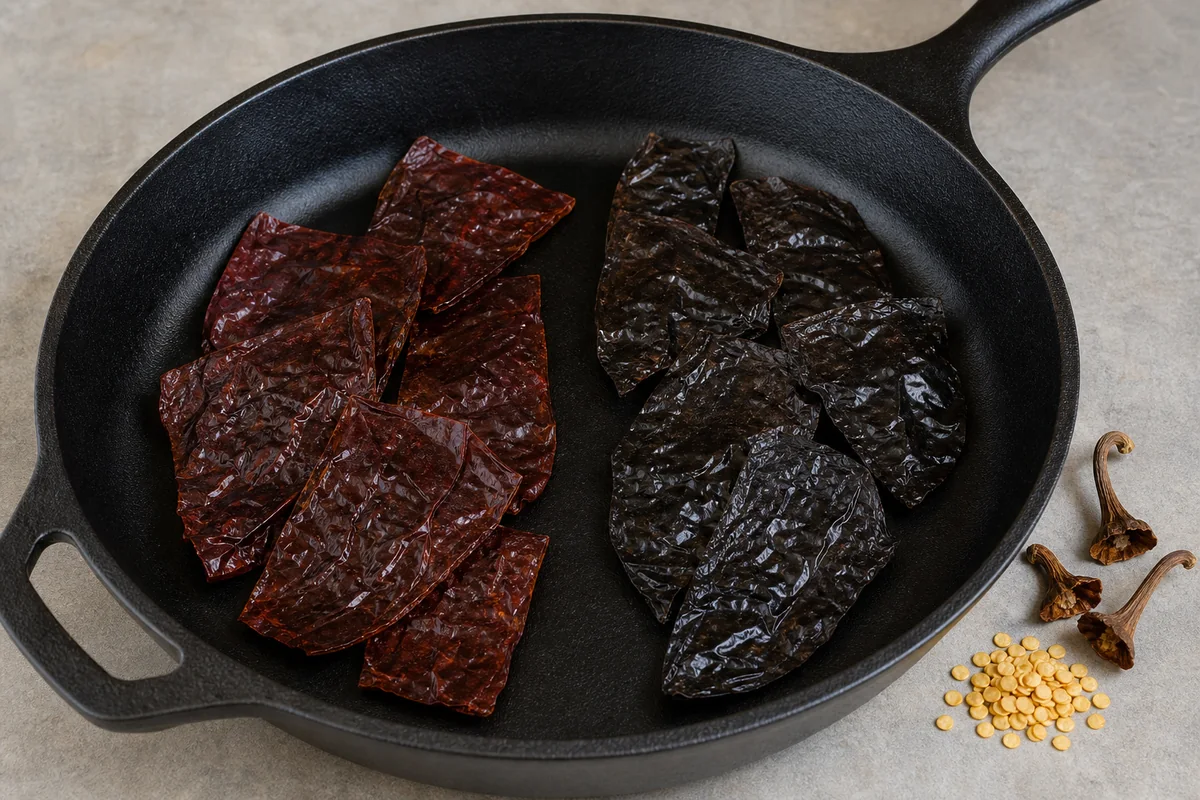
Use the same preparation sequence for both chiles, but watch the surface instead of relying on a long timer. Stem and seed the pods, tear them into flat pieces, and press each piece briefly against a dry medium-hot skillet until it becomes fragrant and slightly more pliable.
Rick Bayless gives a useful ancho reference of about 10 to 15 seconds per side. His recipes then cover the toasted pieces with hot water for roughly 20 to 30 minutes, blend them with fresh liquid, and strain the puree when a smoother sauce is needed.
Mulato's dark skin makes visual scorching harder to see, so aroma matters more than color. Stop when the chile smells toasted, since blackened spots can add bitterness before the inside has softened.
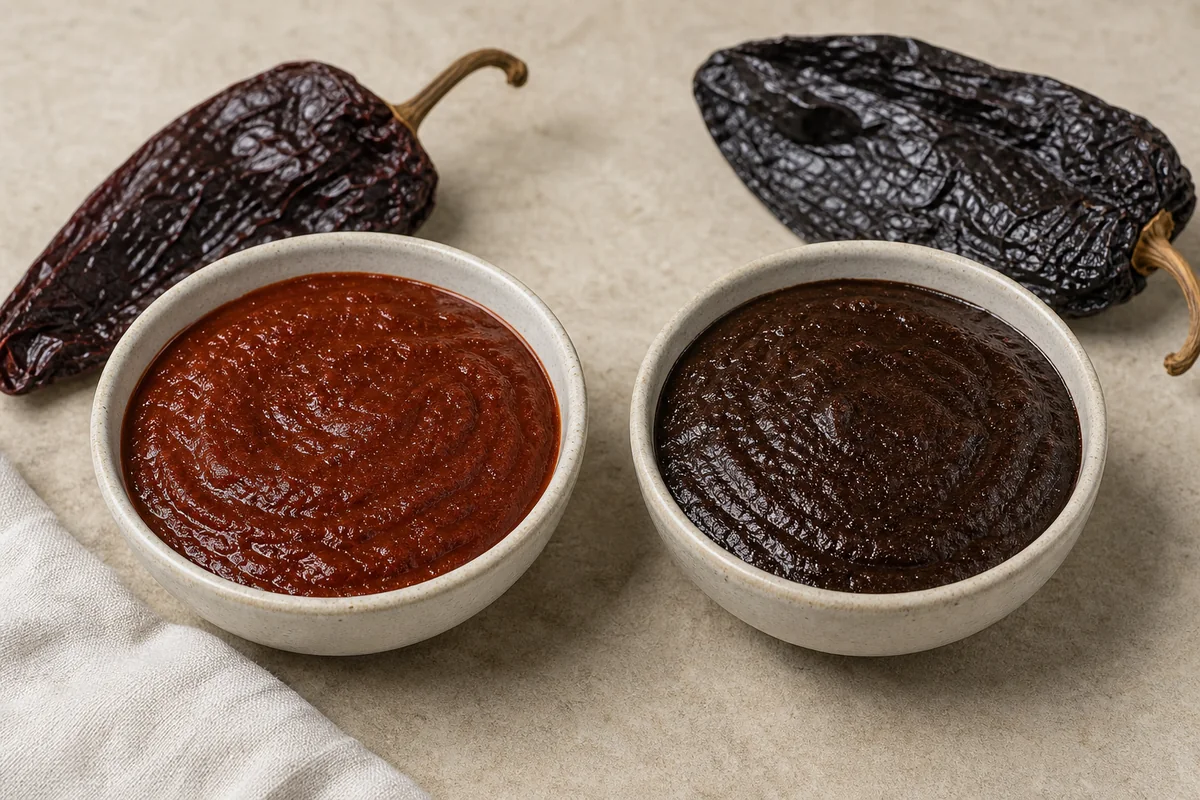
The two purees in the image below show the decision you are trying to preserve. Ancho makes a warmer brick-red puree, while mulato pushes the same basic process toward chocolate brown.
Can You Substitute Ancho for Mulato?
The swap is possible, but the correction is about flavor
Mulato missing from mole: replace it with the same seeded weight of ancho, then expect a sweeter and redder sauce. Restore depth with another dark chile already appropriate to the recipe instead of automatically adding cocoa or sugar.
Ancho missing from a red sauce: begin with about three-quarters as much mulato by seeded weight. Blend, check bitterness and color, then add more only if the darker flavor belongs in the dish.
Whole-pod counts are unreliable. INIFAP reports an average mulato around 12 cm long and 7 cm wide, but dried pods lose water unevenly and one broad pod can weigh far more than another.
Which Dishes Call for Ancho or Mulato?
- Choose ancho for enchilada sauce, adobo, beans, braised meat, and marinades that need mild dried-chile body.
- Choose mulato for mole poblano, dark braises, and chile blends built around toasted nuts, seeds, and dried fruit.
- Use both when the recipe deliberately layers red-brown sweetness with a darker chocolate-like base.
- Choose neither by color alone when the package is unlabeled, because dark ancho pods and light mulato pods can overlap visually.
How Do You Buy and Store Ancho and Mulato Chiles?
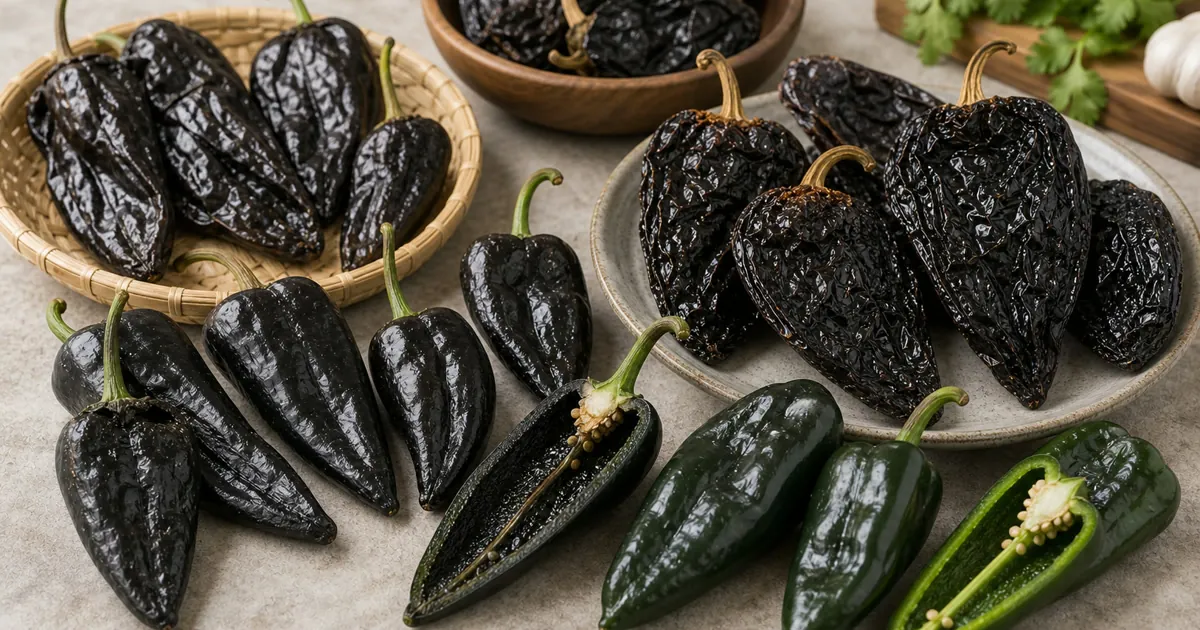
Buy pods that bend slightly instead of shattering, with a clear dried-chile aroma and no powdery mold. Ancho should show red or mahogany undertones under good light, while mulato should look brown-black rather than gray and burnt.
The pod shape is not enough because both are broad poblano types. Read the bin label, then compare color and aroma before buying from a market that stores several dark chiles together.
New Mexico State University notes that dried chile quality depends on preserving color, pungency, and flavor through correct processing and storage. Keep either chile airtight, cool, dark, and dry, then buy an amount you can use while the aroma still rises as soon as the bag opens.
Ground chile fades faster because more surface touches air. Whole pods also let you inspect identity before cooking, which matters when ancho, mulato, and pasilla share the same shelf.
How Do Ancho and Mulato Look and Taste Different?
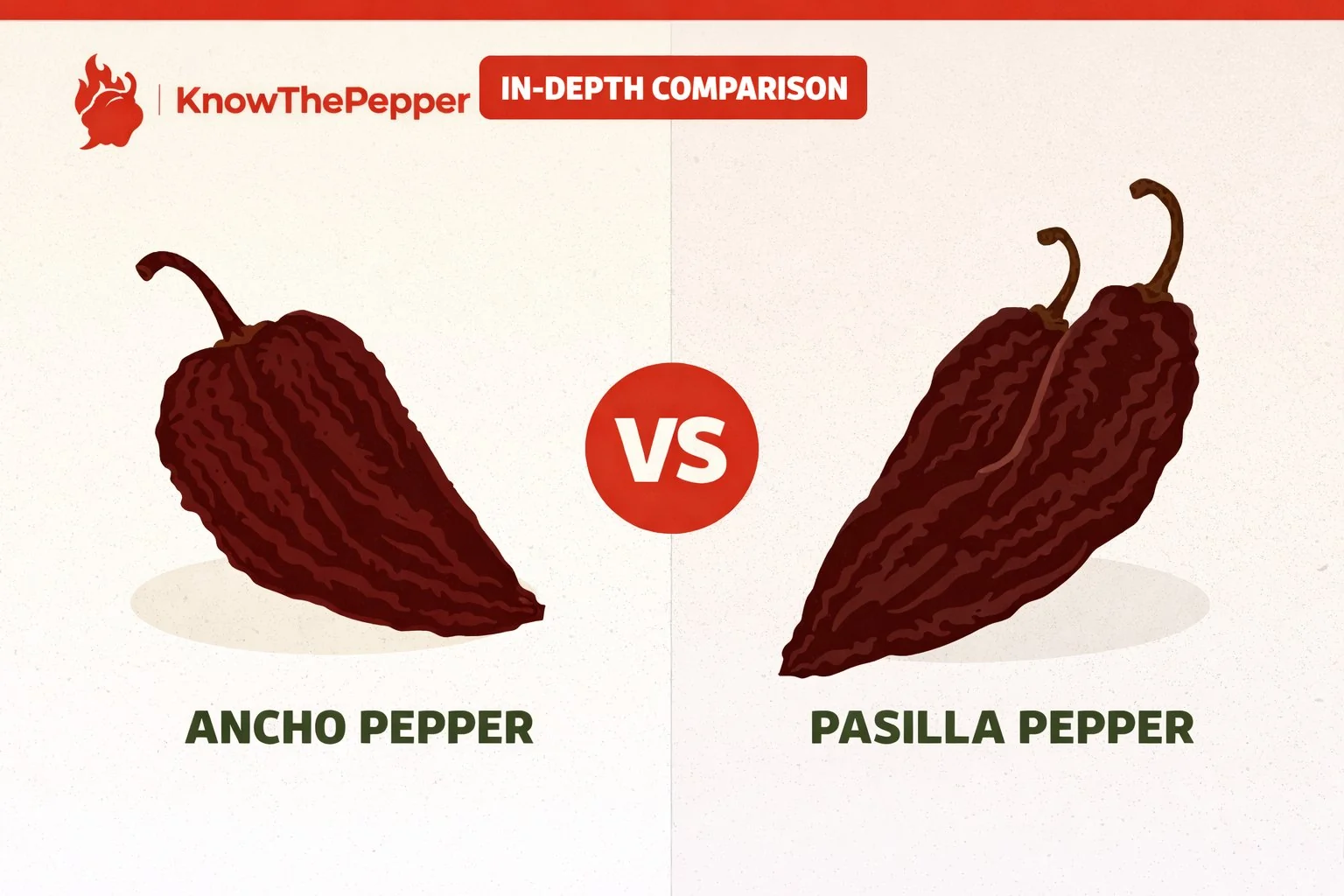
Color is the fastest useful clue when the bag is correctly labeled. A good ancho chile should look reddish brown to deep mahogany, while a mulato chile runs chocolate brown to almost black without looking scorched.
The Chile Pepper Institute describes ancho as mild, sweet, and suggestive of dried fruit. Mexico's INIFAP describes mulato as usually sweet with a flavor close to chocolate, sometimes hot, and distinct enough that the agency warns against treating it as a simple ancho replacement.
That difference becomes clearer after blending. Ancho puree tends to stay warmer and redder, which supports tomato, garlic, stock, and vinegar without darkening the whole sauce.
Mulato puree contributes a lower, darker note that fits toasted nuts, seeds, dried fruit, and the long flavor arc of mole. The word chocolate-like describes the chile's aroma direction and does not mean the pod contains chocolate.
Is Mulato Hotter Than Ancho?
Both chiles belong on the mild end of the Scoville scale, so heat should be a safety check rather than the main buying decision. The Chile Pepper Institute lists dried ancho at 1,000 to 2,000 SHU, which is gentle enough to build sauce volume without turning every spoonful into a heat dose.
Published mulato figures vary by cultivar and source. An Oregon State University trial listed the brown-maturing Mulato Isleño at 500 to 1,000 SHU, while INIFAP notes that mulato is normally sweet but can sometimes be hot.
Those records do not support the common shortcut that mulato is automatically hotter than ancho. The practical conclusion is to taste a tiny softened piece from the actual lot before scaling a sauce, especially when the dish will serve heat-sensitive diners.
Removing seeds does not remove every source of heat because capsaicinoids are concentrated in the inner placental tissue. Split the pods, remove the stem and loose seeds, then trim more pale inner tissue only when heat control matters.
Why Does Mole Poblano Use Both Ancho and Mulato?
Mole poblano often uses ancho and mulato together because each chile supplies a different part of the base. Mexico's Secretaría de Cultura lists ancho, mulato, and pasilla chile among the traditional ingredients, alongside seeds, nuts, spices, tomato, and a modest amount of chocolate.
A Spanish-language turkey mole printed in 1887 and preserved by the University of Texas at San Antonio is even more specific. It calls for one pound of mulato with four ounces each of ancho and pasilla, so the darker chile carries the blend while the other two change its shape.
Rick Bayless uses the same three-chile logic in a modern classic red mole, with 3 ounces of mulato and 1.5 ounces each of ancho and pasilla. These recipes show why replacing every mulato with ancho makes a mole sweeter and redder even when the heat stays manageable.
Ancho can still lead a simpler adobo, enchilada sauce, bean pot, or red chile marinade. When a sauce needs a brighter skin color and cleaner fruit note, guajillo chile is a more useful partner than extra mulato.
Verdict
Ancho is the broad-use sauce chile. It brings mild heat, dried-fruit sweetness, and a red-brown color that supports many adobos, enchilada sauces, and braises.
Mulato is the darker specialist. INIFAP's chocolate-like description and the heavy mulato share in historical mole recipes explain why it belongs where a deep brown base is part of the dish rather than an accidental side effect.
For a one-chile everyday sauce, start with ancho. For mole that names mulato, keep mulato in the blend and match seeded weight before correcting color, bitterness, and fruit direction.
Ancho Pepper vs Mulato Pepper FAQ
- Chile Terminology, New Mexico State University Chile Pepper Institute
- Ancho dried poblano reference, New Mexico State University Chile Pepper Institute
- Cultivo del chile en México, INIFAP
- Revista del Consumidor chile ancho reference, Profeco
- Mole poblano, Secretaría de Cultura de México
- Mole de Guajolote 1887, UTSA Special Collections
- Classic Red Mole with Turkey, Rick Bayless
- Mole Coloradito Enchiladas, Rick Bayless
- Postharvest Handling of Dehydrated Chiles, New Mexico State University