

KnowThePepper
Paprika Pepper: The Thick-Walled Hungarian Red That Gives Paprika Its Color
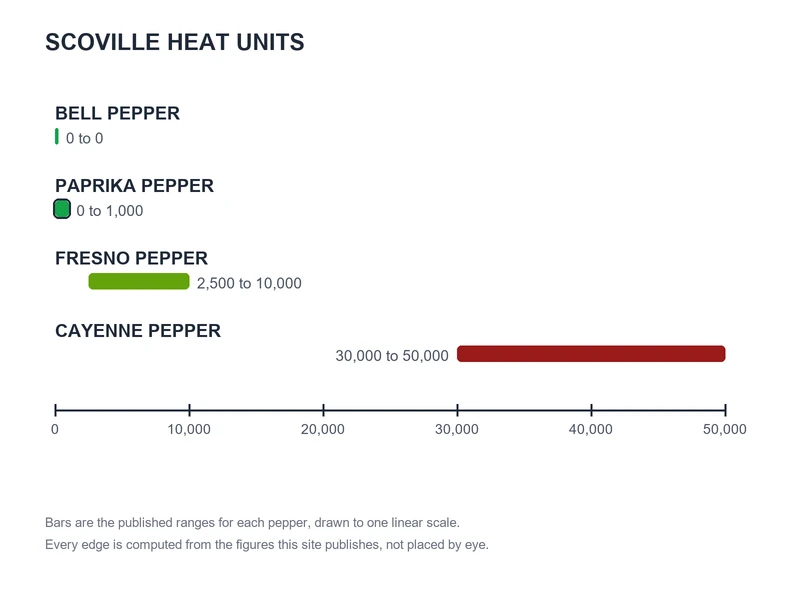
The paprika pepper is a sweet, round C. annuum variety from Hungary, registering 0-1,000 SHU - so mild it barely registers warmth at all. Grown for its brilliant red color and rich, slightly earthy sweetness, it is the backbone of Hungarian and Central European cooking.
Both home gardeners and commercial growers prize it for its productivity and low-maintenance nature.
- Species: C. annuum
- Heat tier: Medium (1K-10K SHU)
What Kind of Pepper Is Paprika Pepper?
Paprika peppers sit at the mildest end of the pepper spectrum, delivering sweetness with almost no perceptible heat, a stark contrast to even the gentlest Fresno, which runs roughly 2,500 to 10,000 SHU by comparison.
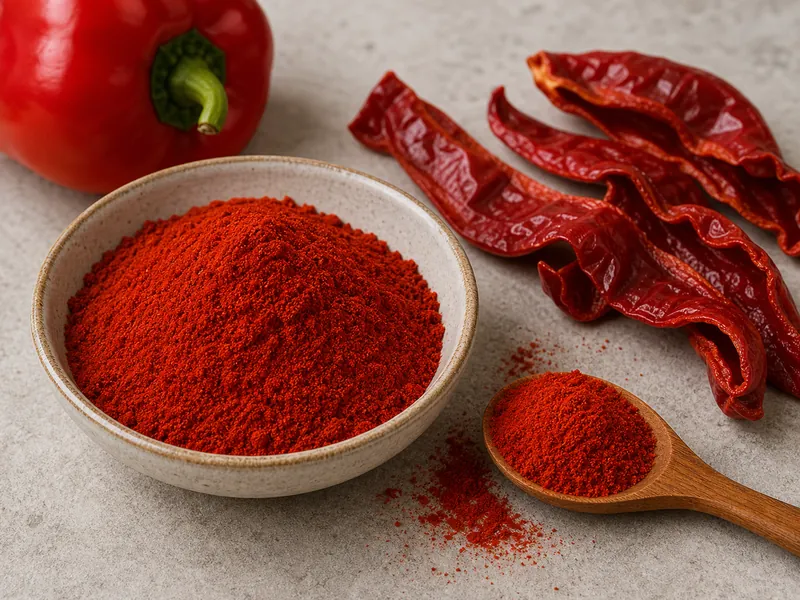
The pepper itself is thick-walled, round to slightly tapered, and ripens from green to a deep, saturated red. That color is the whole point: the dense flesh is loaded with carotenoids, particularly capsanthin, which gives paprika powder its signature brick-red hue.
This is a Capsicum annuum variety, placing it in the same botanical family as bell peppers, cayenne, and jalapeños, though in terms of heat, it behaves more like its bell pepper cousins.
Fresh paprika peppers are crisp and mildly sweet off the vine. Once dried and ground, the flavor deepens considerably, developing an earthy, almost nutty complexity that fresh peppers only hint at.
Hungarian paprika in particular is graded by sweetness and color intensity, with "édesnemes" (sweet noble) being the most common export grade.
For gardeners, the appeal is real: these plants are vigorous, reliably productive, and far less temperamental than many hotter varieties. They thrive in the same Hungarian pepper-growing tradition that has produced some of the world's most prized dried spices.
Where Does Paprika Pepper Come From?
Paprika's story begins with Columbus, who brought Capsicum annuum back from the Americas in the late 15th century. The pepper arrived in Hungary via the Ottoman Empire, likely through the Balkans, sometime in the 16th or 17th century.
Hungarian farmers in the Kalocsa and Szeged regions spent generations selecting for sweetness and color, gradually breeding out most of the heat. By the 19th century, paprika had become central to Hungarian national identity, essential to goulash, chicken paprikash, and countless other dishes.
The spice gained international recognition in 1937 when Hungarian chemist Albert Szent-Györgyi won the Nobel Prize partly for isolating vitamin C from paprika peppers. Today, Hungary and Spain remain the two dominant paprika-producing regions, each with distinct styles, compare Spain's oak-smoked pimentón tradition to Hungary's unsmoked, sun-dried approach.
How Hot Is Paprika Pepper? Heat and Flavor
The Paprika Pepper delivers 0–1K Scoville Heat Units, placing it in the Medium tier (1K-10K SHU).
Flavor notes: sweet and mild.
Paprika Pepper Nutrition Facts
Fresh paprika peppers are an exceptional source of vitamin C - a single 100g serving provides over 100% of the daily recommended intake, which contributed to Nobel-winning research in the 1930s. They are also high in vitamin A precursors (beta-carotene and capsanthin) and vitamin B6.
Calorically light at roughly 31 calories per 100g, fresh peppers offer meaningful fiber and potassium. Dried paprika powder is more concentrated: one tablespoon delivers significant vitamin A, iron, and antioxidant carotenoids.
The C. annuum species consistently ranks among the most nutrient-dense pepper types.
What Is Paprika Pepper Best Used For?
Dried and ground paprika is where this pepper truly performs, but fresh paprika peppers are worth knowing in the kitchen too. Raw, they eat like a sweeter, thinner-walled bell pepper, good in salads, stuffed, or roasted.
For powder production, the peppers are dried (traditionally sun-dried in Hungary) then ground with or without the seeds and veins. Including the seeds produces a slightly more pungent result.
Removing them yields the sweeter grades.
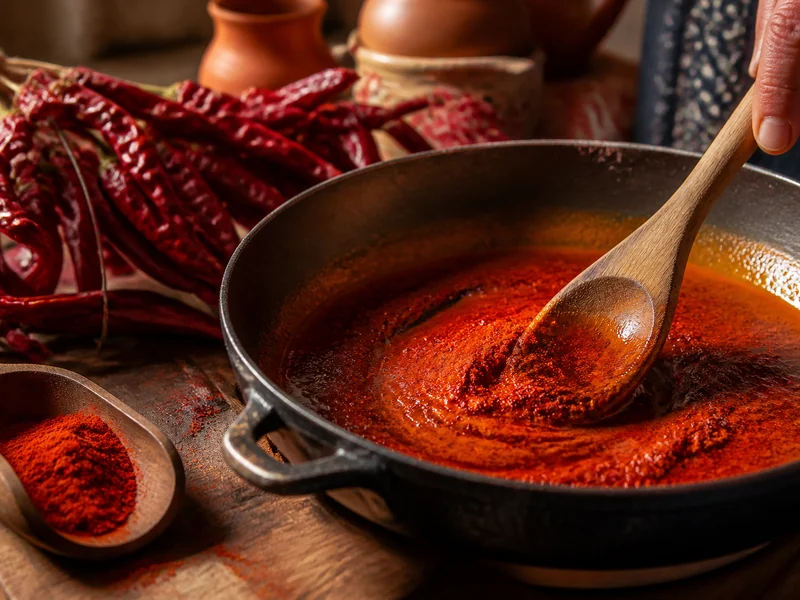
Heat matters when cooking with paprika powder. Adding it to hot oil briefly, no more than 30 seconds, blooms the carotenoids and dramatically intensifies color and flavor.
Burn it and the whole dish tastes bitter. This is the most common paprika mistake.
Paprika pairs naturally with fatty proteins: pork, chicken, lamb, and dairy-based sauces all carry its flavor well. It is the defining spice in Hungarian goulash and the essential rub ingredient for Spanish chorizo.
For fresh pepper applications where you want similar mild sweetness with a bit more structure, the long hot Italian pepper is a reasonable swap. Those wanting to compare roasted flavor profiles should look at the sweet, fire-roasted character of Spanish piquillo.
| Type | How it is made | What it does to the dish |
|---|---|---|
| Sweet | Ground from flesh with seeds and veins removed | Colour and sweetness, no heat to speak of |
| Hot | More seed and vein left in the grind | The same sweetness with a real edge behind it |
| Smoked pimenton | Oak-smoked before grinding, a Spanish product | Smoke as the leading flavour, not a paprika substitute in reverse |
How Should You Buy and Store Paprika Pepper?
Almost nobody buys these as pods. Late summer at farmers markets and specialty grocers is the exception.
Look for firm, unblemished skin with deep red color, softness or wrinkling means they are past peak.
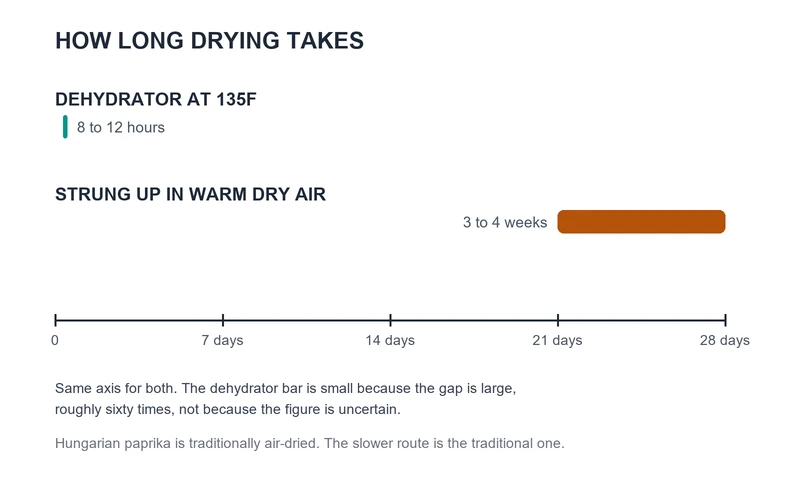
Store fresh peppers in the refrigerator crisper drawer, unwashed, for up to two weeks. For drying at home, string them whole in a warm, dry space with good airflow for 3-4 weeks, or use a dehydrator at 135°F for 8-12 hours.
Ground paprika powder keeps its color and flavor best in a sealed container away from heat and light, replace it after 12 months as the carotenoids degrade noticeably. For a gochugaru vs paprika, both are common pantry staples worth understanding distinctly.
Drying your own, either way
- Pick only fully red fruit, since green flesh will not develop the colour
- Air route: string whole pods somewhere warm, dry and moving, 3 to 4 weeks
- Machine route: dehydrator at 135F for 8 to 12 hours
- Grind with seeds and veins in for a hotter result, out for a sweeter one
- Store sealed and dark, and expect about a year before the colour goes
What Can You Use Instead of Paprika Pepper?
Compare substitutes for Paprika Pepper by form, flavor, and heat before choosing a ratio. Measured adjustments must account for the dish and the concentration of the replacement.
Direct comparisons show where flavor, form, and preparation differ in the Kashmiri vs Paprika and Bell vs Paprika matchups.
Compare Paprika Pepper with: Paprika Pepper vs Cayenne · Paprika Pepper vs Espelette · Paprika Pepper vs Chili Powder · Paprika Pepper vs Chili Powder Vs Cayenne · Paprika Pepper vs Smoked Paprika
How Do You Grow Paprika Peppers?
Paprika peppers are among the more rewarding varieties to grow, productive, relatively disease-resistant, and visually striking when the plants load up with red fruit in late summer.
Start seeds indoors 8-10 weeks before your last frost date. Germination is reliable at 75-85°F soil temperature.
A heat mat helps considerably. Transplant outdoors only after nights stay consistently above 55°F, as cold soil stunts growth in ways that are hard to recover from.
Plants reach 24-36 inches tall and benefit from caging or staking once fruit sets, the heavy load of thick-walled peppers can tip unsupported plants. Space them 18-24 inches apart for good airflow, which reduces fungal pressure.
Full sun is non-negotiable. Paprika peppers need 6-8 hours of direct light daily to develop their characteristic deep red color and maximum sugar content.
In shadier spots, fruit stays pale and flavor turns flat.
For a compact round-fruited alternative that performs similarly in the garden, the thick-walled, globe-shaped Alma paprika's cultivation style is worth comparing. Both varieties are covered in more depth in seed-starting and transplanting.
Days to maturity run 70-90 days from transplant to red ripe. For drying, harvest at full red and string them in a warm, well-ventilated space.
The timeline from transplant to harvest varies by climate, so track your local last frost carefully.
Paprika Pepper FAQ


- The Nobel Prize in Physiology or Medicine 1937, Albert Szent-Gyorgyi
- University of Minnesota Extension, growing peppers
- USDA FoodData Central, SR Legacy 170108, Peppers, sweet, red, raw
- Capsicum annuum L. - USDA GRIN Taxonomy
Species classification: C. annuum - based on published botanical taxonomy.