

KnowThePepper
Cherry Bomb Pepper: Thick-Walled Hot Cherry Whose Heat Overlaps Jalapeño
Cherry Bomb is a Petoseed F1 hot-cherry cultivar with round, thick-walled fruit and a published heat range of 2,500-5,000 SHU. Its range overlaps jalapeño, while its compact cavity makes whole pickling and stuffing more practical than slicing.
- Species: Capsicum annuum
- Heat tier: Medium (1K-10K SHU)
- Comparison: the same heat range as a jalapeño because their published ranges overlap
What Makes Cherry Bomb Pepper Different?
Cherry Bomb is a named Capsicum annuum cultivar, not a label for every round cherry pepper. North Carolina State University's cultivar record identifies it as an F1 from breeder Ken Owens and vendor Petoseed, while NC Extension places the common name within the broader Cerasiforme Group.
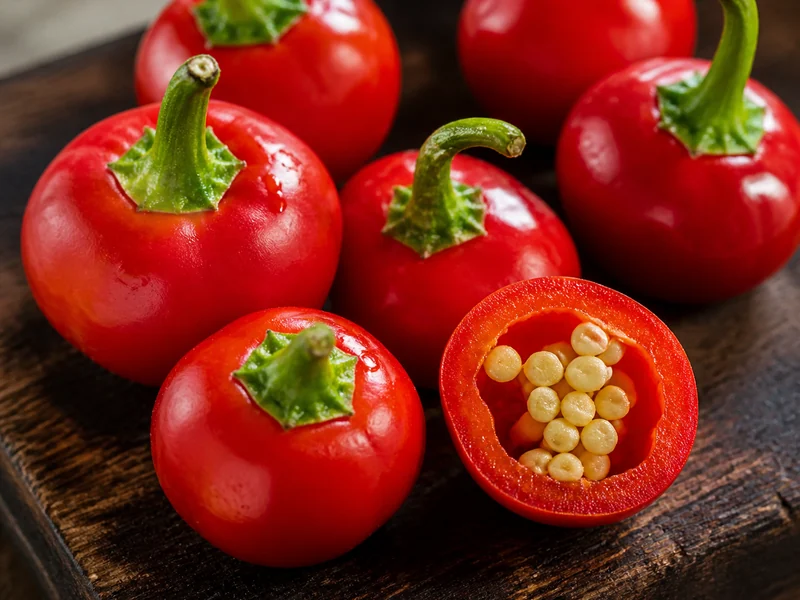
The fruit is round and thick-walled, with a cavity that holds filling or brine, which is the same structural advantage a pimento trades on. Auburn University's 1999 variety trial recorded Cherry Bomb F1 as globe to oblate, green before ripening red, and 2,500-5,000 SHU.
That measured range overlaps jalapeño's published 2,500-8,000 SHU span and ends below jalapeño's upper limit. Pod shape therefore separates the two more reliably than a claim that one is always hotter.
Where Does Cherry Bomb Pepper Come From?
The clearest cultivar record names Ken Owens as breeder and Petoseed as vendor. NCSU's Vegetable Cultivar Descriptions for North America, List 26, records Cherry Bomb as an F1 with fruit about 38 by 38 mm, a compact high-yield plant, a 65-day maturity figure, and a TMV-Po resistance claim.
Auburn's 1999 Alabama trial reported 78 days to harvest for Cherry Bomb F1. The 65- and 78-day figures describe different records and growing conditions, so they should guide planning as observations rather than a universal harvest promise.
Cherry Bomb also needs a firm naming boundary. The Cerasiforme Group includes multiple cherry-shaped peppers, and Large Red Cherry is a different commercial name, so neither record should be used as proof of Cherry Bomb F1's breeder history.
How Spicy Is Cherry Bomb Pepper, and How Does It Taste?
The Cherry Bomb Pepper delivers 2.5K–5K Scoville Heat Units, placing it in the Medium tier (1K-10K SHU). That makes it roughly the same heat range as a jalapeño because their published ranges overlap.
Flavor notes: sweet, mildly hot, and juicy.
How Nutritious Is Cherry Bomb Pepper?
No cultivar-specific nutrient analysis was found for Cherry Bomb F1, so exact calorie, vitamin C, vitamin A, or capsaicin values should not be presented as measurements of this cultivar. USDA FoodData Central can describe generic raw hot peppers, but that category cannot establish the nutrient content of a particular Cherry Bomb harvest.
The defensible profile claim is therefore limited: Cherry Bomb is an edible fresh hot pepper, and its heat range comes from the Auburn variety trial rather than a nutrition database. Readers who track nutrients should use the closest verified USDA food entry for the amount they actually eat and treat it as category-level context.
Which Dishes Suit Cherry Bomb Pepper?
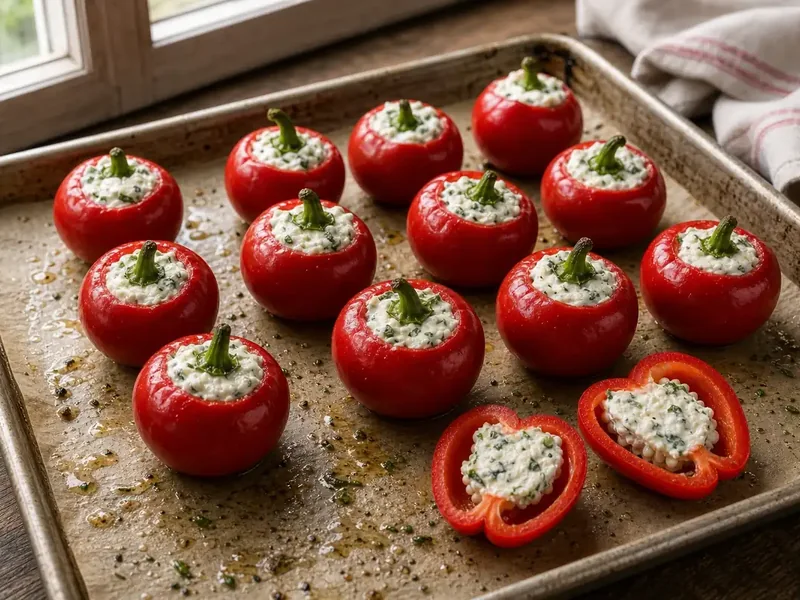
A round pod with thick walls earns its strongest role when the fruit stays whole. Removing the stem end creates a small cavity for cheese, grains, sausage, or breadcrumbs, while the wall supplies more structure than a narrow slicing chile.
NC Extension lists brining, grilling, smoking and pickling among the uses for Cherry Bomb, and the pickled jalapeno brine is a workable starting ratio for the refrigerator version. For whole pickles, pierce or slit each pod so brine can reach the cavity, then follow a tested pickling recipe rather than treating pepper shape as a safety control.
Ripeness changes the cooking decision.
Green pods bring a firmer wall and a more vegetal taste, while fully red pods contribute ripe sweetness and color. That is a use distinction drawn from the documented green-to-red sequence rather than from a tasting trial.
Stuffing and whole pickling are the cultivar's clearest advantages. Compare cherry bomb pepper vs jalapeno when the recipe could use either, because that choice also depends on cavity shape and jalapeño's broader upper heat range.
Uniform pod size matters more than a perfect red color when several peppers cook together. Similar diameters soften at a similar pace, while one oversized fruit may remain firm after the smaller pods have begun to collapse.
For stuffing, cut a narrow opening beside the stem and remove the core without splitting the opposite wall.
Fill only until the seam closes. Excess filling pushes against the wall as it softens and makes the pod harder to turn or serve intact.
Grilling and smoking use the same structural advantage in a different way. Keep the fruit whole or halved, turn it as the skin blisters, and stop once the wall is tender enough for the intended dish instead of cooking every pod until it loses its shape.
A pickling decision also depends on the final storage method. A slit or puncture helps refrigerator brine enter the hollow fruit, but shelf-stable canning still requires a tested acidified recipe with its specified jar size, processing method, and time.
For a relish or sandwich condiment, chop pickled pods after draining and add brine separately. This gives control over acidity and keeps the hollow fruit from releasing an unexpected pocket of liquid into the dish.
How Do You Keep Cherry Bomb Pepper Fresh?
Buy pods that are firm, intact, and free of collapsed spots around the stem. Choose green fruit for a firmer, less ripe result or red fruit when sweetness and color matter more.
UC Agriculture and Natural Resources puts refrigerated storage for peppers at up to one week, and keeping the pods dry is what buys the whole window.
Discard fruit with spreading soft rot or mold rather than trimming it for a stuffed preparation.
For a harvest too large for that window, let the intended dish pick the method.
Freeze peppers for later cooked uses, or run a tested pickling process for shelf-stable jars. Neither preserves fresh texture, whatever the method promises.
For a stuffed batch, sort the purchase by diameter before cutting. Reserve the most even, unbroken pods for filling and use irregular or slightly split fruit in chopped relish, sauce, or a cooked filling where the cavity no longer matters.
Cut fruit loses the protection of an intact skin and should be covered and refrigerated promptly. Keep raw pods separate from cooked fillings, and follow the filling's food-safety limit when it is shorter than the fresh pepper's quality window.
A glossy surface is only useful when the flesh beneath it is firm.
Wrinkling signals moisture loss while a single dry scar is often cosmetic, so press gently around the stem and sides to tell a sound pod from one starting to soften.
What Can Replace Cherry Bomb Pepper in a Recipe?
Direct comparisons show where flavor, form, and preparation differ in the Cherry Bomb vs Cherry and Cherry Bomb vs Jalapeño matchups.
How Do You Grow Cherry Bomb Peppers?
Treat Cherry Bomb as a warm-season pepper and follow the usual routine for growing peppers from seed. Transplant after frost risk has passed into a sunny site with well-drained soil, and water consistently enough to avoid large wet-dry swings.
The cultivar-specific evidence is narrower and more useful. NCSU describes a compact plant and records the TMV-Po resistance claim, while Auburn observed a green-to-red crop at 78 days in its Alabama trial.
Resistance does not mean immunity to every tobacco mosaic virus strain or to unrelated diseases. Keep seed and plant labels, avoid handling plants after tobacco products, and diagnose leaf or fruit problems from symptoms rather than assuming the cultivar record rules them out.
Use the maturity numbers as scheduling references. Weather, transplant age, soil temperature, and crop load can move harvest earlier or later than either published observation.
The compact-plant record makes Cherry Bomb easier to place in a small bed than a sprawling type, but the label still needs to identify the exact cultivar. A generic cherry-pepper transplant may share the round fruit shape without sharing the Petoseed record, maturity observations, or resistance claim.
Treat green and red as two harvests rather than one delayed one.
Pick firm green pods when the dish wants a taut wall, or leave sound fruit to color fully when sweetness and presentation matter.
The 65-day and 78-day records are most useful for ordering work, not predicting a calendar date. Start checking fruit condition around the earlier observation, then let color, wall firmness, and the planned use decide whether each pod should be picked or left to ripen.
Compact growth can still carry a dense fruit load. Inspect branch junctions as pods gain size, keep fruit from resting on wet soil, and support a stem only when its angle or load shows that it needs help.
| Source | Days to harvest | What it describes |
|---|---|---|
| NCSU cultivar description, List 26 | 65 days | A cultivar record figure, not tied to one growing season |
| Auburn 1999 Alabama variety trial | 78 days | An observed crop in one location and one year |
Cherry Bomb Pepper FAQ


- NCSU Vegetable Cultivar Descriptions for North America, List 26
- NC Extension Plant Toolbox: Cherry Bomb Pepper
- UC Marin Master Gardeners: Peppers
- Natorp 2024 Pepper Collection
Species classification: Capsicum annuum - based on published botanical taxonomy.