Paprika, Chili Powder, or Cayenne: Which Does the Job?
Paprika supplies red color and mild pepper flavor, chili powder supplies a chile-and-spice blend, and cayenne supplies direct heat. Read the ingredient list first because chili powder formulas and the heat of ground Capsicum products vary by cultivar and brand.

Paprika Pepper
Chili Powder vs Cayenne
What Is the Difference Between Paprika, Chili Powder, and Cayenne?
The ingredient list settles this comparison before color or aroma does.
FDA guidance defines paprika as the dried, ground, ripe red fruit of Capsicum annuum that is sweet, non-pungent, or slightly pungent when the label says so.
FDA guidance defines red or cayenne pepper by its sharp capsaicin pungency. A jar labeled cayenne should therefore function as a concentrated heat ingredient, although the exact pungency still depends on the cultivar and lot.
American chili powder is normally a seasoning blend, not one ground pepper. McCormick lists chili pepper, spices, salt, and garlic on its current product, while its own explainer names cumin and oregano among the typical aromatic ingredients.
That distinction changes seasoning control.
Paprika supplies pepper color and a mild Capsicum base, chili powder can season several parts of the dish at once, and cayenne raises heat without supplying the blend's cumin, oregano, garlic, or salt.
The spelling on the front is not enough when a package says chile powder. Read the ingredient panel to learn whether it contains one named chile or an American-style blend before choosing a dose or substitution.
Is Chile Powder the Same as Chili Powder?
A single-chile powder should keep the chile's name on the label, such as ancho, guajillo, or chipotle.
Its flavor follows that pepper, so it cannot be evaluated as though it were the same product as a mixed chili powder.
A seasoning blend needs a second check for salt. McCormick's current chili powder ingredient list includes salt, which means adding the recipe's full salt before tasting can remove room for adjustment.
Use the ingredient panel as the product authority. When chile pepper is followed by cumin, oregano, garlic, salt, or a general spices entry, treat the jar as a blend and reduce overlapping seasonings until the dish has simmered long enough to evaluate them.
This label check also explains why two red powders can produce different results at the same spoonful. Their pepper variety, aromatic ingredients, salt, grind, and pungency are not necessarily equal.
How Hot Are Paprika, Chili Powder, and Cayenne?
Paprika begins at the mild end, but the word paprika covers more than one labeled style.
Sweet, hot, and smoked describe different purchasing decisions, and smoke describes flavor rather than a guaranteed rise in heat.
USDA Agricultural Research Service reports 157 SHU for the low-pungency NuMex Garnet paprika cultivar. The same record places that cultivar below the 700 SHU paprika ceiling used in its research and trade context.
New Mexico State University's Chile Pepper Institute classifies dried Capsicum powder into pungency groups. Its scale begins with non-pungent or paprika powder at 0 to 700 SHU, then moves to 700 to 3,000, 3,000 to 25,000, 25,000 to 70,000, and above 80,000 SHU.
Those groups explain the broad separation between low-pungency paprika and a heat-focused cayenne product. They do not prove one retail SHU number for every paprika, cayenne, or mixed chili powder on a supermarket shelf.
Chili powder is the least predictable from its category name because a blend can change both its chile base and its proportion of aromatics.
Choose cayenne when the job is direct heat, then dose the actual jar cautiously rather than relying on a universal multiplier.
When Should You Use Paprika, Chili Powder, or Cayenne?
Choose paprika for color and pepper body when the dish should remain mild. It fits paprikash, goulash, deviled eggs, roast vegetables, dry rubs, and garnishes because a cook can use enough powder to affect color without automatically adding cayenne-level heat.
Sweet paprika and smoked paprika are not interchangeable when smoke would change the dish. A stew built around clean sweet-pepper flavor can taste heavier after smoked paprika, while beans or a barbecue rub may benefit from that smoke.
Choose chili powder for an American-style seasoning base. McCormick describes its blend for chili, tacos, beans, Mexican, Tex-Mex, and Southwestern dishes, where cumin, garlic, oregano, chile, and sometimes salt can work together.
Choose cayenne as a heat control when the existing aromatics are already correct. Soup, curry, a Cajun-style blend, chocolate, and hot sauce can take more burn without another dose of cumin or oregano.
A recipe can also use more than one of the three. Paprika can establish red color and pepper volume, chili powder can supply the seasoned base, and a small cayenne addition can raise heat after the other flavors are balanced.
The decision is therefore about the missing job, not which jar looks reddest.
Color, aromatic seasoning, and capsaicin heat are three separate controls.
Can Paprika, Chili Powder, and Cayenne Replace Each Other?
A useful substitution replaces the missing function and then corrects the side effects.
Swapping only by volume ignores the large difference between a mild single-pepper powder, a salted aromatic blend, and a concentrated heat ingredient.
When cayenne is missing, paprika can restore red color and pepper solids but it cannot promise the same heat. Add paprika for the visible and savory role, then use another known hot ingredient only if the recipe still needs burn.
When paprika is missing, cayenne is a poor volume replacement. Use a mild red pepper powder for the bulk and color when available, then add cayenne separately in a small measured amount if the paprika was meant to be hot.
When chili powder is missing, rebuild its two jobs separately. McCormick's published home substitute uses equal parts oregano, paprika, garlic powder, and ground cumin, with cayenne added only when extra heat is wanted, but that is a brand-specific starting model rather than a universal match for every blend.
When cayenne is missing and chili powder is the only red seasoning available, check for cumin, oregano, garlic, and salt before using it. The blend may suit chili or beans, but it can pull a cream sauce, curry, or fruit-based sauce toward a different flavor family.
When chili powder replaces paprika, reduce any duplicate aromatics and salt elsewhere in the recipe. When it replaces cayenne, expect to use more powder for comparable heat and stop if the blend flavor becomes prominent first.
The table below organizes these swaps by the result the recipe needs. It is a decision aid, not a fixed spoon-for-spoon conversion.
| Recipe needs | Best starting point | Check before serving |
|---|---|---|
| Red color, little heat | Sweet paprika | Smoked or hot wording on label |
| Seasoned chile blend | Chili powder | Cumin, oregano, garlic, and salt already present |
| Direct heat | Cayenne | Add gradually and taste |
| Blend without a jar | Paprika plus cumin, garlic, and oregano | Add cayenne only for the needed heat |
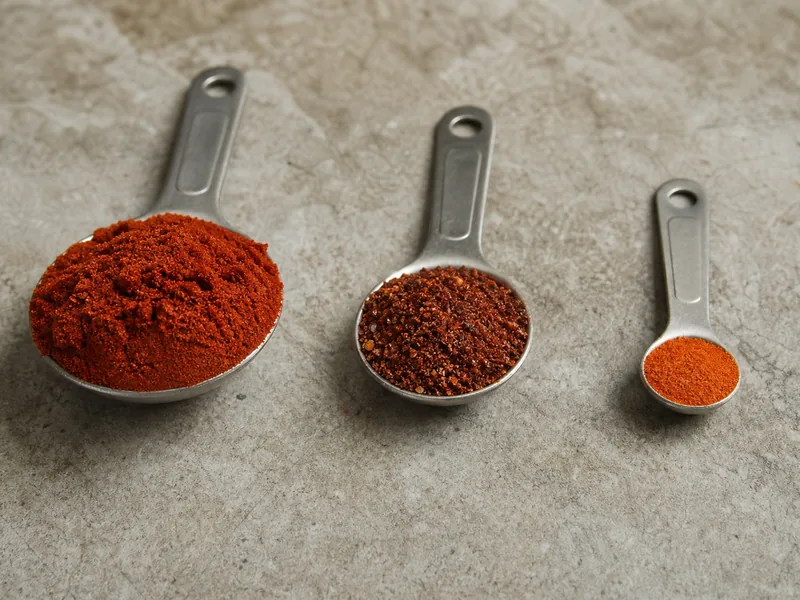
Measure Then Adjust
Keep the original recipe amount when the specified jar is available. For a substitution, test in a small portion of the dish because a brand formula or pepper lot can make an apparently precise ratio unreliable.
Cayenne needs the smallest starting addition of the three because its job is concentrated heat. Add a measured pinch, mix it through the food, allow the heat to disperse, and taste before repeating.
Paprika and chili powder often need fat and cooking time to distribute their color and aroma. Stir them into warm fat or a moist base briefly, then add liquid before the ground pepper scorches and turns bitter.
Late additions behave differently. Paprika dusted on finished eggs contributes visible color, chili powder added late can leave raw cumin or garlic notes, and cayenne added at the table can create isolated hot spots unless it is mixed thoroughly.
For a large pot, protect the batch by testing one measured bowl first.
Record the amount used in that portion, then scale only after the color, seasoning, salt, and heat all move in the intended direction.
Storage And Replacement
Keep all three powders sealed, dry, cool, and away from direct light. New Mexico State University identifies extractable red color, pungency, and flavor as core quality traits of dehydrated chile and paprika products, so storage should protect all three rather than heat alone.
Use a dry spoon and move the jar away from rising steam before opening it. Moisture encourages clumping and makes an opened container harder to dose consistently.
The printed best-by date is the most useful product-specific reference, but aroma and color still matter after opening. Replace a powder when the amount that once changed the dish now contributes little aroma, color, or heat.
Do not assign one shelf life to all three products. Grind size, packaging, opening frequency, humidity, heat, and light vary between kitchens and brands.
Storage also affects the comparison itself.
Faded paprika loses the color that justifies choosing it, a stale chili blend loses the aromatic complexity that distinguishes it from cayenne, and weak cayenne makes cooks add uncertain amounts while chasing heat.