Kashmiri Chili vs Paprika: Which Red Powder Carries a Mild Tingle?
Kashmiri chili is the better choice when a dish needs deep red color with noticeable mild heat, while sweet paprika suits color-first cooking with less pungency. PepperScale places Kashmiri chili at 1,000-2,000 SHU, and the Codex paprika standard sets ordinary paprika at 480 SHU or less and hot paprika below 900 SHU.

Kashmiri Chili
MediumPaprika Pepper
MediumQuick Comparison
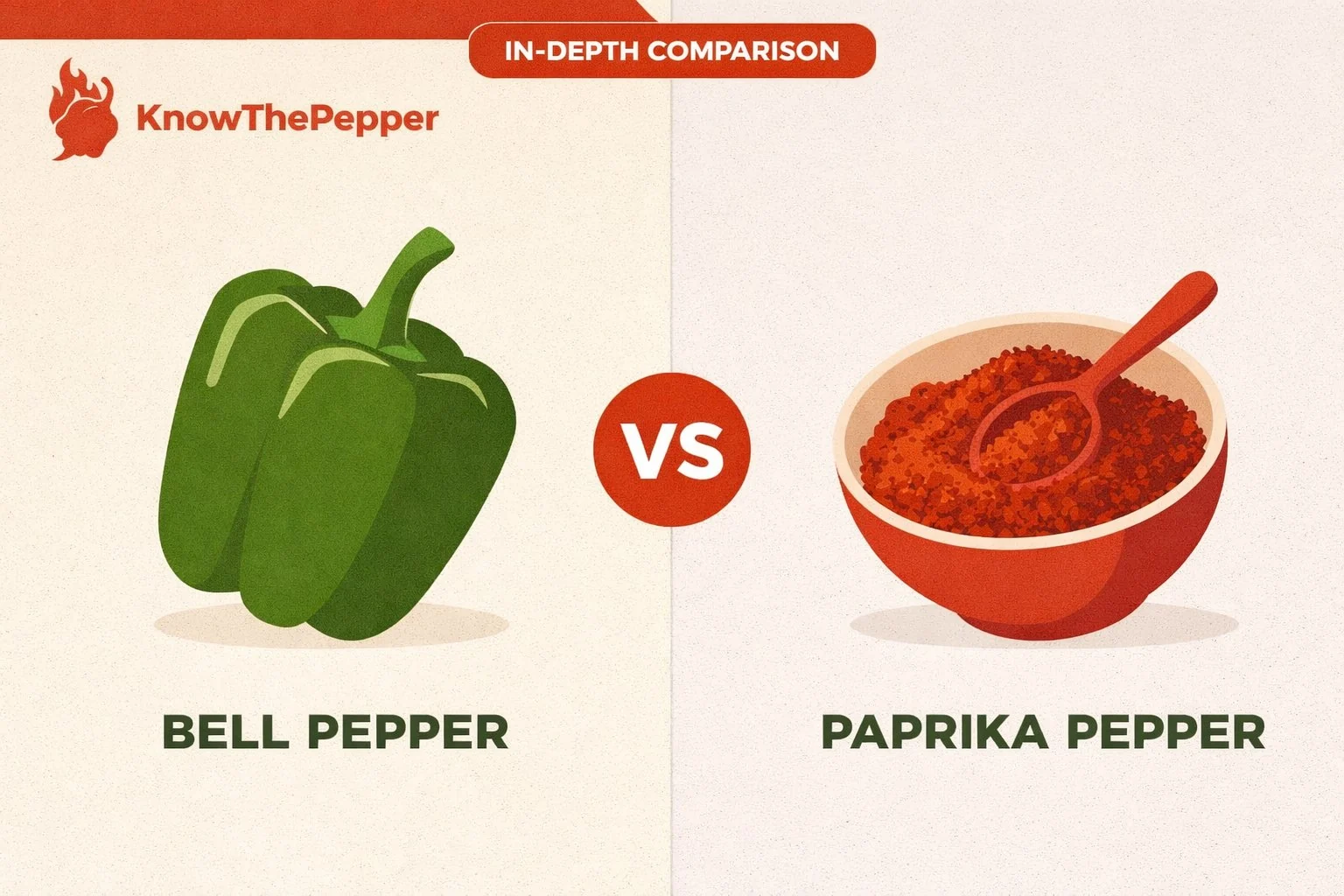
| Attribute | Kashmiri Chili | Paprika Pepper |
|---|---|---|
| Scoville evidence | 1K-2K SHU | 0-1K SHU |
| Heat Tier | Medium | Medium |
| vs Jalapeño | n/a | n/a |
| Flavor | mild and sweet | sweet and mild |
| Species | C. annuum | C. annuum |
| Origin | India | Hungary |
Is Kashmiri Chili Hotter Than Paprika?
PepperScale reports 1,000-2,000 SHU for Kashmiri chili, so it gives a gentle but noticeable chile warmth. The range is mild beside cayenne, yet it can still feel hot to someone who normally uses heatless sweet paprika.
The Codex CXS 353-2022 standard sets ordinary paprika at 480 SHU or less.
Codex places hot paprika above 480 but below 900 SHU, which makes the package style a meaningful part of the comparison. Sweet and hot paprika can look alike while landing on opposite sides of that line.
At their published upper limits, Kashmiri chili is about twice as hot as hot paprika and roughly four times hotter than ordinary paprika.
That arithmetic describes products at the edge of each range rather than a guaranteed spoon-for-spoon result. Grinding, cultivar, placenta content, and blending can all change a jar's pungency.
Commercial Kashmiri powders vary too, and some products sold as red chilli powder contain a blend rather than one named pepper.
Treat the numbers as a buying and dosing guardrail. Sweetness, smoke, color, and the total amount used in the recipe usually change the dish before this modest heat gap becomes the only concern.
A bright red powder is not proof of stronger heat.
Color comes from pepper pigments, while pungency comes from capsaicinoids, so two equally red jars can behave very differently. If a label gives no style or heat information, season in stages and taste after the powder has dispersed.
How Do Kashmiri Chili and Paprika Taste Different?
Kashmiri chili tastes like a mild dried chile with gentle fruitiness and an earthy finish.
The Spices Board of India describes Kashmir chilli as long, fleshy, and deep red, and it records an ASTA color value of 54.10. That official description explains why the pepper can carry a sauce's color without behaving like a high-heat powder.
Its dried-chile character remains present even when the burn is restrained.
Sweet paprika leans toward ripe pepper sweetness instead of that dried-chile bite. The European Union specification for Szegedi paprika describes sweetness reminiscent of roasted squash and fresh garden vegetables, with an intense but non-pungent aroma.
That contrast becomes clearest in dairy or a plain oil bloom, where fewer ingredients cover the aroma.
Paprika is a family of products rather than one fixed taste. Sweet, hot, and smoked jars can produce three different results even when the powders share the same brick-red appearance.
Smoked paprika cannot stand in for Kashmiri chili when smoke would redirect the dish.
Hot paprika keeps more of the paprika family's ripe-pepper character while adding pungency. It may match Kashmiri heat more closely than sweet paprika, but it still does not reproduce the same balance of dried fruit, earthiness, and color.
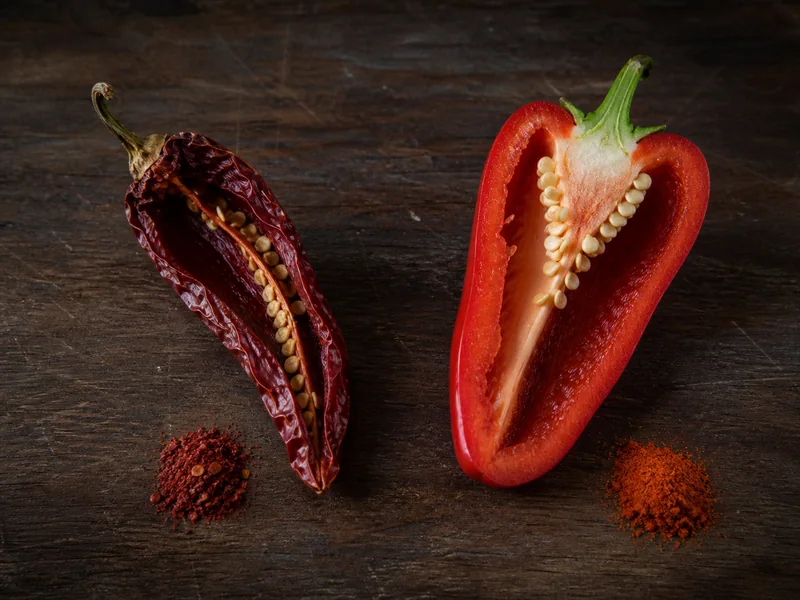
When Should You Use Kashmiri Chili Instead of Paprika?
Choose Kashmiri chili for curry bases, rogan josh, tandoori-style marinades, and red chile pastes that need color and a controlled tingle. The Spices Board's description of low-pungency, deep-red Kashmir chilli supports that color-first role.
It also works in tomato sauces and lentil dishes where a hotter powder would limit the amount you can add for color.
Sweet paprika works better in chicken paprikash, goulash, deviled eggs, and mild rubs where ripe pepper sweetness should remain clear. Hot paprika fits the same broad cuisine but adds enough warmth to require a label check.
Smoked paprika belongs in barbecue rubs, beans, and roasted vegetables only when smoke is part of the intended flavor.
The powders open well in fat, but neither tolerates scorching. Food scientist Harold McGee explains that fat carries spice aromas, so warm oil or butter can release flavor before liquid enters the pan.
Keep that bloom brief and watch the powder rather than a rigid timer.
Stir it into warm fat away from fierce direct heat for about 10-20 seconds, then add wet ingredients before the color darkens or the spice turns bitter. This step helps both products, although their finished aromas remain different.
Compare powder with powder for a fair swap, because a fresh paprika pepper adds water and texture that dried Kashmiri chili cannot replace.
Timing changes the best choice as well. Kashmiri chili holds its role in long-simmered gravies, while sweet paprika can disappear behind assertive spices unless the recipe uses enough powder to make paprika a central flavor.
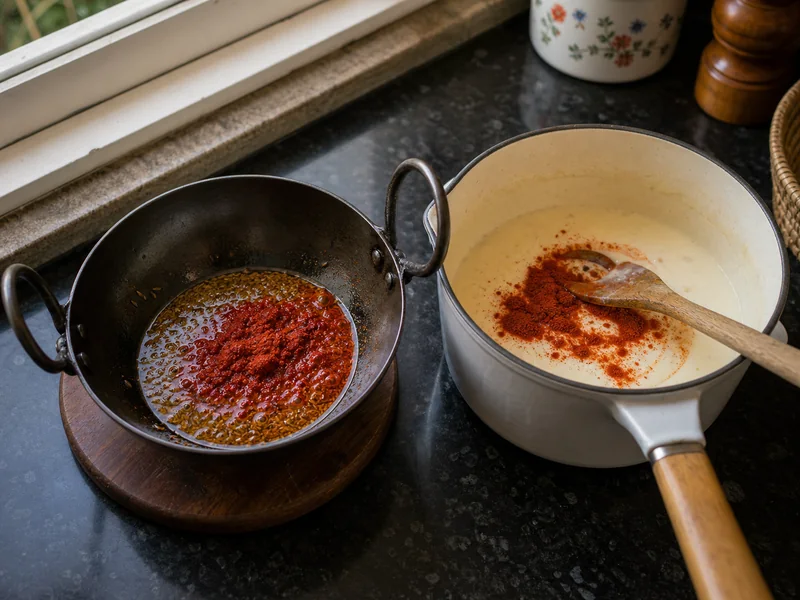
Which Should You Choose, Kashmiri Chili or Paprika?
Pick Kashmiri chili when the recipe needs deep red chile color and mild, clean warmth.
Pick sweet paprika when the dish needs red color, pepper sweetness, and very little heat. Choose hot paprika when that familiar paprika flavor should carry a restrained bite.
Do not treat smoked paprika as the automatic middle ground.
Its smoke can pull an Indian curry or yogurt marinade toward barbecue flavors even when the color looks right. A sweeter unsmoked jar is the safer substitute when the recipe never asks for smoke.
For an emergency swap, start at equal volume and correct one missing quality at a time.
If the recipe names a paprika style, respect that instruction before using Kashmiri chili. If it simply asks for red color and mild warmth, the equal-volume starting swap gives you room to adjust without changing the whole dish.
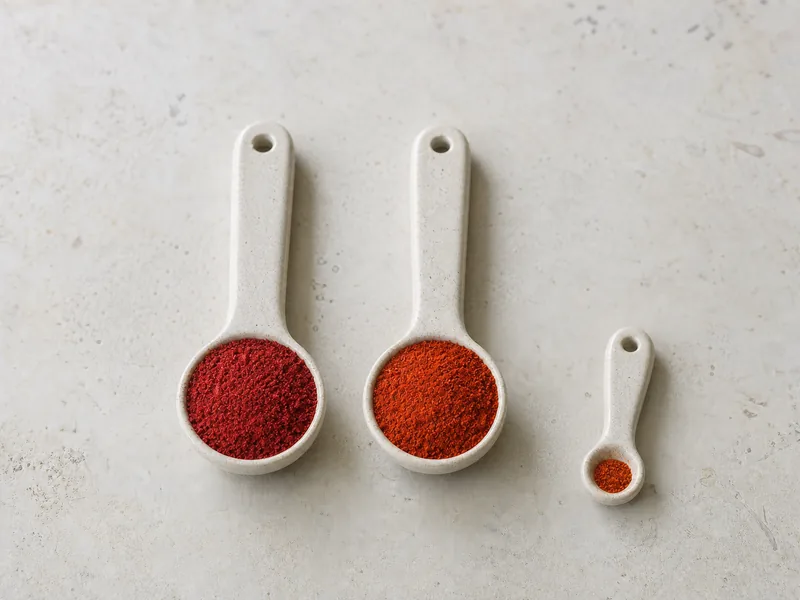
Service Examples
In a tomato-based curry, Kashmiri chili colors the oil and sauce while leaving room for cumin, coriander, and garam masala. Sweet paprika makes the curry milder and sweeter, but it does not reproduce the same dried-chile finish.
In chicken paprikash, sweet paprika should remain the main powder because its sweetness shapes the sauce.
Kashmiri chili can add warmth there, but using it for the full paprika measure may make the dish hotter and less recognizably paprika-led. The same caution applies to cream sauces, where a small flavor change remains easy to notice.
For a dry rub, decide whether the food needs sweetness, smoke, or chile warmth before choosing the red powder.
A yogurt marinade shows the contrast from another angle. Kashmiri chili adds a mild chile edge to the red coating, while sweet paprika mostly colors and sweetens it, and smoked paprika introduces a separate smoke note.
Can You Substitute Paprika for Kashmiri Chili?
Sweet paprika can replace Kashmiri chili when color matters more than heat.
Start 1:1 by volume, then add only a small pinch of cayenne if the finished dish lacks warmth. Keeping the heat correction separate prevents cayenne from taking over the blend.
Kashmiri chili can replace sweet paprika in stews, marinades, and rubs.
Begin with one-half to three-quarters of the paprika amount for heat-sensitive diners, then add more after tasting. The lower starting amount also leaves room to judge whether the dish misses paprika's sweetness.
Hot paprika is the closer heat match under the Codex ranges, while smoked paprika remains a poor direct swap unless the recipe already calls for smoke.
No ratio can correct the wrong form. A fresh paprika pepper changes moisture and texture, while Kashmiri chili powder and ground paprika act as dry seasoning.
Taste the finished base before adding a second spoonful.
Both powders continue to spread through fat and liquid after stirring, so an immediate taste from one concentrated spot can mislead. Mix thoroughly, wait a minute, then adjust heat or sweetness.
Buying And Prep Notes
Read the ingredient line before comparing jars. A Kashmiri product should identify Kashmiri chilli or Kashmiri mirch, while a paprika label should state sweet, hot, or smoked.
That style word predicts the cooking result better than color alone.
Color gives a second quality check because the Spices Board describes Kashmir chilli as deep red. The EU specification describes Szegedi paprika from vivid fire-red to bright red and requires a uniform, fine grind.
Dull brown powder usually signals age or poor storage rather than a different heat grade.
Buy an amount you can use while the aroma remains fresh, close the container tightly, and keep it away from light and stove heat. Whole dried Kashmiri pods make identity easier to judge, while paprika usually relies on origin, style, and a clear ingredient list.
Avoid a jar labeled only chili powder when the ingredient list includes cumin, garlic, salt, or other spices. That seasoning blend cannot replace either single-ingredient powder at the ratios used here.
Quick Choice Matrix
Use the quality missing from the recipe to choose the red powder.
| What the dish needs | Better choice | Starting move |
|---|---|---|
| Deep red color plus mild chile warmth | Kashmiri chili | Use the recipe amount |
| Red color with little pungency | Sweet paprika | Use the recipe amount |
| Paprika flavor with restrained heat | Hot paprika | Start with the recipe amount and taste |
| Sweet paprika replacing Kashmiri | Sweet paprika plus cayenne | Use 1:1 paprika and add one small pinch |
| Smoke as a deliberate flavor | Smoked paprika | Use only when smoke belongs in the dish |
The table treats smoke as its own decision instead of a heat adjustment. That distinction matters most in curries, cream sauces, and marinades where smoke can dominate the other spices.
Common Mistake
The most common mistake is choosing smoked paprika because both powders are red and dried. The color may fit, but the smoke changes the dish before the heat difference does.
A second mistake is chasing Kashmiri heat with too much cayenne.
Add cayenne by the pinch because its sharper heat rises much faster than paprika's sweetness. A measured correction is easier to control than trying to dilute an over-heated sauce later.
Do not assume every product called paprika is sweet.
A hot or smoked jar can be correct for its own recipe, but the missing style word turns a controlled substitution into guesswork. Check the front label and ingredient panel before measuring.
Ratio Note
This ratio is an editorial starting point, not a laboratory conversion. Brand strength, paprika style, and the total amount of powder in the dish still control the final result.