Sweet
gentle pepper flavor without pronounced heat


Smoked paprika brings red color, pepper sweetness, and wood-smoke aroma. Start with one-half teaspoon for four servings, then reduce it when the dish already contains char or another smoked ingredient.
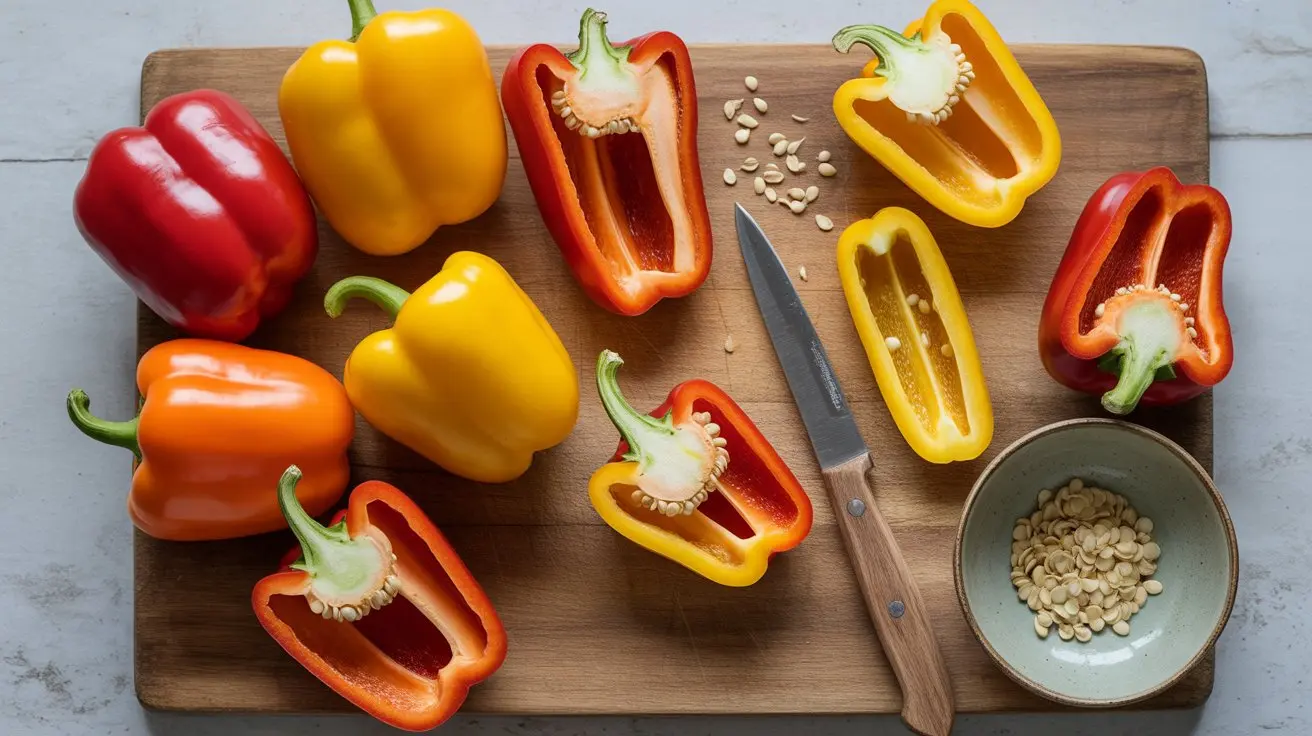
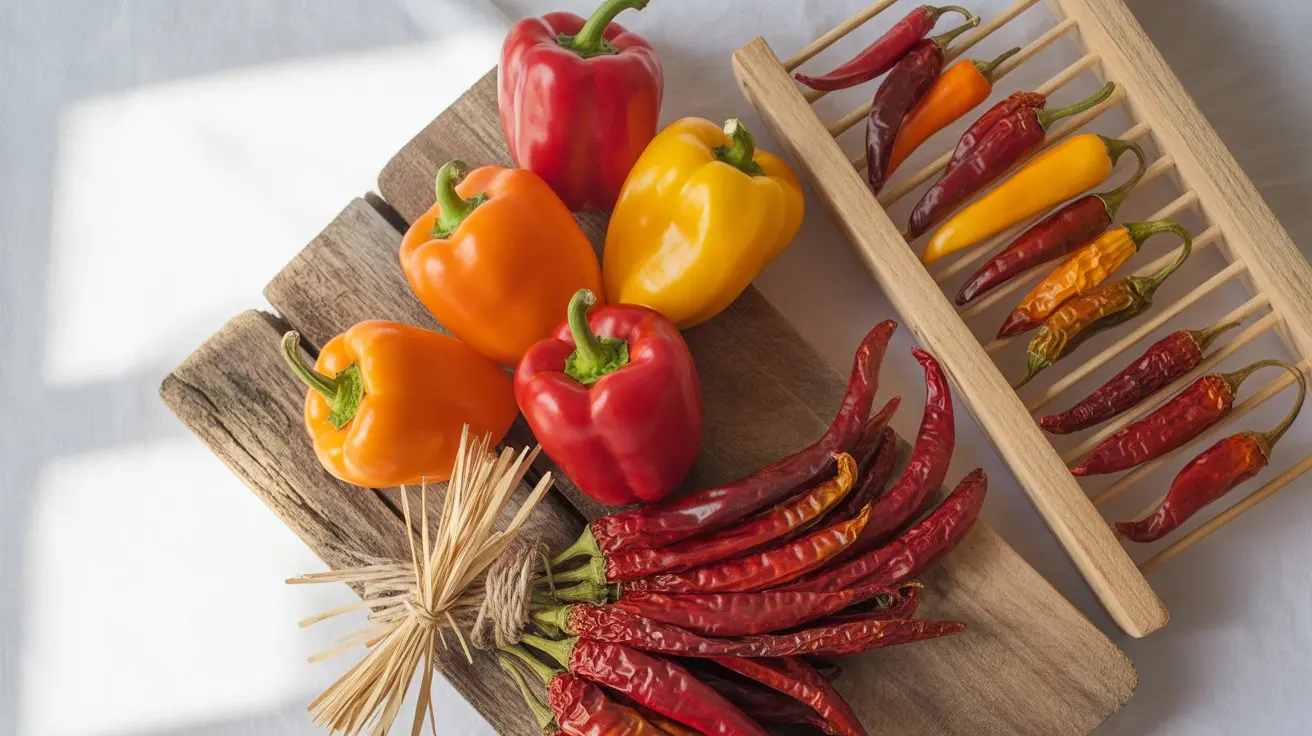
Smoked paprika is ground ripe red pepper that has been dried with smoke. It adds red color, pepper sweetness, and wood-smoke aroma, while its heat depends on the peppers and style in the package.
The European Union specification for Pimentón de la Vera describes ripe peppers dried with oak or holm oak in Spain's La Vera region. It recognizes sweet, bittersweet, and hot groups, so the word smoked does not tell you how hot a tin will be.
Check whether the label says sweet, hot, bittersweet, picante, dulce, or agridulce. A Protected Designation of Origin seal identifies Pimentón de la Vera, while a generic smoked paprika may use different peppers, wood, or processing.
Taste a pinch from a new package before seasoning the full dish. Smoke intensity can vary enough that a familiar spoonful from one brand overwhelms food when copied to another.
For four servings, begin with one-half teaspoon of sweet smoked paprika. Use one-quarter teaspoon when the dish is delicate, already grilled, or built around another smoked ingredient.
The following amounts are KnowThePepper editorial starting points. The label style, brand intensity, and other smoke sources decide the final amount.
| Cooking job | Starting amount | Review point |
|---|---|---|
| Beans, rice, soup, or stew | 1/2 teaspoon per 4 servings | After 5 minutes of simmering |
| Roasted vegetables | 1/2 teaspoon per pound | After coating one tray evenly |
| Dry rub | 1 teaspoon per 2 tablespoons of rub | After cooking a small test piece |
| Mayonnaise, dip, or butter | 1/4 teaspoon per 1/2 cup | After resting for 15 minutes |
| Finishing dust | One small pinch per plate | After seasoning one bite |
Measure rather than shaking from the tin. Fine powder spreads quickly, and a heavy red surface can make the food look seasoned before the smoke has been mixed through it.
The most useful applications give the smoke something substantial to support. Potatoes, beans, lentils, rice, mushrooms, meat, eggs, and tomato can carry more than a delicate cream sauce or lightly dressed leaf.
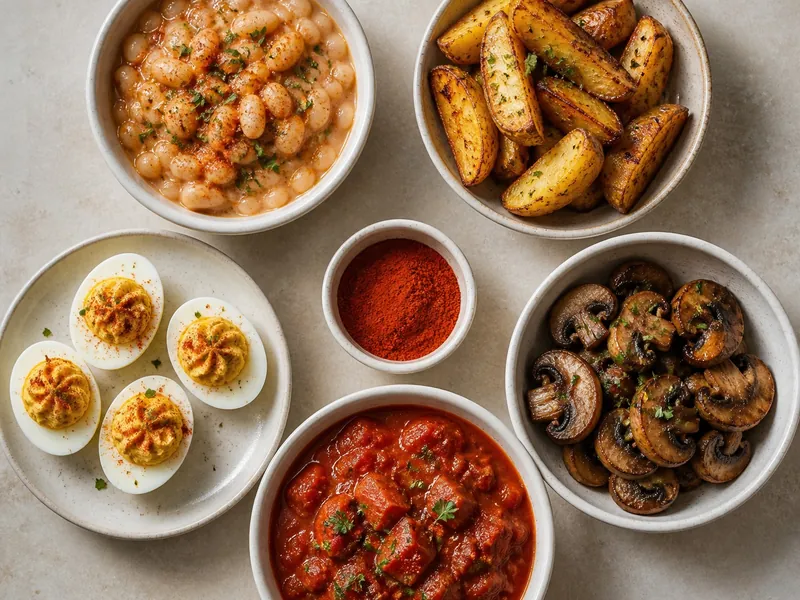
Toss potatoes, cauliflower, carrots, squash, chickpeas, or nuts with oil and smoked paprika before roasting. Oil distributes the powder and keeps it from forming dry bitter patches.
White beans, lentils, tomato soup, and rice gain a cooked-fire impression without adding meat. Add the spice early enough to integrate, then use acid at the end if the result tastes heavy.
Chicken thighs, pork, beef, shrimp, and firm fish can take smoked paprika in a rub or marinade. Combine it with salt, garlic, coriander, oregano, or cumin only when those flavors belong in the dish.
Deviled eggs, scrambled eggs, and mayonnaise show the smoke clearly because fat holds aroma. Start lower than you would in beans or a stew.
Barbecue sauce, tomato sauce, yogurt dip, compound butter, and hummus accept a measured dose without changing consistency. Whisk the spice into a small portion first when a smooth red mixture matters.
Smoked paprika disperses well in fat, but fine particles can burn quickly. Bloom briefly, add liquid before the powder darkens, then judge the smoke after it spreads.
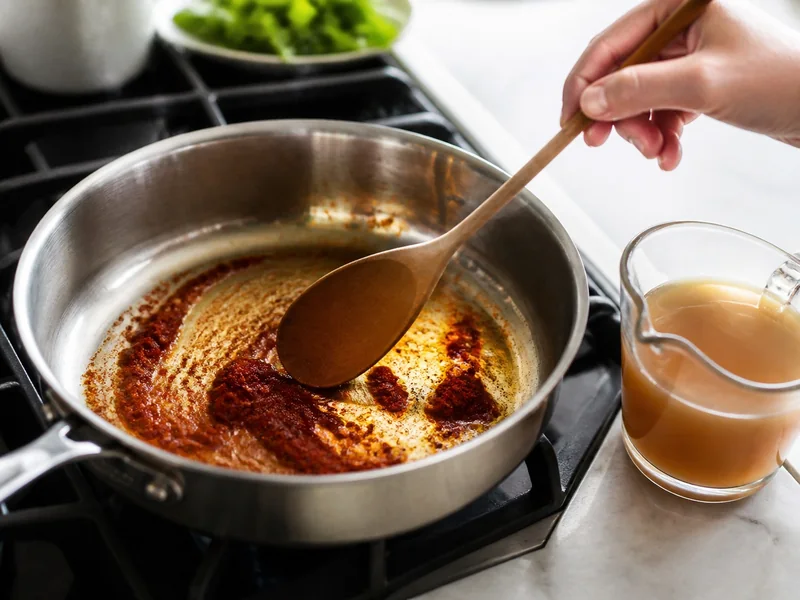
Move onions or other aromatics aside, add the measured paprika to the oil, and stir for about 10 seconds. Stock, tomato, water, or wine should follow before the powder darkens.
For a dry rub, oil the food lightly or mix the paprika thoroughly with the other seasonings. Direct high heat can blacken exposed powder, so watch thin edges and sugary rubs closely.
Finishing keeps the smoke on the surface and makes it seem stronger. Mix a final pinch into salt, oil, butter, or yogurt when even coverage matters.
Sweetness makes smoke rounder, while acidity keeps it from feeling heavy. Tomato, roasted pepper, onion, honey, brown sugar, citrus, sherry vinegar, and yogurt can each balance smoked paprika in a different direction.
Earthy ingredients such as beans, lentils, mushrooms, cumin, and potatoes reinforce the spice. Use acid or fresh herbs alongside them so the finished food still has a bright edge.
Garlic and oregano can make the profile savory, while saffron or seafood keeps a Spanish rice dish more specific. Choose supporting flavors from the dish rather than turning every use into the same barbecue blend.
Duplicate smoke is the common failure. When sausage, bacon, grill char, or chipotle already supplies the main smoky note, use paprika mostly for red color or omit it.
No alternative reproduces every part of smoked paprika. Decide whether the current dish needs smoke, red color, pepper sweetness, or heat before replacing it.
| Alternative | What it supplies | What changes |
|---|---|---|
| Sweet paprika | Red color and mild pepper sweetness | No wood smoke |
| Chipotle powder | Smoke, heat, and dried chile fruit | Usually hotter and more dominant |
| Ancho powder | Mild dried-fruit depth and red-brown color | Less smoke and a darker fruit profile |
| Liquid smoke | Concentrated smoke | No paprika color or pepper body |
| Cayenne plus sweet paprika | Adjustable heat and red color | No smoke unless added separately |
A chipotle comparison matters when both smoke and heat are central. Sweet paprika is the cleaner swap when color matters more than smoke, while ancho changes the dish toward dried-fruit depth.
If smoke dominates, add more unsmoked base that belongs in the dish. More beans, tomato, stock, potatoes, vegetables, yogurt, or plain cooked protein spreads the spice without introducing an unrelated flavor.
Store the spice tightly closed away from stove heat, sunlight, and steam. Use a dry spoon and close the package before leaning over a hot pan.
Replace smoked paprika when its aroma becomes faint, dusty, or generically peppery. Adding more of an old spice may deepen color while failing to restore the oak-smoke character you wanted.