
Pico de Gallo vs Salsa: A Chopped, Low-Liquid Salsa Within a Wider Family
Pico de gallo is a fresh, chopped type of salsa, while salsa is the larger family of Mexican table sauces. Choose pico when distinct pieces and low free liquid matter, and choose another salsa when you need a spoonable sauce that coats or mixes into food.

Pico De Gallo
Fresh chopped salsaSalsa
Broad sauce family- Typical texture: Distinct diced pieces with little free liquid vs Anything from coarse and spoonable to fully blended
- Best role: Topping, filling, garnish, or fresh side vs Dip, table sauce, cooking sauce, marinade, or topping
- Heat control: Chile pieces create noticeable bursts vs Blending can spread chile more evenly through the sauce
Pico De Gallo vs Salsa at a glance
| Attribute | Pico De Gallo | Salsa |
|---|---|---|
| Category | A specific fresh, chopped salsa style | A broad family of raw, roasted, cooked, chunky, or smooth sauces |
| Typical texture | Distinct diced pieces with little free liquid | Anything from coarse and spoonable to fully blended |
| Best role | Topping, filling, garnish, or fresh side | Dip, table sauce, cooking sauce, marinade, or topping |
| Heat control | Chile pieces create noticeable bursts | Blending can spread chile more evenly through the sauce |
| Best choice | A dry, fresh topping that keeps its pieces | A sauce that should pour, cling, or mix through the dish |
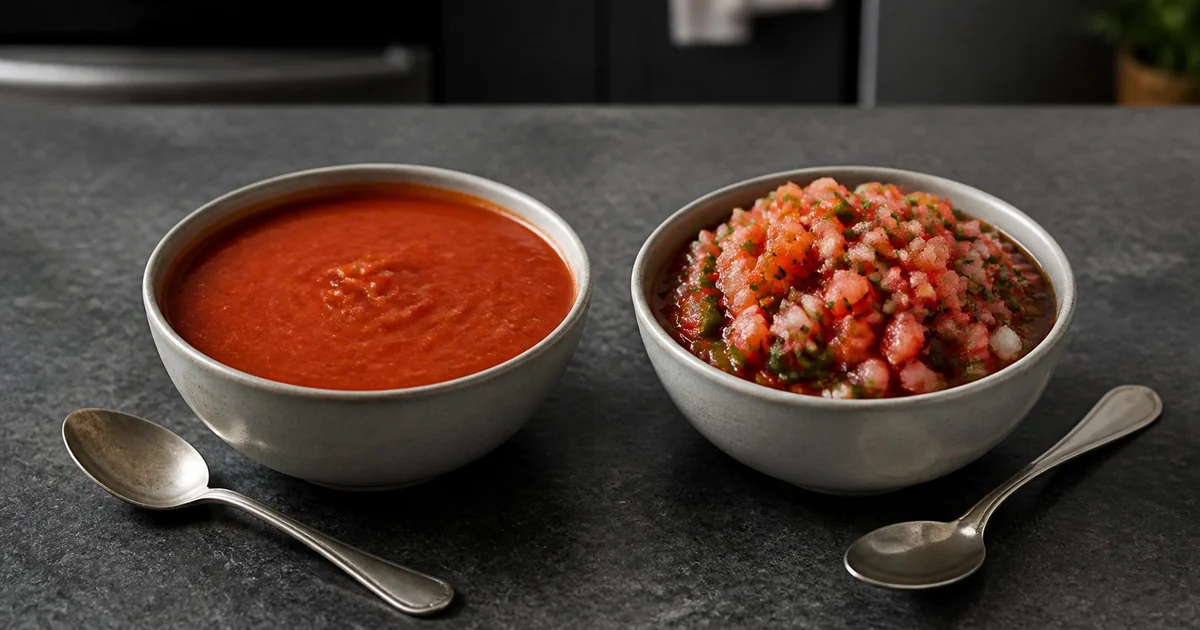
Pico De Gallo and Salsa side by side
Raw ingredients stay distinct, so each bite can emphasize a different component.
Crushing, blending, roasting, or simmering can merge flavor and spread chile more evenly.
Is Pico de Gallo a Type of Salsa?
Pico de gallo belongs inside the salsa category. The CDC describes it as a fresh vegetable salsa made with tomatoes, onions, cilantro, serrano chiles, and lime juice, while an Alberta Agriculture reference uses salsa fresca and pico de gallo for the same uncooked style.
The useful distinction is specific versus broad. Pico de gallo names one recognizable preparation in common English usage, while salsa can describe red or green sauces, raw or roasted mixtures, and textures ranging from a coarse chop to a puree.
That makes the common claim that pico is fresh while salsa is cooked too absolute. Many salsas are cooked, but salsa fresca and salsa cruda are also raw, so cooking alone cannot define the whole category.
Names also shift by region. Larousse Cocina documents Mexican preparations called pico de gallo that use fruit, jicama, citrus, or xoconostle, so a menu outside the United States may use the term more broadly than the familiar tomato version.
The standard pico de gallo recipe keeps the familiar tomato version diced rather than blended.
How Do Pico de Gallo and Salsa Differ in Texture?
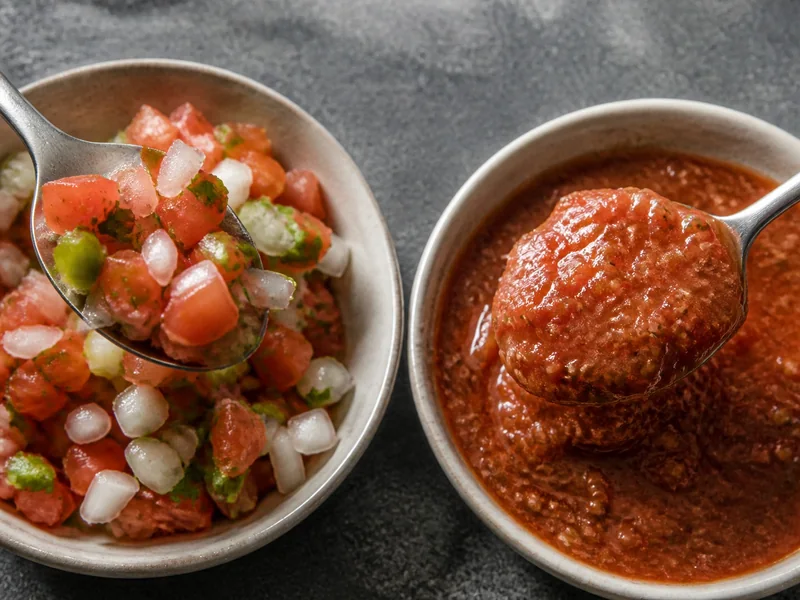
Particle size and free liquid create the clearest difference in the bowl. Standard tomato pico keeps the ingredients visibly diced, and draining watery tomatoes helps the mixture hold together on a tortilla instead of running down the side.
A salsa may keep coarse pieces, but it can also be crushed in a molcajete, pulsed in a blender, strained, simmered, or roasted before blending. Each method changes how the tomato, chile, onion, and acid meet the food.
Chopping leaves separate bites of tomato, onion, cilantro, and chile. A blended salsa distributes those ingredients through one continuous sauce, so every spoonful tastes more integrated even when the ingredient list is nearly the same.
Time narrows the gap. Salt and lime pull water from cut vegetables, which means pico becomes wetter as it rests, but it does not become a smooth salsa unless the pieces are crushed or blended.
The ingredient list is a clue, not a definition. Corn, beans, fruit, avocado, tomatillos, dried chiles, nuts, seeds, and spices can all appear in particular salsas, while the familiar tomato pico uses a much tighter set of fresh ingredients.
A fresh salsa recipe can stay uncooked while using a finer chop or blender, which shows why raw does not automatically mean pico.
When Is Pico de Gallo the Better Choice?
Choose by the job the condiment must do. Pico de gallo is the better fit when the food needs a fresh topping with visible pieces, while a looser salsa is better when the sauce must coat, dip, or soak into another ingredient.
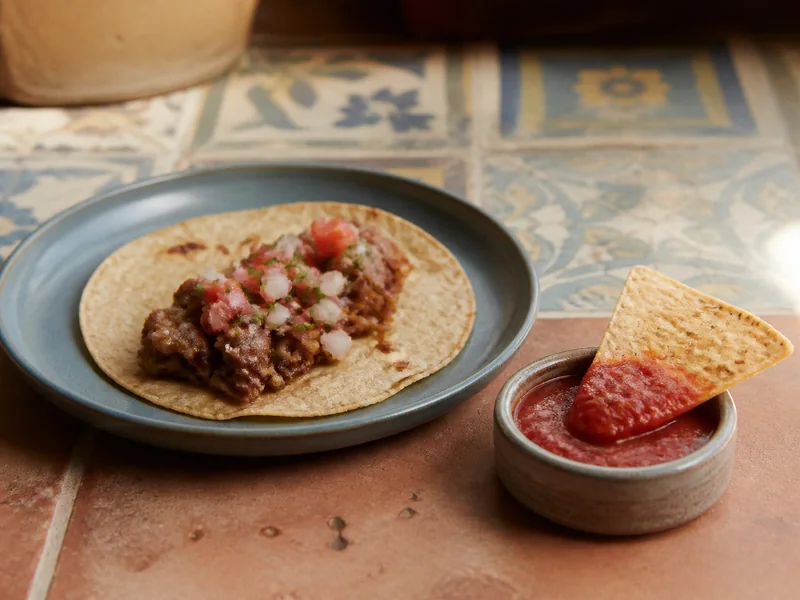
For tacos, tostadas, nachos, scrambled eggs, grilled fish, and stuffed burritos, pico adds tomato and chile without flooding the tortilla. It also gives each bite a crisp onion edge and a clear contrast between the topping and the cooked filling.
For chips, enchiladas, chilaquiles, braises, marinades, and rice, a spoonable salsa reaches more surface area. Roasted or cooked versions can also bring browned flavors that a raw tomato mixture cannot supply.
The choice changes with the dish rather than the serving bowl. A coarse roasted salsa can still sit well on a taco, and a finely diced pico can work as a chip dip if the tomatoes are ripe and the pieces are small enough to scoop.
Use both when they solve different problems. A smooth salsa can season the filling or plate, while pico supplies a fresh finish just before serving.
Use it when the dish needs distinct fresh pieces, crisp onion, and little free liquid.
Use a spoonable or blended style when the sauce needs to coat, dip, mix, or cook into the dish.
Is Pico de Gallo Hotter Than Salsa?
Neither name tells you which one is hotter. The chile variety, amount of chile, and whether the inner white tissue stays in the recipe matter more than the label pico or salsa.
A tomato pico made with a small amount of jalapeno may be mild. One made with serrano can be sharper.
A blended salsa can range from heat-free to very hot because its recipe might use mild poblanos, jalapenos, serranos, chiles de arbol, or several peppers together.
Texture changes how that heat arrives. Diced chile creates concentrated bites.
A blender breaks the inner tissue into smaller pieces and spreads capsaicin through more of the sauce, which makes each spoonful more consistent than a coarse dice.
For a mixed table, our editorial recommendation is to prepare the chile separately and fold it in gradually. Taste after the salt and acid are balanced because both can change how prominent the heat feels beside the tomato.
Removing only the seeds is an unreliable heat control. Much of the capsaicin sits in the pale inner tissue that holds the seeds, so trimming that tissue changes the dose more directly.
Can You Swap Pico de Gallo and Salsa?
You can swap them when you correct for moisture and texture. The substitution works most easily as a topping or dip, but it becomes less predictable when the sauce is part of a cooked recipe.
A recipe that cooks salsa into rice, beans, soup, or braised meat may depend on roasted flavor and a measured amount of liquid. In that case, use the salsa style named by the recipe instead of treating fresh pico as a direct replacement.
Swap without ruining the texture
- Pico for spoonable salsa: chop smaller or pulse briefly, then add released tomato liquid only until it pours.
- Salsa for pico: choose the chunkiest version and drain excess liquid before topping tacos or nachos.
- Fillings and guacamole: compare solids and liquid instead of swapping equal volumes.
How to Store Pico de Gallo and Salsa Safely
Fresh pico and fresh salsa require refrigeration. University of Minnesota Extension identifies fresh salsa such as pico de gallo as a refrigerated food, and FoodSafety.gov advises discarding perishable food left at room temperature for more than two hours, or one hour above 90 degrees Fahrenheit.
Refrigerate the mixture promptly in a covered container and use clean utensils each time. Quality usually declines before a fixed safety date because cut tomatoes release water, onion aroma spreads, and cilantro wilts.
A sealed grocery jar is a different product because a commercial process created shelf stability before opening. Once opened, follow the label and refrigerate it.
Home canning also changes the question from flavor to measured food safety. The National Center for Home Food Preservation explains that salsa combines acidic tomatoes with lower-acid onions and peppers, so a safe boiling-water process depends on a research-tested recipe, exact ingredient proportions, added acid, jar size, and processing time.
Pico De Gallo vs Salsa
Reach for Pico De Gallo when you want Topping, filling, garnish, or fresh side.
Reach for Salsa when you want Dip, table sauce, cooking sauce, marinade, or topping.
- CDC National Health and Nutrition Examination Survey, Dietary Interviewer's Manual: Pico de Gallo Definition
- Alberta Agriculture, Exploring International Cuisine Reference Book
- Larousse Cocina, Diccionario enciclopedico de la Gastronomia Mexicana: Pico de Gallo
- University of Minnesota Extension, Tomato-Based Salsa: The Safe Way
- FoodSafety.gov, Game Day Food Safety Tips and Fresh Salsa Refrigeration
- National Center for Home Food Preservation, Choice Salsa
- New Mexico State University Chile Pepper Institute, Measuring Chile Pepper Heat