

KnowThePepper
Is the Cowhorn Pepper a Cayenne? Only in Shape, at 2,500–5,000 SHU
The cowhorn is a curved Capsicum annuum heirloom sold as Cowhorn Cayenne, where cayenne names the pod shape rather than the heat. Reported at 2,500 to 5,000 SHU it is a fraction of an actual cayenne, and its 6 to 10 inch pods suit stuffing, pickling and roasting.
- Species: Capsicum annuum
- Heat tier: Medium (1K-10K SHU)
- Comparison: the same heat range as a jalapeño because their published ranges overlap
What Makes Cowhorn Pepper Different?
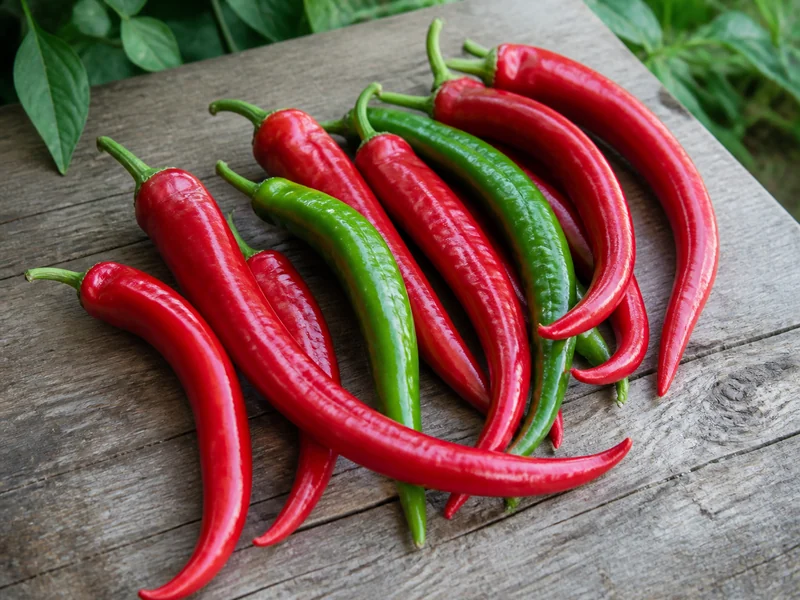
The cowhorn pepper is a curved Capsicum annuum heirloom named for a shape that genuinely does resemble a bovine horn. Seed sellers usually list it as Cowhorn Cayenne, and that second word causes most of the confusion around it.
Cayenne here is a pod type, not a heat level.
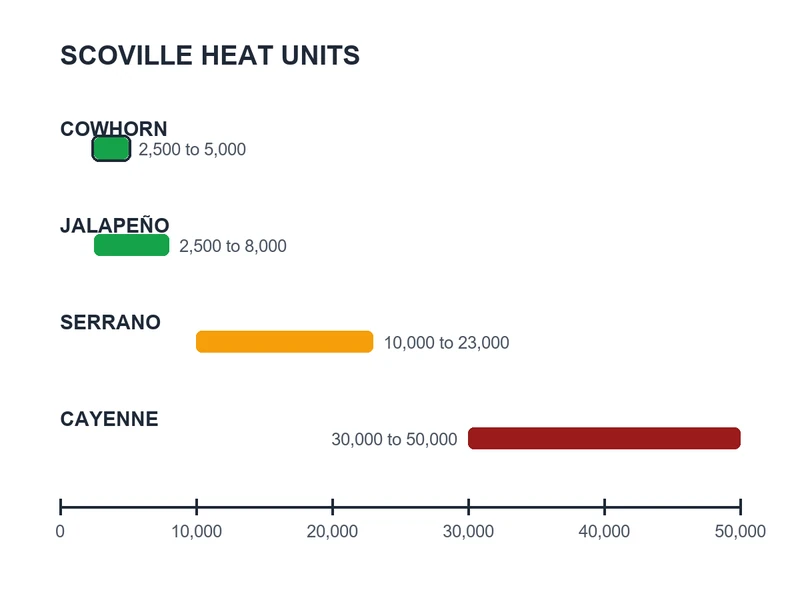
The label describes the long tapering form, and this pepper is reported at 2,500 to 5,000 SHU while an actual cayenne runs 30,000 to 50,000. The table below sets the two side by side, because the gap is larger than the shared name suggests.
Fruit grows to 6 to 10 inches, tapering to a curved tip, which is the whole appeal. There is real flesh to work with, and it carries a sweetness underneath the mild heat.
Walls are thick enough to stuff and thin enough to soften quickly in a hot pan. Pods ripen green to red, with red-stage fruit noticeably sweeter, so green picking suits pickling and red suits roasting.
Against a smoky, deeply flavored dried chipotle, the cowhorn is far more flexible fresh. It sits in the medium heat intensity band, warm enough to notice and mild enough to eat in quantity.
| Pepper | SHU on this site | Why it comes up |
|---|---|---|
| Cowhorn | 2,500 to 5,000 | This pepper, a cayenne pod type by shape |
| Jalapeno | 2,500 to 8,000 | The closest familiar match on heat |
| Serrano | 10,000 to 23,000 | Roughly four times hotter, not twice |
| Cayenne | 30,000 to 50,000 | Shares the pod-type name and almost none of the heat |
| Goat horn | 20,000 to 50,000 | Similar curved shape, far hotter |
What Is the Origin of Cowhorn Pepper?
The cowhorn is an open-pollinated heirloom kept alive by seed savers rather than by a breeding program. That much is consistent across every seller who carries it.
Where it came from is not settled.
Some listings place it in the American South, others in New Mexico, and no extension service, seed bank or research record adjudicates between them. This profile does not pick one, because nothing available supports the choice.
What can be said is that the variety persisted through regional seed-saving long before the heirloom movement formalized in the 1970s and 80s. Large firm pods that hold up in vinegar brine are the reason a pickling household would keep it going.
It never reached the commercial visibility of peppers with deep Mexican cooking roots. Among heirloom growers it stayed in circulation on yield and size alone.
How Spicy Is Cowhorn Pepper, and How Does It Taste?
The Cowhorn Pepper delivers 2.5K–5K Scoville Heat Units, placing it in the Medium tier (1K-10K SHU). That makes it roughly the same heat range as a jalapeño because their published ranges overlap.
Flavor notes: sweet and mild.
What Nutrients Does Cowhorn Pepper Provide?
Red-ripe fruit is where the nutrition sits, and the difference from green is not marginal.
USDA has no cowhorn record, so raw red hot chili is the nearest published reference at 40 calories and 144mg of vitamin C per 100g. Green pods of the same class carry more vitamin C still, at 242mg, though they are tarter and less sweet.
Those figures describe the class rather than this variety. They also describe 100g, which for a pepper this large is roughly one pod.
Capsaicin concentrates in the pale inner membrane rather than in the seeds, so scraping the membrane is what lowers the heat. How capsaicin works explains why that placement matters.
Which Dishes Suit Cowhorn Pepper?
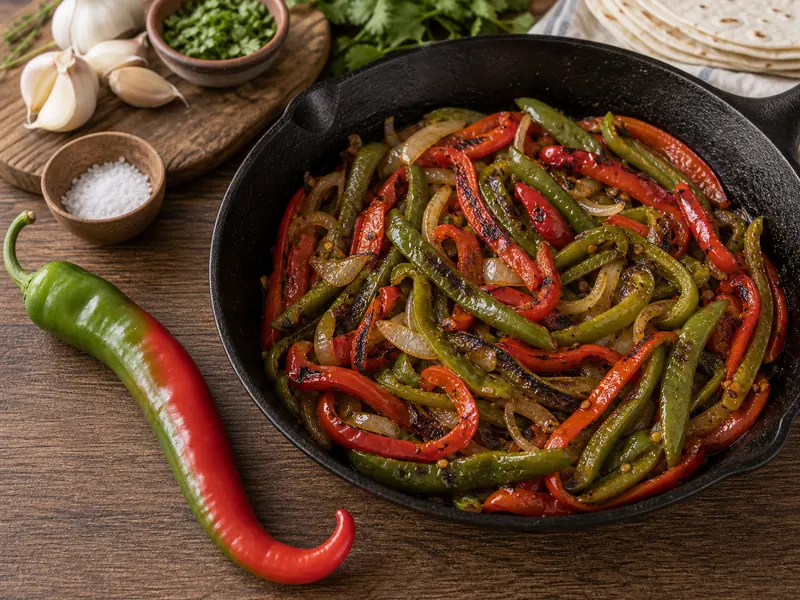
Size is the cowhorn's main cooking asset. At 6 to 10 inches with thick walls, it takes stuffing well, along the lines of the technique in classic chile rellenos preparation.
Green fruit has a grassy, slightly tangy bite. Red-ripe turns noticeably sweeter and roasts cleanly, the skin charring and peeling away to leave soft flesh worth putting in a sandwich or a grain bowl.
Pickling is the traditional use, and the reason is structural.
Sliced into rings and packed in seasoned vinegar, cowhorns keep their texture and settle into a balanced sweet-heat over a few days. They out-pickle a bright, thin-walled fresh Fresno simply because there is more flesh to brine.
At this heat level it works where you want pepper flavor without sharpness. Chop it raw into salsa, layer it on pizza, or fry pods whole in olive oil beside grilled meat.
Dried and ground it makes a mild sweet chili powder, which is the one place the cayenne pod-type name earns itself.
How Do You Buy and Store Cowhorn Pepper?
Cowhorns turn up at farmers markets in late summer, most reliably in the Southeast, and rarely in grocery chains. Home growers have the best access by a wide margin.
Look for firm glossy skin and check the curved tip first, since that is where softness shows earliest. Fresh pods keep 1 to 2 weeks refrigerated in a loosely sealed bag, left unwashed until use.
For longer keeping, roast and freeze in portions, or put them up in a vinegar brine. Whole unblanched pods freeze too, thawing soft but fine for anything cooked.
Drying works well on a pepper this size and gives a mild sweet powder. Whole dried pods hold flavor longer than pre-ground, so grind what a dish needs.
What Can Replace Cowhorn Pepper in a Recipe?
Direct comparisons show where flavor, form, and preparation differ in the Cowhorn vs Cayenne matchups.
How Do You Start and Grow Cowhorn Peppers?
The hard part is not germination, it is keeping the plant upright. These grow to 3 to 4 feet and go top-heavy with fruit, so stake or cage them early rather than after the first sprawl.
Sow indoors 8 to 10 weeks before the expected final frost, on a heat mat at 80 to 85°F. Cowhorn seed wants warm soil and sulks without it.
Transplant only once nights hold above 55°F. Give the plants 6 to 8 hours of direct sun and steady moisture, because irregular watering brings blossom drop and misshapen pods.
Deep watering on a schedule beats frequent shallow irrigation. A drip line is the easy version of that.
Thick-walled pods are the ones that show calcium deficiency as blossom end rot, so amend before planting and consider a mid-season foliar spray if a soil test comes back low.
Published maturity figures disagree, running from 70 days to green up to 90 days for a full crop, and none of them traces to a trial. Judge by color on the plant rather than by a calendar.
Cowhorn Pepper FAQ


- USDA FoodData Central, SR Legacy 170106, Peppers, hot chili, red, raw
- USDA FoodData Central, SR Legacy 170497, Peppers, hot chili, green, raw
Species classification: Capsicum annuum - based on published botanical taxonomy.