

KnowThePepper
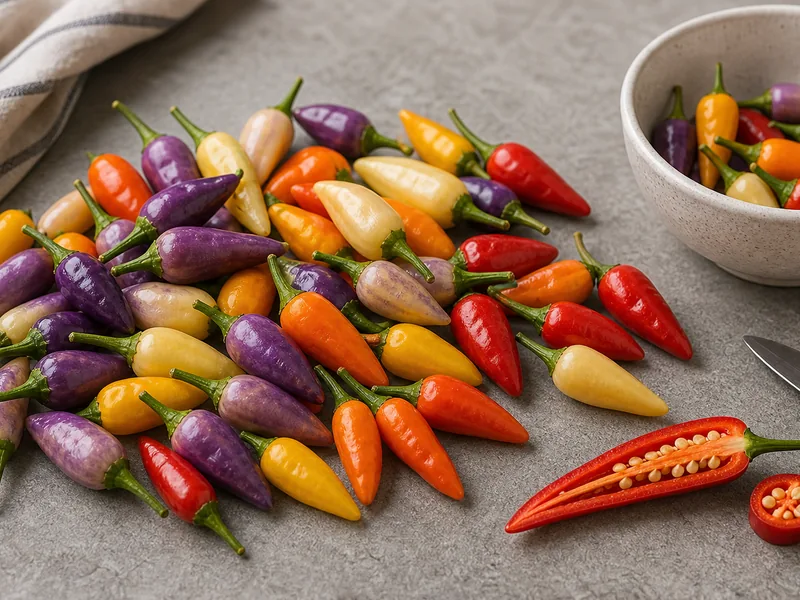
NuMex Easter: Lavender, Yellow, Orange, Then Red Pods at 1,000–3,000 SHU
NuMex Easter is a C. annuum ornamental pepper bred at New Mexico State University, hitting 1,000-3,000 SHU while staying surprisingly mild in flavor. Its pods ripen through a vivid sequence of lavender, yellow, orange, and red, making it as much a garden showpiece as a kitchen ingredient.
Below or near jalapeno heat, it sits near the mild-to-medium edge of the Scoville scale.
- Species: C. annuum
- Heat tier: Medium (1K-10K SHU)
- Comparison: the same heat range as a jalapeño because their published ranges overlap
What Is Numex Easter Known For?
The NuMex Easter pepper earns its name from the Easter-egg-like color show it puts on as pods mature. Developed by the Chile Pepper Institute at New Mexico State University, it was bred specifically to combine ornamental appeal with edible ornamental heat, a combination that had long been missing from the ornamental pepper market.
Pods start out lavender or cream, then shift through yellow and orange before settling into a deep red at full ripeness. That color progression happens simultaneously across the plant, so at any given moment you're looking at a living palette of pastel and saturated tones.
The elongated pod shape is clean and uniform, typically reaching 2 to 3 inches.
At 1,000-3,000 SHU, this sits in the mild-to-low-medium band, far below mild ornamental burn, real heat, but not face-melting. The flavor itself skews mild and sweet relative to that SHU level, which opens it to more uses than many ornamental types.
For context on where this sits on the full spectrum, the pepper heat chart lays out the entire range clearly.
Because it belongs to the C. annuum botanical species, it shares genetics with bell peppers, jalapeños, and New Mexico green chiles, a species known for broad adaptability and reliable production across climates.
What Is the History of Numex Easter?
New Mexico State University's Chile Pepper Institute developed NuMex Easter as part of a broader program to create ornamental peppers that were actually worth eating. The "NuMex" prefix signals its NMSU origin, the same institution behind NuMex Big Jim, NuMex Joe E. Parker, and dozens of other regionally significant cultivars.
The breeding goal was straightforward: take the visual drama of ornamental peppers and pair it with flavors that belong in a kitchen. Most ornamentals before this were either too bitter or too hot to cook with comfortably.
NuMex Easter hit the sweet spot, genuine 1,000-3,000 SHU heat with a sweeter flavor profile than the heat number suggests.
It fits squarely within the American pepper breeding tradition, which has long prioritized both agricultural performance and cooking utility. The NMSU program remains one of the most productive pepper breeding programs in North America.
How Hot Is Numex Easter? Heat and Flavor
The Numex Easter delivers 1K–3K Scoville Heat Units, placing it in the Medium tier (1K-10K SHU). That makes it roughly the same heat range as a jalapeño because their published ranges overlap.
Flavor notes: mild and sweet.
How Nutritious Is Numex Easter?
Like most C. annuum peppers, NuMex Easter delivers solid nutritional value relative to its small size. Fresh pods are high in vitamin C - red-ripe peppers can contain more than double the vitamin C of green-stage pods.
Vitamin A precursors (beta-carotene) increase as pods move through the color stages toward red.
The capsaicin responsible for its 1,000 to 3,000 SHU heat activates TRPV1 receptors and has been studied for anti-inflammatory and metabolic effects. Calorie count is negligible, roughly 20 to 30 calories per 100g fresh weight.
Dried and powdered, the nutritional density concentrates significantly, particularly for vitamins A and C.
How Do You Use Numex Easter in the Kitchen?
The mild-sweet flavor profile here is genuinely useful. Despite sitting at mild ornamental heat, NuMex Easter doesn't carry the sharp, almost metallic edge that some high-SHU annuums do.
The sweetness softens the burn's arrival, which means you can use more of it before the heat becomes the only thing you taste.
Fresh pods in their yellow or orange stage work well sliced into salsas or quick pickles, where the color contrast alone earns them a spot. Red-ripe pods concentrate both heat and sweetness, good candidates for drying and grinding into a powder that pulls double duty as a garnish and a seasoning.
For cooking applications, think about peppers like the upward-facing Sichuan variety used in stir-fries - NuMex Easter can fill a similar role where you want visible heat without overwhelming a dish. It also complements the smoky dried heat of morita-style chipotles in sauces that need layered complexity.
The ornamental angle means many cooks overlook it entirely, which is a mistake. Roasted whole, the pods develop a sweetness that makes them excellent stuffed or blended into hot sauces.
At 1,000-3,000 SHU, it lands near Aji Amarillo - different flavor, similar intensity.
How Do You Buy and Store Numex Easter?
NuMex Easter is primarily a specialty and seed-catalog find, you won't see it at most grocery stores. Baker Creek Heirloom Seeds and NMSU-affiliated seed suppliers carry it reliably.
At farmers markets in the Southwest, look for plants or fresh pods in late summer.
When selecting pods, prioritize firm skin with no soft spots. The multi-color stage is visually striking but red-ripe pods carry the most developed flavor.
Fresh pods keep 1 to 2 weeks refrigerated in a paper bag.
For longer storage, dry whole pods at 135°F in a dehydrator, then store in an airtight container away from light, dried pods hold quality for up to a year.
What Can You Use Instead of Numex Easter?
No dedicated substitute guidance is published for Numex Easter yet.
How Do You Grow Numex Easter at Home?
Starting seeds indoors 8 to 10 weeks before last frost gives NuMex Easter enough lead time to hit its ornamental peak during the warmest months. Germination is reliable at soil temperatures around 80 to 85°F - a heat mat under the seed tray makes a real difference.
Transplant outdoors once nighttime temps stay consistently above 55°F. The plants stay compact, typically 12 to 18 inches tall, which makes them genuinely useful for container growing on patios or balconies where space is limited.
Full sun is non-negotiable, partial shade stunts both growth and the color development that makes this variety worth growing.
The indoor starting and transplanting process for ornamental annuums follows the same principles as standard C. annuum varieties. Consistent moisture matters most during fruit set.
Irregular watering leads to blossom drop and uneven pod development.
For those comparing cultivation approaches, the Maras Pepper offer an interesting contrast, both are annuums that reward patient ripening. Fertilize with a balanced formula through vegetative growth, then shift to lower nitrogen once pods begin forming to encourage the color progression NuMex Easter is known for.
Numex Easter FAQ


- Pepper Joe - NuMex Easter Ornamental Pepper Seeds
- NMSU CR-706 - The Chile Cultivars of New Mexico State University, 1913-2022
- Sandia Seed Company - Easter Ornamental NuMex Pepper Seeds
Species classification: C. annuum - based on published botanical taxonomy.