

KnowThePepper
Aji Mirasol: How Peru's Dried Aji Amarillo Becomes Paste
Aji Mirasol is dried Aji Amarillo, the Peruvian Capsicum baccatum chile that is yellow-orange when fresh and red-brown after dehydration, and the dried pods are opened, deseeded, boiled briefly, and blended into a paste for tamales, stews, sauces, and regional seasoning bases.
- Species: C. baccatum
- Heat tier: Hot (10K-100K SHU)
- Comparison: 4-20x hotter than a jalapeño, depending on where the jalapeño falls in its 2,500-8,000 SHU range
What Kind of Pepper Is Aji Mirasol?
Aji Mirasol names a form of the pepper, not a separate fresh cultivar, and Peru's Ministry of Agriculture states that Aji Amarillo changes name after dehydration, and PROMPERU likewise identifies the dried product as Mirasol.
The fresh fruit is elongated and matures yellow-orange. Drying removes water, darkens the skin to orange-red or red-brown, and concentrates the pepper's fruity aroma into a form that can be toasted, softened, and blended.
The name does not mean that the fresh pods point toward the sun because a PROMPERU market report explains it through the traditional practice of drying Aji Amarillo outdoors while it faces the sun.
A commonly cited range is 30,000 to 50,000 SHU, which is useful as an approximate buying guide rather than a promise for every crop or paste. New Mexico State University's Chile Pepper Institute explains that modern heat values come from measured capsaicinoids, and genetics plus growing conditions can shift the result.
Do not confuse Peruvian Aji Mirasol with the Mexican mirasol category that includes Guajillo, and although they share a dried-chile name and can sometimes fill the same sauce role, but the Peruvian product is dried Aji Amarillo from Capsicum baccatum.
Where Does Aji Mirasol Come From?
Aji Amarillo and its dried Mirasol form belong to Peru's long Capsicum tradition. PROMPERU records Aji Amarillo as a pepper cultivated since ancient times and identifies the dried name without claiming that a modern named line existed unchanged for thousands of years.
The same source places production along Peru's coast, mainly from Lambayeque to Tacna, and describes the mature fresh fruit as elongated, hanging, pointed, and strongly orange with green shadows, while fresh, dried, powdered, preserved, and paste forms support different kitchen jobs and market channels.
INIA's 50-ICA Mirasol record provides a concrete accession rather than a generic plant portrait. Its plants averaged 122.4 centimeters, with elongated fresh fruit averaging 122.2 millimeters long and 32 millimeters wide before drying.
Government food and culture sources show the ingredient in tamal criollo, carapulcra, shambar, capchi, and other regional preparations, and that documented range explains why the paste functions as a seasoning base rather than a garnish used in only one famous dish.
How Spicy Is Aji Mirasol, and How Does It Taste?
The Aji Mirasol delivers 30K–50K Scoville Heat Units, placing it in the Hot tier (10K-100K SHU). That makes it roughly 4-20x hotter than a jalapeño, depending on where the jalapeño falls in its 2,500-8,000 SHU range.
Flavor notes: fruity and tangy.
How Nutritious Is Aji Mirasol?
Drying changes concentration by removing water, so fresh-pepper and dried-pepper numbers cannot be swapped without stating the basis, and the earlier calorie and vitamin cards on this page were generic chile estimates, so they have been removed.
INIA reports 336.3 milligrams beta-carotene per 100 grams of fresh pepper for its 50-ICA accession and separately lists dry-basis composition for the dried sample. Those figures describe that accession and test basis, not every retail Mirasol pod or tablespoon of paste.
A paste serving is also much smaller than 100 grams and may include oil, salt, or acid, so use the package nutrition panel for a commercial paste, and treat the whole dried chile primarily as a concentrated seasoning ingredient.
What Is Aji Mirasol Best Used For?
The most useful starting point is a smooth Mirasol paste. Peru Travel's tamal criollo recipe gives a complete method with 4 dried Aji Mirasol pods for a batch built around 10 ears of corn and half a kilogram of chicken.
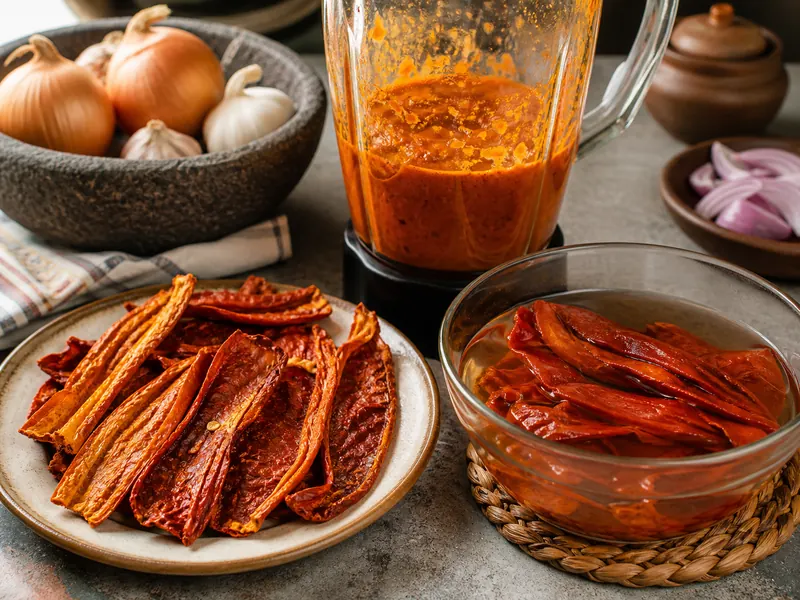
Open the dried pods, remove the seeds, wash them, and boil them in water for 5 minutes, then discard that water, then blend the softened chile with a small amount of vegetable oil until it becomes a paste.
The recipe fries the paste with onion, garlic, salt, and pepper before adding chicken and liquid. This order cooks the raw edge out of the paste and spreads its color and flavor through the corn mixture.
Aji Mirasol also seasons carapulcra, shambar, capchi, braises, beans, marinades, and sauces, using the whole dried pod when you want to control soaking and texture, or use a labeled paste when speed matters and adjust for any added salt or acid.
For substitution, fresh or frozen Aji Amarillo keeps the closest pepper identity but adds water and a brighter fresh flavor. Guajillo supplies a red dried-chile body with lower heat and a different species profile, while a small amount of habanero adds fruit and heat without matching the Peruvian sauce character.
Mirasol paste, the method Peru Travel uses
- Open the dried pods and remove the seeds, then wash them
- Boil 5 minutes, then discard that water
- Blend the softened chile with a little vegetable oil until smooth
- Fry the paste with onion, garlic, salt and pepper before anything else goes in the pan
How Should You Buy and Store Aji Mirasol?
Look for packages that say Aji Mirasol or dried Aji Amarillo and identify Peru as the style or origin. The pods should be elongated, evenly orange-red to red-brown, and free from visible moisture, fuzzy growth, or stale odors.
Whole pods give you control over seed removal, soaking, and paste thickness, while jarred or frozen paste saves time, but compare ingredient lists because added salt, oil, acid, or another chile changes the amount a recipe needs.
Utah State University Extension recommends drying chile pods until brittle and storing them in bags or glass jars at room temperature. Keep the container airtight, cool, dark, and dry, then discard any batch that develops condensation, mold, or an off odor.
Refrigerate opened commercial paste according to its label, and for a homemade batch you will not use promptly, freeze small labeled portions so you can thaw only the amount needed for one sauce or stew.
What Can Replace Aji Mirasol in a Recipe?
No dedicated substitute guidance is published for Aji Mirasol yet.
How Do You Grow Aji Mirasol Peppers?
You grow Aji Amarillo and make Mirasol after harvest, so buy seed under the fresh pepper name and confirm Capsicum baccatum. A packet sold only as dried Mirasol should still state the line, mature color, and expected plant habit.
University of Minnesota Extension recommends starting peppers about 8 weeks before outdoor planting and keeping the seed mix at 80 to 90 degrees Fahrenheit until emergence, then move hardened seedlings outside after frost risk when nights stay above 50 degrees Fahrenheit.
Use full sun, warm soil, good drainage, and even moisture. The INIA 50-ICA accession had an upright habit and averaged 122.4 centimeters, but another Aji Amarillo line may differ, so the seed supplier's mature height and season should guide support and spacing.
Harvest after the fruit reaches the mature yellow-orange color documented for your line, and Utah State University Extension advises washing chile pods, slicing them to the desired size, using a dehydrator, and drying until brittle before storage.
Wear gloves while opening or slicing hot pods and keep hands away from eyes. Once fully dry, label the container as Mirasol with the harvest year so it cannot be confused with Guajillo or another red dried chile.
Aji Mirasol FAQ


- PROMPERU - Peruvian Peppers catalog
- MIDAGRI - Peruvian gastronomy diversifies pepper exports
- Peru Travel - Tamal Criollo
- INIA Peru - Agro-morphological characterization of native peppers
- PROMPERU - Aji Mirasol paste market study
- New Mexico State University - Measuring Chile Pepper Heat
- University of Minnesota Extension - Growing Peppers
- Utah State University Extension - How to Preserve Chiles
Species classification: C. baccatum - based on published botanical taxonomy.