
Dried Peppers as Whole Pods, Flakes, or Powder: Which Suits Your Recipe?
Dried peppers range from sweet, raisin-like ancho to sharp chile de arbol and smoky chipotle. Browse by heat, flavor, and the cooking job each chile does best.

Related Pepper Paths
Move from broad category browsing into focused substitute guides, pairings, and recipes.
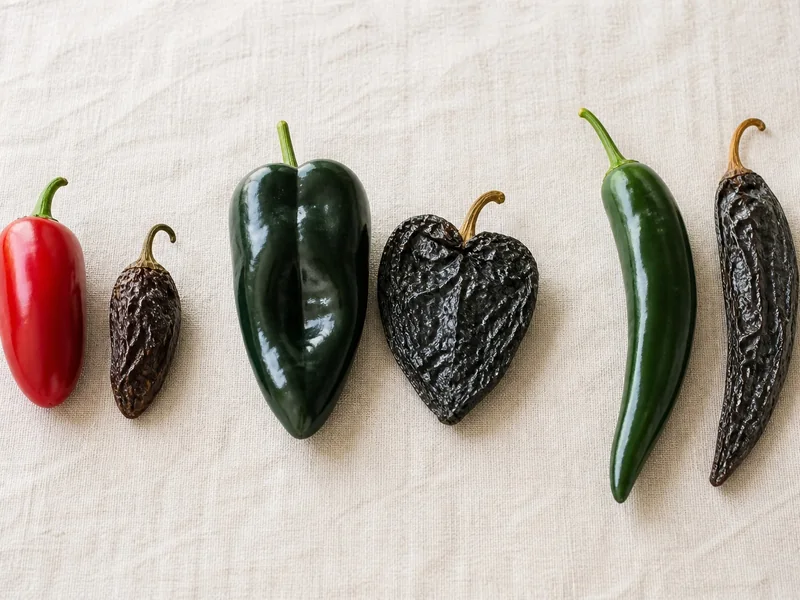
About Dried Peppers
This collection covers 15 varieties. Each profile includes Scoville heat ratings, flavor notes, and cooking recommendations.
In this collection, Aji Colorado leads with 30K SHU, while Ancho Pepper comes in at 2K SHU. Browse all peppers by heat level or browse our pepper guides for cooking and growing tips.
Need a substitute? Our pepper substitutes tool finds the closest match by heat and flavor.
For side-by-side analysis, try our pepper comparison hub.
Notable Varieties
All Dried Peppers
Every variety in this collection, sorted by maximum Scoville heat rating. Click any card for the full profile with flavor notes, anatomy details, growing tips, and substitutes.
 Medium
Ancho Pepper
 Medium
Pasilla Pepper
 Medium
Cascabel Pepper
 Medium
Mulato Pepper
 Medium
Espelette Pepper
 Medium
Guajillo Pepper
 Medium
Chipotle
 Medium
Aji Panca
 Hot
Hot
Aleppo Pepper
 Hot
Hot
Gochugaru
 Hot
Hot
Gochugaru Flakes
 Hot
Hot
Morita Pepper
 Hot
Hot
Pasilla de Oaxaca
 Hot
Hot
Aji Colorado
View profile → Hot
Hot
De Arbol
Heat Level Distribution
How dried peppers distribute across the Scoville scale. Click any tier to browse all peppers at that heat level.
Heat Range Comparison
Visual breakdown of where each variety falls on the Scoville scale. Wider bars show a larger documented SHU spread between individual pods.
The causes of pepper heat variation explain why pods from one cultivar do not always measure alike.
Related Comparisons
Side-by-side breakdowns of heat, flavor, and cooking uses. Each comparison covers Scoville ratings, pod anatomy, and substitution options.
 2K SHU
vs
2K SHU
2K SHU
vs
2K SHU
Ancho vs Poblano: Same Pepper, Different Job
Ancho and poblano come from the same pepper, but they are not the same ingredient in the pan. Use poblano when the recipe needs a… 2K SHU
vs
5K SHU
2K SHU
vs
5K SHU
Ancho vs Guajillo: Body or Bright Red Sauce
Choose ancho when the sauce needs sweet body, raisin-cocoa depth, and a darker base. Choose guajillo when the dish needs brighter red… 2K SHU
vs
2.5K SHU
2K SHU
vs
2.5K SHU
Ancho vs Pasilla: How to Tell and Use Each Chile
Ancho is the broader, sweeter dried poblano for fuller sauces. Pasilla is the long dried chilaca for a darker, leaner finish. Their… 2K SHU
vs
3K SHU
2K SHU
vs
3K SHU
Ancho vs Mulato: Flavor, Heat, Mole, and Substitutions
Ancho pepper gives a mild red-brown base with dried-fruit sweetness. Mulato pepper is the darker choice for mole and braises that need… 8K SHU
vs
2K SHU
8K SHU
vs
2K SHU
Chipotle or Ancho? Choose Smoke, Heat, or Sauce Body
Choose chipotle when the dish needs wood smoke and a sharper chile edge. Choose ancho when it needs mild dried-fruit depth, dark… 2.5K SHU
vs
2K SHU
2.5K SHU
vs
2K SHU
Chilhuacle vs Ancho: Rare Mole Chile or Staple
Chilhuacle is the best choice when an Oaxacan mole depends on rare regional chile character. Ancho is the practical dried poblano…Browse all comparisons in our comparison hub, or use the pepper tools for calculators and finders.
Related Guides
Reference guides and recipes tied to the same pepper family, region, or use-case.


Frequently Asked Questions
Sources & References
- Chile Terminology | New Mexico State University Chile Pepper Institute
- Postharvest Handling of Dehydrated Chiles | New Mexico State University Extension
- Peppers | UC Agriculture and Natural Resources
- Hot Chiles | Oregon State University Extension Service
- Preserving Food at Home: Drying | University of Minnesota Extension
- Packaging and Storing Dried Foods | National Center for Home Food Preservation
Keep Reading
Jump into the wider database, heat tiers, comparisons, and substitute references without another card wall.