

KnowThePepper
Pretty in Purple Pepper: Ornamental Heat and Tiny Pods
Pretty in Purple is an edible ornamental Capsicum annuum grown for purple foliage, purple flowers, and tiny round pods that turn cream, orange, then red. Treat its 4,000-8,000 SHU range as reported heat, not a lab-certified cultivar record.
- Species: C. annuum
- Heat tier: Medium (1K-10K SHU)
- Comparison: the same heat range as a jalapeño because their published ranges overlap
What Is Pretty in Purple Pepper?
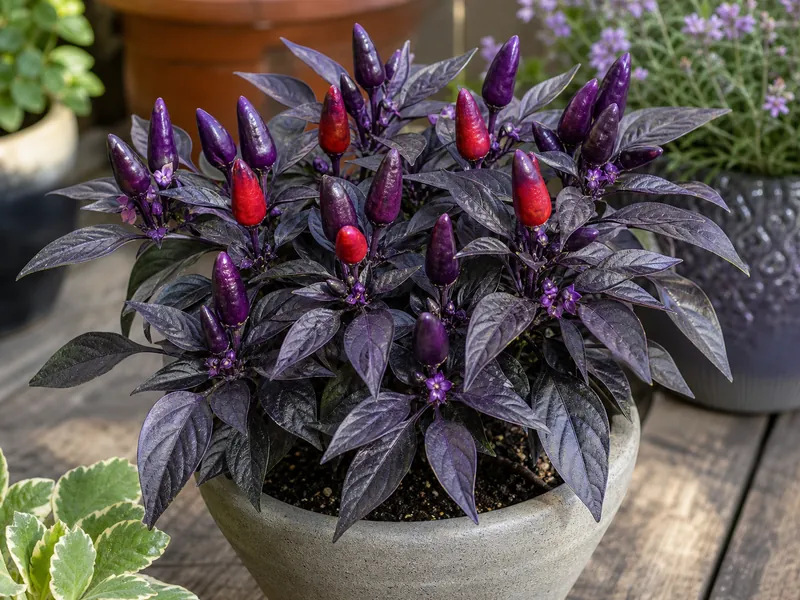
Pretty in Purple is a compact edible ornamental chile, not a full-size cooking pepper. Its main job is display: purple-green foliage, purple flowers, and small round pods that start dark purple and move through cream or orange before red maturity.
The most specific public cultivar description available lists fruit at about 6 mm, far smaller than a full-size jalapeno pod. That tiny size makes this a garnish, pickle, powder, or finishing-heat pepper rather than a stuffing or chopping pepper.
Most pepper references place Pretty in Purple at 4,000-8,000 SHU, inside the medium SHU band. Treat that as a reported range.
We did not find a public lab sheet for this cultivar, so avoid presenting the number as a certified measurement.
Compared with jalapeno, Pretty in Purple offers similar upper-end heat but far less flesh. Compared with hotter Black Pearl ornamental pepper or NMSU-bred NuMex Twilight, it is milder and more useful as a patio color plant with edible pods.
What Is the Origin of Pretty in Purple Pepper?
NCSU's Vegetable Cultivar Descriptions for North America lists Pretty in Purple as an open-pollinated ornamental pepper submitted by Johnny's Selected Seeds and Harris Seeds in the late 1990s. That source describes purple flowers, purple-green leaves, and small round fruit about 6 mm across.
The same cultivar entry marks the fruit color sequence as dark purple, cream, and orange, with a 60-day note. That is the strongest public source for the plant's identity, so it should carry more weight than generic ornamental-pepper summaries.
Pretty in Purple is not documented there as a New Mexico State University release. That matters because nearby ornamental cultivars such as NMSU-owned NuMex Twilight profile do have NMSU ownership, while Pretty in Purple appears in the commercial ornamental seed role.
The practical takeaway is simple: use Pretty in Purple as a named ornamental cultivar with edible heat, not as a catch-all label for every purple pepper plant sold in nurseries.
How Hot Is Pretty in Purple Pepper, and What Does It Taste Like?
The Pretty in Purple Pepper delivers 4K–8K Scoville Heat Units, placing it in the Medium tier (1K-10K SHU). That makes it roughly the same heat range as a jalapeño because their published ranges overlap.
Flavor notes: bright, grassy, vegetal.
Pretty in Purple Pepper Nutrition Facts
USDA FoodData Central does not publish a Pretty in Purple-specific nutrient entry, so nutrition claims should stay species-level. Treat raw hot pepper data as a rough reference, not as a cultivar certificate.
A realistic serving is only a few tiny pods. That means the nutrition value is minor compared with the heat, color, and garnish role.
The purple color is tied to anthocyanin pigments, while fully ripe red peppers lean more on carotenoid color. That color chemistry is interesting, but it does not turn this ornamental pepper into a meaningful health-food serving.
Capsaicin still matters even at reported 4,000-8,000 SHU. The burn comes mostly from the placenta and inner membrane, not from the seeds themselves.
The capsaicin method explains that heat mechanism in more detail.
How Do You Cook With Pretty in Purple Pepper?
The pods are edible, but their 6 mm size changes how they cook. Use them whole or minced in small amounts, not as the main pepper volume in a salsa or stir-fry.
Purple-stage pods are best when color matters: a few rings or minced pieces on tacos, grain bowls, deviled eggs, or fresh salads. Ripe red pods make more sense for heat because the color is less fragile and the flavor is a little rounder.
For sauces and vinegar condiments, start with a small handful and taste before adding more. Pretty in Purple can land near jalapeno heat, but the tiny pods concentrate the burn in a small bite.
If the plant was sold as an ornamental nursery plant, confirm it was grown for edible use before eating the pods. Nursery ornamentals may have a treatment history that is different from food-crop pepper plants.
Drying works because the pods are small and thin-walled. For powders or finishing salts, dry the pods until brittle, then grind and store away from light.
For heat control, remove the inner membrane with careful pepper deseeding before cooking.
How Do You Buy and Store Pretty in Purple Pepper?
Pretty in Purple is usually bought as seed or as a live ornamental pepper plant, not as produce. If you plan to eat the pods, choose seed or a plant sold for edible use rather than assuming every nursery ornamental is food-safe.
Fresh pods are tiny and thin-walled, so use them soon after harvest. Store unwashed pods in the refrigerator and keep them dry.
Moisture shortens their life faster than cold does.
For longer storage, dry whole pods until brittle and keep them in an airtight jar away from light and heat. Ground powder loses aroma faster than whole dried pods, so grind small amounts as needed.
Freezing works for cooked use but softens the pods. For a broader storage baseline across fresh, frozen, and dried peppers, use the pepper storage.
Which Peppers Can Replace Pretty in Purple Pepper?
No dedicated substitute guidance is published for Pretty in Purple Pepper yet.
How Do You Start and Grow Pretty in Purple Peppers?
Grow Pretty in Purple for light and color first. The purple foliage and dark pods show best in full sun, while lower light can make the plant stretch and reduce the contrast that gives the cultivar its value.
Start seeds indoors 8-10 weeks before the last expected frost, the same timing used for many Capsicum annuum peppers. Warm soil speeds germination, so a heat mat is useful if your seed-starting area runs cool.
The NCSU cultivar listing gives a 60-day note, which fits its role as a compact ornamental crop. Treat that as a nursery-production cue, not a guarantee that every home garden will show mature red pods at exactly day 60.
A 3-5 gallon container is usually enough for one compact ornamental pepper. Keep the soil evenly moist, avoid heavy nitrogen after the plant starts setting buds, and move patio containers out of cold nights.
For the basics that apply across seed trays, hardening off, transplant timing, and container care, use the broader pepper seed-starting tips. Pretty in Purple does not need a separate growing system, but it does need enough sun to keep the ornamental color strong.
Pretty in Purple Pepper FAQ


- NCSU Cucurbit Breeding - Pepper M-Z cultivar descriptions
- UF/IFAS Gardening Solutions - Ornamental Peppers
- UF/IFAS Ask IFAS - Capsicum annuum Ornamental Pepper
Species classification: C. annuum - based on published botanical taxonomy.