
Fresno vs Jalapeño: Nearly the Same Heat, Different Flavor and Crunch
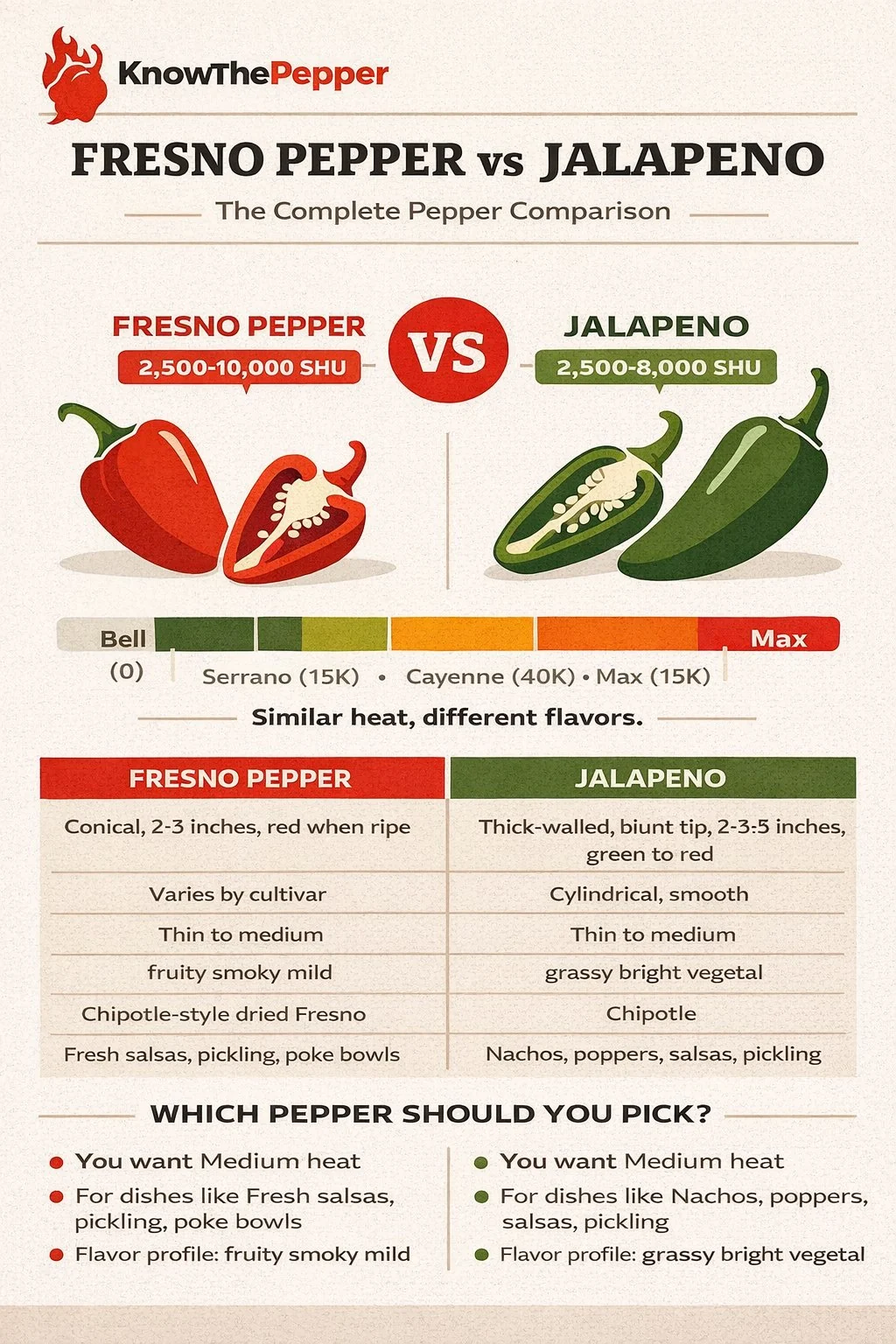
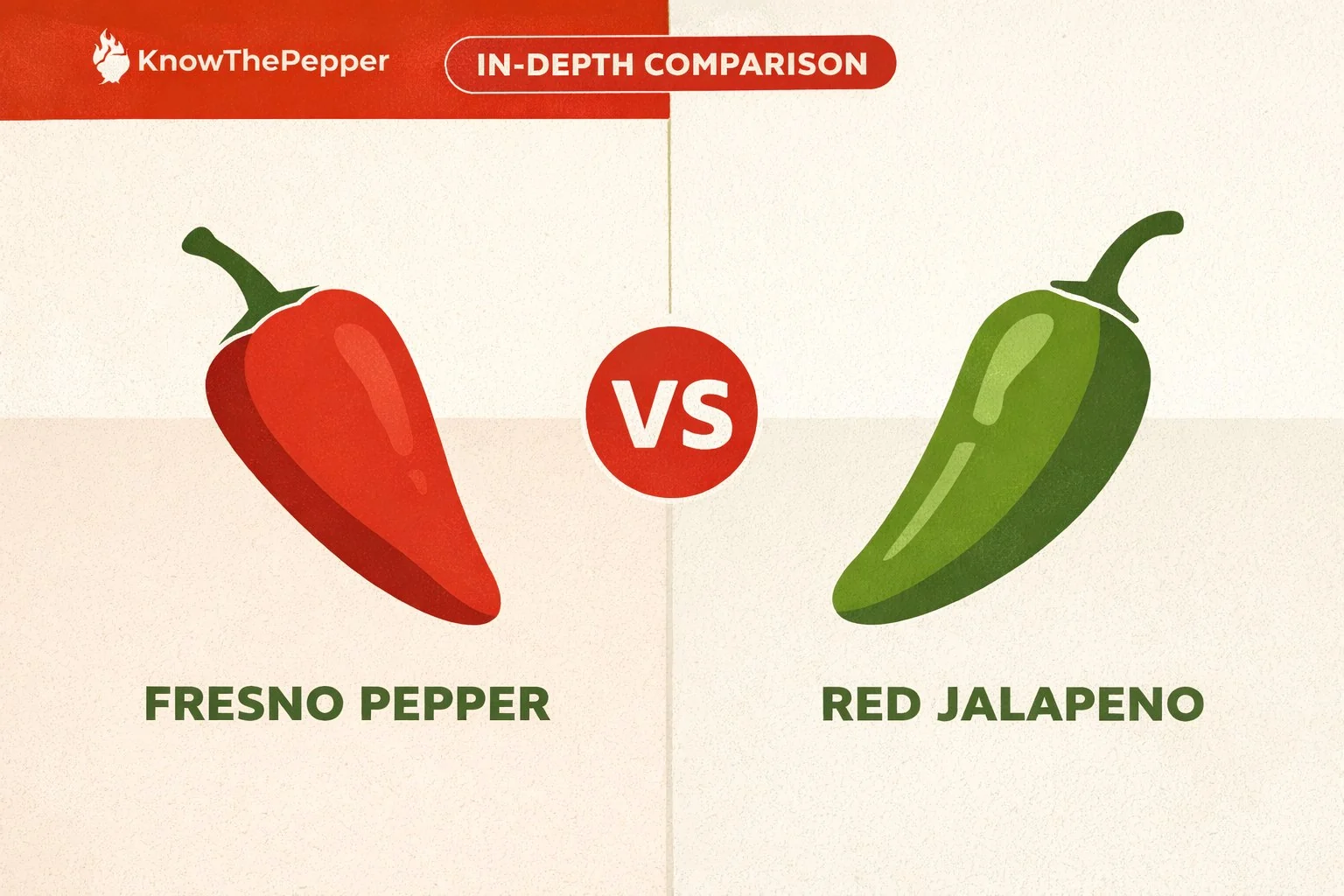
Fresno and jalapeno peppers overlap almost completely on the Scoville scale, share the same species, and can look similar when young. Side by side in the kitchen, Fresno tastes fruitier and softer when red, while jalapeno keeps a cleaner grassy snap and thicker crunch.

Fresno Pepper
HotJalapeño
MediumQuick Comparison
| Attribute | Fresno Pepper | Jalapeño |
|---|---|---|
| Scoville evidence | 2.5K-10K SHU | 2.5K-8K SHU |
| Heat Tier | Hot | Medium |
| vs Jalapeño | 1x hotter | 1x hotter |
| Flavor | fruity and smoky | Grassy, crisp, lightly sweet when red |
| Species | C. annuum | C. annuum |
| Origin | USA | Mexico |
Which Is Hotter, Fresno or Jalapeño?
Both peppers sit in the 2,500-10,000 SHU range, which puts them squarely in what most heat reference charts call the medium-intensity SHU bracket : hotter than a banana pepper, cooler than a serrano. The overlap is nearly total: jalapeños top out at 8,000 SHU, while Fresnos can push to 10,000 SHU, giving the Fresno a slight edge at the ceiling.
In practical terms, that difference is rarely noticeable. A hot jalapeño and a mild Fresno are interchangeable in terms of burn.
What changes is the character of the heat.
Jalapeños tend to build slowly across the tongue and linger near the front of the mouth. Fresno heat hits a bit faster and spreads more broadly across the palate : not dramatically different, but detectable when you eat them back to back.
Both peppers contain capsaicin and dihydrocapsaicin as their primary heat compounds. If you want to understand capsaicin, the chemistry is the same for both : TRPV1 activation regardless of which pepper you're eating.
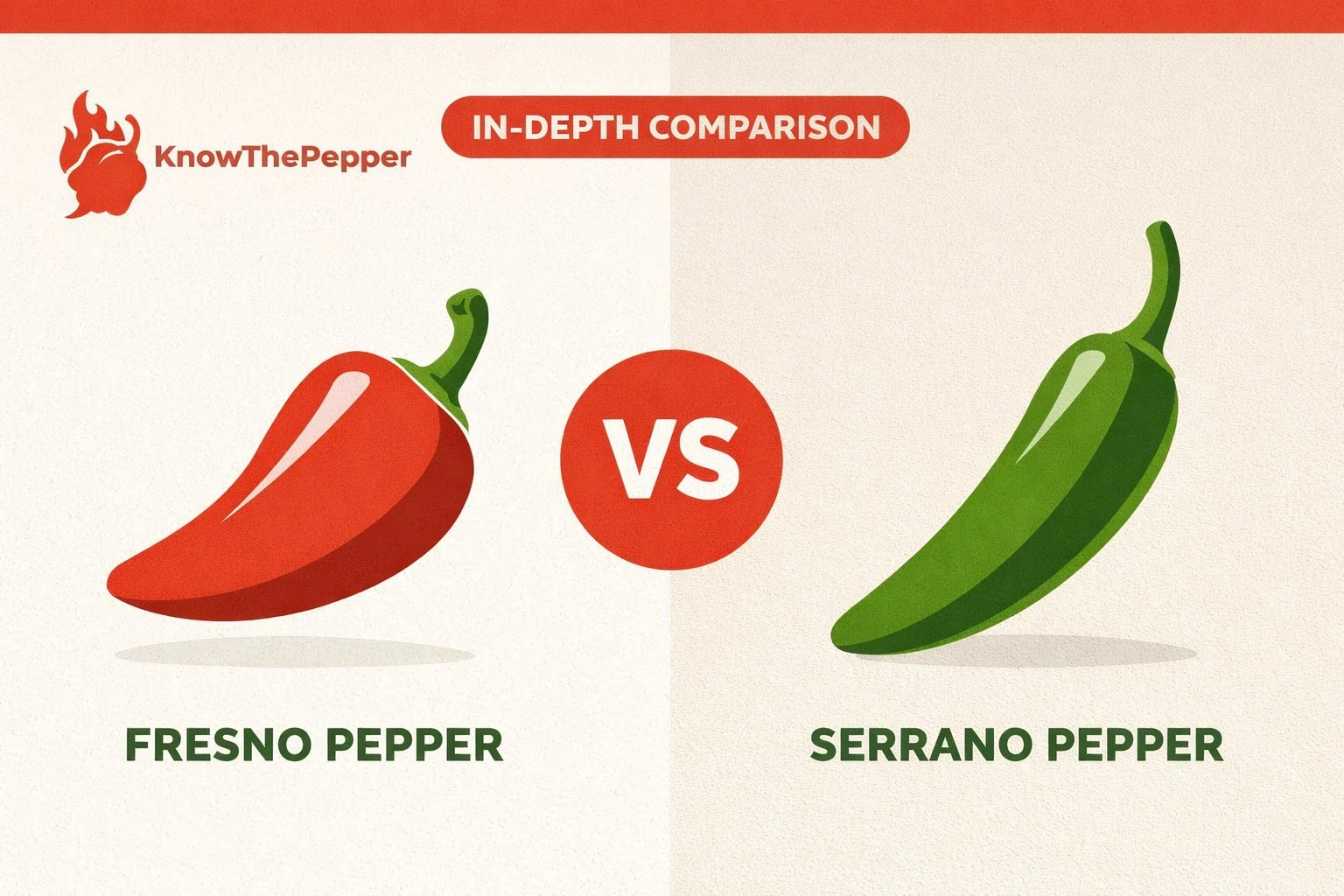
Neither pepper approaches serrano territory (10,000-23,000 SHU), so anyone who handles serranos regularly will find both of these quite manageable. The jalapeño's reputation as a benchmark pepper makes it useful for calibration : but the Fresno's upper range does give it a measurable, if modest, heat advantage.
How Do Fresno and Jalapeño Taste Different?
This is where the real difference lives.
Jalapeños have a flavor that's almost universally described as bright and grassy : there's a clean, vegetal quality that makes them taste fresh even when cooked. That character comes through whether they're raw in pico de gallo, pickled in brine, or charred on a grill.
It's a reliable, neutral-leaning heat that doesn't compete with other ingredients.
Fresnos are a different animal flavor-wise. They carry a fruitiness that reads almost like a mild red bell pepper crossed with a hint of smoke : especially when fully ripe and red.
That smokiness isn't from processing.
It's inherent to the pepper's flavor profile. Raw Fresnos taste sweeter and more complex than jalapeños at the same ripeness stage.
Color matters here too.
Jalapeños are most commonly eaten green (unripe), which amplifies their grassy character. Fresnos are most often sold red (fully ripe), which concentrates their sugars and deepens that fruity quality.
If you compared a green jalapeño to a red Fresno, the flavor gap would feel enormous : but that's partly a ripeness comparison, not just a variety comparison.
For raw applications : salsas, slaws, ceviche : jalapeños bring a sharp brightness that Fresnos don't quite replicate. For cooked applications, especially anything that benefits from a little sweetness or depth, Fresnos often produce a more interesting result.
Both belong to the C. annuum botanical species, which also includes bell peppers, poblanos, and cayennes : a remarkably diverse family.
How Are Fresno and Jalapeño Used in Cooking?
Jalapeños are one of the most versatile peppers in the Mexico's pepper tradition : used raw, pickled, smoked (as chipotles), stuffed, and blended into sauces. That flexibility comes from their clean flavor, which adapts to almost any preparation without pulling attention toward itself.
Nachos, salsa verde, jalapeño poppers, hot sauce : the applications are wide.
Fresnos, rooted in the broader American pepper tradition, are newer to the mainstream but have carved out a specific niche in restaurant kitchens and specialty markets. Their fruity-smoky depth makes them particularly good in roasted salsas, grain bowls, and anywhere you'd want a pepper to add flavor complexity rather than just heat.
Substitution guidance: In most cooked dishes, Fresnos and jalapeños swap 1:1 without adjustment. The flavor shift is real but subtle enough that most recipes tolerate it.
For raw preparations where jalapeño's grassy brightness is the point : think classic pico de gallo : a Fresno substitution will noticeably sweeten and soften the result.
That might actually be an improvement depending on your preference.
For the banana pepper vs. jalapeño heat gap, Fresnos land much closer to jalapeños than to banana peppers : don't use them as a mild substitute.
Fresnos shine in: roasted pepper sauces, fermented hot sauces (their sugar content supports fermentation), red salsa, and as a garnish where color matters. Jalapeños dominate in: pickling, stuffing, green salsas, and anywhere you want that signature fresh-pepper punch.
Drying works better for jalapeños (chipotle is proof). Fresnos can be dried but their fruity notes don't survive the process as well.
Both can be used at any ripeness stage : green Fresnos taste closer to jalapeños than red ones do.
Verdict
If you're shopping for one and the store only has the other, swap freely : they're close enough that most dishes won't suffer. But if you're choosing intentionally, the decision is straightforward.
Reach for a jalapeño when freshness and brightness matter: raw salsas, pickling, anything green and sharp. The clean grassy flavor is a feature, not a limitation.
Reach for a Fresno when you want a pepper that contributes more than heat: roasted sauces, cooked dishes, fermented preparations, or anywhere red color adds visual appeal. The fruity-smoky depth is genuinely distinct.
The birds eye chili vs jalapeno is far more dramatic than anything between a Fresno and a jalapeño : these two are practically relateds. And compared with a Calabrian chili, the Fresno is the milder, fruitier option.
Both are excellent, accessible peppers. Neither is a compromise.
Which Dishes Suit Fresno and Which Suit Jalapeño?
Choose Fresno when the dish needs a red fresh chile with fruitier aroma and a cleaner look in sauce. Fresno works especially well in red salsa, fermented hot sauce, vinegar sauce, seafood toppings, and sliced garnishes where the color should stay bright.
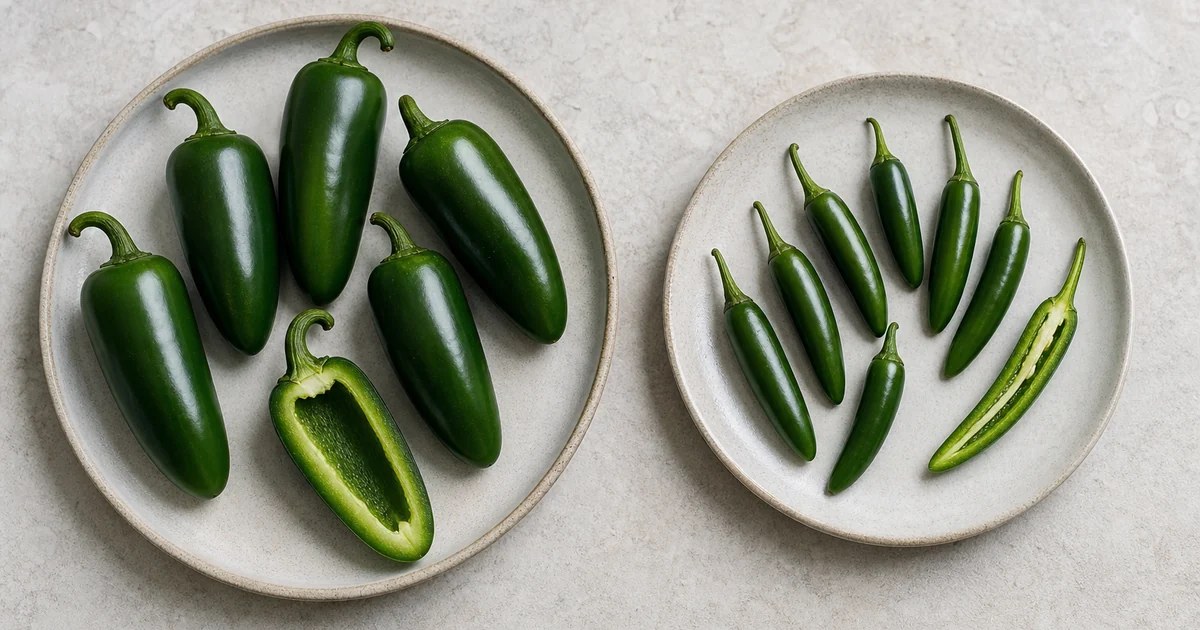
Choose jalapeno when you want a thicker wall, greener flavor, and easier sourcing. Jalapeno is better for poppers, nachos, pickled rings, pico de gallo, and recipes where the pepper needs to hold shape after slicing or stuffing.
It also gives the most predictable grocery-store result because fresh jalapenos are easier to find year-round.
The heat overlap is close enough that substitution is usually safe. Use 1 Fresno for 1 jalapeno in salsa, hot sauce, and marinades.
If the Fresno tastes hotter, remove some placenta before chopping.
If the jalapeno tastes grassy in a red sauce, roast it first or add a small strip of red bell pepper for color.
The swap gets harder in stuffed recipes. Fresno pods are usually slimmer and thinner-walled, so they do not carry cream cheese or sausage filling as well as jalapenos.
For frying or baking, jalapeno is the safer structure.
For blending into a sauce, Fresno often tastes cleaner and looks better.
The practical rule: choose Fresno for red fresh heat and sauce color, choose jalapeno for crunch, stuffing, and common grocery availability.
Can You Substitute Fresno for Jalapeño?
The swap limit is structure. Jalapeno walls are thicker, so they hold up under broiling, stuffing, and frying.
Fresno is usually slimmer and softer, which is helpful in sauces but weaker in poppers or grilled pepper halves.
For fresh salsa, use 1 Fresno for 1 jalapeno when you want red color and a little more fruit. If the salsa is meant to stay green, jalapeno is the better match.
A red Fresno can make a green salsa look muddy unless the whole sauce is built around red ingredients.
For hot sauce, Fresno often wins. It ferments cleanly, blends smoothly, and gives a brighter red color without needing dried chile.
Jalapeno can still work, especially when ripe red pods are available, but common green jalapenos make a sharper and more vegetal sauce.
For pickling, jalapeno is more predictable because rings stay firm. Fresno rings can soften faster, especially in hot brine.
Use a cold quick pickle or shorter heat exposure if Fresno is the only option.
If you want a simple grocery-store rule, use jalapeno for texture and Fresno for color. Heat is close enough that the dish form should decide the swap.
How Do Fresno and Jalapeño Change a Fresh Sauce?
In a fresh sauce, red Fresno gives a cleaner red color with less help from tomato or dried chile. Jalapeno keeps a greener aroma that worked better with tomatillo, cilantro, lime, and white onion.
That color and aroma split is the reason the two are close but not interchangeable in every salsa.
For heat tolerance, both are manageable for most medium-heat eaters, but Fresno batches can feel sharper when fully red and ripe. Removing the placenta is still the best control point.
Seeds ride along with the membrane, but the white inner tissue holds most of the capsaicin.
For availability, jalapeno wins in most supermarkets. Fresno is worth buying when you see firm red pods with glossy skin, especially if you make hot sauce or red salsa often.
If the pods are wrinkled or soft, choose jalapeno and adjust color elsewhere.
Serving Guidance
For serving, use Fresno where the red slice is part of the visual cue and jalapeno where green crunch is expected. Fresno looks intentional on seafood, noodles, and red salsa.
Jalapeno looks and tastes more familiar on nachos, burgers, and pico de gallo.
The plate context can decide the pepper. For mixed batches, slice one pod before cooking and smell it raw.
Fresno should read fruitier.
Jalapeno should read greener.
Fresno Pepper vs Jalapeño FAQ
- Capsicum annuum L. - USDA GRIN Taxonomy
- Capsaicin and TRPV1 Receptor Activation - National Institutes of Health