
Thai Chili vs Serrano: Far Hotter Tiny Pods, So Use Fewer When Swapping
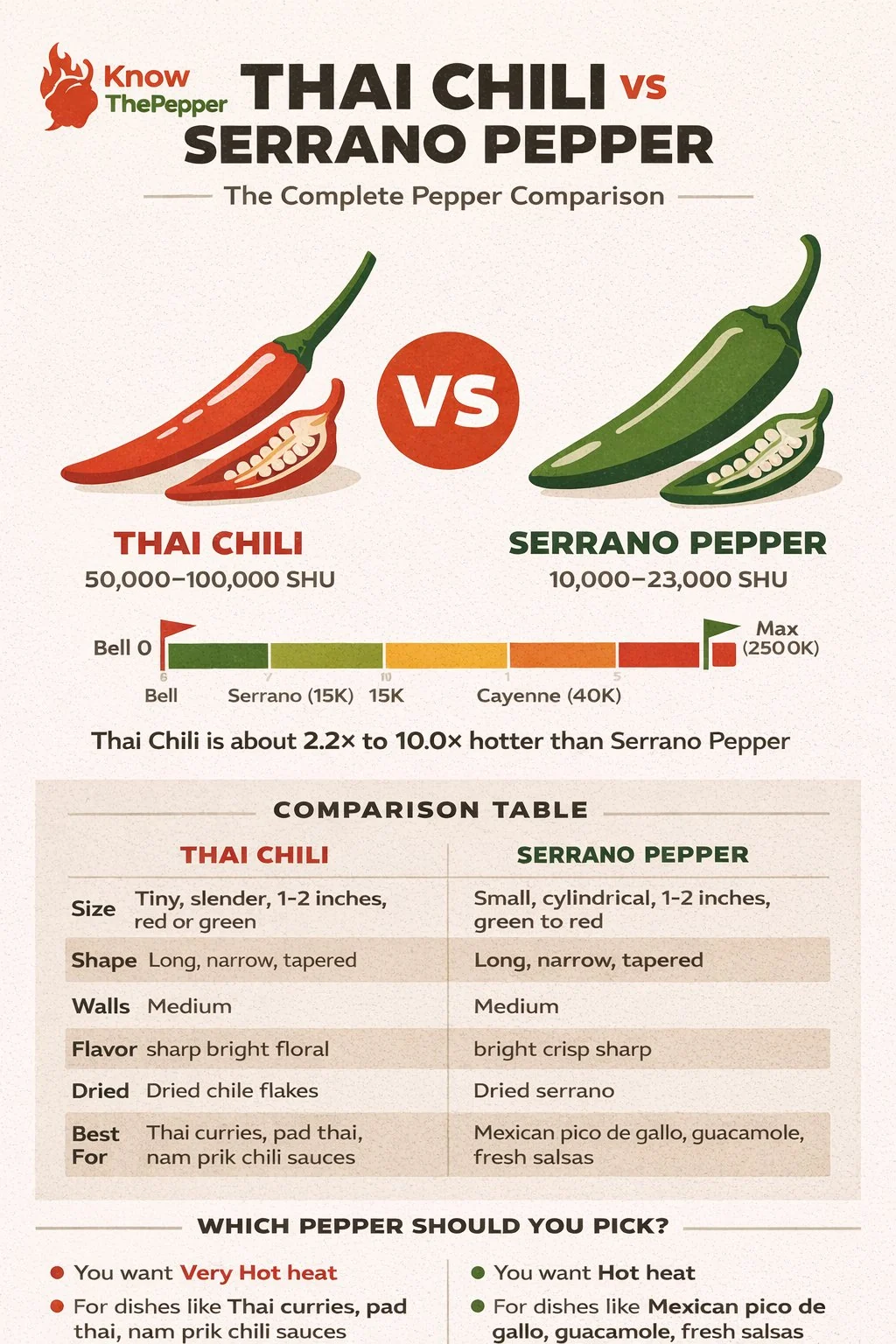
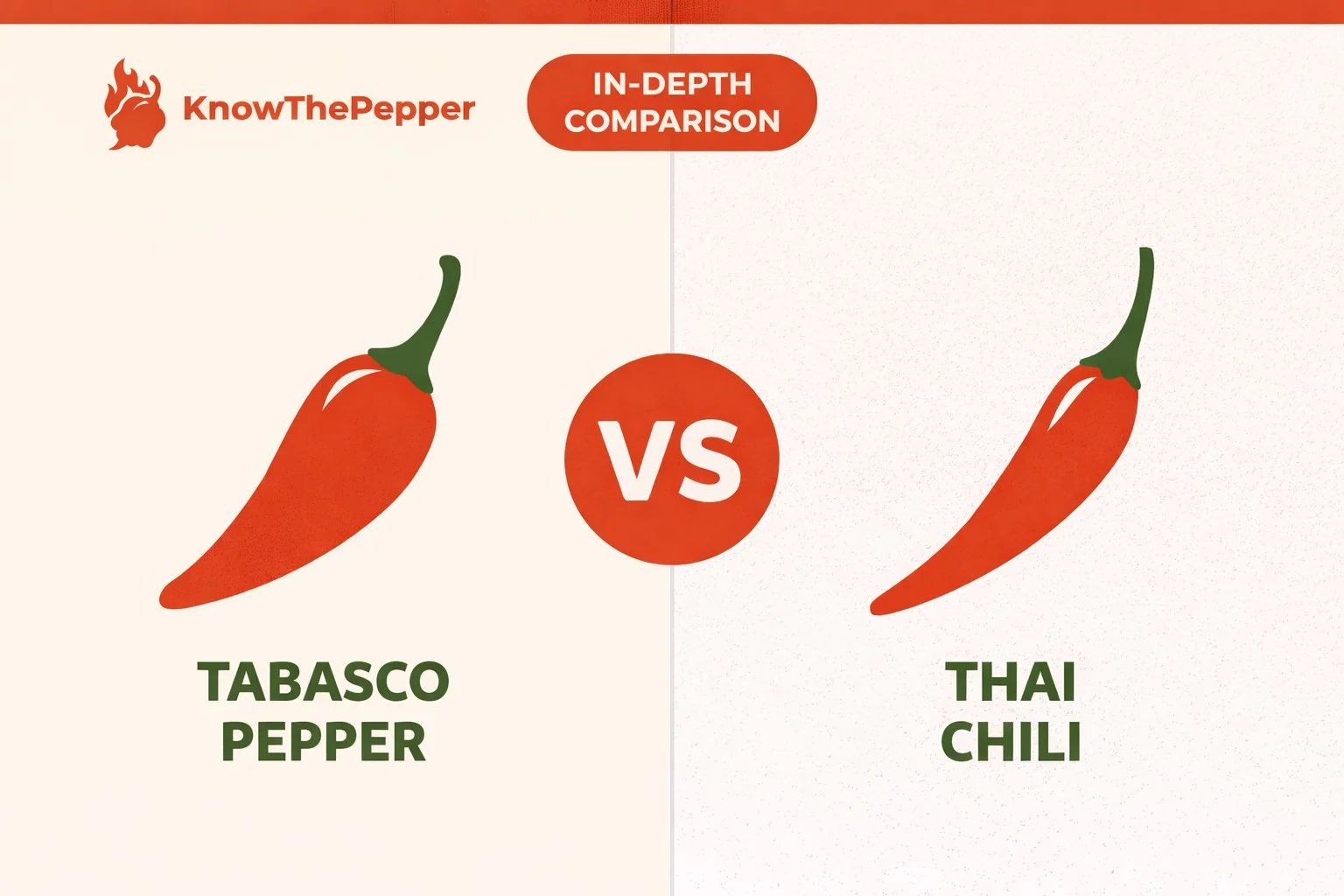
Thai chili and serrano are both members of C. annuum, but they land in very different places on the heat scale. Thai chili runs 50,000-100,000 SHU while serrano tops out around 23,000 SHU, a gap that matters enormously in the kitchen. Substituting one for the other is possible, but you need to know what you're trading away.

Thai Chili
HotSerrano Pepper
HotQuick Comparison
| Attribute | Thai Chili | Serrano Pepper |
|---|---|---|
| Scoville evidence | 50K-100K SHU | 10K-23K SHU |
| Heat Tier | Hot | Hot |
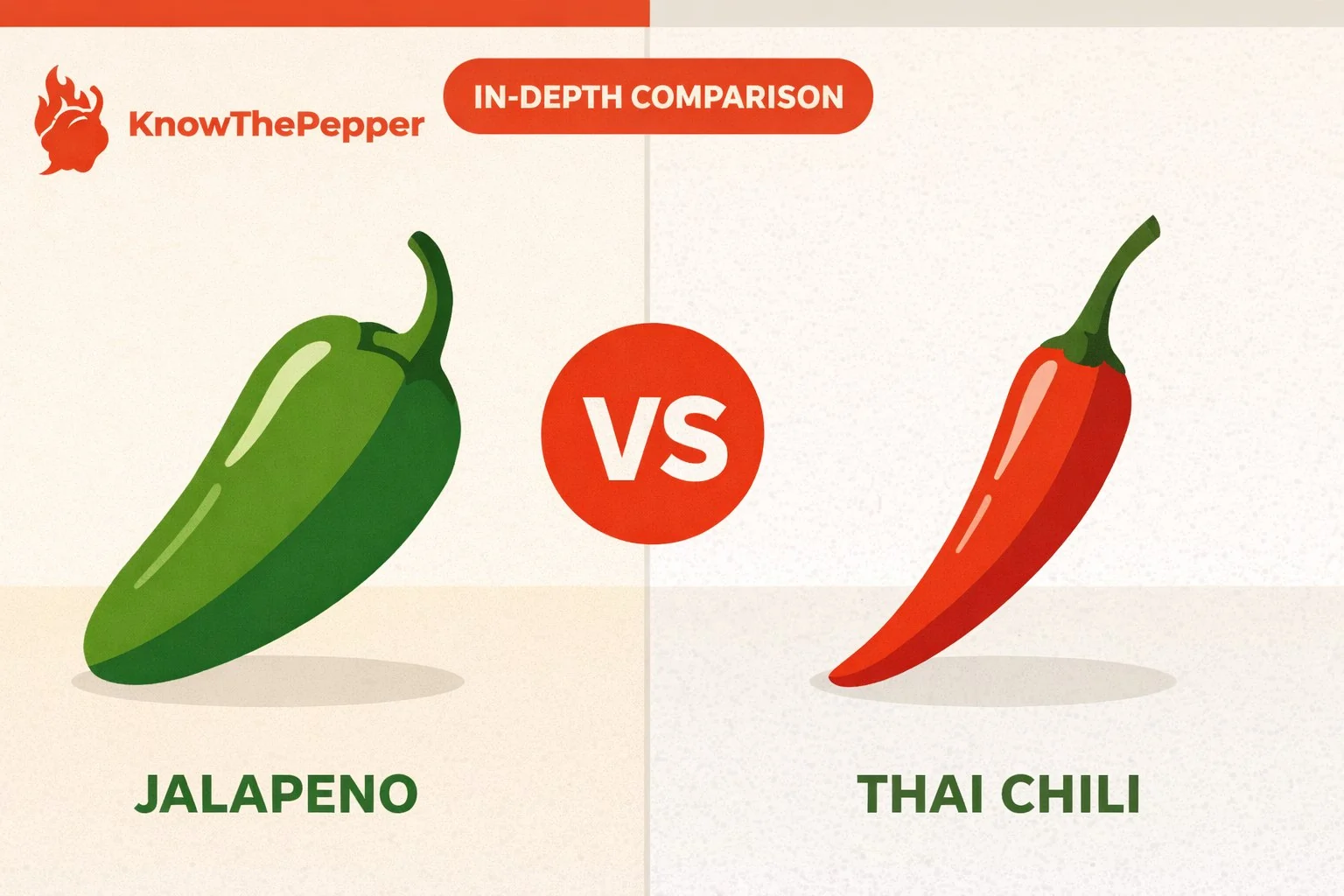
| vs Jalapeño | 13x hotter | 3x hotter |
| Flavor | bright and peppery | bright and crisp |
| Species | C. annuum | C. annuum |
| Origin | Thailand | Mexico |
How Much Hotter Is Thai Chili Than Serrano?
Both peppers share a brightness that hits the front of the palate first : but that's where the similarity ends. Serrano delivers a clean, sharp snap of heat that builds gradually and fades relatively quickly.
Thai chili comes in harder, with a more insistent burn that lingers and radiates.
On the Scoville heat units scale, the numbers tell the story clearly. Serrano registers 10,000-23,000 SHU, placing it solidly in the medium-high heat classification for everyday cooking peppers.
Thai chili sits at 50,000-100,000 SHU : a range that puts it roughly 4 to 10 times hotter than serrano depending on individual fruit measurements.
Compared to a standard jalapeño at around 5,000 SHU, serrano runs about 2-4x hotter, while Thai chili can hit 10-20x hotter than a jalapeño. That's a meaningful jump for anyone using jalapeño as their personal heat benchmark.
The capsaicin chemistry behind this difference : specifically how it binds to pain receptors : is covered in detail in the how capsaicin triggers the burn response. What matters practically: Thai chili's heat is more diffuse and persistent, while serrano's burn is sharper but shorter-lived.
Both belong to Capsicum annuum, the Capsicum annuum Varieties from bell peppers to cayenne.
How Do Thai Chili and Serrano Taste Different?
Strip away the heat and you're left with two genuinely different flavor profiles, even if both get described as 'bright.'
Serrano : originating from the mountainous regions covered in our Mexican pepper origin : has a grassy, almost herbaceous quality. It's crisp and vegetal, with a clean finish that makes it exceptional for fresh preparations.
Pico de gallo made with serrano has a particular clarity that other peppers struggle to replicate.
Thai chili carries a different kind of brightness : more peppery and forward, with a slight floral note that becomes apparent when you smell a freshly sliced pod. The flavor is less vegetal than serrano and more purely peppery.
This makes sense given the different agricultural environments of Thailand's pepper-growing traditions versus Mexico's highland climate.
Aroma is another point of separation. Serrano smells like fresh green pepper with a hint of garden earthiness.
Thai chili has a more assertive, almost sharp scent that telegraphs the heat to come.
For dishes where pepper flavor is meant to be subtle background heat, serrano is the more accommodating choice. Thai chili asserts itself : you'll taste it even when it's not the dominant ingredient.
This distinction matters most in delicate broths, light salads, and raw applications where serrano's cleaner flavor won't overpower other ingredients.
Which Cuisines and Dishes Suit Each Pepper?
Serrano shines in fresh applications: salsas, ceviches, guacamole, and raw sauces where its clean flavor and moderate heat let other ingredients breathe. It also holds up beautifully when roasted or charred : the skin blisters nicely and the flavor deepens without turning bitter.
Mexican cooking relies on it heavily for exactly these reasons.
Thai chili is built for high-heat cooking. Stir-fries, curries, nam prik dipping sauces, and soups are its natural territory.
The small size means it's often used whole or sliced thin, releasing heat gradually into a dish.
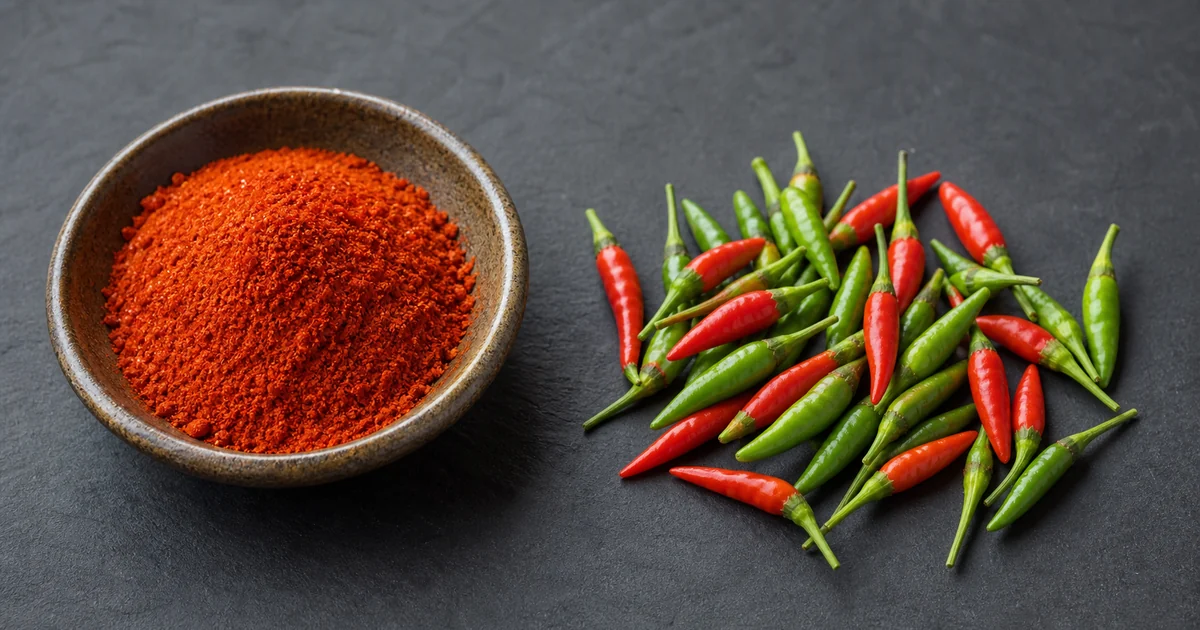
It also dries exceptionally well : dried Thai chili is a pantry staple that retains both heat and flavor.
For substitution purposes, the heat gap requires adjustment. If a recipe calls for 1 Thai chili, use 3-4 serrano peppers to approximate the heat level.
Going the other direction : replacing serrano with Thai chili : use roughly 1 Thai chili for every 3 serranos called for, and expect a flavor shift alongside the heat change.
The comparison with cayenne pepper vs thai chili is worth reading if you're working with dried forms, since cayenne powder substitutions follow different ratios than fresh pepper swaps.
For dishes that specifically need Thai chili's floral peppery note : pad kra pao, green papaya salad, Thai fish sauce dips : serrano is a functional but imperfect stand-in. The heat can be scaled, but that aromatic quality is harder to replicate.
The bird's eye chili is actually a closer substitute in those cases.
Serrano works better as a Thai chili replacement in cooked applications where the pepper is one of several bold flavors, rather than the centerpiece.
Verdict
The choice comes down to heat tolerance and dish origin.
Reach for serrano when cooking Mexican-inspired food, making fresh salsas, or cooking for people with moderate heat tolerance. Its clean flavor and manageable 10,000-23,000 SHU range make it one of the most versatile fresh peppers available.
The full heat-level breakdown for this range confirms it sits right where most home cooks want their go-to hot pepper.
Thai chili is the right call when the dish specifically needs that persistent, high-intensity heat : curries, stir-fries, Southeast Asian dipping sauces. At 50,000-100,000 SHU, it's not a casual substitution for the heat-averse.
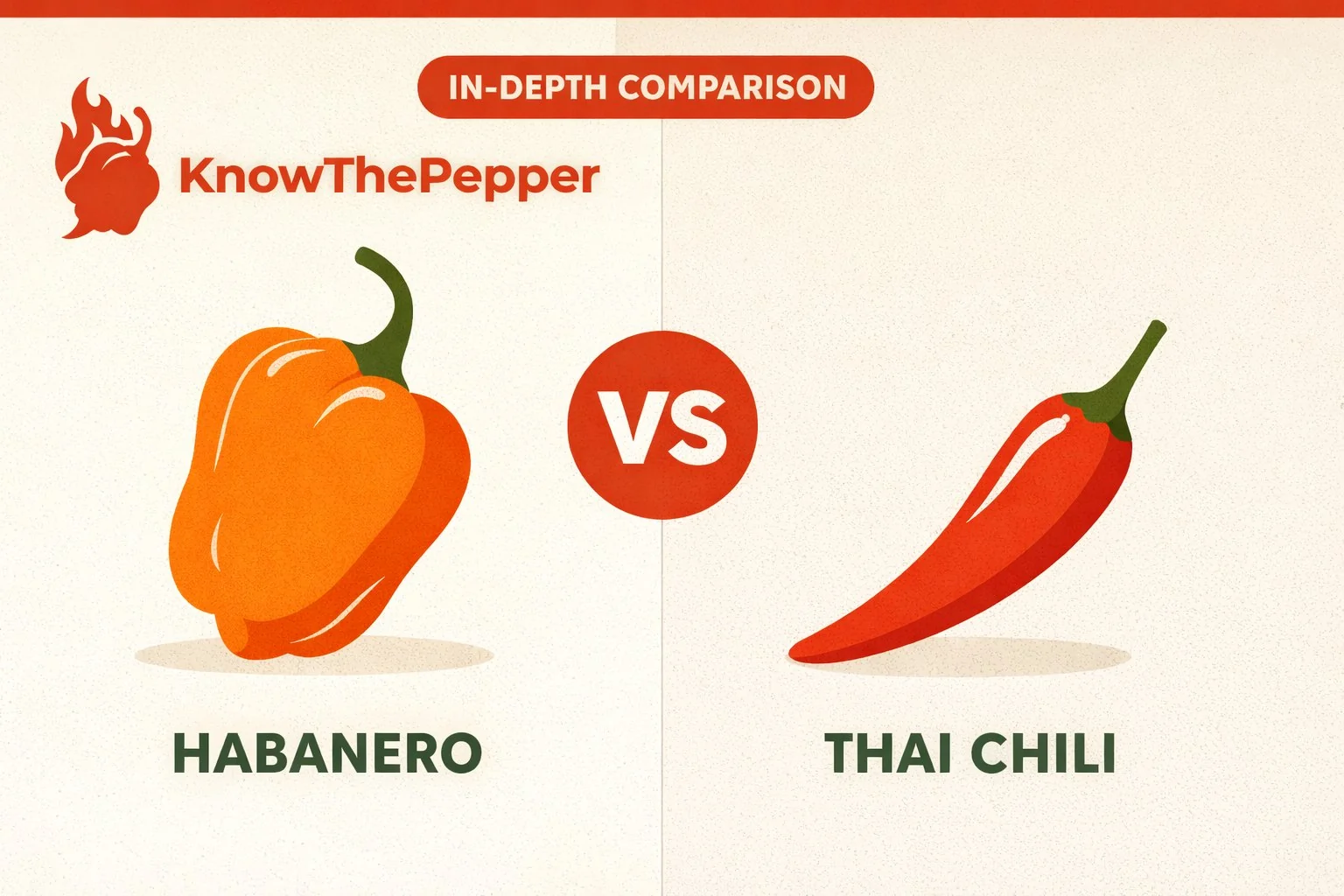
The habanero vs. Thai chili is useful context if you're scaling heat up further.
Both peppers are worth keeping on hand. They're not interchangeable so much as complementary : one for the fresh crunch of Mexican cooking, the other for the sustained heat of Southeast Asian cuisine.
Which Recipes Call for Thai Chili or Serrano?
Choose Thai chili when the recipe needs small-pod heat that shows up fast. It is the better choice for prik nam pla, Thai curry paste, Vietnamese dipping sauces, stir-fries, and chopped raw garnishes where one or two tiny pods should season the whole dish.
Choose serrano when the recipe needs fresh green chile flavor with more body and less risk. Serrano is better for salsa verde, pico-style salsa, guacamole, eggs, and everyday Mexican cooking where the pepper is eaten in visible pieces.
It has heat, but it does not hit as hard as Thai chili.
The substitution math matters because the heat gap is large. Thai chili at 50,000-100,000 SHU can run about four to five times hotter than serrano at 10,000-23,000 SHU by midpoint.
Use 1 Thai chili for 3 to 4 serranos only when the recipe is blended or cooked.
In raw salsa, start smaller because Thai chili's fast burn can dominate before the green flavor catches up.
Going the other direction, use 2 to 3 serranos for 1 Thai chili when you need volume, then add a pinch of cayenne if heat is still low. Serrano brings more flesh and moisture, so it can loosen dipping sauces or curry paste.
Chop it finer and cook it a little longer if the dish depends on a tight paste.
The choice is not just heat. Thai chili is compact, sharp, and high-impact.
Serrano is greener, thicker, and easier to dose in fresh dishes.
Can You Substitute Serrano for Thai Chili?
The biggest limit is dose control. A single Thai chili can season a whole dipping sauce, while one serrano often reads as mild to medium once it is mixed with lime, fish sauce, sugar, or tomato.
That makes Thai chili better for small, precise heat and serrano better for visible fresh pepper pieces.
For Thai curry paste, serrano adds too much water and not enough heat per gram. If serrano is all you have, chop it fine, cook off moisture, and add cayenne or chile flakes for heat.
For salsa verde, Thai chili has the opposite problem: it brings heat without enough green pepper body, so the salsa can taste sharp but thin.
Use 1 Thai chili for 3 serranos in cooked sauces when heat is the main goal. Use 2 serranos for 1 Thai chili when volume and green flavor matter, then add dry heat only after tasting.
In raw garnishes, start with half a Thai chili because its fast burn is more obvious before cooking softens it.
The safer kitchen decision is cuisine-led. Thai chili belongs in Southeast Asian sauces where tiny pods are expected.
Serrano belongs in Mexican and Tex-Mex dishes where fresh green chile flavor carries the recipe.
If you are serving people with mixed heat tolerance, serrano is easier to control at the table. Thai chili is better when everyone expects a hot dish and the pepper is chopped very fine.
How Does Each Pepper Change a Sauce?
In a sauce, Thai chili changes perceived heat before it changes body. Two small pods can make a fish sauce dip feel hot even though the texture stays thin.
Serrano changes body first because it adds more flesh, water, and green aroma per pepper.
That matters in blended sauces. Thai chili can be added late because the pieces are small and the heat extracts quickly.
Serrano needs finer chopping or more blending if you want an even sauce.
In a chunky salsa, that extra flesh is a strength because people expect visible green chile.
For shopping, serrano is usually the easier U.S. grocery choice. Thai chili is common in Asian markets and often sold in larger packs, so freezing extras whole is practical.
Frozen Thai chilies still work well in cooked sauces, but they lose some raw snap.
How Should You Cut Each Pepper for Serving?
For serving, treat Thai chili as a heat concentrate and serrano as a fresh vegetable with heat. Mince Thai chili very fine so nobody gets one punishing piece.
Slice serrano when you want visible chile in tacos, eggs, or salsa.
That simple cut choice keeps each pepper in its natural role.
Thai Chili vs Serrano Pepper FAQ
- Scoville Scale and Capsaicin Measurement - American Chemical Society
- Thai Pepper Production and Varieties - FAO Agricultural Data