
Tabasco Pepper vs Thai Chili: Fermented Sauce or Fresh Stir-Fry Heat
Tabasco pepper is the better choice for fermented mash, vinegar-forward sauce, and Gulf-style pickling. Thai chili is the better choice for fresh salads, curry paste, stir-fry oil, and sharper pod-by-pod heat. They overlap in heat, but their cooking jobs are not the same.

Tabasco Pepper
HotThai Chili
HotQuick Comparison
| Attribute | Tabasco Pepper | Thai Chili |
|---|---|---|
| Scoville evidence | 30K-50K SHU | 50K-100K SHU |
| Heat Tier | Hot | Hot |
| vs Jalapeño | 6x hotter | 13x hotter |
| Flavor | sharp and vinegary | bright and peppery |
| Species | C. frutescens | C. annuum |
| Origin | Mexico | Thailand |
Sauce Mash Or Fresh Pod
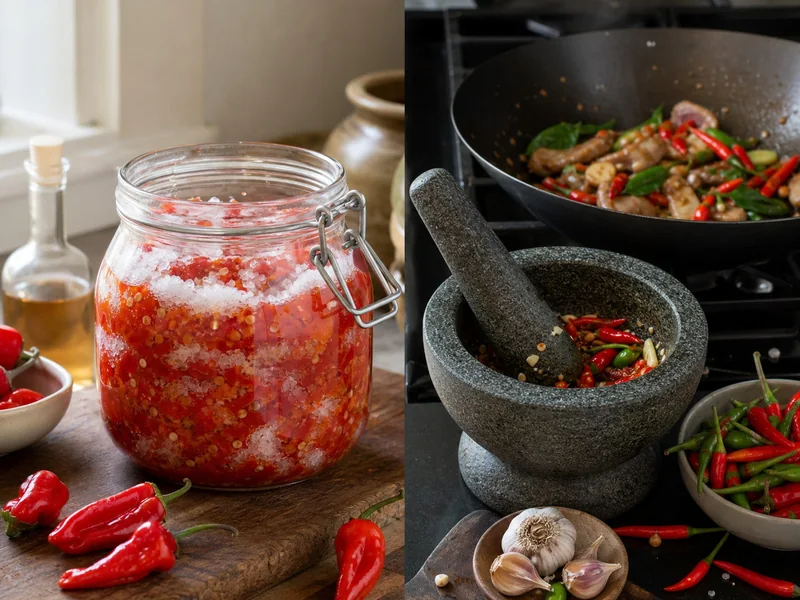
The split is form first. Tabasco pepper is a sauce and mash pepper: thin walls, high moisture, sharp heat, good behavior in salt and vinegar.
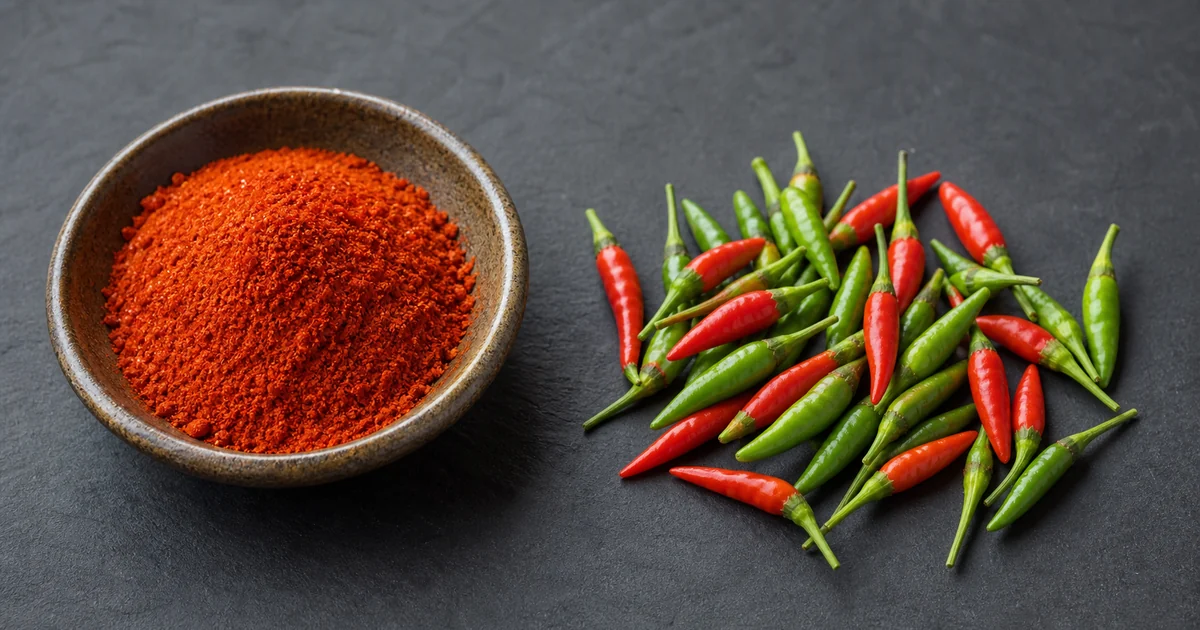
Thai chili is a fresh cooking pod: small, easy to pound, slice, fry, dry, or count into a dish.
That is why tabasco makes sense in pepper vinegar and fermented bottles, while Thai chili makes sense in som tam, nam prik, curry paste, fried rice, and quick chile oil. The wrong choice usually fails because of moisture and texture before it fails because of heat.
That form difference isn't incidental. Tabasco's juicy flesh breaks down readily into mash, while Thai chili's thinner, drier walls resist a smooth mash and instead hold up well to dry-frying or pounding into a coarse paste.
How Does Each Pepper Deliver Heat?
Tabasco heat spreads. Fermentation, vinegar, salt, and blending move the burn evenly through the bottle, so one shake seasons a whole bite.
Thai chili heat lands. A sliced pod can sit in one spoonful, a pounded pod can hit hard in a dipping sauce, and fried pieces can bloom through oil.
The result feels sharper even when the recipe uses only a few pods.
SHU numbers explain part of it: tabasco often sits around 30,000-50,000 SHU, while Thai chili often reaches 50,000-100,000 SHU. But the delivery method is the bigger reason the same amount feels different.
If a dish uses oil, Thai chili can get louder after frying. If a sauce uses vinegar and time, tabasco can seem smoother without becoming mild.
That difference also shows up in aftertaste. Tabasco's fermented acidity leaves a tangy, lingering edge on the palate, while Thai chili's heat fades faster once the dish itself is swallowed, since nothing about the pepper is designed to persist the way a barrel-aged mash does.
Which Dishes Call for Tabasco Pepper or Thai Chili?
Use tabasco for fermented hot sauce, seafood condiments, pepper vinegar, pickled whole pods, and bottled table sauces. The hot sauce process fits tabasco because the pepper's moisture helps the mash instead of fighting it.
Use Thai chili for curry paste, papaya salad, dipping sauce, stir-fries, chile oil, and recipes that tell you to add one, three, or ten small pods. Countable heat is part of its value.
Tabasco earns its place through McIlhenny's three-year fermentation, a process that mellows raw heat into something rounder and more complex than a quick vinegar-pepper mix. Thai chili's speed cuts the other way: it is pounded fresh into a curry paste or scattered whole into a stir-fry minutes before serving, since the cuisine built around it prizes bright, immediate heat over aged complexity.
A dish that names one pepper by tradition, jambalaya calling for tabasco, or a green papaya salad calling for Thai chili, should keep that pepper rather than swapping for convenience, since the flavor identity of the dish depends on it.
Can You Substitute Thai Chili for Tabasco Pepper?
Replacing tabasco with Thai chili means lowering the pod count first, then restoring the sauce's acid with vinegar, lime, or fermented brine if the recipe needs that tabasco-style snap.
Going the other direction, tabasco can stand in for Thai chili in wet applications like pickles and hot sauce, but it is not as clean in curry paste or stir-fry oil. The extra moisture and softer wall dilute a paste and can spatter more in hot oil, so pat the pods dry first and expect a rounder, less sharp heat.
A useful rule of thumb: start with about one-third the volume of Thai chili when replacing tabasco sauce, then add a small splash of vinegar to recreate the tang that fresh Thai chili alone will not provide.
| Recipe job | Tabasco contribution | Thai chili contribution |
|---|---|---|
| Fermented mash | Juicy pod and even sauce base | Use only if the cultivar and mash method fit |
| Fresh curry paste | Adds too much moisture | Pounds into a concentrated paste |
| Stir-fry oil | Can spatter and soften | Slices or whole pods bloom quickly |
| Table condiment | Fermented acid and dispersed heat | Fresh or pounded sharp heat |
Growing, Buying, and Storing Each Pepper
Grow tabasco when you want many juicy pods for a planned sauce batch. It is a Capsicum frutescens pepper, so it behaves differently from common annuum garden chiles.
Grow Thai chili when container yield and frequent picking matter more than one big sauce day. It is easier to buy fresh at Asian markets, and the pods freeze well because the walls are thin.
Storage should follow the job. Freeze Thai chilies whole for cooking.
Ferment tabasco pods when enough ripe fruit arrives at once. Dry either pepper only if you actually want flakes or powder, not a fresh-pod substitute.
Fresh Thai chilis should look glossy and firm with no wrinkling, since a shriveled pod has already lost much of the moisture that gives it snap. Tabasco pods ripen unevenly on the plant, so a single harvest often mixes green, orange, and red fruit, useful for cooks who want visual color range in a jar of pickled peppers.
What Species Are Tabasco Pepper and Thai Chili?
Tabasco pepper is a named Capsicum frutescens pepper used for mash and sauce, while Thai chili is a market term that can cover several small hot cultivars. The stored taxonomy and chile sources support the species and heat context, but a buyer still needs a cultivar or package description for the Thai side.
The old account of Avery Island production, trademark history, Portuguese trade routes, exact arrival dates, and one national Thai cultivar standard has been removed because the stored sources do not establish every detail. Those stories do not change whether the recipe needs a wet mash pepper or a fresh countable pod.
Check shape, wall moisture, ripe color, species or cultivar when supplied, and intended form. A bottle of branded Tabasco sauce is also a prepared condiment, so it cannot be treated as a raw Tabasco pod in a one-for-one comparison.
Why Serving Form Matters More Than Nutrition
Generic vitamin values do not decide this comparison because a few fresh Thai chilies, raw Tabasco pods, fermented mash, and bottled sauce use different serving sizes and ingredients. The stored sources do not establish the former vitamin percentages for these exact products.
Recipe form is the useful measure. Tabasco pods contribute moisture to mash, while Thai chilies can be counted, sliced, pounded, fried, or dried without first becoming a liquid condiment.
Wear gloves for batch preparation, keep hands away from the face, and let grinder or mortar dust settle before leaning over it. When frying Thai chili, use ventilation and avoid scorching pieces because airborne capsaicin can irritate the eyes and airway.
Tabasco Pepper vs Thai Chili FAQ
- Capsaicin and TRPV1 Receptor Binding - PubMed