
Cayenne vs Thai Chili: Check the Pod Before the Heat
Cayenne is the easier dry seasoning, while Thai bird's-eye chile is the hotter fresh or dried pod for slicing, pounding, and frying. First confirm that Thai chili means the small hot type rather than a larger mild spur chile.

- Common heat band: 30,000 to 50,000 SHU vs 50,000 to 100,000 SHU for bird's-eye type
- Typical market form: Fine powder or flakes vs Small fresh or whole dried pod
- Dose pattern: Evenly dispersed vs Pounded, sliced, fried, or ground
- Best fit: Rubs, soups, smooth sauces vs Thai condiments, pastes, and stir-fries
- Label caution: Check for pure cayenne vs Thai can mean hot bird's-eye or mild spur chile
Cayenne Pepper
HotThai Chili
HotQuick Comparison
| Attribute | Cayenne Pepper | Thai Chili |
|---|---|---|
| Common heat band | 30,000 to 50,000 SHU | 50,000 to 100,000 SHU for bird's-eye type |
| Typical market form | Fine powder or flakes | Small fresh or whole dried pod |
| Dose pattern | Evenly dispersed | Pounded, sliced, fried, or ground |
| Best fit | Rubs, soups, smooth sauces | Thai condiments, pastes, and stir-fries |
| Label caution | Check for pure cayenne | Thai can mean hot bird's-eye or mild spur chile |
Is Thai Chili Hotter Than Cayenne?
A common bird's-eye Thai chile usually reaches the hotter half of this comparison. Cornell Cooperative Extension lists Thai chiles at 50,000 to 100,000 SHU and cayenne at 30,000 to 50,000 SHU.
The bands touch at 50,000 SHU. That boundary means a hot cayenne can match the low end of the listed Thai band, while the Thai chile ceiling reaches twice the cayenne ceiling.
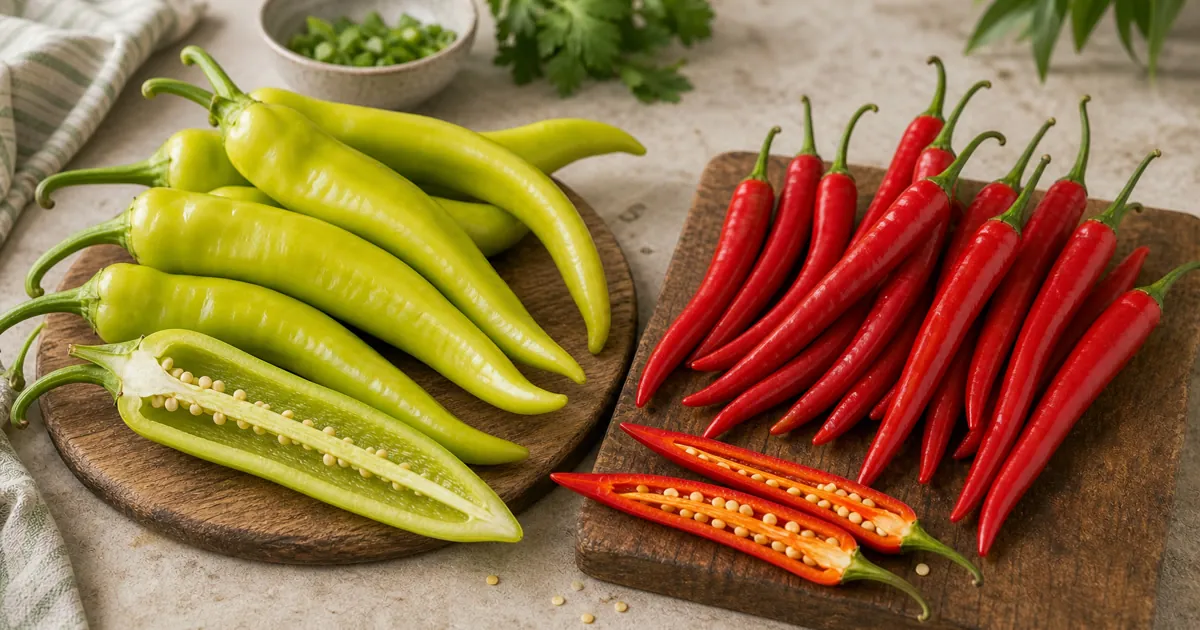
The name on the bin needs interpretation before the number is useful. Thai cooking educator Pailin Chongchitnant distinguishes the small, very hot bird's-eye chile called prik kee noo from the larger, milder spur chile called prik chee fa.
North American markets often sell the small green or red bird's-eye type simply as Thai chili. A recipe asking for a larger mild red Thai chile is requesting color and chile flavor with less heat, so substituting a 100,000 SHU bird's-eye pod can distort the entire dish.
UF/IFAS describes a typical Thai bird pepper as roughly 1 inch long and under 1/5 inch wide. Its small size does not mean a small dose, because the cited range begins where cayenne's range ends.
Scoville values describe the pepper material rather than the serving. Powdered cayenne disperses through a batch, while a sliced Thai pod can concentrate capsaicinoids in a few pieces unless it is pounded or blended.
The shared boundary is not an equal range
| Comparison point | Cayenne | Thai bird's-eye |
|---|---|---|
| Listed low end | 30,000 SHU | 50,000 SHU |
| Listed high end | 50,000 SHU | 100,000 SHU |
| Shared boundary | 50,000 SHU | 50,000 SHU |
| Ceiling difference | Baseline | 2 times higher |
Flavor and Form: Fine Powder vs Whole Pod
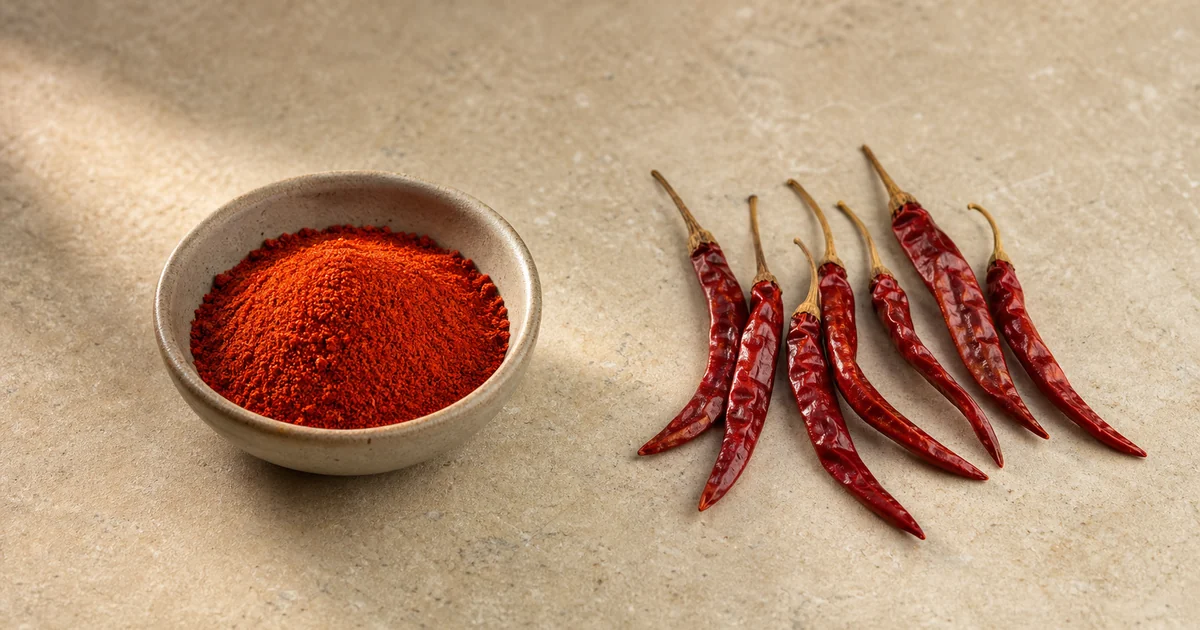
Most cooks are comparing two different forms as well as two pepper names. Cayenne usually arrives as a fine dried powder, while a Thai bird's-eye chile usually arrives as a small fresh pod or a whole dried pod.
UF/IFAS notes that cayenne is commonly dried and used as powder or flakes. That fine form disappears into rubs, soups, sauces, flour mixtures, and fat with little added texture.
Fresh Thai chile adds moisture, skin, seeds, and a sharp fresh-chile presence. Slicing it into fish sauce or a stir-fry leaves recognizable hot pieces, while pounding it with garlic distributes both chile flesh and heat.
The pod's maturity changes its character without changing its identity. Green Thai chiles bring an underripe fresh note, while red pods are ripe and visually sweeter, but either can be very hot when the label refers to the bird's-eye type.
Dried Thai chiles create another choice. Chongchitnant explains that Thai cooks use small spicy dried chiles for heat in curry paste and roast and grind them for chile flakes, while larger mild dried chiles supply color and chile flavor without making the paste unusably hot.
Cayenne can raise the heat of a paste, but it cannot replace the physical bulk of soaked or pounded dried chiles. The paste may need chile solids for body and color before it needs a final capsaicin correction.
This is why one taste word cannot settle the comparison. The meaningful question is whether the recipe needs invisible seasoning, fresh pieces, dried chile solids, or a pounded paste.
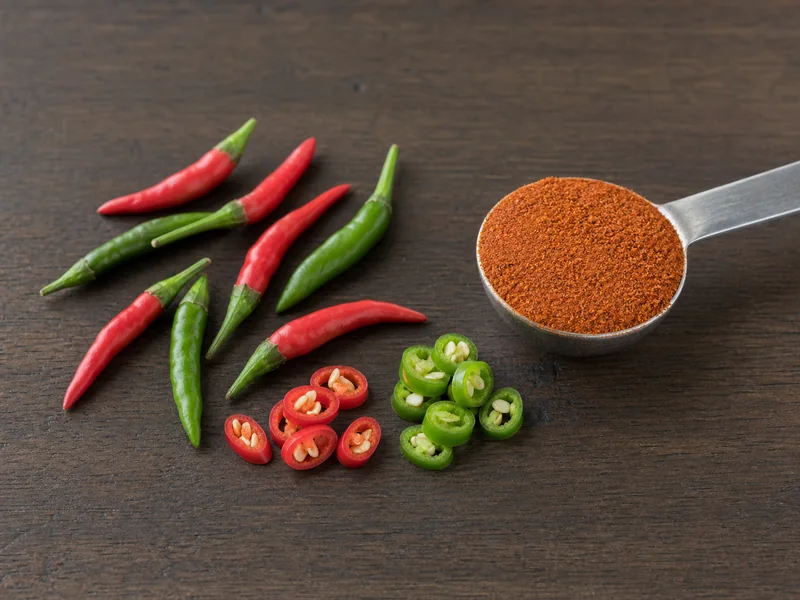
Read the Thai chile name in context
- Prik kee noo: small, very hot bird's-eye chile used to add heat.
- Prik chee fa: larger, milder spur chile used for color and chile flavor.
- Fresh bird's-eye: sliced, pounded, or fried when fresh pod character matters.
- Dried hot chile: pounded into paste or roasted and ground for flakes.
Read the size and method clues because they are more reliable than the English label Thai chili.
When Should You Use Thai Chili Instead of Cayenne?
Choose fresh Thai chile when the cooking action names the pod. Slice it into prik nam pla, pound it with garlic, fry it into a stir-fry base, or add thin rounds where concentrated hot bites are intentional.
Choose dried Thai chile when a curry paste or roasted flake mixture needs chile solids. Hot Thai Kitchen separates small spicy dried chiles from larger mild dried chiles, allowing the cook to control heat and color as two different variables.
Choose cayenne when heat should dissolve into the background. It works in dry rubs, soups, smooth sauces, eggs, batters, and seasoning blends where fresh pieces would change the texture.
Cayenne is also the easier final adjustment for a large wet dish. Add a small measured amount, stir it through the full volume, then taste after the powder has dispersed.
Thai chile is more useful when aroma and visible form matter. A few fresh slices can season a dipping sauce at the table, while a pounded pod can become part of the aromatic base rather than a generic heat addition.
Do not assume every Thai recipe needs the hottest available chile. Chongchitnant's drunken-noodle method combines fiery chiles with a milder chile because the dish needs enough chile flavor and volume without receiving all of its heat from bird's-eye pods.
The method therefore decides the product. Dust, whisk, stir, or bloom points toward cayenne, while slice, pound, fry, soak, or grind points toward a Thai chile in the form the recipe names.
Both can appear in one kitchen without duplicating each other. Cayenne covers evenly dispersed pantry heat, while fresh and dried Thai chiles cover the small-pod techniques that shape Thai sauces, pastes, and condiments.
Match the form to the action
- Dry rub: cayenne keeps the mixture dry and uniform.
- Prik nam pla: fresh Thai chile supplies visible hot slices.
- Curry paste: dried chile provides solids, color, and adjustable heat.
- Smooth soup: cayenne makes a controlled final correction.
- Stir-fry aromatic base: pounded or chopped Thai chile joins garlic and other aromatics.
Which Should You Choose, Cayenne or Thai Chili?
Choose cayenne for predictable measuring and minimal texture. It is the stronger default for spice blends, smooth liquids, large batches, and any dish where the heat should not announce a visible pepper piece.
Choose a bird's-eye Thai chile for sharper fresh pod heat and recipes that slice, pound, or fry the chile. Verify that the recipe means the small hot type rather than the larger mild spur chile.
At the market, do not trust the word Thai by itself. Compare pod size and the recipe's requested form, because a one-inch bird's-eye pod and a larger prik chee fa serve different heat and color roles.
At home, keep cayenne as a dry seasoning and buy or freeze Thai chiles for dishes that need their physical form. One does not make the other redundant because they solve different preparation problems.
The shortest reliable answer is practical. Cayenne seasons the batch, while Thai chile becomes part of the method and sometimes part of the bite.
Buy by pod size and final use
For cayenne, choose pure powder in a container small enough to finish while its aroma remains clear. Read the ingredients so a seasoned chili-powder blend does not enter a recipe that expects pure cayenne.
For bird's-eye Thai chiles, look for small firm pods with intact skin and stems free of damp rot. Green and red pods can both be useful, but the recipe may care about color and ripeness.
For a mild Thai-chile role, do not buy the smallest hottest pod by default. A larger mild red chile may be the ingredient that lets a paste or stir-fry carry more chile flavor without excessive heat.
Substitution
Cayenne can replace Thai chile when the missing job is heat in a cooked or blended dish. Begin with a small pinch, distribute it through the full volume, and adjust after tasting.
The shared 50,000 SHU boundary does not create a universal conversion. A Thai bird's-eye pod can reach 100,000 SHU, while powder mass, pod size, ripeness, and the number of servings all change the result.
If the recipe slices fresh chile into a condiment or garnish, use another small fresh hot pepper rather than cayenne. Serrano can preserve fresh pieces and a clean green character, although its typical heat band is lower.
If the recipe pounds fresh chile with garlic or herbs, replace both moisture and solids. Cayenne can adjust heat afterward, but powder alone will leave the paste short of fresh chile material.
If the recipe makes a curry paste from dried chiles, choose dried pods first. Chongchitnant recommends dried árbol for the small spicy role and guajillo or puya for the larger mild role when Thai varieties are unavailable.
Thai chile can replace cayenne when fresh pieces and moisture are acceptable. Mince the pod into soup, beans, stew, or a chunky sauce, but do not put fresh chile into a dry rub that must remain dry.
Dried Thai chile can make a closer cayenne replacement after grinding. Sift or grind it evenly if a fine texture matters, then measure cautiously because its listed ceiling is higher.
Substitute the physical form before adjusting the heat. A fresh garnish needs a fresh chile, a curry paste needs chile solids, and a smooth finished sauce is where cayenne can work most cleanly.
Freeze extra pods and protect your hands
Hot Thai Kitchen recommends freezing fresh chiles whole in a freezer bag and using them without thawing, since thawed pods soften and become harder to chop. The texture suits cooked or pounded dishes better than a crisp raw garnish after freezing.
Keep cayenne powder closed and away from heat and steam. Measure over a plate or counter rather than over a boiling pot so moisture stays out of the jar and an accidental pour does not ruin the batch.
Iowa State Extension warns that capsaicin transfers easily to the face and eyes. Wear gloves if you are sensitive, wash tools after cutting the pods, and let grinder dust settle before opening the lid.
Cayenne Pepper vs Thai Chili FAQ
- UF/IFAS - Pepper Production in Miami-Dade County
- Cornell Cooperative Extension - Pepper Secrets
- UF/IFAS Gardening Solutions - Peppers by Scoville Units
- Hot Thai Kitchen - Essential Thai Ingredients
- Hot Thai Kitchen - Traditional Thai Red Curry Paste
- Iowa State University Extension - Growing Peppers