
Gochujang vs Sambal Oelek: Texture, Flavor, and Swaps
Gochujang gives sweet fermented body and cling. Sambal oelek gives direct chile heat and a looser texture, so choose by the sauce job before adjusting a swap.

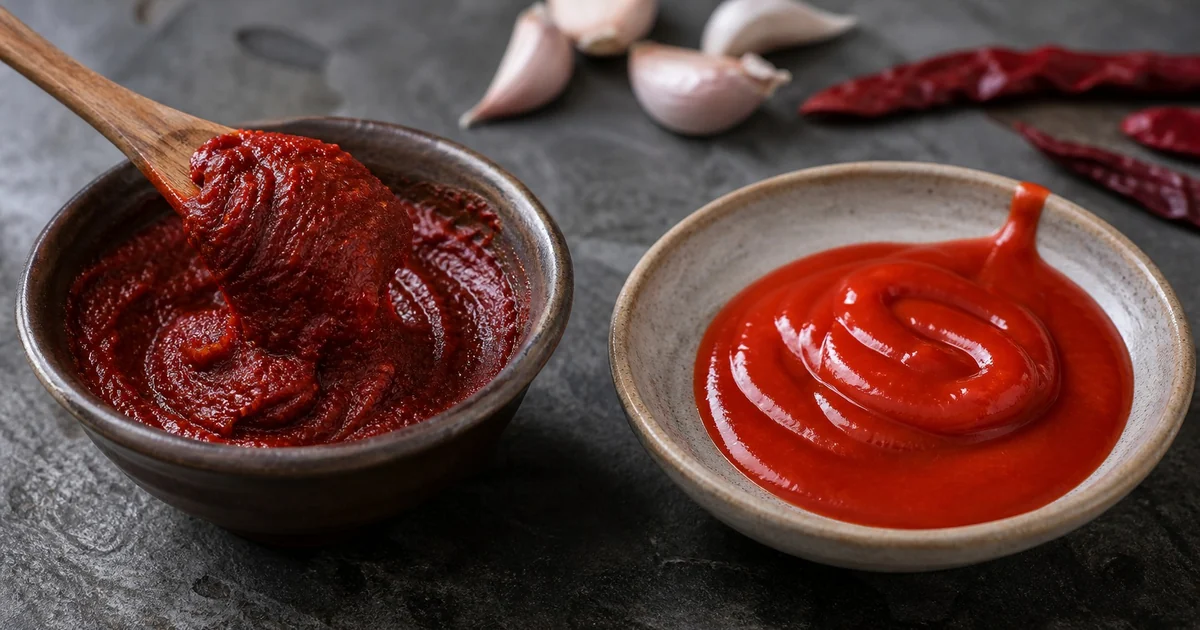
Gochujang
Fermented Korean chile pasteSambal Oelek
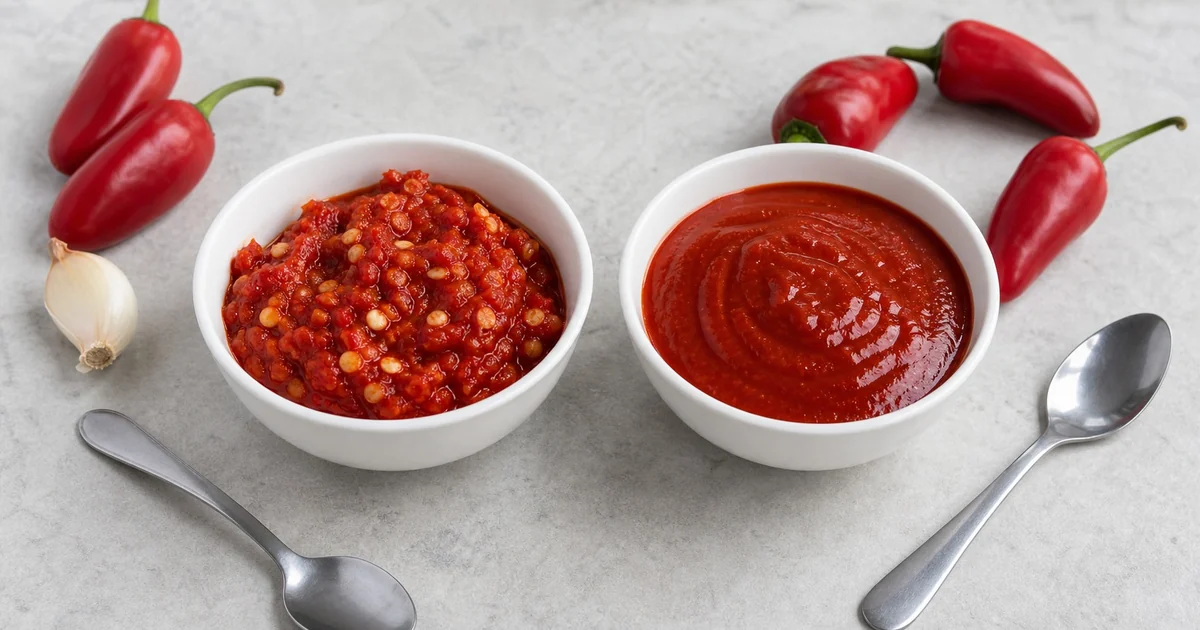
Plain ground chile sauce- Texture: Dense, smooth, and clingy vs Coarse, spoonable, and easier to loosen
- Flavor direction: Savory, sweet, salty, and fermented vs Direct chile flavor with a simpler base
- Best role: Glazes, braises, marinades, and coating sauces vs Stir-fries, soups, dipping sauces, and table heat
Gochujang vs Sambal Oelek at a glance
| Attribute | Gochujang | Sambal Oelek |
|---|---|---|
| Core identity | Fermented Korean chile paste | Plain ground chile sauce |
| Texture | Dense, smooth, and clingy | Coarse, spoonable, and easier to loosen |
| Flavor direction | Savory, sweet, salty, and fermented | Direct chile flavor with a simpler base |
| Best role | Glazes, braises, marinades, and coating sauces | Stir-fries, soups, dipping sauces, and table heat |
| Heat control | Builds with sweetness and body | Reads faster because chile stays forward |
| Swap start | 2 tsp sambal + 1 tsp mild miso + 1/4 tsp sugar | 2 tsp gochujang + 1 tsp water + a few drops of rice vinegar |
Gochujang and Sambal Oelek side by side
Codex defines gochujang around fermented grain, red pepper powder, salt, and water, with soybean ingredients and sugars allowed.
Huy Fong presents sambal oelek as a full-bodied sauce focused on the taste of chiles, which makes it a useful plain commercial reference.
What Is the Difference Between Gochujang and Sambal Oelek?
Although gochujang and sambal oelek can both make a dish red and hot, choose gochujang for fermented savoriness, sweetness, and cling or sambal oelek for direct chile flavor and a looser texture according to the sauce job.
The Codex regional standard defines gochujang as a fermented red paste based on grain, red pepper powder, salt, and water. The standard says the grain is saccharified, salted, fermented, and aged, while red pepper powder may be mixed before or after fermentation.
That process explains why gochujang changes more than heat. Codex also permits ingredients such as powdered meju, soybeans, sugars, soy sauce, and fermented soybean paste, so a spoonful can add grain body, sweetness, salt, and fermented flavor at once.
Huy Fong describes its Sambal Oelek as a full-bodied sauce that keeps chiles at the center, making it a useful reference for the plain commercial style even though another brand may use a different chile, acid level, preservative system, or texture.
Read the ingredient label before making a substitution because both categories vary by product. The label tells you whether the missing adjustment is sugar, salt, acid, soybean savoriness, or simply water.
The quickest decision is to identify what the original ingredient does after cooking. A glaze needs cling, a broth needs clean dispersion, and a table condiment needs a flavor that still works without several corrective ingredients.
Which Is Hotter, Gochujang or Sambal Oelek?
Because there is no dependable universal Scoville number for either jar, a single heat multiplier would give false precision even though Codex sets a minimum capsaicin quality factor of 10 parts per million for standardized gochujang.
Codex specifies a gas-chromatography method for measuring capsaicin in gochujang. The same standard allows several optional ingredients and requires no consumer-facing SHU band, which means two compliant products can deliver different perceived heat.
Huy Fong also does not publish one SHU figure on its Sambal Oelek product overview. Its description emphasizes chile taste, so the practical comparison begins with your two labels and a small measured addition to the dish.
Sambal oelek often reads as the faster heat because the chile is not cushioned by the same fermented grain body and possible sugars, but this cooking inference is a starting expectation rather than a fixed ranking.
Gochujang can still become forceful when a glaze reduces. Water evaporates while salt, sugar, chile, and fermented solids remain, which concentrates several sensations together and makes late tasting more useful than an assumed ratio.
For a new brand, start with one teaspoon in the complete sauce and taste before adding the rest. This measured approach matters most in a cold dip, where neither dilution nor cooking will soften an imbalance.
Which Paste Suits Which Sauce?
Choose by the finished sauce rather than color or spoon volume, using the table below to identify the jobs that most often decide between these two pastes.
| Sauce job | Better starting choice | Reason |
|---|---|---|
| Sticky glaze | Gochujang | Grain solids and possible sugars help the sauce coat and brown |
| Clear soup or broth | Sambal oelek | The looser chile base disperses without adding as much sweetness |
| Cold dipping sauce | Sambal oelek | Direct chile flavor leaves room to set sugar, acid, and salt separately |
| Braise or stew | Gochujang | Fermented savoriness and body can remain present through longer cooking |
| Fast stir-fry | Sambal oelek | A small amount spreads quickly when liquid enters the wok |
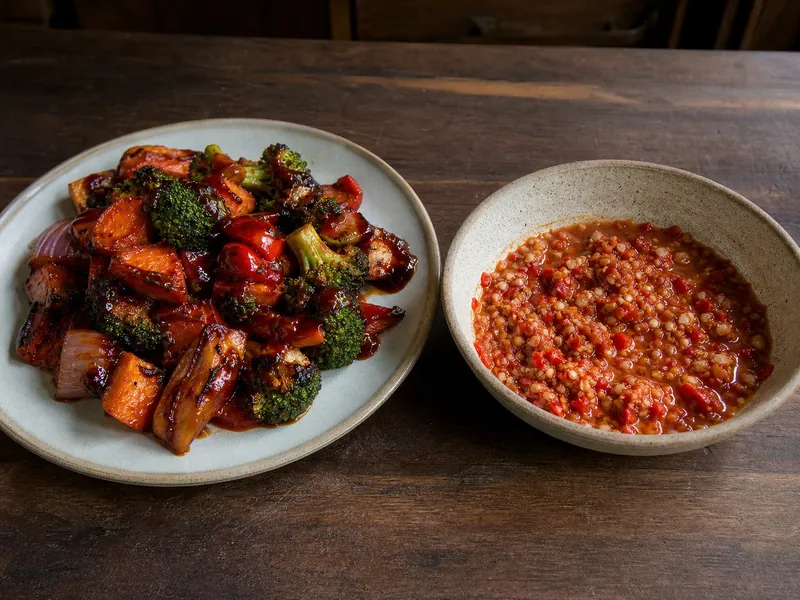
| Roasted vegetable coating | Gochujang | The dense paste stays on the surface instead of running into the pan |
For barbecue glaze, braised tofu, roasted squash, or a thick noodle coating, gochujang starts closer to the needed structure. Add water, stock, or vinegar to control flow instead of replacing its body and then rebuilding it.
For fried rice, broth, dumpling dip, or a quick chile addition at the table, sambal oelek gives you more control over the other flavors. You can add sugar, soy sauce, miso, or vinegar only when the dish needs them.
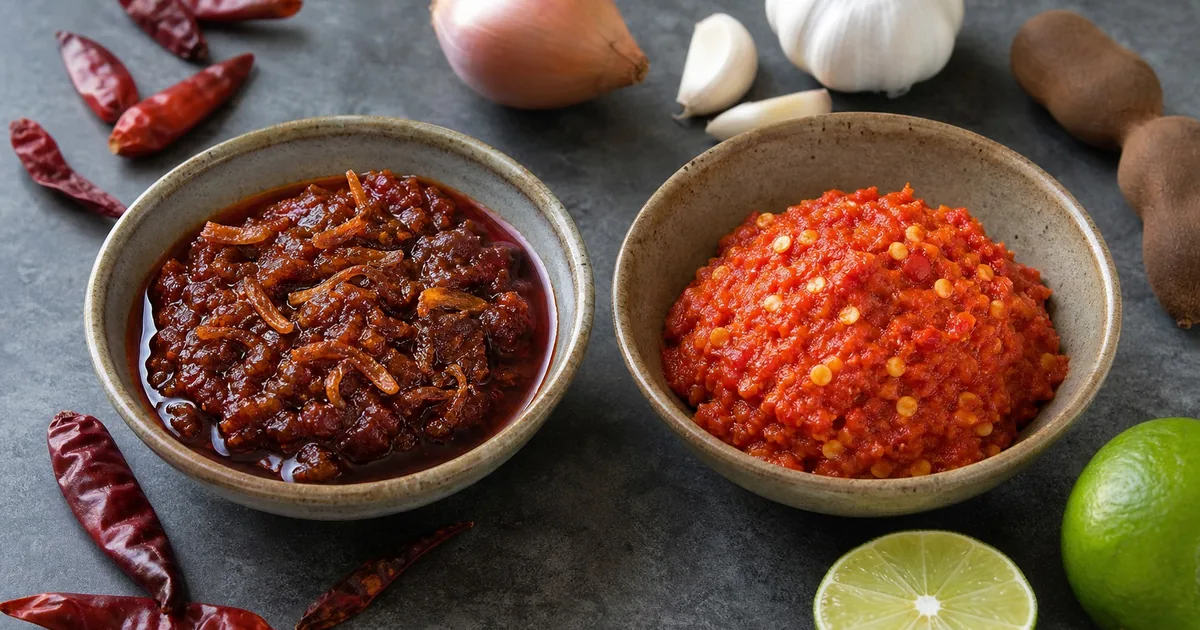
Because sriracha brings a smooth pourable structure, comparing it with gochujang answers a different question from the contrast here between fermented paste and coarse chile sauce.
The same separation applies when comparing sambal oelek and sriracha, where texture and sweetness can matter more than color. Nam prik pao and sambal oelek also split along a different axis because the roasted condiment brings its own sweet and savory profile.
When a recipe names a traditional ingredient, preserve that identity when possible. A modified substitute can keep dinner moving, but it does not turn one condiment into the other.
Can You Substitute Sambal Oelek for Gochujang?
To replace one tablespoon of gochujang, begin with 2 teaspoons sambal oelek, 1 teaspoon mild miso, and 1/4 teaspoon sugar as a starting blend for balance rather than an equivalence claim.
Sambal supplies chile while miso supplies fermented soybean savoriness that the Codex standard allows in gochujang. Sugar replaces part of the sweetness found in many commercial pastes, but the exact need depends on the original label and the rest of the recipe.
Mix the three ingredients before they enter the dish. A uniform blend makes it easier to judge thickness and prevents a pocket of miso or sugar from creating a misleading taste.
For a glaze, reduce another liquid by one teaspoon or add a small amount of starch only when the sauce still runs off the food, since miso brands and cooking times change the final body.
For soup or braise, the looser replacement is usually helpful. Stir the blend into a small amount of warm liquid first, then return it to the pot so the miso disperses without leaving lumps.
For a cold sauce, add acid after the first taste because commercial sambal formulas differ. The goal is to restore the missing fermented depth and sweetness while keeping the original sauce's salt and acidity under your control.
Stop adjusting when the dish reaches the role gochujang was meant to fill because more miso may add too much salt and more sugar may hide the chile without restoring the missing grain-like body.
Can You Substitute Gochujang for Sambal Oelek?
To replace one tablespoon of sambal oelek, begin with 2 teaspoons gochujang, 1 teaspoon water, and a few drops of rice vinegar to restore flow and move the flavor toward a brighter chile sauce.
This swap remains sweeter, smoother, and more fermented than plain sambal. It works best inside a cooked sauce where other ingredients can absorb those differences, and it is less convincing as an exposed table condiment.
Whisk the gochujang with water before adding vinegar. A smooth dilution lets you see whether one teaspoon of water is enough, while adding all the acid first can make a thin sauce that still tastes too sweet.
For stir-fry, reserve the diluted paste until the aromatics are fragrant and liquid is ready so it can spread through the pan without sitting dry against high heat.
For soup, add half the replacement and taste the broth before using the rest. Gochujang changes salt, sweetness, color, and viscosity together, so a full spoon can shift several balances at once.
For dipping sauce, use this replacement only when fermented sweetness belongs in the final flavor. If the recipe depends on visible chile pieces and a clean sharp finish, another plain chile paste will preserve the intended texture more closely.
Water and vinegar can make gochujang looser and brighter, but the condiment's identity sets a ceiling because those additions cannot remove its fermented grain base.
How to Add Either Paste Without Scorching It
Add either condiment when its solids can dissolve without scorching, since the label and pan conditions matter more than a rule that treats every red paste the same.
When a gochujang label lists sugar, keep the paste moving and add cooking liquid promptly over high heat. Browning may help a glaze, but a dry layer on the pan can turn bitter before the rest of the sauce is ready.
Sambal oelek can enter earlier with aromatics when the pan contains enough oil or moisture. Its chile pieces can still catch on a dry surface, so the next liquid should be measured and ready.
Use this adjustment order after the condiment is dispersed:
- Correct thickness with water, stock, or cooking time.
- Correct fermented savoriness with a small amount of mild miso.
- Correct sweetness with sugar in small pinches.
- Correct brightness with rice vinegar a few drops at a time.
- Correct salt only after every other ingredient is mixed.
Changing one variable at a time prevents a common failure where extra sugar demands extra acid and then extra salt. A measured sequence also shows whether the original substitution was already close enough.
Keep a separate spoon for tasting after raw ingredients enter the sauce. This avoids carrying raw meat juices back into the condiment jar or the finished food.
Storage And Marinade Safety
Because formulas and packaging differ, follow the specific jar's storage instruction and the FDA advice to keep foods cold when the label requires refrigeration.
Use a clean, dry utensil and close the lid promptly. These steps limit the introduction of food particles and moisture, while the printed manufacturer direction remains the controlling storage instruction.
For marinades, the FDA says to marinate food in the refrigerator because bacteria can multiply rapidly at room temperature. Mix the complete gochujang or sambal sauce before raw meat, poultry, or seafood enters the bowl.
The FDA says used marinade should not return as a serving sauce unless it reaches a rapid boil, so the simpler option is to reserve a clean portion before raw food touches the mixture.
Discard a condiment that looks or smells suspicious rather than trying to rescue it with heat. The FDA notes that food can be unsafe even when spoilage is not obvious, so the label, clean handling, and proper refrigeration matter more than a visual guess.
The final choice stays simple. Use gochujang when the dish needs fermented body and cling, and use sambal oelek when it needs direct chile flavor with fewer built-in adjustments.
Gochujang vs Sambal Oelek
Reach for Gochujang when you want Glazes, braises, marinades, and coating sauces.
Reach for Sambal Oelek when you want Stir-fries, soups, dipping sauces, and table heat.
Gochujang vs Sambal Oelek FAQ
- Codex Alimentarius - Regional Standard for Gochujang (CXS 294R-2009)
- Sempio - Jang Paste and Gochujang Products
- FDA - Are You Storing Food Safely?