
Nam Prik Pao vs Sambal Oelek: Choose the Right Paste
Choose nam prik pao for sweet roasted depth, oil, and savory seasoning. Choose sambal oelek when the dish needs direct chile heat and a coarse, acidic paste.

Nam Prik Pao
Thai roasted chile jamSambal Oelek
Indonesian-style crushed chile paste- Core character: Roasted chile, shallot, garlic, tamarind, savory seafood notes vs Fresh crushed chile, salt, and a clean acidic edge
- Texture: Thick, oily, jam-like vs Wet, coarse, and spoonable
- Sweetness: Usually clearly sweet vs Usually little or no added sugar
Nam Prik Pao vs Sambal Oelek at a glance
| Attribute | Nam Prik Pao | Sambal Oelek |
|---|---|---|
| Best role | Sweet-savory roasted seasoning and finishing paste | Direct chile heat and acidity |
| Core character | Roasted chile, shallot, garlic, tamarind, savory seafood notes | Fresh crushed chile, salt, and a clean acidic edge |
| Texture | Thick, oily, jam-like | Wet, coarse, and spoonable |
| Sweetness | Usually clearly sweet | Usually little or no added sugar |
| Best dishes | Tom yum, stir-fries, fried rice, noodles, glazes | Noodles, fried rice, marinades, dressings, table seasoning |
| Swap start | Use 1 teaspoon, then correct sweetness and savoriness | Use 1 teaspoon for heat, then add sugar and oil if needed |
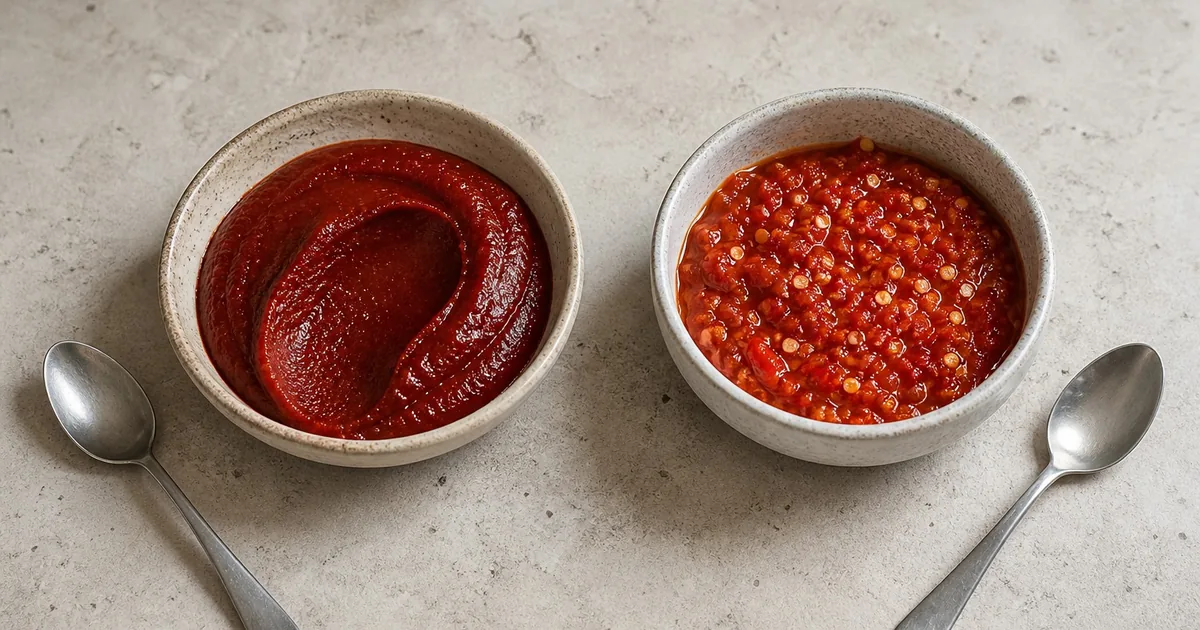
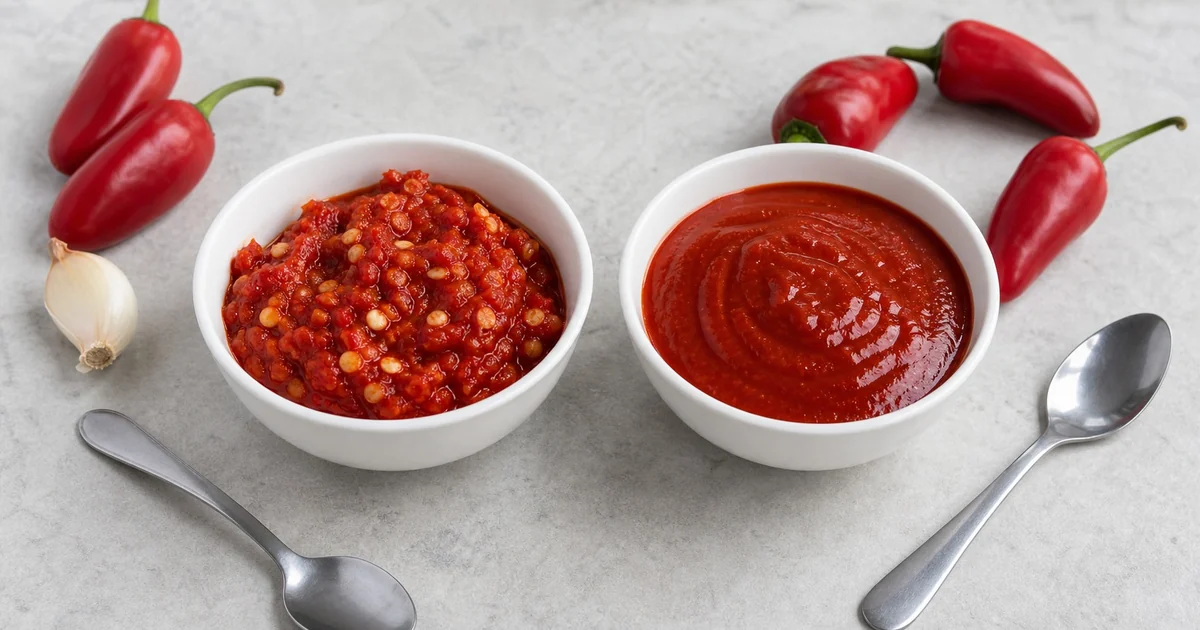
Nam Prik Pao and Sambal Oelek side by side
Nam prik pao builds a finished flavor with fried aromatics, tamarind, sugar, and often shrimp paste or fish sauce.
Sambal oelek keeps the chile in front. Commercial jars commonly add salt and acid but far less sweetness and roasted depth.
When Should You Use Nam Prik Pao or Sambal Oelek?
Choose nam prik pao when the paste must season the whole dish with sweetness, roasted aromatics, oil, and savory depth. It belongs in tom yum, seafood stir-fries, fried rice, noodles, and glazes where one spoon should do several jobs.
Choose fresh crushed chile paste when the food already has its own sugar, aromatics, and savory seasoning. Sambal oelek adds visible chile pulp and a clean heat without making every dish taste roasted or sweet.
The two jars solve different problems, so compare the missing flavor before choosing one.
What Are Nam Prik Pao and Sambal Oelek Made Of?
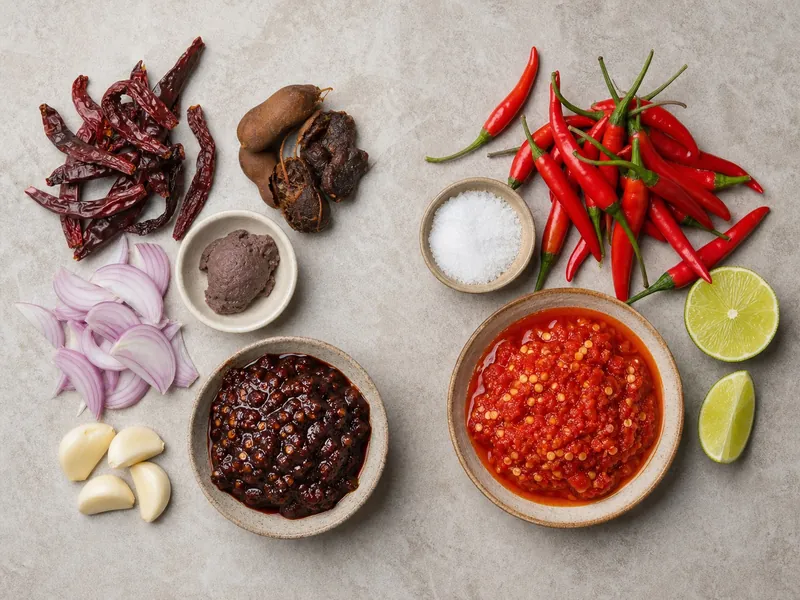
Nam prik pao is a family of roasted Thai chile pastes, not one fixed jar formula. The Thai Ministry of Foreign Affairs describes nam prik as a shared-table food whose heat and character change with local ingredients, while the roasted branch commonly combines dried chile, shallot, garlic, tamarind, sugar, and savory seafood seasoning.
Chef Pim Techamuanvivit described nam prik pao to the Michelin Guide as a chile jam containing garlic, shallots, fish sauce, tamarind, and shrimp paste. Home and commercial versions may omit seafood, change the sweetener, or carry much more separated chile oil, so the product name cannot settle allergens or sweetness.
The Smithsonian Asian Pacific American Center presents sambal oelek in its basic hand-ground form as chile and salt, with heat and tang adjusted by the cook. A widely sold Huy Fong jar adds acetic acid, which explains why many US shoppers know sambal oelek as a bright, acidic paste rather than a roasted or fried sambal.
Check the exact ingredient and allergen panels. An alternative for nam prik pao may need to replace sweetness, tamarind, oil, and seafood savoriness together, while a sambal replacement usually starts with chile texture and acidity.
Which Is Hotter, Nam Prik Pao or Sambal Oelek?
Sambal oelek usually tastes sharper because crushed chile remains the main ingredient. Nam prik pao may contain hot chiles, yet sugar, oil, tamarind, and fried aromatics spread that heat across a richer paste.
Neither name promises one fixed Scoville rating. Cultivar, seed content, recipe, and brand change the result, so use the burn from capsaicinoids as a tasting issue rather than a label guarantee.
Texture also changes the dish: sambal leaves coarse chile pieces, while nam prik pao melts into a glossy sauce and may separate into paste and red oil.
Pick The Paste By Dish
Pick the condiment that supplies what the recipe has not already supplied.
| Dish | Better first choice | Reason |
|---|---|---|
| Tom yum | Nam prik pao | Adds roasted chile oil, sweetness, and savory depth |
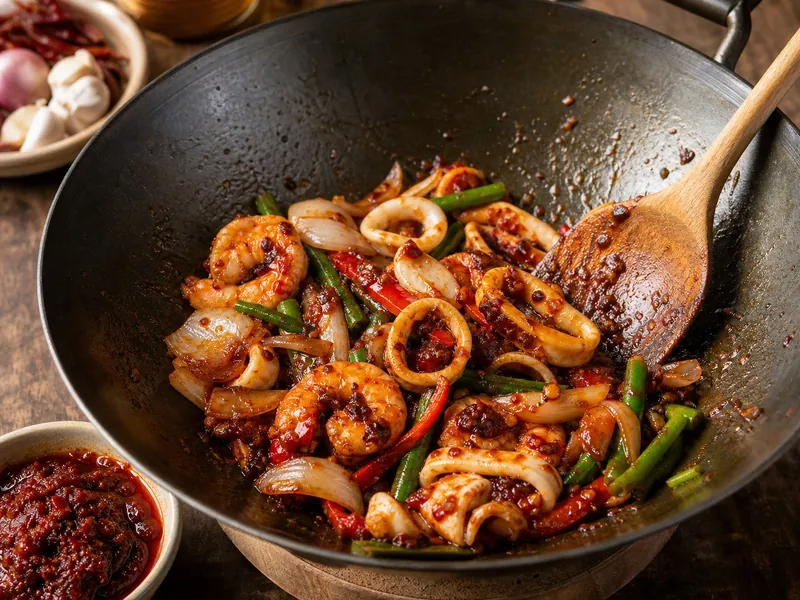
| Seafood stir-fry | Nam prik pao | Coats seafood with a glossy, rounded sauce |
| Fried rice with sugar and soy already measured | Sambal oelek | Adds heat without a second sweet sauce |
| Vinaigrette or dipping sauce | Sambal oelek | Disperses chile pulp through an acidic base |
| Toast or rich noodle topping | Nam prik pao | Jam-like body stays on the surface |
Thai SELECT uses nam prik pao plus the oil from its jar in a crab curry stir-fry, which shows why draining that oil changes the intended sauce. Sambal oelek works better when a cook wants to control oil separately.
Can Nam Prik Pao and Sambal Oelek Replace Each Other?
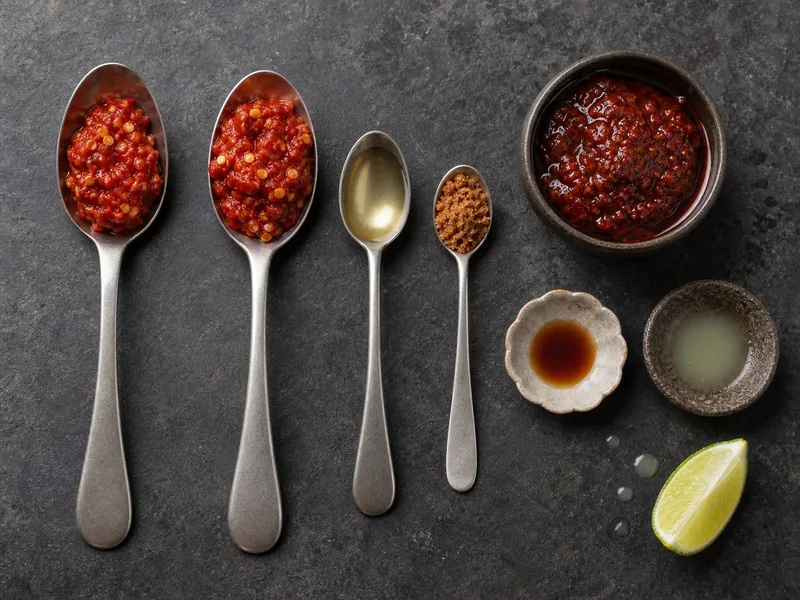
To replace 1 tablespoon of sambal oelek, start with 2 teaspoons nam prik pao and reduce another sweetener by about 1 teaspoon. Add lime juice or mild vinegar a few drops at a time because the roasted paste is usually sweeter, oilier, and less direct.
To replace 1 tablespoon of nam prik pao, start with 2 teaspoons sambal oelek, 1 teaspoon neutral oil, and 1/2 teaspoon brown or palm sugar. Add tamarind for sour fruit and fish sauce or a vegetarian savory seasoning only when the dish permits it.
Correct by dish, not by color. In tom yum, sambal needs roasted oil and sweet-sour depth.
In a vinaigrette, nam prik pao needs extra acid and often less added sweetener.
In fried rice that already contains sugar and soy, sambal may need no correction beyond oil. Use the swap matched to the dish when neither jar is available.
Are Nam Prik Pao and Sambal Oelek Vegan?
Traditional and commercial nam prik pao can contain shrimp paste, dried shrimp, fish sauce, or other seafood ingredients. A vegetarian jar exists, but the product name alone does not prove that the jar is vegetarian.
Plain sambal oelek is often the simpler choice for vegan cooking, although preservatives and processing vary by brand. Read the ingredient and allergen panels every time.
A jar labeled chili garlic sauce is also a separate product because extra garlic and often sugar move it away from plain sambal oelek.
Buying And Storage
Buy nam prik pao by reading the whole ingredient list, not by looking for one supposedly authentic formula.
Roasted aromatics, tamarind, sweetener, seafood seasoning, and the amount of oil tell you whether the jar can season tom yum, glaze seafood, or spread on toast. Oil above the paste is normal in some styles, and Thai SELECT deliberately uses both paste and surface oil in its crab curry stir-fry.
Choose sambal oelek when chile appears first and the ingredient list stays close to the direct heat and texture the dish needs.
Do not confuse it with chili garlic sauce or sweeter fried sambals. Those products bring their own garlic, sugar, oil, or fermentation and change the correction.
Follow the opened-jar refrigeration instructions on the label, use a clean dry spoon, and discard a jar with mold, gas, or an abnormal odor. Flavor fading is a practical reason to replace an old jar even before spoilage is visible.
Nam Prik Pao vs Sambal Oelek
Reach for Nam Prik Pao when you want Sweet-savory roasted seasoning and finishing paste.
Reach for Sambal Oelek when you want Direct chile heat and acidity.
Nam Prik Pao vs Sambal Oelek FAQ
- Thai SELECT - Pu Pad Pong Garee recipe
- Thailand Ministry of Foreign Affairs - Culture, Ways of Life and Wisdom
- Michelin Guide - Chef Pim Techamuanvivit on nam prik pao
- Smithsonian Asian Pacific American Center - Homemade Sambal Oelek
- Huy Fong Foods - Allergen Statement