

Nam Prik Pao Substitute for Soup, Stir-Fries, and Glazes
For most soups and stir-fries, replace 1 tablespoon nam prik pao with 2 teaspoons sambal mixed with fried shallot and garlic, brown sugar, tamarind, and a little neutral oil.
Heat at a glance
Pick the Substitute from the Dish
Nam prik pao is a thick, shiny Thai roasted-chile paste. Dried chiles, shallots, garlic, dried shrimp or shrimp paste, sugar, tamarind, fish sauce, and oil can all contribute to its sweet, savory, sour, and roasted profile.
The replacement should follow the job it performs in the recipe.
| Dish or use | Best starting replacement | Starting ratio |
|---|---|---|
| Tom yum or broth | Sambal blend | 2 tsp per tbsp |
| Stir-fry or fried rice | Quick roasted-chile blend | 1:1 |
| Glaze or marinade | Sriracha or gochujang blend | 3/4:1 |
| Noodles or eggs | Chili crisp blend | 1:1 |
| Spread or dip | Quick blend or harissa blend | 1:1 |
Soup needs a paste that dissolves without thickening the broth. A glaze needs sugar and enough solids to cling.
A condiment needs fried aroma that remains clear without long cooking. Thai pepper traditions provide the chile context, but the shallot, garlic, sugar, tamarind, and savory ingredients decide whether the swap reads like nam prik pao.
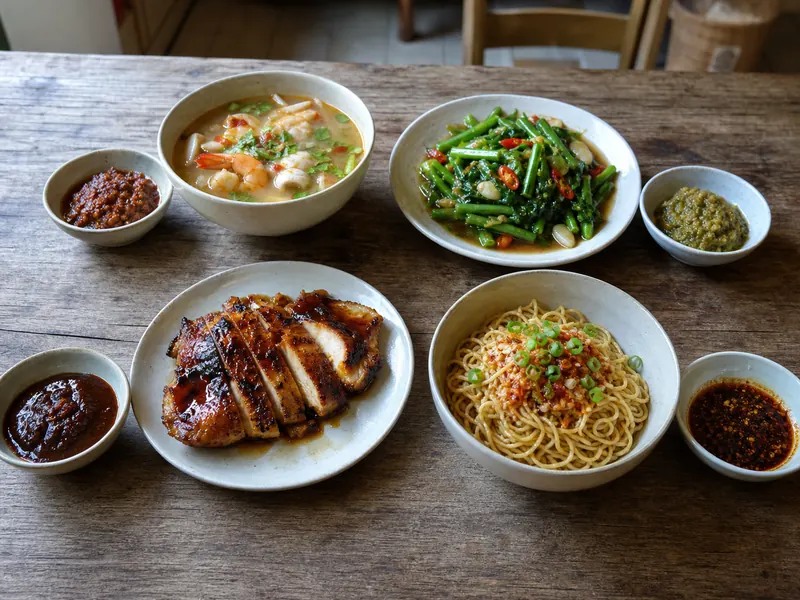
Seven Nam Prik Pao Swaps Ranked by Dish
Quick roasted-chile blend
Closest MatchThe closest fast replacement begins with a plain crushed-chile paste, then restores the roasted shallot, garlic, sweetness, and tamarind that make nam prik pao distinct. Homemade Thai chili paste remains the best option when 45 minutes are available. This blend handles the same jobs in a weeknight dish.
Use it 1:1 after mixing. It fits tom yum, fried rice, noodles, stir-fries, salad dressing, and savory spreads.
Sambal oelek with tamarind and sugar
Runner-Upsambal oelek method supplies chile, salt, and acid without imposing a new spice blend. It lacks the jammy aromatics and sweet-sour balance.
This is the cleanest pantry choice for soup and stir-fry. Taste before adding fish sauce because the sambal may already be salty.
Sriracha with fried shallot
Also GreatSriracha sauce brings chile, garlic, sugar, and vinegar in a smooth form. Fried shallot and a little tamarind move it closer to roasted Thai chile jam.
Choose it for glazes, dipping sauce, sandwiches, fried rice, or a sweet stir-fry. In tom yum, begin with half the amount because vinegar can sharpen the broth.
Thai red curry paste with sugar
Red curry paste has concentrated chile and garlic, but it also brings lemongrass, galangal, and sometimes shrimp paste. It works when the recipe already contains Thai aromatics.
Fry the mixture briefly before adding liquid. Do not use this swap as a toast spread or plain condiment, where the raw curry aromatics can dominate.
Chili crisp solids with tamarind
Chili crisp contributes fried chile, oil, and toasted aroma. Its crunchy solids are unlike smooth nam prik pao, but the format suits noodles, fried rice, eggs, and vegetables.
Read the label for soy, sesame, peanut, or other allergens. This substitute is best when texture is welcome, not in a smooth soup or dressing.
Gochujang with lime and fried garlic
Gochujang replacements show how fermented rice and soybean create dense sweetness and umami. That depth can support a marinade or glaze, though it does not taste Thai.
Use it on grilled meat, mushrooms, or roasted vegetables. Skip it in tom yum because the fermented bean-and-rice body clouds the soup's bright herbal profile.
Harissa with brown sugar and tamarind
Harissa paste supplies roasted chile, garlic, and oil, but cumin and caraway pull it toward North Africa.
This is a practical choice for roasted vegetables, lentils, grilled meat, or a sandwich spread. It is a loose fit for Thai soup and seafood salad.
Rebuild What a Plain Chili Paste Misses
A plain paste can be corrected in five small steps. Make the correction before measuring it into the dish.
- Add fried shallot and garlic for roasted aroma.
- Add brown or palm sugar for jammy sweetness.
- Add tamarind for a dark, rounded sour note.
- Add fish sauce, soy sauce, or mushroom seasoning for savory depth.
- Add neutral oil when the recipe uses the glossy oil from the jar.
2 tsp sambal + 1 tsp fried shallot and garlic + 1/2 tsp brown sugar + 1/4 tsp tamarind
Fry the shallot and garlic until golden, not dark brown. Burnt aromatics make the finished paste bitter.
Stir the sugar and tamarind into the chile base, then loosen with oil.
Taste the mixture on the food that will carry it. A spoonful may seem sweet alone but balanced once dispersed through sour soup or unsalted rice.

Check Shrimp, Fish, Soy, and Sesame Before Swapping
Traditional and commercial nam prik pao may contain dried shrimp, shrimp paste, or fish sauce.
The FDA classifies crustacean shellfish such as shrimp as a major food allergen and requires the specific shellfish to be declared on packaged foods in the United States. Fish is a separate allergen category.
For a vegetarian replacement, use sambal or plain chile paste with fried shallot, fried garlic, sugar, tamarind, and soy sauce or mushroom seasoning.
If an allergy is involved, use products that fit the person's established avoidance plan and prevent cross-contact. Substituting an ingredient does not make a dish safe when another sauce, stock, utensil, or cooking surface still carries the allergen.
Shortcuts That Change the Dish Too Far
Do not replace nam prik pao with plain hot sauce 1:1. Thin vinegar and heat cannot supply fried aromatics, oil, sweetness, or paste body.
Do not assume red curry paste is shellfish-free. Some products contain shrimp paste, and its lemongrass and galangal can redirect a dish.
Do not use sweet chili sauce as the only substitute in tom yum. It supplies sugar and vinegar but lacks roasted chile and savory depth.
Do not increase gochujang simply to make the dish hotter. More paste also adds sweetness, fermentation, and thick starch.
Correct the Finished Dish One Variable at a Time
Wait until the substitute has cooked into the dish, then identify the missing element.
- Hot but flat: add fried shallot, garlic, or a small amount of sugar.
- Sweet but dull: add tamarind or lime by the drop.
- Sharp and thin: add fried aromatics and a little oil.
- Too salty: enlarge the unsalted base. Do not add more sugar first.
- Too thick in soup: dilute with unsalted broth and correct acid afterward.
- Too mild: add chile in small amounts after sweetness and salt are balanced.
For tom yum, stir the substitute into hot broth and wait one minute before judging.
For a stir-fry, fry an unsweetened blend for 20 to 30 seconds, then add the sauce. Sweet sriracha- or gochujang-based blends scorch faster and should go in after liquid.
Refrigerate opened commercial products according to their label.
The chili paste storage guide explains why salt, sugar, oil, and acidity do not make every jar shelf-stable.
Nam Prik Pao Substitution Questions
- Hot Thai Kitchen - Thai Chili Paste (Nam Prik Pao)
- Thai SELECT - Crab Curry Stir Fry with Nam Prik Pao
- FDA - Food Allergies: What You Need to Know
- Food Allergy Research & Education - Shellfish Allergy