
Harissa vs Sriracha: Choose the Right Red Chile Condiment
Choose harissa for earthy chile depth, warm spice, marinades, and cooking. Choose sriracha for a smooth, sweet-tangy finish, dips, noodles, eggs, and table use.

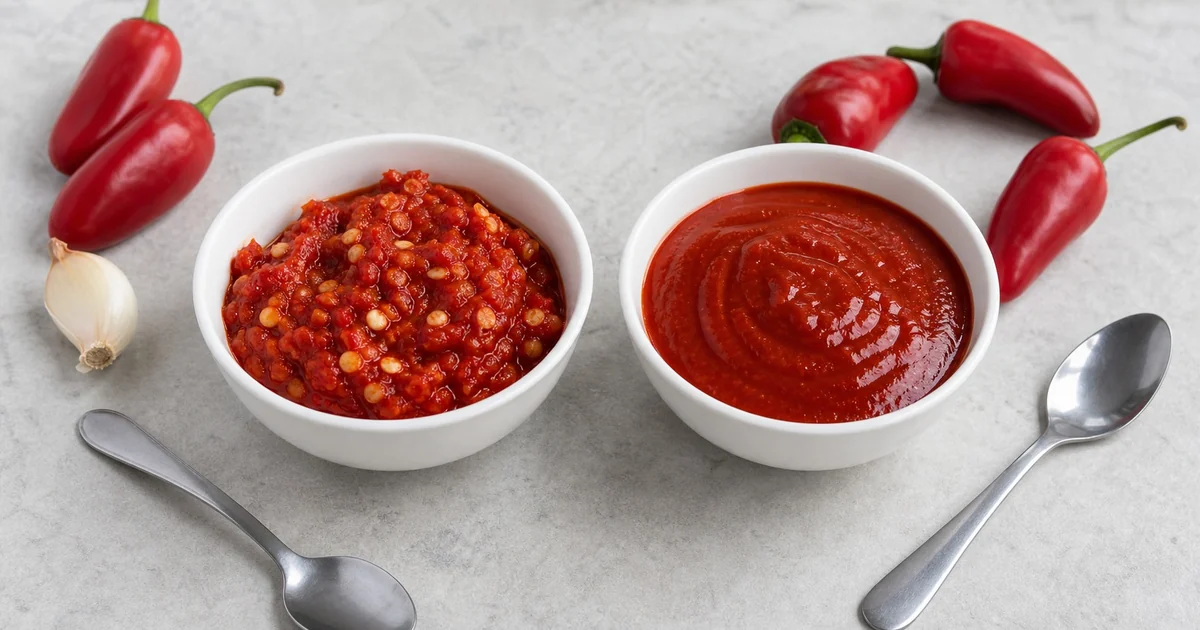
Harissa
North African chile pasteSriracha
Pourable chili sauce- Texture: Dense, coarse, and spoonable vs Fluid enough to squeeze or drizzle
- Flavor: Earthy chile, garlic, coriander, and warm spice vs Bright chile, garlic, sugar, vinegar, and salt
- Best job: Rub, marinade base, stew starter, or grain seasoning vs Table sauce, dip, noodle finish, or quick mayo
Harissa vs Sriracha at a glance
| Attribute | Harissa | Sriracha |
|---|---|---|
| What it is | Dried-chile paste and cooking condiment | Smooth, pourable bottled chili sauce |
| Texture | Dense, coarse, and spoonable | Fluid enough to squeeze or drizzle |
| Flavor | Earthy chile, garlic, coriander, and warm spice | Bright chile, garlic, sugar, vinegar, and salt |
| Best job | Rub, marinade base, stew starter, or grain seasoning | Table sauce, dip, noodle finish, or quick mayo |
| Heat | Recipe- and brand-dependent | Brand-dependent. No universal category SHU |
| Swap start | 2 tsp sriracha plus 1 tsp tomato paste and spice | 2 tsp harissa plus water, vinegar, and sugar |
Harissa and Sriracha side by side
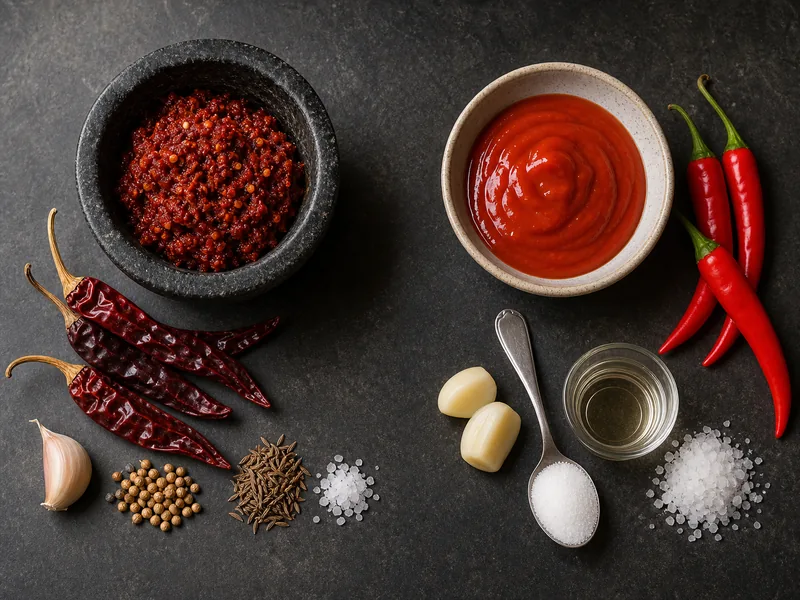
UNESCO describes Tunisian harissa as dried chilli peppers ground with salt, garlic, and coriander. Commercial jars and regional recipes may add oil, caraway, cumin, tomato, or other ingredients.
Sriracha is a sauce category rather than one fixed formula. Huy Fong uses a smooth chile puree, while Sriraja Panich describes a Thai formula built around aged chile, garlic, sugar, vinegar, and sea salt.
When Should You Use Harissa or Sriracha?
Choose harissa when the chile condiment must season the food during cooking. Its dense body and dried-chile flavor belong in marinades, braises, soups, roasted vegetables, couscous, beans, and meat rubs.
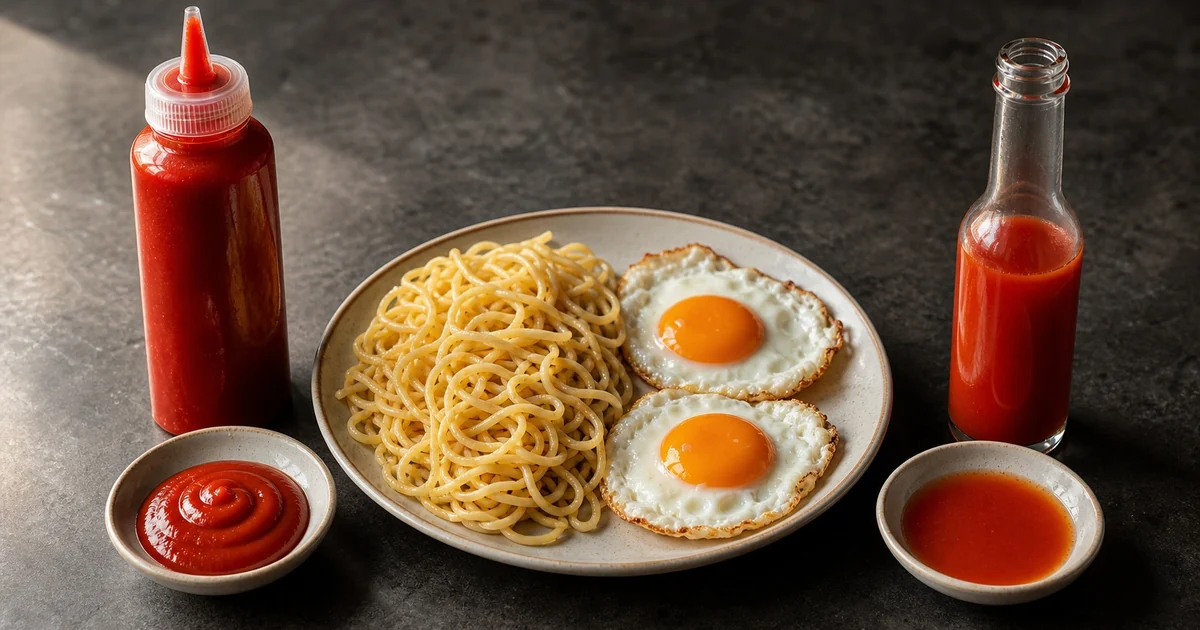
Choose sriracha when the sauce must flow from a bottle and brighten finished food. It spreads quickly through mayonnaise, noodle bowls, eggs, sandwiches, fried rice, and dipping sauces.
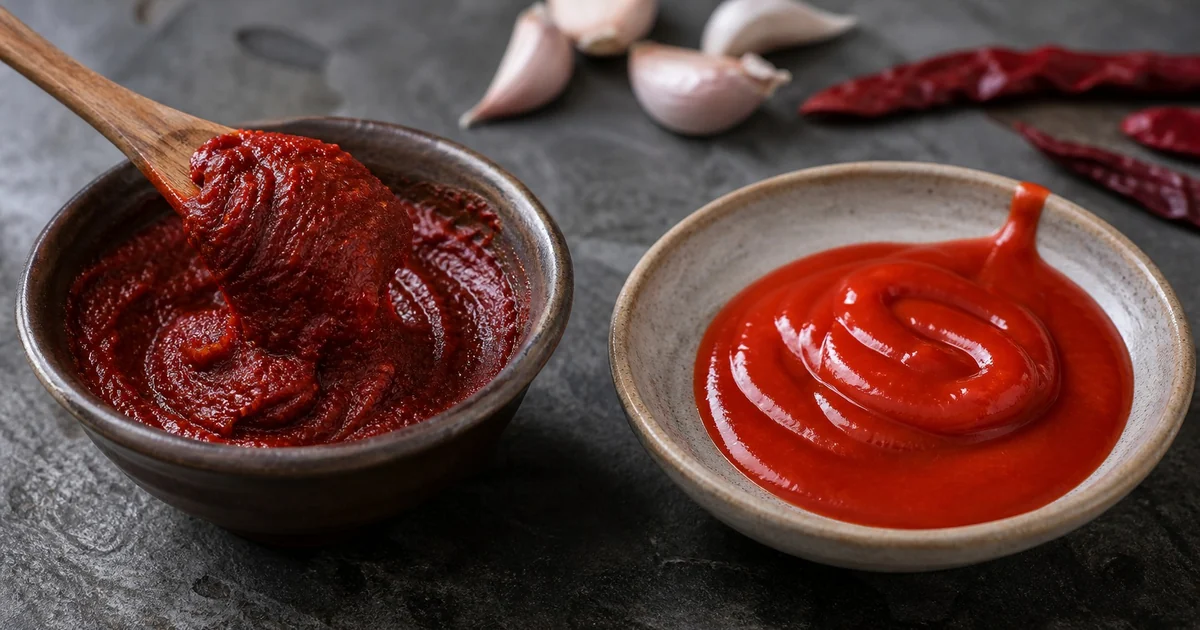
The shortest decision is texture: harissa behaves like a paste, while sriracha behaves like a pourable sauce. That physical difference changes how each coats food before their heat levels matter.
What Are Harissa and Sriracha Made Of?
UNESCO documents Tunisian harissa as sun-dried chilli peppers that are stemmed, deseeded, washed, ground, and seasoned with salt, garlic, and coriander. Families and producers vary the pepper blend and may use caraway, cumin, olive oil, or other additions.
That dried-pepper base gives harissa an earthy, concentrated center. Toasted spice can make it taste warm and aromatic even when the actual capsaicin burn stays moderate.
Sriracha starts brighter. Sriraja Panich names red goat peppers, pickled Thai garlic, sugar, vinegar, and sea salt, then ages the chile for at least three months before blending.
Huy Fong describes sun-ripened chiles pureed into a smooth paste. Those two official examples show why the word sriracha does not guarantee one sweetness, acidity, fermentation method, or heat level.
Body Acid And Browning
A spoon of harissa stays where it is placed. Oil and concentrated solids help it cling to cauliflower, chicken, fish, carrots, or chickpeas, and direct oven heat can darken the paste at the edges.
Loosen harissa before using it as a drizzle. Water reduces thickness, vinegar or lemon adds a sharper finish, and a small amount of sugar can imitate the roundness of a bottled table sauce.
Sriracha already contains enough liquid to run across a plate or disappear into mayonnaise. Its sugar helps a glaze brown, but a heavy layer can scorch before a thick piece of food finishes cooking.
Add sriracha late when the goal is a fresh garlic-vinegar note. Add harissa earlier when the paste should bloom in oil and distribute spice through the entire dish.
Dish By Dish Choices
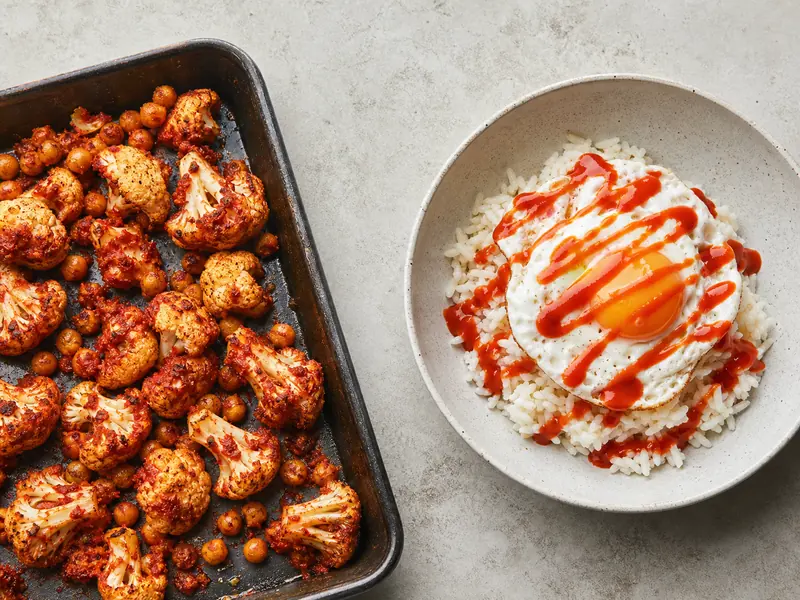
For roasted vegetables, harissa is the stronger first choice because it clings before the tray enters the oven. Mix it with oil and salt, then coat the vegetables in a thin, even layer.
For eggs, dumplings, fries, or a finished grain bowl, sriracha is faster. The bottle delivers acid, sweetness, garlic, and heat without a separate mixing step.
Harissa suits lentils, chickpeas, tomato stews, grilled lamb, fish, and couscous because its spice profile can become part of the base. A spoonful stirred into stock provides more depth than a bright finishing stripe.
Sriracha suits quick noodles, fried rice, sandwiches, and creamy dips because its smooth texture disperses immediately. It can season a cooked dish, but the vinegar-led character remains easier to notice.
Can Harissa and Sriracha Replace Each Other?
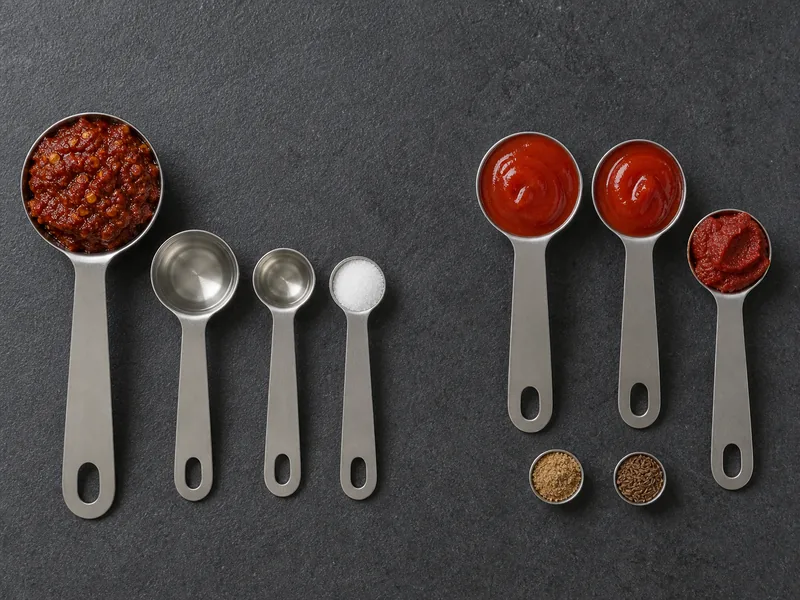
A useful swap rebuilds texture and balance instead of exchanging equal red spoonfuls. Start with the matrix, taste after mixing, and correct only the quality the dish still lacks.
| Recipe needs | Starting replacement | Correction |
|---|---|---|
| 1 tbsp harissa in a marinade | 2 tsp sriracha + 1 tsp tomato paste | Add a pinch each of ground coriander and caraway or cumin |
| 1 tbsp sriracha in a dip | 2 tsp harissa + 1 tsp water | Add 1/2 tsp vinegar and 1/2 tsp sugar |
| Harissa coating for roasting | Sriracha + tomato paste at 2:1 | Use a thin coat to prevent scorching |
| Sriracha table drizzle | Harissa thinned to flow | Strain only if a smooth bottle texture matters |
For other paste replacements, match the missing flavor before choosing a ratio. Sambal oelek is useful when the dish needs coarse fresh chile without warm spice.
Gochujang is useful only when fermented grain body and extra sweetness belong.
These are starting ratios, so a salty harissa, sweet sriracha, or highly acidic brand needs a smaller correction.
Heat Label And Storage
Neither category has one defensible Scoville range. Harissa heat changes with the dried chile blend, seed and placenta removal, recipe, and serving size.
Sriracha changes with the pepper crop and manufacturer formula.
A dark harissa may be mild but concentrated, while a glossy red sriracha may carry more sugar and acid than heat.
Read the ingredient list before swapping. Harissa may contain oil, tomato, citrus, preserved lemon, or a different spice blend, while sriracha may include thickeners, preservatives, or a larger sugar dose.
Check the exact allergen panel because accompaniments and flavored versions may introduce sesame, soy, fish, or wheat.
Taste a measured amount before seasoning a shared dish, then follow the package after opening rather than applying one storage rule to the whole category. Watching for mould, gas and other spoilage signs is what tells you a jar has turned.
Discard a product with mold, gas, a bulging lid, or an odor that conflicts with the label.
Harissa vs Sriracha
Reach for Harissa when you want Rub, marinade base, stew starter, or grain seasoning.
Reach for Sriracha when you want Table sauce, dip, noodle finish, or quick mayo.
Harissa vs Sriracha FAQ
- UNESCO Intangible Cultural Heritage - Harissa, knowledge, skills and culinary and social practices
- Huy Fong Foods
- Sriraja Panich - The Taste of the Original