

KnowThePepper
Chilhuacle Pepper: Grown on Under 10 Hectares in Oaxaca for Mole Negro
The chilhuacle is a rare dried Mexican chile grown only in the Cañada region of Oaxaca, on under 10 hectares, and it is the chile that defines mole negro. Its value is depth and scarcity rather than heat, and no published study reports a Scoville measurement for it.
- Species: Capsicum annuum
- Heat tier: Medium (1K-10K SHU)
- Comparison: the same heat range as a jalapeño because their published ranges overlap
What Kind of Pepper Is Chilhuacle Pepper?
The chilhuacle, also written huacle in the agronomic literature, is one of Mexico's most narrowly grown dried chiles. It is a Capsicum annuum native variety produced in the Cañada region of Oaxaca, inside the Tehuacán-Cuicatlán Biosphere Reserve.
Slow Food records the Cañada as the only area of Mexico where the chile is cultivated, on a total planted area of no more than 10 hectares. That scarcity, not the heat, is the defining fact about this pepper.
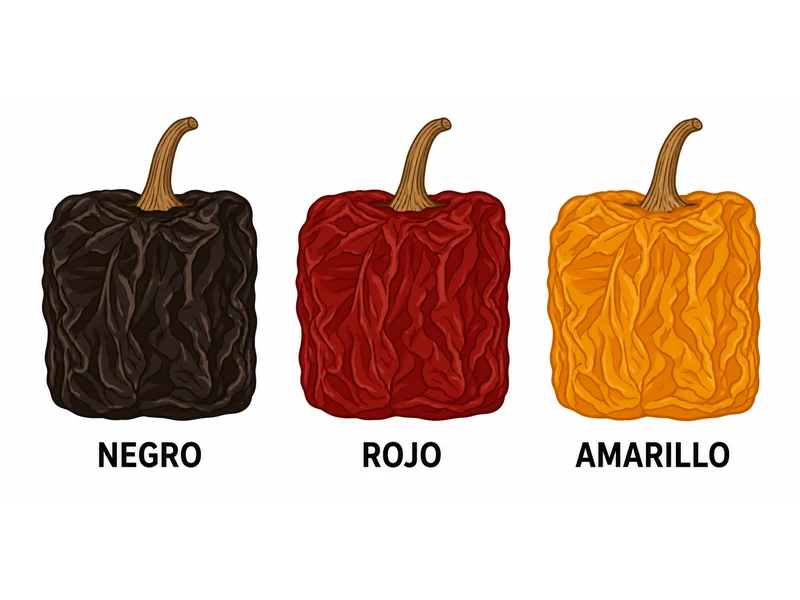
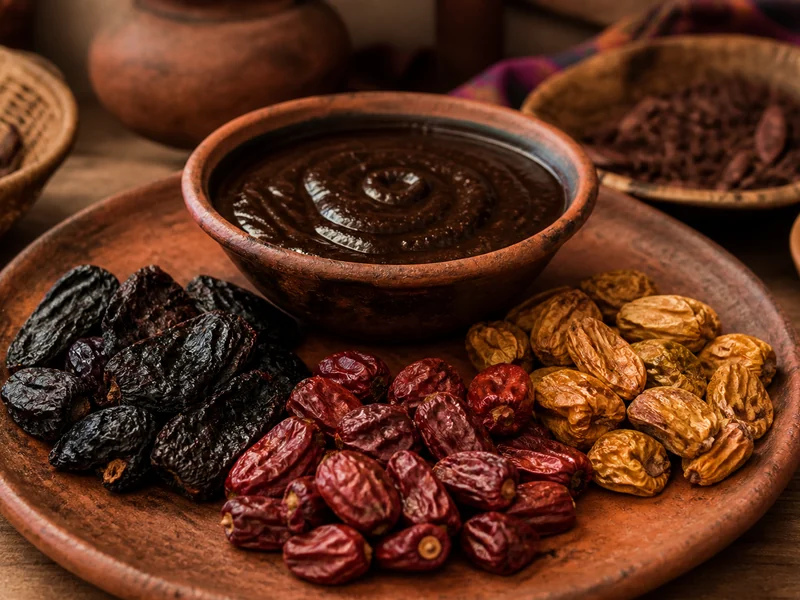
Three color types are grown, and they are not interchangeable. Which one a recipe wants is set out after the cooking section below.
Pepper references commonly report 1,500 to 2,500 SHU, which would place it in the medium-intensity heat band. Treat that as a reported figure rather than a measurement, because the two peer-reviewed studies of this chile describe its cultivation in detail and report no capsaicinoid or Scoville value at all.
What the pods deliver instead is depth. Toasted chilhuacles give dried fruit, tobacco and cocoa notes alongside a smokiness that comes from how they are dried rather than from any smoking step.
Where Does Chilhuacle Pepper Come From?
The chilhuacle belongs to the Cañada, a hot semi-arid valley in Oaxaca whose microclimate suits slow-ripening chiles. Growers there have carried it under traditional agricultural systems, and it remains bound to that one region rather than to a national market.
Unlike chiles that traveled widely through trade, the chilhuacle stayed home. It never reached the distribution of the earthy dried guajillo, which is part of why it is scarce outside Oaxacan specialty markets.
Oaxacan cooks have built mole negro on it for generations, and the negro type supplies both the bitterness and the near-black color the dish is named for. The three color types most likely reflect long farmer selection for different sauces.
The variety is now under real pressure. A 2017 review in the International Journal of Agronomy describes a highly restricted genetic base alongside pest and disease problems that hold yields down, and Slow Food reports growers cutting their planted area because of viral disease and cost.
How Spicy Is Chilhuacle Pepper, and How Does It Taste?
The Chilhuacle Pepper delivers 1.5K–2.5K Scoville Heat Units, placing it in the Medium tier (1K-10K SHU). That makes it roughly the same heat range as a jalapeño because their published ranges overlap.
Flavor notes: smoky and complex.
How Nutritious Is Chilhuacle Pepper?
Two peer-reviewed studies cover this chile, and neither one weighs it.
They report yields, plant heights and fruit dimensions rather than composition, and USDA holds no chilhuacle record either. So this profile publishes no per-serving figures for it.
What can be said holds for dried chiles as a group. Drying removes water and concentrates what remains, so carotenoids and minerals rise per gram while vitamin C falls.
Capsaicin survives drying, because the compound is heat-stable.
The receptor chemistry behind that survival is set out in how capsaicin trips a heat receptor. Any health claim past it needs its own evidence, and none exists for this chile.
What Is Chilhuacle Pepper Best Used For?
Toast the pods before any other step. Dry heat in a skillet, roughly 30 seconds a side until fragrant, activates aromatic compounds that raw pods do not release.
For a straightforward start, rehydrate two or three toasted pods in hot water for 20 minutes. Blend them with garlic, charred onion and a splash of the soaking liquid for an enchilada sauce with more depth than any jarred version.
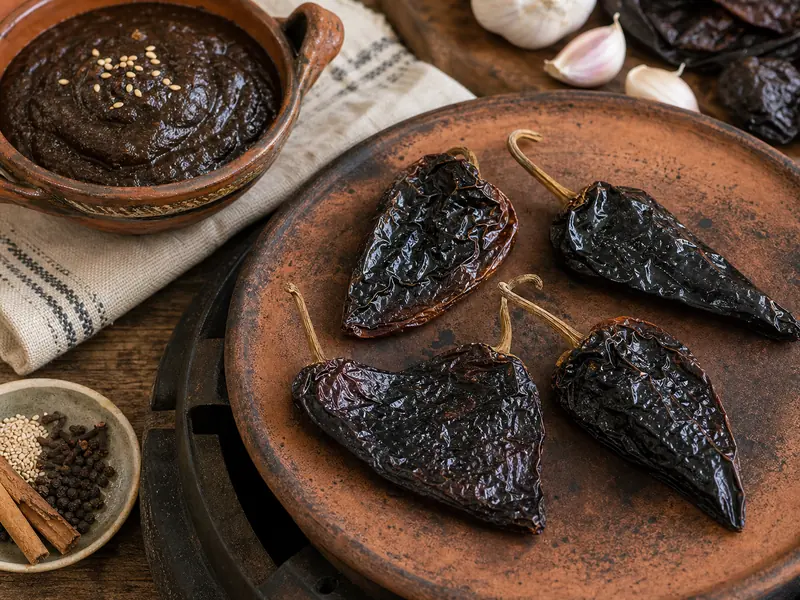
In mole negro the chilhuacle works alongside other dried chiles to build the bitterness and smoke the sauce depends on. The negro type in particular carries the near-black color.
The complex kitchen uses of dried pasilla overlap enough that the two swap in a pinch, though chilhuacle runs smokier and more bitter. Given how little chilhuacle is grown, treating pasilla as the everyday option and chilhuacle as the special one is the practical order.
Ground chilhuacle adds a smoky backbone to dry rubs for pork or beef. If you want to try rehydrated pods as a stuffing base instead, the practical guidance on chile rellenos covers the technique.
The darkest of the three and the one mole negro is built on. It carries the bitterness and the near-black color the sauce is named for.
Redder and the most commonly found of the three. It turns up in sauces and stews where the deep bitterness of the negro would dominate.
The least frequent and the mildest. It is kept for particular mixtures rather than used as a general substitute for the other two.
How Do You Keep Chilhuacle Pepper Fresh?
Look in Mexican specialty grocers stocking Oaxacan ingredients, or online sellers carrying regional Mexican chiles. The negro type is the one usually offered, while rojo and amarillo are considerably harder to find.
Authenticity is a live problem here rather than a pedantic one. With under 10 hectares in production, demand outruns supply, so confirm the seller names the Cañada or Oaxaca as the origin rather than selling a generic dark dried chile as chilhuacle.
What to check before handing over money is listed below, because with this chile the origin matters as much as the condition of the pods.
Store them in an airtight container away from light and heat. Whole pods hold their flavor far longer than ground powder, so grind only what a dish needs.
Rehydrate in hot water for 20 to 30 minutes before blending into a sauce. Reserve the soaking liquid, because it carries flavor worth putting back.
Checking a chilhuacle before you buy
- The seller names the Canada or Oaxaca as the origin, rather than describing a generic dark dried chile
- Pods are pliable rather than brittle, which means the moisture content is still right
- Color is deep with a faint sheen, since dusty or faded pods have lost flavor
- You are buying whole pods rather than powder, because ground chilhuacle loses aroma far faster
What Can Replace Chilhuacle Pepper in a Recipe?
Direct comparisons show where flavor, form, and preparation differ in the Chilhuacle vs Ancho and Chilhuacle vs Guajillo matchups.
How Do You Grow Chilhuacle Peppers?
Chilhuacle is a long-season crop and a large plant. A 2022 Mexican field study recorded plants reaching 181 cm tall, which is far bigger than the compact bush many growers expect from a dried-chile variety.
That study transplanted seedlings 47 days after sowing, so start seed indoors well ahead of the season. Germination is reliable at soil temperatures of 75 to 85°F, and a heat mat helps.
Transplant only once night temperatures hold above 55°F. Nothing about this variety needs exotic treatment, so the usual routine for growing peppers from seed covers the rest.
Give the plants room and full sun. Tall bushy growth needs airflow to keep fungal problems down in humid weather, and eight hours of direct sun is the working minimum.
Consistent moisture through pod development beats drought cycling. Water stress can nudge pungency up in peppers generally, but it costs yield, and yields are already the constraint here.
Harvest at full color, then dry the pods off the plant. Slow Food describes the traditional method as laying the fruit out on rocky hillsides in direct sun, which is where the flavor is made, so plan for drying space rather than leaving pods hanging.
Expect modest returns. Published yields run to about 1 tonne per hectare of dried fruit, which is part of why the chile costs what it does.
Chilhuacle Pepper FAQ


- García-Gaytán et al., The Chilhuacle Chili (Capsicum annuum L.) in Mexico: Description of the Variety, Its Cultivation, and Uses, International Journal of Agronomy, 2017
- Slow Food Foundation, Ark of Taste, Chilhuacle
- Comportamiento del chile Huacle (Capsicum annuum L.) con aplicación de compost y Azospirillum sp. en invernadero, Terra Latinoamericana, 2022
Species classification: Capsicum annuum - based on published botanical taxonomy.