
Bulgarian Carrot vs Habanero: Same Orange Color, Far Apart on Heat
The Bulgarian Carrot and habanero occupy completely different positions on the heat spectrum, one sits in the 5,000-30,000 SHU range, the other scorches between 100,000-350,000 SHU. Beyond heat, they differ in species, origin, and flavor character, making them suited to distinct cooking roles. This comparison breaks down exactly where each pepper excels and when one can substitute for the other.

Bulgarian Carrot Pepper
HotHabanero
Extra-HotQuick Comparison
| Attribute | Bulgarian Carrot Pepper | Habanero |
|---|---|---|
| Scoville evidence | 5K-30K SHU | 100K-350K SHU |
| Heat Tier | Hot | Extra-Hot |
| vs Jalapeño | 4x hotter | 44x hotter |
| Flavor | fruity, crisp, and steadily hot | fruity and citrusy |
| Species | Capsicum annuum | C. chinense |
| Origin | Bulgaria | Mexico |
How Much Hotter Is Habanero Than Bulgarian Carrot?
The gap between these two peppers is not subtle. The hot tops out at 30,000 SHU - a respectable burn, but one that sits roughly 3-10 times hotter than a Fresno chili depending on the specific pod.
That's manageable heat most people can eat without distress.
The habanero is a different category entirely. At 100,000-350,000 SHU, it lands firmly in the extra-hot upper bracket - up to 35 times hotter than a Fresno at peak intensity.
This is not background warmth.
It's a full-face burn that lingers.
The burn character differs too. Bulgarian Carrot delivers a relatively clean, front-of-mouth heat that builds moderately and fades without much persistence.
The habanero, as a C. chinense species, carries capsaicin compounds that bind aggressively to TRPV1 receptors, and capsaicin explains why habanero burn can linger for 20-30 minutes.
For context: a 5,000 SHU Bulgarian Carrot sits near the lower jalapeño range, while a 350,000 SHU habanero approaches the base of super-hot territory. These two peppers are not interchangeable on heat alone, swapping one for the other without adjustment will either disappoint or destroy a dish.
How Do Bulgarian Carrot and Habanero Taste Different?
This is where the comparison gets specific beyond raw heat numbers. The habanero carries a signature fruity, citrusy flavor profile, tropical and almost floral, with notes that read as mango and apricot before the heat arrives.
That fruitiness is characteristic of C. chinense species genetics, the botanical family behind most Caribbean and Mexican superhots.
It's part of why habanero-based hot sauces have such devoted followings. The flavor is genuinely distinct.
The Bulgarian Carrot, a member of Capsicum annuum Varieties, has a more straightforward profile.
The name comes from its shape and color rather than any carrot-like taste. The flavor is clean and slightly grassy when fresh, with a thin-walled flesh that cooks down quickly.
It lacks the complexity of the habanero but also lacks the chinense funk that some people find off-putting.
Roasting transforms the Bulgarian Carrot significantly, it sweetens and concentrates, making it more specific than its raw form suggests. The habanero's fruity notes also intensify with heat but can turn slightly bitter if charred too aggressively.
For dishes where you want heat with tropical fruit undertones, habanero is irreplaceable. For applications where clean, direct pepper flavor matters more than complexity, pickles, vinegar sauces, fresh salsas, the Bulgarian Carrot holds its own without overwhelming the other ingredients.
Culinary Uses
Habanero hot sauce is the obvious starting point for the habanero. Its fruity heat makes it the backbone of Caribbean-style sauces, Yucatan salsas, and jerk marinades.
The fruity heat profile in habanero-forward sauces is fundamentally different from cayenne-based products, something worth understanding before substituting.
For mango habanero glazes, jerk chicken, and cochinita pibil, the habanero's flavor is structural, not just heat.
Bulgarian Carrot peppers shine in Eastern European-style pickles and ferments. Their thin walls absorb brine beautifully, and the moderate heat means pickled Bulgarian Carrots can be eaten alongside food rather than just as a condiment.
They also work well in fresh paprika-style preparations and roasted pepper spreads where their clean heat doesn't compete with other flavors.
Substitution requires adjustment. Replacing habanero with Bulgarian Carrot means using 3-10 times more pepper by volume to approximate the heat, and you'll lose the fruity complexity entirely.
Going the other direction, a single habanero can replace several Bulgarian Carrots, but expect the flavor profile to shift dramatically toward tropical fruitiness.
For cooking applications where both peppers appear in the same cuisine context, the datil pepper's sweet-hot profile versus habanero offers a useful parallel for understanding how fruit-forward heat behaves differently from straightforward spice. In fermented hot sauces, Bulgarian Carrot pairs well with garlic and vinegar.
Habanero pairs better with fruit bases like mango or pineapple.
Dried Bulgarian Carrot flakes work as a paprika substitute with heat. Dried habanero powder is a finishing spice, use it sparingly.
Which Should You Choose, Bulgarian Carrot or Habanero?
Choose the Bulgarian Carrot when you want moderate, approachable heat without fruit-forward complexity, pickles, Eastern European dishes, fresh salsas, and any preparation where the pepper is a supporting player rather than the star.
Choose the habanero when the fruity, citrusy flavor is part of the recipe's identity. Caribbean hot sauces, jerk preparations, mango-based glazes, these dishes need that C. chinense fruity depth that the habanero delivers.
Heat tolerance matters here too. The Bulgarian Carrot is accessible to most eaters.
The habanero at 350,000 SHU is genuinely challenging.
For peppers from Eastern European growing traditions, the Bulgarian Carrot is one of the hotter options available, but it's nowhere near habanero territory.
If you're exploring the habanero family further, the fatalii's sharp citrus heat versus habanero comparison shows how much variation exists even within the same heat tier.
How Far Apart Are Their Average Scoville Ratings?
The gap here is substantial:
Bulgarian Carrot Pepper: 5,000-30,000 SHU (average ~15,000 SHU) Habanero: 100,000-350,000 SHU (average ~200,000 SHU)
Habanero is 7-15x hotter than Bulgarian carrot pepper at average SHU. This places Bulgarian carrot in the hot pepper category alongside serrano and cayenne, while habanero sits firmly in the superhot range.
The heat character also differs by species: Bulgarian carrot is C. annuum with fast-onset, clean heat that fades within 10-15 minutes. Habanero is C. chinense with delayed onset (builds over 30-60 seconds) and longer duration (20-40 minutes).
These are noticeably different eating experiences even apart from intensity.
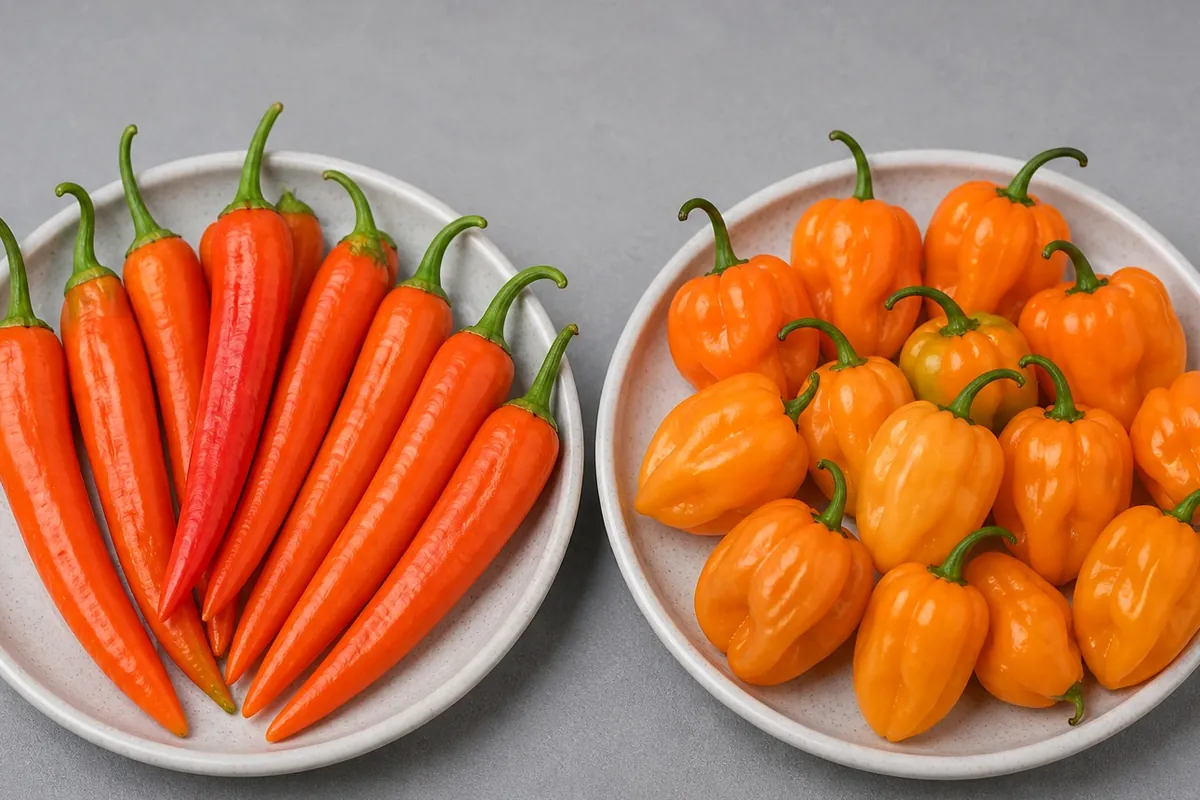
The name explains the comparison: Bulgarian carrot peppers are bright orange, elongated, and taper to a point, visually similar to a small carrot. Habanero is also orange (in its most common form) but has the lantern-shaped, wrinkled form of C. chinense.
In a bowl of mixed peppers, someone unfamiliar with Bulgarian carrot might reach for it expecting a mild sweet orange pepper, and get a significant heat surprise. At 30,000 SHU upper range, it is hotter than most jalapenos.
Bulgarian carrot: bright, fruity sweetness with a carrot-like quality, slightly sweet, slightly earthy, distinctly vegetable-forward. The heat is clean and uncomplicated.
The flavor pairs naturally with roasted vegetables, pickled condiments, and fresh salsas.
Habanero: intensely fruity and floral, tropical fruit (mango, apricot, passion fruit), with a slightly citrus edge. The flavor is more complex and aromatic than Bulgarian carrot, and it lingers longer because of the delayed heat.
For flavor alone (ignoring heat): Bulgarian carrot is sweeter and simpler. Habanero is more complex and aromatic.
In a dish where the pepper flavor is prominent, the difference is clear.
Bulgarian carrot excels at: - Pickling - the crisp walls hold excellent texture in vinegar brine. The orange color is visually striking in pickled condiment jars - Fresh salsa and relishes - the fruity heat works well raw - Roasting - pairs with root vegetables where the carrot flavor note is complementary - Eastern European pepper dishes - stuffed with rice and meat (a Bulgarian/Balkan tradition)
Habanero excels at: - Caribbean and Mexican hot sauces - the complex tropical flavor defines many hot sauce profiles - Fruit-based sauces - mango-habanero, pineapple-habanero pairings use the fruity aromatics intentionally - Any application where serious heat is the goal - habanero delivers 7-15x more capsaicin per gram
Choose Bulgarian carrot if: - The application needs orange color and moderate-to-hot heat (serrano tier) - Pickling is the goal, the texture and color are ideal - You want to cook with a heritage Eastern European pepper - Guests include heat-moderate but not heat-extreme eaters
Choose habanero if: - The recipe calls for superhot heat - The fruity-tropical flavor complexity matters to the dish - You are making Caribbean-style hot sauce or jerk seasoning
Bulgarian carrot and habanero are not close substitutes for each other due to the 7-15x heat gap. If you must substitute:
Bulgarian carrot for habanero: Use 5-6 Bulgarian carrot peppers per 1 habanero for heat parity. The flavor will be less complex.
Habanero for Bulgarian carrot: Use 1 habanero per 5-6 Bulgarian carrot peppers. Add a small amount of sweet orange pepper to compensate for the lost sweetness.
For most recipes, it is better to substitute habanero with scotch bonnet (same SHU, same species) or Bulgarian carrot with serrano (similar SHU, similar heat character) than to cross the mild-superhot divide.
Is Bulgarian carrot pepper actually from Bulgaria" Yes, it is a traditional Bulgarian variety (Chushka shipka in Bulgarian) used in local pickling and pepper paste traditions. It arrived in North American seed catalogs through seed bank exchanges in the 1980s-1990s.
Are they available at grocery stores" Rarely. Bulgarian carrot peppers are primarily a farmers market, specialty grocer, or grow-your-own pepper.
Habanero is widely available at mainstream grocery stores.
Can I use Bulgarian carrot in a mango-habanero sauce" Yes, with adjustments. You would need 6-8 Bulgarian carrot peppers per habanero the recipe calls for, and the tropical flavor complexity will be reduced.
The result is a milder, sweeter sauce, pleasant but different from the original profile.
How Does Bulgarian Carrot Differ From Habanero Beyond Color?
This choice is not just orange color. Bulgarian Carrot is a sharp, crunchy C. annuum pepper with quick heat and a bright snap in pickles, salsa, and fresh sauces.
Habanero is a hotter C. chinense pepper with floral fruit, thinner walls, and a slower, wider burn.
Use Bulgarian Carrot when texture and orange color matter. Use habanero when the sauce needs tropical aroma and much higher heat.
Best Method Match
Bulgarian Carrot works well in vinegar pickles, carrot-colored hot sauce, chopped relish, and fresh salsa where the pepper should keep some bite. Habanero works better in fruit hot sauce, Caribbean-style marinades, mango salsa, and blended sauces where floral heat is the point.
Can You Swap Bulgarian Carrot and Habanero?
For substitution, treat habanero as the hotter and more aromatic ingredient.
Start with 1/3 to 1/2 habanero for 1 Bulgarian Carrot if heat is the main concern. If replacing habanero with Bulgarian Carrot, use more pepper for color and body, then add a small amount of hotter chile only if the sauce tastes underpowered.
Final Choice
Final Choice: pick Bulgarian Carrot for crunchy orange heat, pickling, fresh relish, and sharper annuum flavor. Pick habanero for fruit sauces, floral heat, Caribbean-style cooking, and a much hotter finish.
Bulgarian Carrot Pepper vs Habanero FAQ
- Heat - Chile Pepper Institute, NMSU
- Capsicum - USDA GRIN Taxonomy
- C. chinense Flavor Compounds - Journal of Agricultural and Food Chemistry
- Baker Creek Heirloom Seeds