Can You Eat Pepper Seeds? Safety, Heat, Flavor, and Removal
Pepper seeds are edible and carry almost no capsaicin of their own, so removing them changes texture more than heat. The long-standing advice to avoid seeds with diverticular disease failed its largest test, and the nightshade worry points at leaves and stems rather than fruit. Scrape the ribs and placenta when you want a milder or smoother dish.
Can you eat pepper seeds?
Yes. Pepper seeds are edible, they are not poisonous, and a few of them in salsa, hot sauce, stir-fry, or pickles is a normal part of eating fresh peppers.
People remove them for texture, bitterness, heat control, or appearance. Safety only enters the question when the pepper itself is spoiled, mouldy, or damaged inside.
That distinction is worth holding onto in the kitchen. Chasing every last seed because you think seeds are dangerous wastes time that would be better spent on the tissue that actually carries the heat.
A 2025 review of pepper seed composition puts them squarely in the food category, reporting 6.3 to 28.3 g of protein, 11.0 to 23.7 g of fat, and 26 to 61 g of dietary fibre per 100 g of seed, roughly 90 percent of that fibre insoluble.
The oil is mostly linoleic acid, at 67.8 to 77.9 percent of total fatty acids. None of that makes a spoonful of seeds a health food, but it does settle whether they belong in the bin.
Should you avoid seeds if you have diverticular disease?
This is the belief underneath most of the worry, and it comes from decades of standard advice to avoid nuts, corn, popcorn, and seeds after a diverticulitis diagnosis.

That advice was tested and did not hold up.
The Health Professionals Follow-up Study tracked 47,228 men aged 40 to 75 for 18 years, recording 801 cases of diverticulitis and 383 of diverticular bleeding, and found no increased risk from these foods.
The associations ran the other way. Nut consumption gave a hazard ratio of 0.80 and popcorn 0.72 for the highest intake against the lowest, and the authors concluded that clinicians can confidently tell patients to enjoy these foods.
That study measured nuts, corn, and popcorn rather than pepper seeds specifically, and the cohort was men. It is the strongest available test of the avoid-seeds rule rather than a direct study of chiles, and anyone managing an active flare should still follow their own clinician's instructions.
What it does mean is that the general food-avoidance rule has no evidence behind it. If you remove pepper seeds, remove them because of the sauce, not because of your colon.
Are pepper seeds toxic because peppers are nightshades?
Peppers are Solanaceae, so this comes up whenever nightshades are being blamed for something.
UC Master Gardeners put it plainly. All 2,700 Solanaceae species produce solanine, an alkaloid toxin, but in most foods it is present in such small quantity that it is harmless, and most of it sits in the leaves and stems rather than the fruit.
The pepper you eat is the fruit. The parts that concentrate the alkaloid are the parts you already throw away.
Do pepper seeds hold most of the heat?
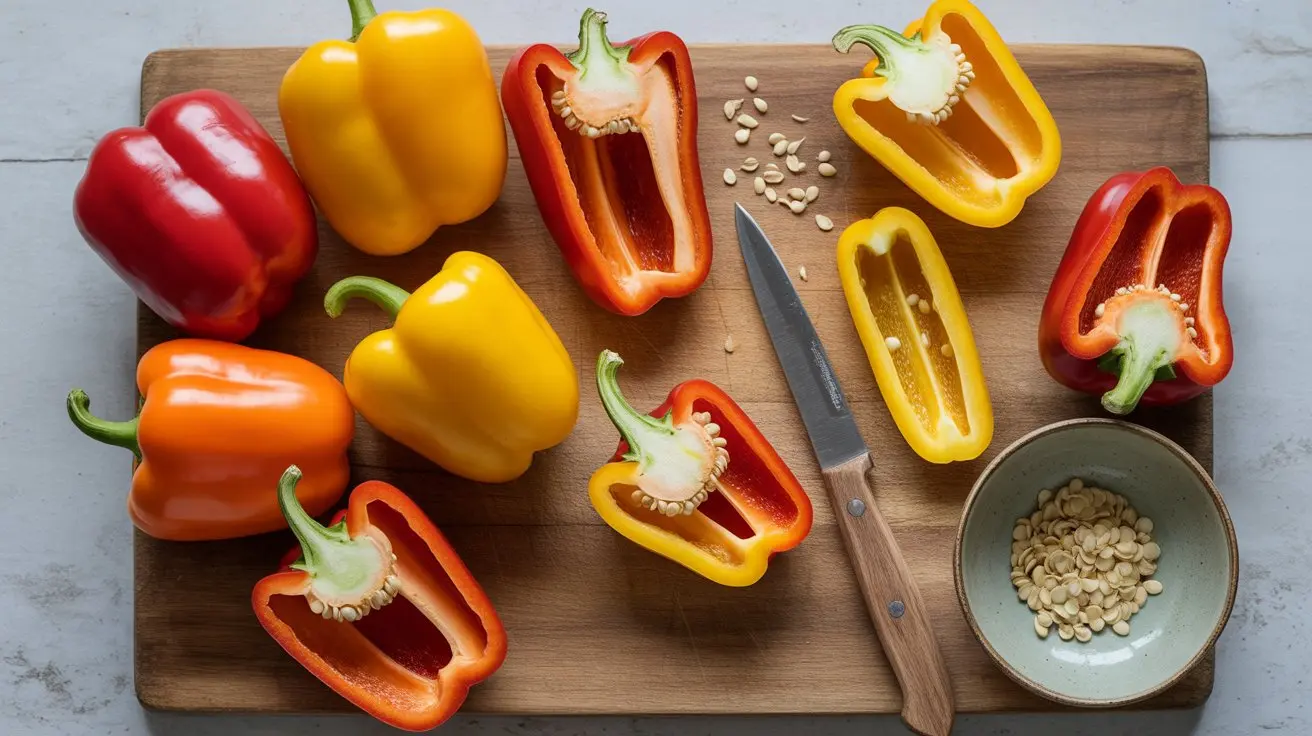
Most of a pepper's heat sits around the pale placenta and the inner ribs rather than in the seed itself. UC Agriculture and Natural Resources places the highest concentration of capsaicin in the white pithy parts around the seeds, and states there is almost none of it in the seeds themselves.
Seeds taste hot because they sit against that tissue and get coated during cutting. A seed scraped out of a jalapeno can still burn on its own.
That burn is borrowed rather than made, because the seed is not where the pepper produces its capsaicin.
The practical consequence is that shaking loose seeds out of a pepper changes texture far more than it changes heat.
Scraping the ribs, placenta, and seed cluster together is what makes a salsa noticeably milder. The cut surface matters more than the seed count.
| Part | Kitchen effect | Remove when |
|---|---|---|
| Seeds | Crunch, slight bitterness, carried heat | You want a smooth texture |
| Placenta and ribs | The main heat control point | You want a milder dish |
| Flesh | Flavour, colour, moisture | Usually keep it |
| Stem | Tough and grassy | Almost always remove |
This is why deseeding is better aimed at the ribs than at a perfect seed hunt.
Do pepper seeds make food bitter or gritty?
Seeds are firmer and drier than pepper flesh. In a chunky salsa that reads as texture, while in a smooth hot sauce, cream sauce, or puree it reads as grit.
Bitterness is the second complaint, and it shows up mostly after blending. A few seeds in a fresh salsa are nothing, but a blender loaded with the seeds of several hot peppers gives a sauce a rough edge.
Cut the peppers open and scrape the ribs and seed cluster before blending if a smooth finish is the goal.
A batch that is already blended and gritty can still be rescued through a fine-mesh sieve before bottling. Many homemade hot sauce batches taste cleaner for exactly that step.
When to keep pepper seeds
Keep them when the dish gains from texture, or when the pepper is mild enough that the carried heat is welcome.
Fresh salsa, chunky relish, stir-fries, and rustic hot sauce all handle seeds without complaint. Leaving some in a bright raw salsa makes the heat feel more immediate.
Seeds are also standard in dried chile flakes and crushed pepper blends, where the texture is expected rather than tolerated.
Removing them from every dried pepper is wasted effort unless you are building a very smooth paste. Let the dish decide rather than a rule.
When to remove pepper seeds
Remove them for a smooth sauce, a clean pickle brine, a milder stuffed pepper, or a tidy garnish. Take the ribs at the same time whenever heat reduction is the actual goal.
Pickles show the difference clearly. Seeds floating in the jar are safe, but they cloud the brine and make each slice less tidy, so scraping before packing is worth the minute it costs.
Gloves are worth wearing for this with hot peppers, because the capsaicin on the inner tissue lingers on skin long after the pepper is gone.
The same rule runs through our jalapeno cutting guide, which is to control the ribs and wash the tools before touching your face.
For superhots, work under good ventilation and keep your hands away from your eyes. The seeds are not the danger on their own, but the tissue coating them is.
Dish-by-dish seed decisions
The answer changes with the dish more than with the pepper, and it is worth deciding before the knife rather than after the blender.
- Salsa. A style call. A chunky pico keeps seeds happily because the texture matches chopped tomato and onion, while a blended restaurant-style salsa tastes cleaner with seeds and ribs reduced first.
- Pickles. Scraping gives a cleaner jar and more even slices. Seeds are safe in pickled jalapenos, they just float loose into the brine.
- Stuffed peppers. Take the seed cluster out, because it occupies space the filling wants and turns bitter against a long bake.
- Pepper flakes. Leave them. Crushed chile is supposed to carry seed texture, and picking them out produces something that no longer reads as flakes.
- Hot sauce. Decide before fermentation or blending. Seeds left in a fermented mash add rustic body, while a smooth vinegar sauce almost always wants them gone.
Can pepper seeds upset your stomach?
Most people digest pepper seeds without noticing them at all.
Some notice irritation after a very spicy meal, or from the combined roughage of skin, fibre, and seed in quantity.
If seeds bother you, remove them.
That is a preference worth respecting. It is a different statement from the claim that seeds are unsafe, and the two get argued as though they were one.
The insoluble fibre in the composition figures above is part of why quantity matters more than presence. A few seeds in a salsa behave differently from the seed load of a whole jar of chiles.
For children or spice-sensitive guests, take out seeds and ribs and start from milder varieties, remembering that a deseeded cayenne is still a cayenne.
Cooking changes texture more than safety
Heat does not make pepper seeds unsafe. It changes how they feel.
Seeds in a quick raw salsa stay firm and obvious, while seeds simmered into a sauce turn tougher and taste more bitter once blended.
Roasting dries them and brings out something nuttier, but scorched seeds go bitter fast. If you char peppers for salsa, peel the skin and pull out any blackened seed clumps before the blender.
In oil, seeds carry capsaicin into the fat because they are coated with the inner juices. That is useful for a rustic chile oil and unhelpful for a clean sauce.
Why heat itself shifts perceived burn is a separate question, and cooking peppers covers how oil, boiling, roasting, and cut size change it.
When seeds are a warning sign
The seeds are not the signal. The pepper around them is.
Do not eat seeds from a pepper showing fuzzy mould, a sour smell, collapsed flesh, or insect damage inside the cavity. Damage in the seed cavity is the version that hides best from the outside.
Peppers stored damp in a sealed bag deserve extra suspicion, because moisture collects around the stem and seed area first, especially in thick-walled pods.
A pod that looks clean outside but has a brown, slimy, or fermented-smelling core goes in the bin.
Tan seeds in a ripe pepper are normal. A rotten smell never is.
Most of this is a storage problem before it is a seed problem, and storing peppers covers keeping moisture away from the cavity in the first place.
Eating seeds is different from saving seeds
Seeds for eating and seeds for planting are held to different standards, and the two questions get confused constantly.
You can eat the seeds of any clean edible pepper. Saved seed has to come from ripe, healthy, true-to-type fruit if it is going to grow into anything worth having.
Do not save seed from a mouldy pepper, a diseased plant, or an immature green pod, unless the variety is meant to be picked green and you accept the weaker seed maturity that comes with it.
If next season is the goal, our saving pepper seeds guide covers drying and storage. If tonight's dinner is the goal, decide on texture, heat, and the dish in front of you.
Can You Eat Pepper Seeds? Safety, Heat, Flavor, and Removal FAQ
- Nut, corn, and popcorn consumption and the incidence of diverticular disease (Strate et al., JAMA 2008)
- Let them eat nuts: this snack is safe for diverticulosis patients
- A Comprehensive Review on Characterization of Pepper Seeds
- Nightshade, More Than Tomatoes - UC Master Gardeners of Napa County
- Hot Peppers - UC Agriculture and Natural Resources