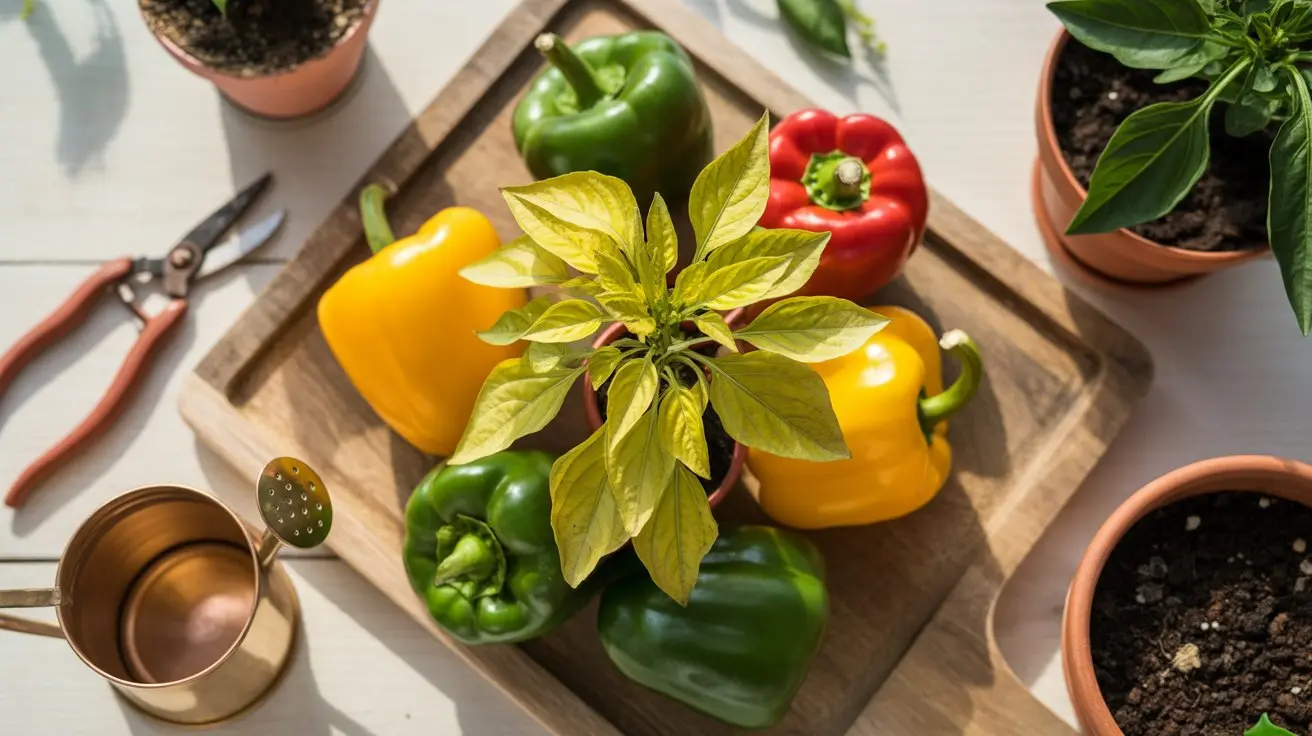
Spider Mites on Pepper Plants: Early Signs, Treatment, and Prevention
Spider mites on pepper plants show up first as pale stippling on leaves, fine webbing under the canopy, and bronzed foliage during hot, dry weather. Confirm them with a white-paper shake test, then treat leaf undersides with water spray, insecticidal soap, or horticultural oil on a repeat schedule.
Spider mites on pepper plants are tiny sap-feeding arachnids that usually announce themselves through damage before you see the mites. The first reliable signs are pale speckles on the upper leaf surface, fine webbing under leaves, and a dusty bronze cast on stressed foliage.
The answer is short. Confirm mites before spraying, hit the undersides of leaves, repeat contact treatments, and lower plant stress so the colony does not rebound.
University of Minnesota Extension notes that twospotted spider mites thrive in hot, dry weather and can build colonies quickly when temperatures are high.
How can you confirm spider mites on peppers?
Do not treat every speckled pepper leaf like a mite problem.
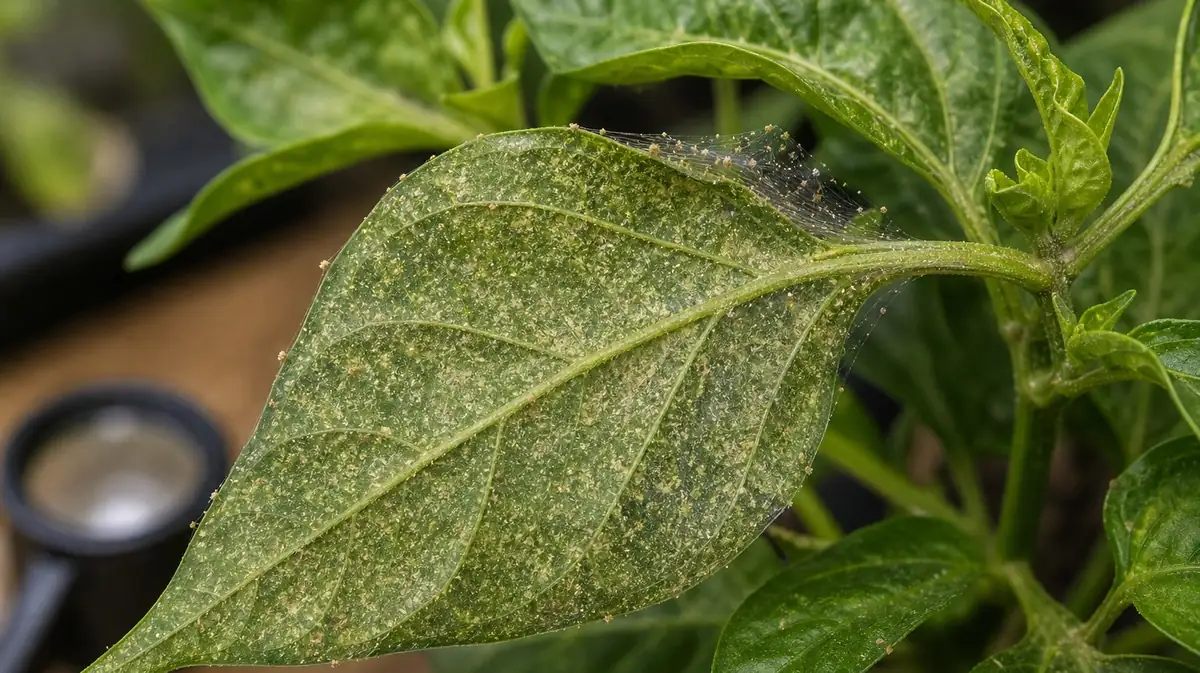
Drought stress, pepper leaf curl, herbicide drift, and nutrient stress can all leave pale or distorted leaves.
Use the white-paper test.
Hold a sheet of white paper below a suspect leaf, tap the leaf sharply, then look for tiny moving dots. A 10x hand lens helps because twospotted spider mites are roughly 1/50 inch long.
- Early damage: tiny white or yellow stipples between veins.
- Active colony: moving dots on leaf undersides and light webbing near petioles.
- Heavy infestation: bronzed leaves, leaf drop, and webbing across growing tips.
- False match: sticky honeydew points more toward aphids on pepper plants than mites.
We check undersides first because mites feed there and contact sprays only work where they land. Spraying the shiny top of a pepper leaf while leaving the underside dry is the usual reason a mite treatment looks like it failed.
Why peppers get mites in hot, dry spells
Pepper plants are a good mite target when the canopy is dry and dusty. Container plants on patios, grow bags against a wall, and greenhouse benches can run hotter than the surrounding garden.
That matters because mites reproduce faster in heat. UMN Extension says colonies can reach high numbers in less than two weeks under temperatures above 90F.
Where pressure lands first: potted plants that dry out before evening, whether they are jalapenos or hotter varieties. In-ground plants with mulch and steady drip irrigation usually show fewer repeat outbreaks.
Water stress does not cause spider mites by itself, but it makes pepper plants less resilient.
If your plant also shows daytime wilt, dry pot edges, and blossom-end rot, fix the water pattern alongside mite control. The broader watering pepper plants guide covers that stage by stage.
Why don't insect sprays kill spider mites?
Spider mites are not insects. They are arachnids, closer to spiders and ticks, which is why products formulated for insects often leave them untouched.
The species on peppers across North America is the two-spotted spider mite, Tetranychus urticae, a generalist that feeds on more than 300 plant species and is usually in the garden long before it finds a pepper.
In hot, dry, low-humidity weather a colony can double every 3 to 5 days. They also acquire resistance to chemical miticides faster than almost any other pest.
Two reasons a spray backfires: it may not be built for an arachnid at all, and it kills the predatory mites and ladybugs holding the colony down.
That is why biological and contact controls are the recommended route for a home grower rather than a stronger chemical.
Remove a light infestation first
For a small outbreak, start with physical removal. Spray leaf undersides with a firm stream of water in the morning, supporting branches with your other hand so you do not snap a brittle pepper stem.
This knocks mites off the plant and breaks up webbing. It also buys time for beneficial insects and predatory mites to catch up if the garden has not been hit with broad-spectrum insecticides.
- Repeat the water spray every 2 or 3 days for one week.
- Remove the worst two or three leaves if they are mostly bronzed.
- Do not compost heavily webbed leaves near seedlings.
- Rinse dusty paths or greenhouse benches so dust does not keep stressing the canopy.
Use this method before oils or soaps when the plant is already heat-stressed. A hard spray is not magic, but it reduces the mite count without adding chemical stress to the foliage.
Use soap or horticultural oil when mites keep moving
If the paper test still shows moving mites after water sprays, use a labeled insecticidal soap or horticultural oil. These are contact treatments, not systemic cures, so coverage and repeat timing matter more than product bravado.
Spray early morning or evening, never in full heat. Water the plant first, then coat the undersides of leaves, the growing tips, and the tight branch joints where webbing starts.
| Pressure level | Best action | Repeat timing |
|---|---|---|
| Few mites, no webbing | Water spray and prune worst leaves | Every 2-3 days for 7 days |
| Stippling plus light webbing | Labeled insecticidal soap on leaf undersides | Every 5-7 days as label allows |
| Heavy webbing, leaf drop | Remove worst foliage, treat remaining canopy, isolate container plants | Recheck every 3 days |
Do not mix kitchen dish soap into a home remedy. Extension guidance favors labeled soaps because household detergents can burn pepper leaves, especially on thin new growth.
How often should you spray for spider mites?
The two products above only work at the right strength and the right interval, and both need repeating because neither touches eggs.
| Control | How much | How often | What to know |
|---|---|---|---|
| Neem oil | 1 to 2 tablespoons cold-pressed per gallon, with a teaspoon of castile soap as emulsifier | Every 5 to 7 days for three weeks | Spray leaf undersides in the evening. Neem degrades in sunlight and can burn foliage in direct sun |
| Insecticidal soap | Per the product label | Every 2 to 3 days for two weeks | Kills on contact by dissolving the waxy coating, so it has to land on the mite |
| Predatory mites | One release for a moderate infestation | Controls within 2 to 3 weeks | Phytoseiulus persimilis eats spider mites and nothing else, so unlike bought ladybugs it stays where the food is |
Release predatory mites onto affected plants in the evening, and order them before summer so they arrive when pressure starts rather than after.
Neem oil and insecticidal soap are in most garden centres. Look for an OMRI-listed product if the peppers are for eating.
Which sprays make spider mites worse?
Broad-spectrum residual insecticides can knock out natural enemies and leave mites with fewer predators. That is why a pepper bed may look cleaner for a week and then flare harder.
UMN Extension warns that long-lasting products such as bifenthrin and permethrin can kill natural enemies and make mite problems worse over time. If you use any pesticide, follow the label and keep it away from open flowers when pollinators are active.
Never at noon: oils and soaps can damage leaves when heat, drought and direct sun are already stressing the plant.
Treat in cooler light, and water the root zone first.
If the infestation is on a seedling tray, isolation matters more than heavy spraying. Move the tray away from mature plants, remove the worst seedlings, and clean the shelf before starting another seed-starting round.
The same applies before you move clean plants out to harden off.
Inspect nearby plants before you call it solved
Spider mites rarely stay politely on one pepper once the colony is established. Check nearby tomatoes, eggplants, beans, strawberries, and ornamental plants because they can hold mites and send them back into the pepper row.
Container peppers need a wider inspection radius.
Move infested pots onto a washable surface, treat them there, and keep them away from clean seedlings until two paper tests come back clear.
This is also a good time to check whether the plant is being pushed too hard with fertilizer. Soft, lush growth after heavy nitrogen can attract pests and delay recovery, so keep feeding moderate and use the pepper fertilizing as a baseline.
How do you prevent spider mites on peppers?
Prevention is mostly canopy hygiene and steady moisture.
Keep pepper plants mulched, rinse dusty leaves during dry spells, and avoid overfertilizing with nitrogen because soft growth attracts several pests.
Spacing also helps.
Crowded plants are harder to inspect and harder to spray evenly, which is why mite colonies hide in the middle of dense pepper rows.
- Check leaf undersides every 3-5 days during hot, dry weather.
- Mulch in-ground plants to keep soil moisture steady.
- Keep containers evenly moist without leaving saucers full of water.
- Prune only enough for airflow. Severe pruning can expose fruit to sunscald.
- Rotate pest checks with common pepper pest and disease diagnosis so you do not miss aphids, hornworms, or bacterial spot.
Spider mites are manageable when you catch them early. The failure point is usually waiting until webbing covers the growing tips, then expecting one spray to reverse two weeks of colony growth.
When to discard a pepper plant
Discard a plant when most leaves are bronzed, the plant has stopped pushing new growth, and mites have spread to nearby peppers. That is a hard call, but keeping one collapsing plant can seed the rest of the bed.
For a valuable overwintered chile, cut back the worst growth, wash the frame, treat the remaining leaves, and isolate it for two weeks. For a young seedling, replacing it is often faster and cleaner.
After removal, clean stakes, trays, and nearby benches. Mites are small enough that a dirty plant shelf can keep the problem alive even after the original pepper is gone.
Are the peppers still safe to eat?
Mite damage costs yield, not safety. Severely damaged plants set fewer and smaller pods because the drained chlorophyll cuts photosynthesis.
- Wash treated fruit: rinse thoroughly before eating anything that has been sprayed.
- Neem oil: the pre-harvest interval is typically 0 to 1 day.
- Insecticidal soap: typically 0 days for organic products, though the label is the authority.
Spider Mites on Pepper Plants: Early Signs, Treatment, and Prevention FAQ
- University of Minnesota Extension - Twospotted spider mites in home gardens
- University of Minnesota Extension - Growing peppers in home gardens
- University of Minnesota Extension - Pepper plant diagnosis
- University of Minnesota Extension - Insect management for vegetable crops