Pepper Plant Wilting: Recovery Timing, Soil, and Root Signs to Check
A pepper plant can wilt from dry soil, saturated or damaged roots, temporary heat demand, transplant or cold stress, vascular disease, or nematodes. Check when it recovers, then inspect soil, crown, stem, and roots before changing water or fertilizer.
Why Is My Pepper Plant Wilting?
A wilting pepper plant has lost more water from its leaves than its roots and stem can replace. Dry soil is one possible cause, but saturated roots, damaged roots, heat, cold, transplant stress, and vascular disease can create the same posture.
Note the time, soil condition, recent weather, and affected plants before changing care.
| Pattern | What it suggests | Next check |
|---|---|---|
| Firm in the morning, droops during the hottest hours, recovers by evening | Leaf water demand temporarily exceeded root supply | Check moisture below the surface, wind, sun exposure, and whether fruit or flowers are also stressed |
| Dry root zone, limp foliage, improves after the full root ball is watered | An irrigation gap is likely | Confirm that water reached the center and bottom of the root ball |
| Moist or wet soil, wilt persists through the night | Roots or water-conducting tissue may be impaired | Inspect drainage, crown, roots, and stem before adding water |
| One plant or one bed patch declines while comparable plants stay firm | A local root, soil, or disease problem is more plausible than regional heat alone | Compare roots, stems, irrigation coverage, and soil history inside and outside the patch |
The conceptual graph below shows why one glance at midday is not enough.
It is a pattern guide rather than measured plant data, so use it with soil and tissue evidence.
Temporary recovery does not mean the conditions are ideal. Repeated daily droop shows that the plant is reaching its supply limit and deserves a moisture, shade, wind, or root-capacity check.
How Do You Check Whether the Soil Is Dry or Soggy?
Push a finger or narrow trowel several inches into the root zone, away from the stem. The surface can be dry while the center of a large pot remains saturated.
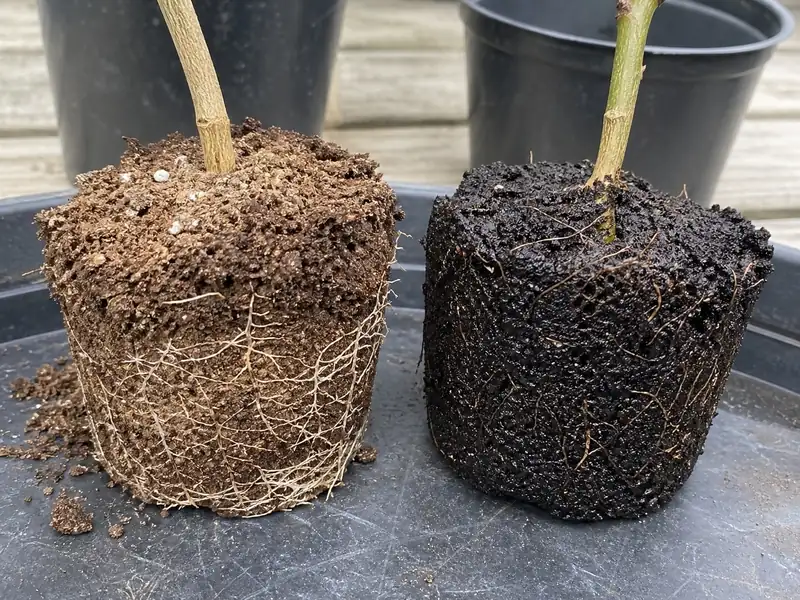
Penn State Extension includes soggy soil, soil pulling from a pot edge, excess fertilizer, root rot, stem rot, cold, and pot-bound roots among possible causes of wilt. That range is why the root-zone inspection comes before another watering.
| Root-zone evidence | Interpretation | Immediate response |
|---|---|---|
| Mix is dry through most of the root ball and the pot feels light | Roots have too little available water | Water slowly across the surface until the root ball is evenly moist and excess can drain |
| Mix glistens, smells sour, or stays wet long after irrigation | Roots may lack air and decay risk is higher | Stop adding water, empty any saucer, and correct blocked drainage |
| Water runs down the pot wall while the center stays dry | A shrunken or water-repellent root ball is bypassing irrigation | Rehydrate slowly in passes and verify moisture in the center |
| Roots circle densely and little mix remains | The container cannot buffer water demand well | Move the plant to a suitable larger container without tearing healthy roots apart |
| Roots are dark and soft or the crown has a dark sunken area | Root or crown disease is possible | Isolate the plant and seek diagnosis before reusing soil or moving water between plants |
Pale, firm roots support recovery, while soft roots and a declining crown raise concern. Root color varies with potting mix, so texture and tissue integrity matter more than color alone.
In a garden bed, compare the affected spot with soil beside a healthy pepper. Standing water, a compacted layer, a broken irrigation emitter, or a mound that dries faster can explain why neighboring plants behave differently.
The retained photograph provides a physical comparison between a dry, crumbly root ball and a saturated dark root zone.
It supports the moisture check without claiming that color alone diagnoses disease.
Did Heat, Drought, Cold, or Transplanting Start the Wilt?
Recent events can narrow a wilt diagnosis faster than a list of diseases.
Work backward from the first day the plant drooped.
- After a hot, bright, or windy period. Check moisture below the surface during the droop and again after conditions ease. Recovery in cooler hours supports temporary demand stress, while persistent wilt sends the diagnosis back to roots and stems.
- After the root ball dried. Water the entire root zone once, confirm drainage, and observe the next leaf cycle. Rapid firming supports an irrigation gap, but repeated collapse in moist soil does not.
- After transplanting. Check whether the root ball stayed intact, the new soil makes contact with it, and outdoor exposure increased gradually. Cornell CALS notes that root-ball size and handling affect transplant recovery, so timing supports this explanation only when direct disease signs are absent.
- After a cold night. Look for discolored young shoots, damaged leaves, or fruit injury rather than assuming drought. University of Minnesota Extension includes chilling injury among pepper-wilt causes.
Do not fertilize a newly wilted plant as a diagnostic test. Added salts increase the work damaged or dry roots must do, and leaf posture cannot show which nutrient is missing.
For heat-related droop, reduce the condition driving water loss while keeping the root zone evenly moist. Temporary afternoon shade and protection from drying wind can lower demand, but constantly wet soil creates a different problem.
When Does Wilting Point to Root or Stem Disease?
Persistent overnight wilt, rapid collapse in wet soil, or one-sided decline deserves a tissue inspection. Keep the plant and its drainage water away from healthy peppers while a contagious cause remains possible.
| Direct sign | What it supports | Confirmation boundary |
|---|---|---|
| One side wilts first and tan vascular tissue appears inside a lengthwise stem cut | A vascular wilt is possible | University of Minnesota lists this pattern for Verticillium, but a diagnostic service should distinguish lookalikes |
| Dark sunken stem or crown lesion with all growth beyond it wilted | Phytophthora or another crown and stem disease is possible | Wet-site history and rapid spread add concern, while laboratory diagnosis identifies the organism |
| Whitish strands stream from a freshly cut stem suspended in clean water | Bacterial colonization is possible | University of Hawaii CTAHR presents streaming as a field or laboratory sign, not proof that every wilt is bacterial |
| Several weak or wilted plants form an irregular patch and roots have firm galls | Root-knot nematodes are possible | UF/IFAS says galls can support root-knot diagnosis, while other nematodes require roots and soil for laboratory analysis |
| Soft dark roots without galls | Root decay or severe root injury is possible | Moisture history, crown condition, and a diagnostic sample separate pathogens from noninfectious damage |
A stem-streaming test can raise or lower suspicion, but it cannot safely own the final diagnosis.
Do not keep cutting several plants or move contaminated water through the garden to repeat it.
Root-knot injury is more convincing below ground than above it. UF/IFAS describes chlorotic, wilted pepper patches and swollen galled roots, while warning that other nematode damage may need laboratory analysis.
Collect both roots and surrounding soil when a diagnostic laboratory requests a nematode sample. A photograph of the whole plant, crown, root system, and bed pattern helps preserve evidence that washing or transport may change.
How Do You Fix a Wilting Pepper Plant?
Choose the smallest action supported by the soil, timing, and direct signs. Record the time and photograph the plant so the next leaf cycle can be compared with the same evidence.
| Supported cause | One correction | Evidence to recheck |
|---|---|---|
| Dry root ball | Moisten the full root zone and adjust future checks to pot weight and subsurface moisture | Foliage firms and the root ball remains evenly moist rather than dry in the center |
| Temporary heat or wind demand | Reduce peak exposure while preserving drainage and consistent moisture | The plant remains firmer through the next similar weather period |
| Saturated mix without advanced tissue decay | Restore drainage and allow excess water to leave | Soil aerates, new growth stays firm, and wilt stops progressing |
| Recent transplant stress without direct disease signs | Stabilize moisture and exposure without repeatedly moving or feeding the plant | New growth remains firm as the root ball establishes contact with surrounding soil |
| Possible vascular, crown, or nematode problem | Isolate the plant and submit the evidence requested by local extension or a diagnostic laboratory | A confirmed diagnosis determines removal, site management, and whether nearby plants need action |
Remove a plant promptly when a confirmed contagious disease makes it a continuing source, or when the crown has collapsed and no firm functioning tissue remains.
Bag diseased material when local guidance advises it, and do not reuse suspect potting mix for another pepper.
Escalate sooner when several plants wilt in an expanding patch, a moist plant remains collapsed overnight, the crown darkens, or a stem shows vascular discoloration. Those patterns need diagnosis before more irrigation, fertilizer, or pesticide is applied.
A recovering pepper holds firm through the next comparable part of the day and produces healthy new growth.
Old damaged leaves may remain limp or discolored, so trend matters more than restoring every leaf.
Pepper Plant Wilting: Recovery Timing, Soil, and Root Signs to Check FAQ
- Pepper Leaves Wilt - University of Minnesota Extension
- Diagnosing Poor Plant Health - Penn State Extension
- Avoid Transplant Shock - Cornell CALS
- Bacterial Streaming - University of Hawaii CTAHR
- Nematode Management in Tomatoes, Peppers, and Eggplant - UF/IFAS Extension