

KnowThePepper
Chimayo Pepper: New Mexico's Earthy-Sweet Heirloom for Red Chile Powder
The Chimayo pepper is a treasured New Mexico heirloom with 4,000 to 6,000 SHU - roughly on par with a Fresno chile, delivering earthy, sweet flavor in an elongated pod that dries beautifully. It thrives in high-desert conditions but adapts well to home gardens.
Generations of families in Chimayo, New Mexico have grown this the Capsicum annuum species variety for its distinctive red chile powder.
- Species: C. annuum
- Heat tier: Medium (1K-10K SHU)
- Comparison: the same heat range as a jalapeño because their published ranges overlap
What Is Chimayo Pepper Known For?
The Chimayo takes its name from the small northern New Mexico village where it has been cultivated for centuries, and this elongated American pepper use tradition represents one of the most geographically specific chiles in the country.
At 4,000 to 6,000 SHU, Chimayo sits squarely in the medium heat band - noticeable warmth without the kind of burn that overwhelms a dish. The heat is clean and even, without the sharp spike you sometimes get from a Fresno at its upper range.
The flavor is what sets it apart. Earthy and gently sweet, with a complexity that intensifies when the pods are dried and ground into powder.
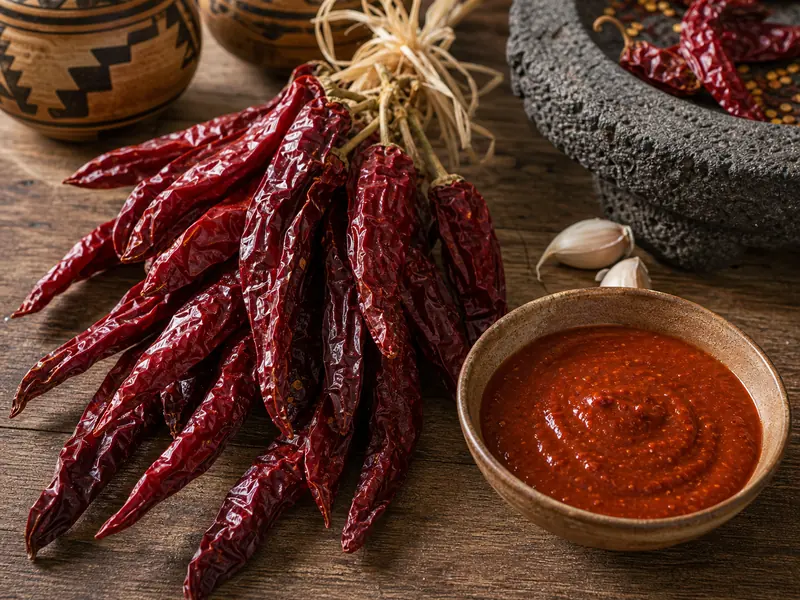
That powder is the real prize: a rich, brick-red product that forms the backbone of traditional New Mexico red chile sauce.
The pods themselves are 4 to 6 inches long, tapering to a point, turning from green to deep red at full maturity. Plants are moderately sized and productive, fitting comfortably in raised beds or in-ground plots.
The variety belongs to the Capsicum annuum species, the same botanical family as bell peppers and jalapeños, a species known for adaptability and reliable germination.
Chimayo is grown at altitude (around 6,000 feet in its native village), which shapes the flavor. The intense sunlight and cool nights of high-desert New Mexico concentrate sugars in the pod walls, contributing to that characteristic sweetness.
What Is the Origin of Chimayo Pepper?
The village of Chimayo sits in the foothills of the Sangre de Cristo Mountains, and its namesake pepper has been grown there by Pueblo and Hispanic farming communities for at least 300 years. The regional pepper heritage of northern New Mexico is deeply tied to this variety, families have saved seed across generations, keeping the landrace genetically distinct from commercial New Mexico chile types.
Unlike standardized varieties developed through university breeding programs, Chimayo is a true landrace: shaped by place, climate, and the hands of the people who grew it. The Chile Pepper Institute at New Mexico State University has recognized its cultural importance, though commercial production remains small and localized.
Interest from seed preservationists and heirloom gardeners has grown steadily since the 1990s, helping maintain seed availability outside its home region.
What Does Chimayo Pepper Taste Like, and How Hot Is It?
The Chimayo Pepper delivers 4K–6K Scoville Heat Units, placing it in the Medium tier (1K-10K SHU). That makes it roughly the same heat range as a jalapeño because their published ranges overlap.
Flavor notes: earthy and sweet.
What Nutrients Does Chimayo Pepper Provide?
Like most C. annuum peppers, Chimayo is nutritionally dense relative to its calorie count. A 1-tablespoon serving of dried Chimayo powder (approximately 7g) provides meaningful amounts of vitamin A (from beta-carotene in the red pigment), vitamin C, and vitamin E.
Red chile powder is also a source of iron and potassium. The capsaicin content, responsible for the medium-intensity heat sensation, registers at the lower end of noticeable warmth, which the TRPV1 receptor pathway processes as a mild-to-moderate signal.
Caloric density is low: roughly 20 to 25 calories per tablespoon of ground powder.
How Do You Use Chimayo Pepper in the Kitchen?
Red chile enchiladas are the entry point for most cooks discovering Chimayo. The dried pods, or ground powder, rehydrate into a sauce with a depth that commercial chile powder cannot match.
The earthy sweetness carries through heat without turning bitter, which makes it ideal for long-simmered preparations.
Ground Chimayo powder works as a dry rub base for pork shoulder or lamb, where the sugars in the pod caramelize against the meat. A tablespoon stirred into a pot of beans transforms the dish.
Fresh green Chimayo pods can be roasted and peeled like any New Mexico chile, though most cooks prefer to let them ripen fully to red before harvesting for drying. The dried whole pods store well and can be toasted briefly in a dry pan before grinding to amplify their flavor.
For those familiar with the mild-to-medium dried heat of guajillo, Chimayo powder offers a similar application range but with a sweeter, less tannic profile. It also pairs well with the kind of preparations suited to Mirasol Pepper - both work in red mole bases and braised meat dishes.
For a different application, the fresh pods can substitute in recipes calling for jalapeno poppers, adding more sweetness and slightly less punch.
How Do You Buy and Store Chimayo Pepper?
Fresh Chimayo pods are rarely found outside northern New Mexico farmers markets. Dried whole pods and ground powder are the most accessible forms, available from specialty New Mexico chile vendors and online retailers.
When buying powder, look for a deep brick-red color, faded orange-brown indicates age or poor storage. Store ground powder in an airtight container away from light and heat.
It holds peak flavor for about 12 months.
Whole dried pods last 2 to 3 years stored in a cool, dark pantry. For growing, cascabella-type seed vendors who specialize in Southwest heirlooms often carry authentic Chimayo seed alongside their other offerings.
Dried form: Most cooks meet Chimayo as powder rather than as a pod, and that powder is what traditional New Mexico red chile sauce is built on.
Colour is the fastest quality read. Deep brick-red means recent and well stored.
Faded orange-brown means the jar has sat in light or heat, and the earthy sweetness fades along with the colour.
Whole dried pods outlast powder by a wide margin. Ground Chimayo holds peak flavour for about twelve months, while whole pods kept in a cool, dark pantry stay good for two to three years.
Buying whole and grinding as needed is the difference between one season of flavour and three.
Toast whole pods briefly in a dry pan before grinding. The short heat lifts the aroma, and grinding only what a dish needs leaves the rest of the batch sealed.
Store either form in an airtight container away from light and heat.
Powder is a convenience that costs aroma from the day it is ground.
| Form | What to look for | Peak flavour holds |
|---|---|---|
| Ground powder | Deep brick-red. Faded orange-brown means age or poor storage | About 12 months |
| Whole dried pods | Stored cool and dark, away from light | 2 to 3 years |
| Fresh pods | Rarely sold outside northern New Mexico farmers markets | 1 to 2 weeks refrigerated |
What Is a Good Substitute for Chimayo Pepper?
No dedicated substitute guidance is published for Chimayo Pepper yet.
How Do You Start and Grow Chimayo Peppers?
Chimayo performs best in full sun with well-drained, slightly sandy soil, conditions that mimic its high-desert homeland. That said, it adapts well to lower elevations if you can provide adequate heat units during the growing season.
Start seeds indoors 8 to 10 weeks before last frost. Germination is reliable at soil temperatures between 75 to 85°F.
A heat mat speeds things up considerably.
Transplant outdoors once nighttime temps stay consistently above 55°F.
Spacing at 18 to 24 inches gives plants room to develop their moderate canopy. In-ground beds with compost-amended soil outperform containers for this variety, the root system benefits from depth.
Days to maturity runs approximately 80 to 90 days from transplant to red-ripe pods. Green pods can be harvested earlier, but the full flavor profile develops only at red maturity.
If you are comparing production timelines, the similar growing season of jalafuego-type peppers makes for a useful side-by-side planting.
Water deeply but infrequently, Chimayo tolerates dry spells better than many annuums. Overhead irrigation can encourage fungal issues.
Drip lines at the base of plants are preferable.
For gardeners new to starting chiles from scratch, a grow peppers from seed covers the fundamentals that apply directly to this variety. Harvest dried pods after the first light frost threatens, cutting entire branches and hanging them in a dry, ventilated space.
Chimayo Pepper FAQ


Species classification: C. annuum - based on published botanical taxonomy.