

KnowThePepper
Jalafuego Pepper: Early Jalapeno Heat (4,000-6,000 SHU)
Jalafuego sits at 4,000-6,000 SHU and behaves like an early, productive jalapeno-type for growers who want reliable mid heat. We recommend it when you want jalapeno utility with faster harvest rhythm.
- Species: C. annuum
- Heat tier: Medium (1K-10K SHU)
- Comparison: the same heat range as a jalapeño because their published ranges overlap
What Is Jalafuego Pepper?
The jalafuego is not a novelty name on a standard jalapeño. It is a purpose-bred hybrid in the Capsicum annuum species group - engineered specifically for disease resistance, uniform fruit size, and consistent heat output that outpaces typical jalapeños.
At 4,000 to 6,000 SHU, the jalafuego sits comfortably in the medium-heat pepper category but punches noticeably hotter than an Anaheim, which typically tops out around 2,500 SHU. That gap matters in the kitchen, salsas, hot sauces, and pickled preparations land with more presence.
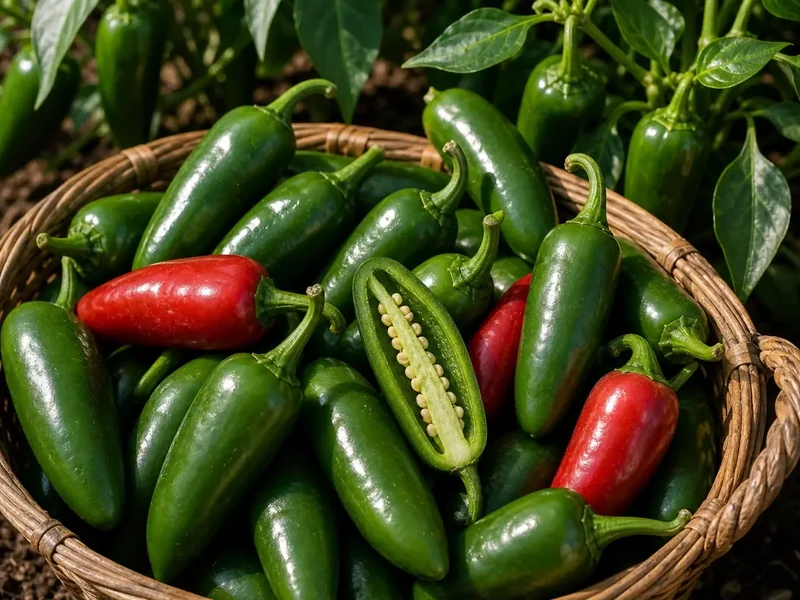
The fruit itself resembles a classic jalapeño in shape: cylindrical, blunt-tipped, typically 3 to 4 inches long with thick flesh walls. It matures from deep green to red.
The thick walls make it an excellent candidate for stuffing and roasting, where thinner-walled varieties tend to collapse.
Commercial growers favored this variety because of its resistance to common pepper diseases and its extremely uniform fruit set, nearly all pods on a plant ripen within a close window. For home growers, that same trait means a predictable, concentrated harvest rather than a slow trickle across weeks.
The name comes from combining "jalapeño" with "fuego" (Spanish for fire), which slightly oversells the heat, this is not an extreme pepper. Think of it as a jalapeño with better consistency and a modest heat boost.
Where Did Jalafuego Pepper Originate?
The jalafuego is a modern hybrid, not an heirloom with centuries of regional history. It was developed by seed breeders, primarily through commercial agricultural programs, targeting growers who needed a jalapeño-type pepper with improved disease resistance and more predictable yields than open-pollinated varieties.
Its roots trace to Mexico's deep pepper-growing traditions, the same agricultural lineage that gave the world the standard jalapeño. The jalapeño itself originates from Xalapa, Veracruz, and has been cultivated in Mexico for centuries.
The jalafuego diverges from that heritage by prioritizing commercial traits over cultural ones. Unlike varieties with documented regional identities, such as peppers with deep New Mexican cultural roots tied to specific communities, the jalafuego was bred in a laboratory setting and released through seed catalogs aimed at professional growers in the late 20th century.
How Spicy Is Jalafuego Pepper, and How Does It Taste?
The Jalafuego Pepper delivers 4K–6K Scoville Heat Units, placing it in the Medium tier (1K-10K SHU). That makes it roughly the same heat range as a jalapeño because their published ranges overlap.
What Nutrients Does Jalafuego Pepper Provide?
Like most C. annuum peppers, the jalafuego is low in calories, roughly 20 calories per 100g - while delivering meaningful amounts of vitamin C and vitamin A. Red-ripe fruits contain significantly more vitamin C than green ones.
Capsaicin, the compound responsible for heat, has been studied for its role in triggering the TRPV1 pain response and potential metabolic effects. At 4,000 to 6,000 SHU, the jalafuego contains moderate capsaicin levels, enough to produce measurable physiological response but far below the concentrations found in super-hot varieties.
Peppers in this heat range also provide dietary fiber, potassium, and small amounts of iron. The thick flesh walls mean a higher flesh-to-seed ratio, making each pepper slightly more nutritionally dense by weight than thinner-walled types.
How Do You Cook With Jalafuego Pepper?
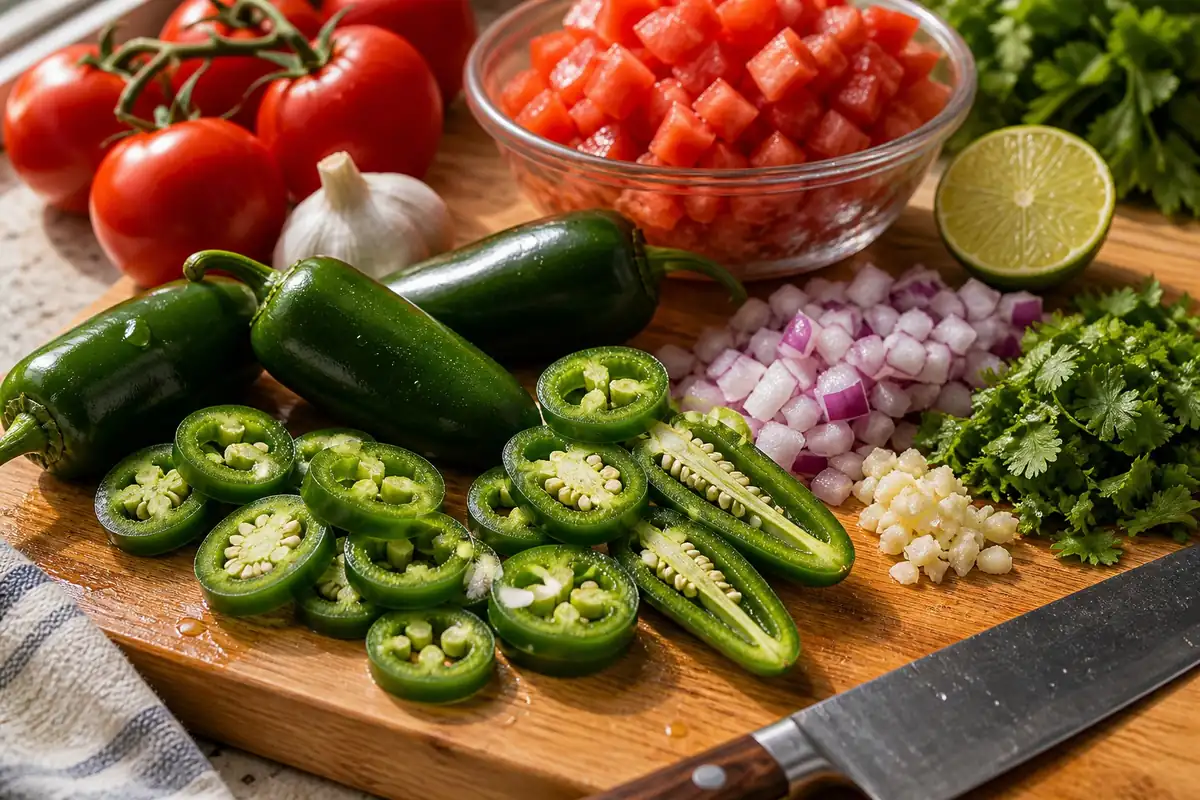
Because the flavor profile of the jalafuego closely tracks a standard jalapeño, most recipes that call for jalapeños work directly with this variety. The key difference is the heat floor: at 4,000 SHU on the low end, it rarely produces the mild, barely-there heat that some jalapeños deliver when grown in cool conditions.
Thick walls make it a standout for stuffed preparations. The flesh holds up to roasting without turning to mush, and the cavity is large enough to pack with cheese, meat, or grain-based fillings.
For poppers, this is arguably a better choice than a standard jalapeño.
Pickling is another strong application. The dense flesh absorbs brine without going limp, and the moderate heat survives the acid without fading entirely.
Sliced rings work well on nachos and sandwiches.
For sauces, roasting the jalafuego first develops a slightly smoky depth, compare this to the wide cooking range of dried guajillo, which takes a very different way to complexity. Fresh jalafuego salsas are bright and direct.
Roasted versions are richer and slightly more layered.
When you need to dial heat down, pair it with step-by-step deseeding technique - the ribs carry most of the capsaicin, and removing them brings the heat closer to a mild roasted pepper.
How Do You Keep Jalafuego Pepper Fresh?
Fresh jalafuego peppers appear occasionally at farmers markets and specialty grocers, though they are more commonly grown at home or sourced through CSA boxes. Look for firm, glossy skin with no soft spots or wrinkles, both signal age.
Refrigerate unwashed in a paper bag or loosely wrapped for up to 2 weeks. Washing before storage accelerates decay.
For longer preservation, the thick walls make jalafuego an excellent candidate for pickling or freezing. Frozen whole peppers retain good texture for roasting and sauces.
Dried jalafuego can be ground into powder, though the variety is not traditionally used as a dried spice the way some Mexican peppers are.
What Can Replace Jalafuego Pepper in a Recipe?
No dedicated substitute guidance is published for Jalafuego Pepper yet.
What Does Jalafuego Pepper Need to Grow Well?
Jalafuego is a hybrid variety, so seeds must be purchased fresh each season, saved seeds will not breed true. That is the primary trade-off for the disease resistance and yield consistency you get in return.
Start seeds indoors 8 to 10 weeks before last frost. Germination runs 10 to 21 days at soil temperatures of 75 to 85°F.
Bottom heat from a seedling mat makes a meaningful difference in germination speed and uniformity.
Transplant outdoors when nighttime temperatures stay reliably above 55°F. Spacing of 18 to 24 inches between plants allows adequate airflow, which the disease-resistant genetics complement but do not replace, good air circulation still matters.
For anyone working through a structured to starting peppers indoors, jalafuego follows standard C. annuum protocols without major deviations. It does appreciate consistent moisture.
Uneven watering causes blossom drop and can contribute to blossom-end rot in heavy-fruiting plants.
Days to maturity typically run 70 to 80 days from transplant to green-ripe stage. Full red maturity adds another 2 to 3 weeks.
Harvest green for the sharpest heat expression.
Harvest red for slightly sweeter, more developed flavor.
Yields are heavy relative to standard jalapeños, expect dense clusters of pods per plant under good conditions. The concentrated ripening window means you will likely want a preservation plan ready before harvest peaks.
Jalafuego Pepper FAQ


- Tomato Growers Supply Company - Jalafuego Hybrid Pepper
- Chile Pepper Institute, New Mexico State University
Species classification: C. annuum - based on published botanical taxonomy.