
Aleppo vs Kashmiri Chili: Do You Need Red Color or Fruity Flakes?
Choose Kashmiri chili when the recipe needs deep red color and almost no heat. Choose Aleppo pepper when you want fruity flakes you can bloom gently or scatter at the end. They are both Capsicum annuum, but one acts like a color-first powder and the other acts like a finishing chile.

Aleppo Pepper
HotKashmiri Chili
MediumQuick Comparison
| Attribute | Aleppo Pepper | Kashmiri Chili |
|---|---|---|
| Scoville evidence | 10K-10K SHU | 1K-2K SHU |
| Heat Tier | Hot | Medium |
| vs Jalapeño | 1x hotter | n/a |
| Flavor | fruity, tart, sweet-hot, lightly earthy | mild and sweet |
| Species | C. annuum | C. annuum |
| Origin | Syria | India |
Which Should You Use, Kashmiri or Aleppo?
Aleppo and Kashmiri solve different kitchen problems. Kashmiri is the better pick for curry, tandoori marinade, and any red sauce that needs color without much bite.
Aleppo is the better pick for eggs, yogurt, grilled meat, hummus, and roasted vegetables where the pepper stays visible and tastes fruity.
The SHU numbers explain part of that split. Kashmiri chili usually sits around 1,000 to 2,000 SHU, which puts it near the mild end of the scale.
Aleppo pepper is commonly sold around 10,000 SHU. That is a real gap, but the bigger difference is how you use the spice, not how bravely you eat it.
If a sauce needs two or three teaspoons of chile just to reach the right color, Kashmiri is built for that job. Aleppo is not.
That much Aleppo can push a dish hotter than intended and can also leave a flake texture where the recipe wanted a smooth red base.
If the dish ends with a final sprinkle, the advantage flips. Aleppo gives fruit, gentle tartness, and visible flakes.
Kashmiri disappears into the food more completely, which is useful in the pot but less interesting on the plate.
| Cooking need | Better fit | When it enters |
|---|---|---|
| Red curry or tandoori color | Kashmiri chili | Bloom briefly in oil or ghee |
| Visible chile finish | Aleppo pepper | Add near the end or at the table |
| Mild color across a sauce | Kashmiri chili | Build into the base |
| Fruity flakes on yogurt or roasted vegetables | Aleppo pepper | Finish after cooking |
When Do You Add Kashmiri and Aleppo to the Pan?
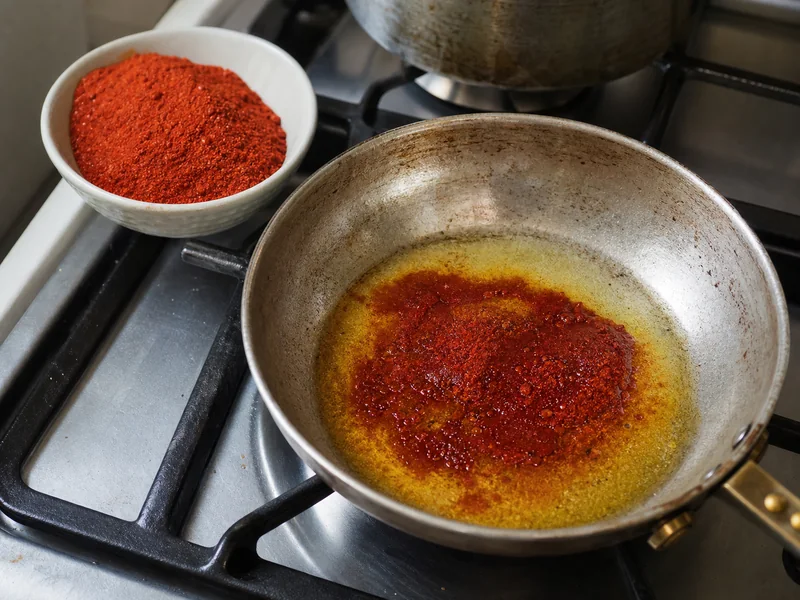
Kashmiri usually enters the pan early. The common move is to bloom the powder in ghee or oil for about 30 to 45 seconds so the fat pulls out the red color before tomatoes, yogurt, or stock go in.
That early bloom is why butter chicken, rogan josh, and tandoori-style marinades can turn deep orange-red without becoming truly hot.
Aleppo behaves better with softer heat. Many blends include a little oil and salt, so the flakes can taste flat or bitter if they fry hard for too long.
A gentle bloom near the end of cooking, or a straight finish over warm food, keeps the fruity side clearer.
Texture matters here too. Kashmiri powder melts into the sauce.
Aleppo leaves small red flecks unless you grind it finer.
That means a swap changes the look of the dish even before it changes the flavor.
If you cook them the same way, you can blame the wrong spice for the wrong problem.
Aleppo will seem dull because it stayed over heat too long. Kashmiri will seem weak because it never got the fat contact that makes its color show up.
How Do Aleppo and Kashmiri Chili Taste?
Kashmiri tastes mild, slightly sweet, and earthy enough to sit under garlic, ginger, cumin, and tomato without fighting them. Its best trait is that it supports a sauce instead of pulling attention away from it.
Aleppo is louder in a good way. It tastes fruity, lightly tart, and a little raisin-like, with a softer burn than generic crushed red pepper.
In many jars the flakes also carry a faint cured or salty note, so they season food more like a finishing spice than a neutral powder.
That is why the same red color can point in two different directions. Kashmiri helps build a sauce.
Aleppo helps finish a bite.
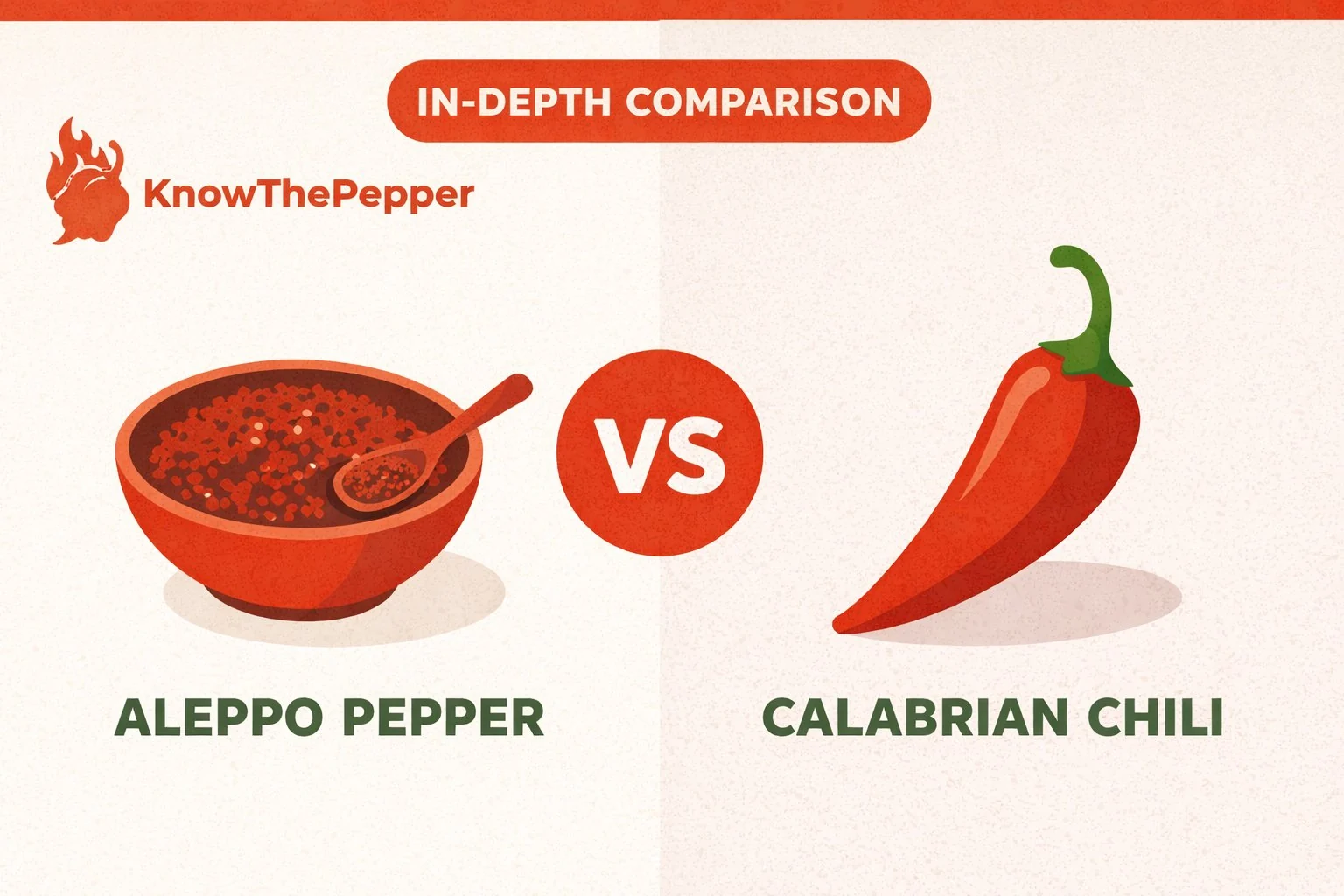
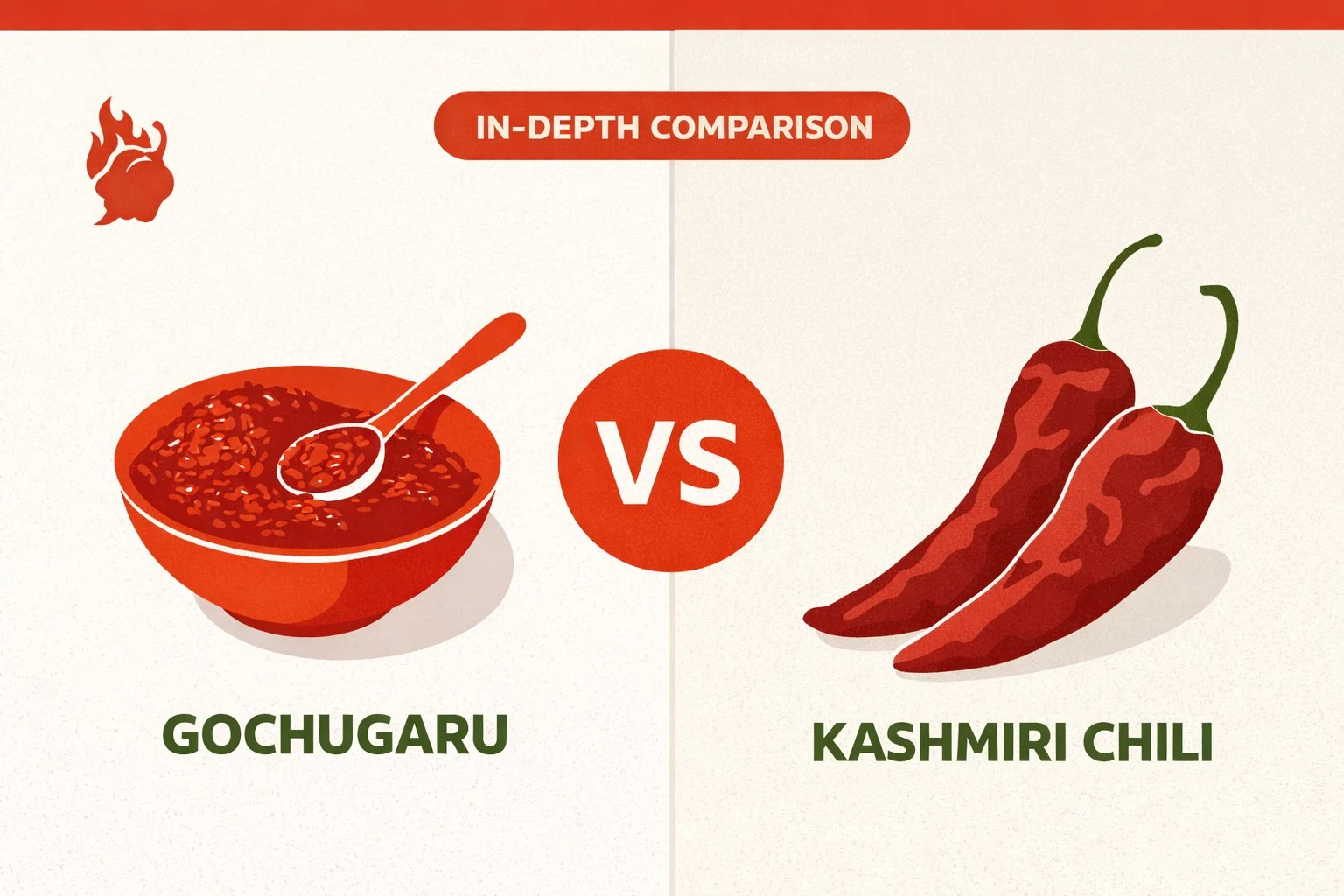
If you want a closer powder question, gochugaru vs Kashmiri chili stays nearer to the color-and-grind role. If you want another Aleppo comparison, Aleppo vs Calabrian chili is the better choice for heat and table use.
Where Each Spice Belongs
Use Kashmiri in butter chicken, rogan josh, tandoori marinades, and curry bases where the chile should tint the whole pan. It also makes sense in a red chili oil when color matters more than serious heat.
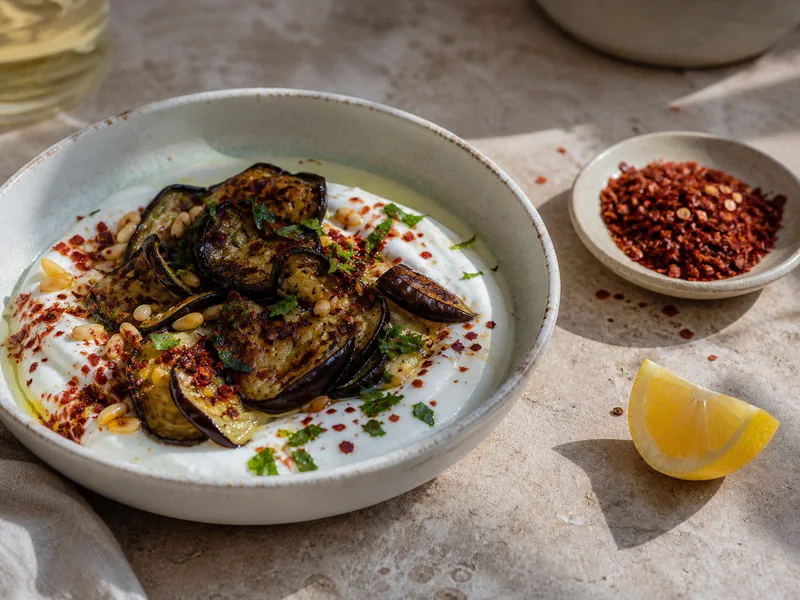
Use Aleppo on labneh, hummus, kebabs, grilled lamb, roast carrots, potatoes, fried eggs, and tomato dishes that need a gentle finishing lift.
It works especially well when the pepper stays near the surface instead of dissolving into the whole sauce.
There is some overlap. A tomato stew or lentil pot can take either one.
The deciding question is whether you want the chile to disappear into the base or stay present as a visible seasoning.
Watch the verbs in the recipe. If the instructions say bloom, whisk, and simmer into a sauce, Kashmiri usually makes more sense.
If they say sprinkle, finish, or spoon over just before serving, Aleppo usually wins.
Can You Substitute Aleppo for Kashmiri Chili?
Replacing Kashmiri with Aleppo takes more than a simple spoon-for-spoon swap. Start with about one third to one half as much Aleppo, then restore the missing color with sweet paprika or another mild red pepper if the dish still looks pale.
Taste for salt too, because some Aleppo blends are seasoned.
Replacing Aleppo with Kashmiri is harder because the heat drops fast and the texture changes. You can use more Kashmiri powder to color the dish, but you may still need another pepper if the recipe depends on a steady medium burn.
The break point is easy to spot.
If the dish wants smooth red fat, Kashmiri has the edge. If the dish wants visible fruity flakes, Aleppo has the edge.
A technical 1:1 swap can hit the same teaspoon measure and still miss the reason the recipe asked for that spice.
For cooks who only need one pantry rule, keep it simple.
Kashmiri is the better backup for color-first sauces. Aleppo is the better backup for finishing warmth.
What Should You Check on the Jar Before Buying?
The label can mislead you.
"Aleppo-style," "Halaby," and "Maras-style" products can all be useful, but they do not always use the same drying, oiling, or salt level.
Kashmiri jars can be just as slippery. Many are pure Kashmiri chili, while others are generic red chili powder sold in the same color family.
Buy Aleppo when the flakes smell fruity and look deep red instead of dusty brown. Buy Kashmiri when the powder looks vivid brick red and the seller names the pepper clearly.
Store both away from light and heat, but be especially careful with Aleppo because its oil-rich flakes lose character faster once the jar stays open.
Serious Eats describes useful Aleppo-style flakes through their fruity, gently acidic character, so aroma tells you more than a bright surface color alone. A jar that smells flat before purchase will not recover that finishing character over warm food.
The Indian Spices Board treats color as an important dried-chile quality, so choose Kashmiri powder when a measured spoonful must tint sauce evenly and check that the label names the chile instead of relying on a generic red blend.
For Aleppo, compare salt on the ingredient list before changing a recipe. A salted blend can season eggs or yogurt well, but it can also make a normal teaspoon measure misleading when the recipe assumes pure pepper.
The storage decision follows the form, so keep the finer Kashmiri powder tightly sealed while choosing a smaller Aleppo jar that you can finish before its oil-rich flakes lose aroma.
Those checks turn the label into a cooking decision instead of a name test. Buy Kashmiri for smooth color that enters early, and buy Aleppo for aromatic flakes that remain noticeable at serving.
The final pantry check is frequency of use, since a smaller fresh jar protects flavor better than a bulk purchase that stays open for months.
Aleppo Pepper vs Kashmiri Chili FAQ
- New Mexico State University Circular 706 - Measuring Chile Pepper Heat
- Indian Spices Board - Chilli