

KnowThePepper
Medusa Pepper: Named for Its Writhing Upright Clusters, Mild and Grassy
The Medusa pepper is an ornamental C. annuum variety bred in the USA, producing clusters of slender, upright fruits that shift from pale yellow through orange to red. Heat sits at 1,000 to 1,000 SHU - a gentle warmth, not a challenge.
Its mild, grassy flavor and spectacular plant form make it as much a garden centerpiece as a kitchen ingredient.
- Species: C. annuum
- Heat tier: Medium (1K-10K SHU)
What Makes Medusa Pepper Different?
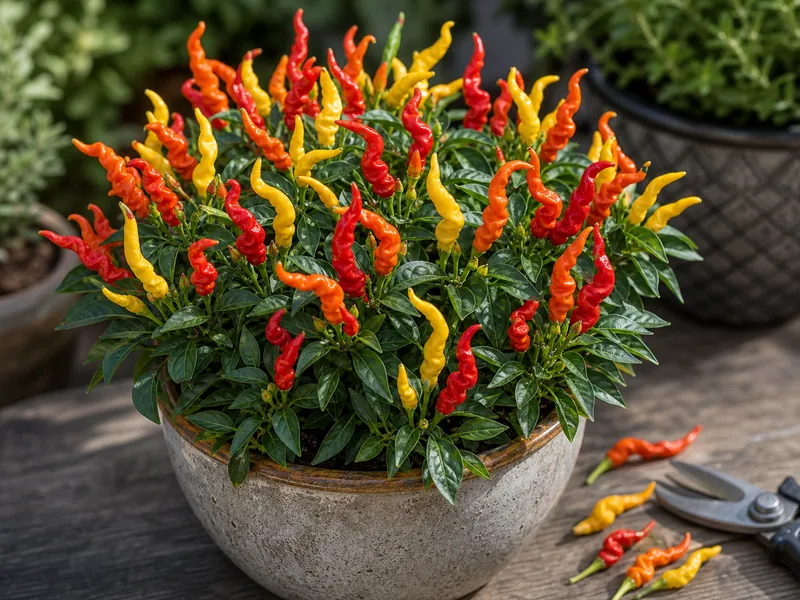
The Medusa pepper works on the patio table and the cutting board at once. Named for the writhing, upward-pointing clusters of elongated fruits that crown each plant, it belongs to the Capsicum annuum as the annuum species alongside bell peppers, jalapeños, and paprika.
The heat registers between 1,000 and 5,000 SHU - roughly comparable to a mild Fresno at its lower end. That places it firmly in the mild-to-moderate pepper category, where warmth adds interest without demanding tolerance.
The flavor is fresh and grassy, with a clean finish that doesn't linger aggressively.
Fruits start a creamy ivory or pale yellow, then cycle through orange before settling into red at full maturity. A single plant in peak season carries fruits at every color stage simultaneously, which is most of why gardeners grow it in the first place.
Originating in the USA as a deliberate ornamental breeding project, Medusa quickly found a following beyond decorative use. Home cooks discovered the young pale fruits hold that mild, grassy note particularly well, sharper heat develops as fruits redden.
The compact plant habit, typically reaching 8 to 12 inches tall, makes it ideal for containers, borders, and windowsill growing where a full-sized pepper plant would overwhelm the space.
Where Does Medusa Pepper Come From?
The Medusa pepper is a modern American creation, developed specifically as an ornamental variety during the late 20th century ornamental pepper boom. Breeders working within the American pepper-growing tradition prioritized compact plant form, prolific fruiting, and multi-color display over heat or yield.
Unlike the centuries-old Guajillo Pepper, Medusa has no ancient cooking lineage. Its story is straightforwardly commercial: a variety designed to sell in garden centers as a patio plant that happened to be edible.
That background actually gives it an interesting niche. Most ornamental peppers were bred without any thought for flavor, producing fruits that are edible but unpleasant.
Medusa's breeders landed on a mild, grassy profile that rewards anyone willing to actually cook with the harvest rather than just admire it.
How Hot Is Medusa Pepper, and What Does It Taste Like?
The Medusa Pepper delivers 1–1K Scoville Heat Units, placing it in the Medium tier (1K-10K SHU).
Flavor notes: mild and grassy.
How Nutritious Is Medusa Pepper?
Medusa peppers share the nutritional profile of other mild C. annuum varieties. Fresh fruits deliver meaningful vitamin C - sweet pepper varieties in this heat range typically provide 80 to 150% of the daily recommended intake per 100g serving.
Vitamin A content increases as fruits ripen from yellow to red, tracking the carotenoid development visible in the color change. Capsaicin at 1,000 to 1,000 SHU is present in low enough concentrations that digestive irritation is rarely a concern, even in larger servings.
Calorie count is minimal, roughly 30 to 40 calories per 100g. Fiber, potassium, and B vitamins round out the profile.
The thin walls mean water content is high, which is worth accounting for in cooked applications.
Which Dishes Suit Medusa Pepper?
Cooking with Medusa peppers rewards patience with the harvest schedule. Pale yellow fruits carry the brightest, grassiest flavor, use them raw in salads, sliced thin over grain bowls, or pickled quickly in rice vinegar for a crisp, mild condiment.
As fruits redden, a subtle sweetness develops alongside slightly more heat. Red-stage Medusas work well roasted whole, where the thin walls blister quickly and the grassy notes mellow into something closer to a sweet smoked paprika character.
For anyone familiar with the Costeño Pepper, Medusa offers a fresh-pepper alternative in the same heat neighborhood. The 1,000 to 1,000 SHU range means you can use them generously, a handful raw into salsa, a dozen roasted into a sauce, without calibrating heat carefully.
They pair naturally with corn, summer squash, fresh cheese, and eggs. The mild heat and clean flavor profile also make them a good gateway pepper for cooking with children or heat-sensitive guests.
Pickling a mixed batch of yellow, orange, and red fruits produces a visually striking jar that holds the flavor well for several weeks refrigerated.
How Should You Buy and Store Medusa Pepper?
Medusa peppers rarely appear in grocery stores, your best source is a farmers market, a specialty nursery selling the plants, or your own garden. Seeds are widely available from ornamental pepper specialists and general seed catalogs.
Fresh fruits keep 1 to 2 weeks refrigerated in a loosely sealed bag. Avoid sealed containers that trap moisture.
The thin walls bruise and mold quickly when humidity builds.
For longer storage, pickling works better than freezing, the texture after freezing is soft enough to limit raw applications. A simple brine of vinegar, salt, and sugar preserves both color and the mild grassy flavor for 4 to 6 weeks in the refrigerator.
Which Peppers Can Replace Medusa Pepper?
No dedicated substitute guidance is published for Medusa Pepper yet.
How Do You Grow Medusa Peppers?
Start seeds indoors 8 to 10 weeks before last frost. Medusa germinates readily at soil temperatures around 80°F - a heat mat under the tray speeds things up considerably.
For a full walkthrough of the early stages, the seed-starting and transplanting for peppers covers the details worth knowing.
Transplant outdoors after frost risk passes and nights stay above 55°F. Container growing is genuinely the sweet spot for this variety, a 5-gallon pot gives enough root room while keeping the plant manageable.
The compact habit, similar to the Goat Horn Pepper, means plants don't need staking.
Full sun is non-negotiable: aim for 6 to 8 hours daily. Medusa tolerates heat well but needs consistent moisture.
Irregular watering causes blossom drop and stunted fruit development.
A balanced fertilizer at transplant, then a low-nitrogen feed once flowering begins, keeps fruit production strong without pushing excessive vegetative growth.
If leaves start yellowing mid-season, the yellow pepper leaves is worth consulting before assuming it's a nutrient deficiency, overwatering and root issues are more common culprits in containers.
Expect fruits to begin showing color 70 to 80 days from transplant. Harvest regularly to encourage continued production through the season.
Medusa Pepper FAQ


- Growstuff - Medusa Pepper
- Chile Pepper Institute, New Mexico State University
Species classification: C. annuum - based on published botanical taxonomy.