

KnowThePepper
Mexibell Pepper: Looks Like a Sweet Bell, Tastes Pungent at 100–1,000 SHU
The MexiBell is a blocky Capsicum annuum bell that All-America Selections named a 1988 winner for looking sweet and tasting pungent. It reaches mature green at 120 days from seed, tolerates tobacco mosaic virus, and is commonly reported at 100 to 1,000 SHU, which is milder than the Anaheim its flavor gets compared to.
- Species: Capsicum annuum
- Heat tier: Medium (1K-10K SHU)
What Kind of Pepper Is Mexibell Pepper?
Most people assume anything shaped like a bell pepper carries no heat. All-America Selections put it more bluntly when it named MexiBell a winner, describing a pepper that looks like a sweet pepper but is not, with an entirely new flavor it called pungent.
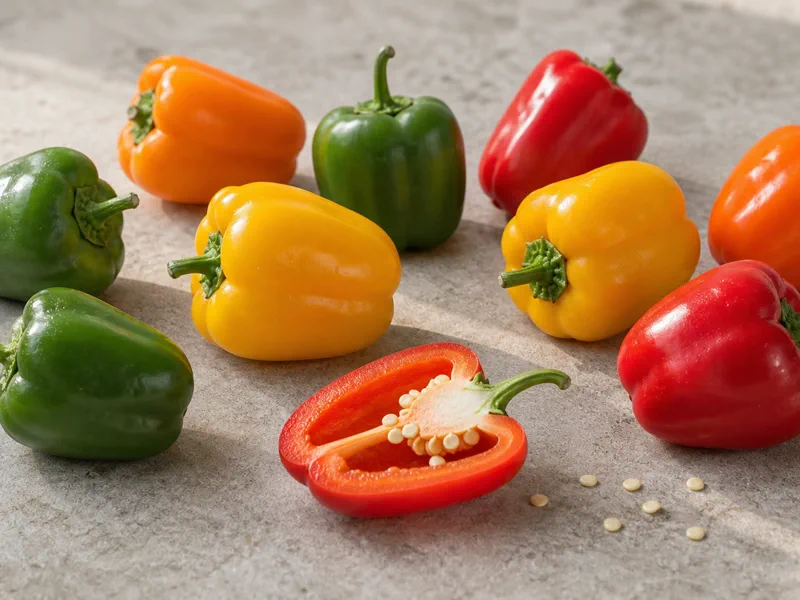
Thick walls and a blocky lobed shape are why it behaves like a bell in the kitchen while tasting like something else. The figures below come from the AAS trial record.
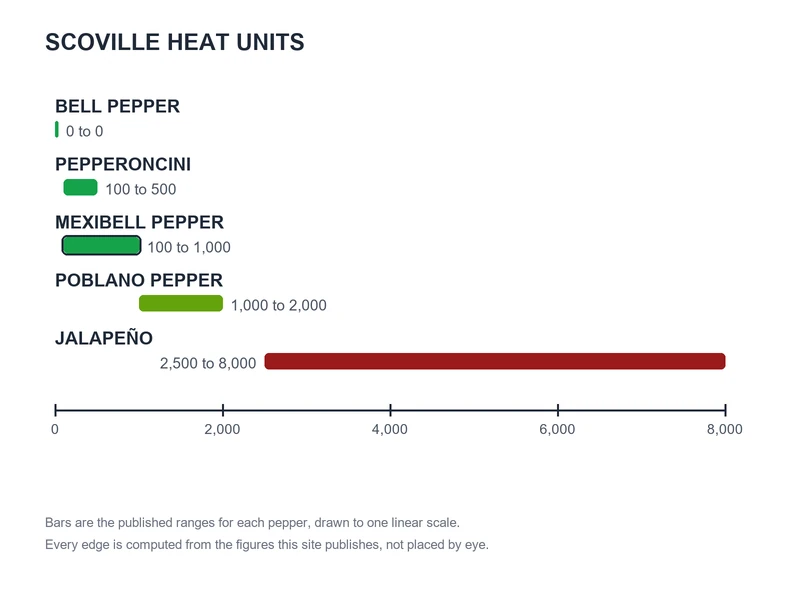
Pepper references commonly report 100 to 1,000 SHU, which would place it at the bottom of the medium band. AAS publishes no Scoville figure for the variety, so treat that range as reported rather than measured.
AAS compares the flavor to an Anaheim, which is worth reading carefully. An Anaheim sits at 500 to 2,500 SHU, so a MexiBell at the top of its reported range only reaches the Anaheim's floor.
Botanically it is Capsicum annuum, the species covering everything from sweet bells to cayennes. The flavor leans sweet and vegetal at the low end of its range and turns peppery nearer the top.
For cooks who find standard bells dull but cannot take real heat, this fills a genuine gap. It holds structure through roasting and stuffing the way a thin-walled chili cannot.
What Is the Origin of Mexibell Pepper?
The origin is documented, contrary to how this pepper is usually described. MexiBell is an F1 hybrid that All-America Selections named a 1988 edible vegetable winner, which is a specific award from a specific trialling body rather than an untraceable catalog entry.
The AAS citation explains what the award was for. The variety combined a familiar blocky bell shape with a pungency no bell pepper had, so the novelty was the pairing rather than either trait alone.
That places it firmly as a horticultural product rather than a landrace. It was bred for the home garden and the commercial market, not carried across generations in a regional food culture.
The name points at the flavor rather than a place of origin.
Nothing in the AAS record ties the variety to Mexican cultivation, and reading the name as a provenance claim overstates it.
How Spicy Is Mexibell Pepper, and How Does It Taste?
The Mexibell Pepper delivers 100–1K Scoville Heat Units, placing it in the Medium tier (1K-10K SHU).
What Nutrients Does Mexibell Pepper Provide?
Pick green or pick red and you are eating measurably different fruit.
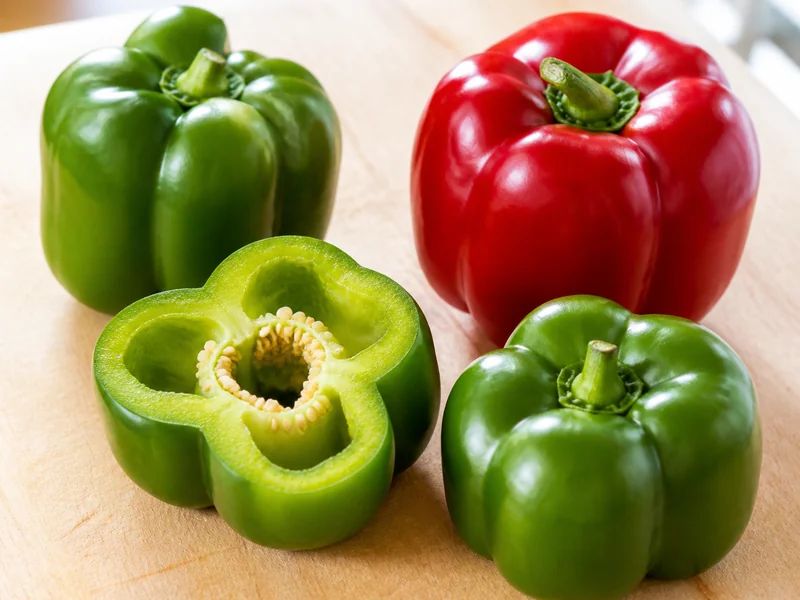
USDA puts green bell at 20 calories with 80.4mg of vitamin C per 100g, and red bell at 26 calories with 128mg. Red also brings 1,620µg of beta-carotene, which green does not carry at that level.
MexiBell has no USDA entry, so those describe sweet bell pepper as a class. The stage matters more than the cultivar in any case.
The capsaicin at this level is present but slight, which is the whole reason the pepper surprises people. The chemistry of pepper heat explains what it takes to register as hot.
What Is Mexibell Pepper Best Used For?
Cooking a MexiBell is intuitive if you know bell peppers, with one adjustment. Taste before committing to a quantity, because the reported range is wide enough that two fruits from one plant can differ.
AAS notes the heat can be moderated by cutting out the seed core along with the internal seeds and white ribs. That is the practical lever if you are cooking for someone heat-averse.
Roasting lifts both the sweetness and the mild heat, which suits pepper-based sauces that want body without chili intensity. Compare that to Piquillo Pepper, which give similar texture with less bite.
For stuffing, the thick walls hold filling without going soggy. The low heat sits well under savory cheese or grain fillings rather than fighting them.
Sliced raw it brings color and a mild warmth at once. Dishes built on Long Hot Italian take MexiBell in equal amounts, since both sit in the same reported band.
Dried and ground, the flesh contributes a mild pungency in the direction of gently warming ground paprika varieties. That is a use for surplus rather than the reason to grow it.
How Should You Buy and Store Mexibell Pepper?
MexiBell is uncommon in mainstream groceries. Specialty grocers, farmers markets and home harvests from seed are the realistic sources, and seed is easier to find than fruit for an AAS variety of this age.
Look for firm glossy skin with no soft spots or wrinkling, since both signal age or poor storage. Buy green or red according to what the dish needs, because the two stages differ in sweetness as well as nutrition.
Refrigerate unwashed in the crisper drawer, where fruit holds up to 2 weeks. Keep it away from ethylene producers such as apples, which soften it faster than age does.
For longer keeping, roast and freeze in portions, since the thick walls survive freezing and thawing better than thin ones. Whole pods also freeze without blanching and go straight into cooked dishes.
What Can Replace Mexibell Pepper in a Recipe?
No dedicated substitute guidance is published for Mexibell Pepper yet.
How Do You Start and Grow Mexibell Peppers?
MexiBell is a long-season pepper, and the AAS trial figures in the table below make that plain. Starting it late is the single most common way to end the season with green fruit only.
Bell types establish more slowly than thin-walled chilies, so give seed 8 to 10 weeks indoors first. Soil wants at least 60°F at transplant, with 70 to 85°F the productive band for fruit set.
Space plants so the canopy AAS describes can shade the developing fruit without crowding its neighbors. Crowding costs airflow, and airflow is what keeps thick-walled types clean in humid weather.
Stake or cage early rather than once the fruit load is obvious. Blocky fruit at 5 to 6 ounces apiece puts real weight on the branches.
Water consistently, because bell types punish irregular moisture more than thin-walled varieties do. Blossom end rot and cracking both trace back to it, and a 2-inch mulch layer buffers the swings.
Fertilize with a balanced formula until flowering, then drop the nitrogen so the plant builds fruit rather than leaves. The virus tolerance noted in the table is worth having if the bed has a history.
For technique on starting thick-walled peppers, the indoor starting for growing peppers covers soil mix and hardening off. The practical guidance on growing poblanos is the closest comparison for managing another thick-walled type alongside it.
| Trait | Figure | Why it matters |
|---|---|---|
| Mature green | 120 days from seed | The earliest usable harvest, and the reason this counts as long-season |
| Red ripe | 140 days from seed | About three more weeks on the plant for full color |
| From transplant | roughly 60 days | The number to plan against once seedlings go out |
| Plant size | 24 in tall, 12-18 in spread | Space near 18 inches so the canopy shades fruit without crowding |
| Disease | Tolerant of tobacco mosaic virus | One fewer worry in a bed that has carried TMV before |
Mexibell Pepper FAQ


- All-America Selections, Pepper MexiBell F1, 1988 edible vegetable winner
- USDA FoodData Central, SR Legacy 170427, Peppers, sweet, green, raw
- USDA FoodData Central, SR Legacy 170108, Peppers, sweet, red, raw
Species classification: Capsicum annuum - based on published botanical taxonomy.