
Hungarian Wax vs Jalapeño: Heat Overlaps, So Pod Shape Picks the Dish
Choose Hungarian Wax for long pickling slices, frying, or stuffed whole pods. Choose jalapeño for salsa, poppers, and thick-walled green chile crunch. Their heat ranges overlap, so taste the actual wax pepper before setting the dose.

Hungarian Wax is the better choice for long pickles, frying, and stuffed pods. Jalapeño is better for salsa, poppers, and thick-walled green slices. Their published heat ranges overlap, so taste the actual wax pepper before dosing it.
- Species: Both are C. annuum
Hungarian Wax
HotJalapeño
MediumQuick Comparison
| Attribute | Hungarian Wax | Jalapeño |
|---|---|---|
| Scoville evidence | 2K-4K SHU (Iowa State Extension) | 2.5K-8K SHU (Oregon State Extension) |
| Heat Tier | Hot | Medium |
| vs Jalapeño | 2x hotter | 1x hotter |
| Flavor | tangy and bright | Grassy, crisp, lightly sweet when red |
| Species | C. annuum | C. annuum |
| Origin | Hungary | Mexico |
Is Hungarian Wax Hotter Than Jalapeño?
The useful heat answer is overlap, not a fixed winner because Iowa State University Extension lists Hungarian Yellow Hot Wax at 2,000-4,000 SHU, while Oregon State University Extension places a standard jalapeño at 2,500-8,000 SHU. Those published bands overlap from 2,500 to 4,000 SHU, so either pepper can deliver the stronger bite in that shared zone.
Seed line matters for Hungarian Wax because Johnny's Selected Seeds reports that poorly maintained commercial strains have varied in fruit shape and heat. A package labeled Hungarian Hot Wax therefore gives the cook less certainty than the name alone suggests.
Jalapeño also varies, but its familiar extension range makes it easier to dose in recipes written around green jalapeños. Oregon State describes the fruit as thick-fleshed and suitable fresh, cooked, or pickled, which explains why one pod gives both a known heat band and a predictable amount of usable flesh.
Ripeness changes the comparison without turning color into a heat guarantee because Penn State Extension says genetics, environment, and ripeness all influence chile heat. University of Minnesota Extension notes that jalapeños may be harvested green and Hungarian Wax peppers yellow, but color cannot certify a pod's SHU.
How Do Hungarian Wax and Jalapeño Taste Different?
Form creates the clearest flavor difference because Hungarian Wax is long, tapered, and moderately piquant in Johnny's current seed description, with pale yellow fruit at 58 days and red-ripe fruit at 83 days. The pale stage gives pickles and fried peppers a lighter color and a clean pepper bite without the green profile expected from jalapeño.
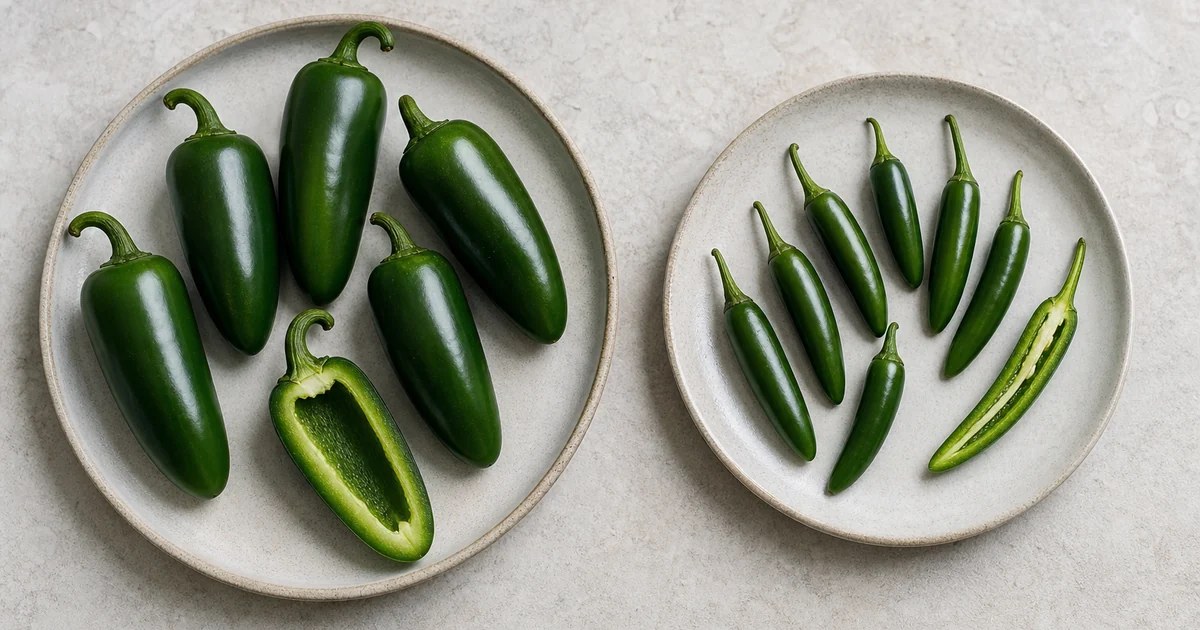
A green jalapeño brings a more recognizable vegetal chile character. Oregon State describes a smooth, cylindrical fruit about 1.5 by 3 inches with thick flesh, so it releases less thin-walled pepper surface into a salsa spoonful and retains a substantial bite after slicing.
The distinction becomes smaller after long cooking because aromatics soften and both peppers belong to Capsicum annuum. It stays obvious in raw salsa, quick pickles, and sandwiches, where color, wall thickness, and fresh aroma remain exposed.
For the cleanest decision, match the pepper to the texture and color the dish needs. Hungarian Wax supplies long pale pieces that take well to frying and pickling, while jalapeño supplies compact green pieces that read immediately as salsa or topping chile.
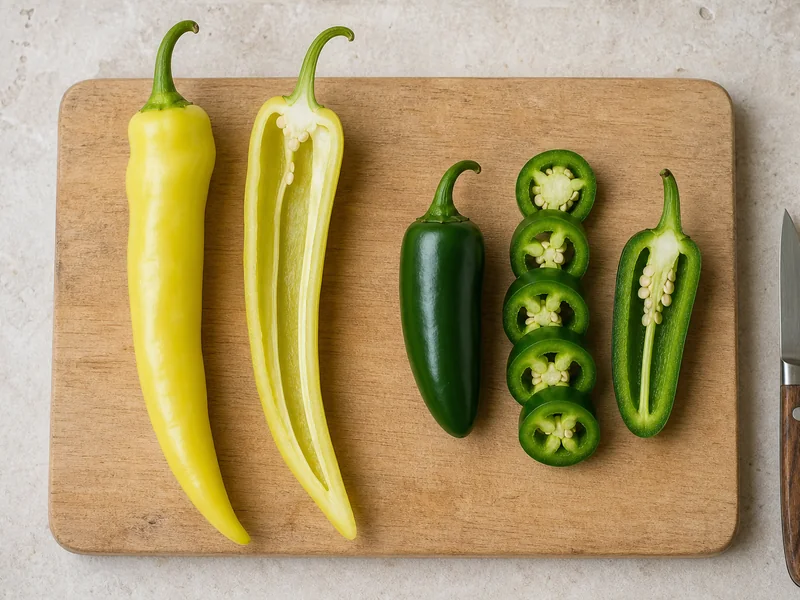
The peppers overlap in heat, but their forms send them toward different jobs. Shape points to the job before heat does.
| Decision | Hungarian Wax | Jalapeño |
|---|---|---|
| Harvest look | Long, pale yellow pod | Short, green cylindrical pod |
| Flesh and format | Broad rings and long cavity | Thick walls and compact rounds |
| Best first choice | Frying, pickling, whole-pod stuffing | Salsa, poppers, nachos |
| Dose check | Taste the seed line or pod | Plan around the 2.5K-8K SHU range |
Which Dishes Suit Hungarian Wax, and Which Suit Jalapeño?
Pick Hungarian Wax when the pod itself is part of the dish because Johnny's recommends the cultivar for frying, roasting, and pickling. Its improved line averages about 5½ inches long by 1½ inches wide, which provides broad rings and a useful cavity for filling.
Jalapeño fits recipes that need smaller, thick-walled pieces because Oregon State supports its use fresh, cooked, or pickled. A short pod portions cleanly for poppers, nacho rings, and salsa without contributing the flesh of one long wax pepper.
For salsa, choose jalapeño unless pale color or a sharper wax-pepper character is intentional. Dice by weight rather than pod count because a long Hungarian Wax fruit can contribute much more flesh than a jalapeño, and taste the batch before adding the rest.
Both peppers work for pickling, but Hungarian Wax earns the choice for long rings or spears while jalapeño earns it for compact rounds. Use a tested preservation recipe for shelf-stable jars because pepper type does not make an untested brine safe.
For stuffing, shape settles the choice. Hungarian Wax makes a longer filled pepper that can be roasted or fried, while jalapeño makes the smaller thick-walled popper associated with cream cheese or other compact fillings.
Which Should You Choose, Hungarian Wax or Jalapeño?
Choose the pepper by dish form first and heat second. Hungarian Wax wins for long pickles, frying, and whole-pod stuffing, while jalapeño wins for salsa, poppers, nachos, and compact green slices.
Heat does not provide a universal tiebreaker because the extension ranges overlap. Jalapeño is easier to plan around when a recipe expects 2,500-8,000 SHU, while Hungarian Wax asks the cook to taste the particular pod or seed line.
Buying availability may settle the decision for everyday cooking, but it should not erase the shape difference. A jalapeño can supply heat to a Hungarian Wax recipe, yet it cannot supply the same long pale body for stuffing or broad rings for a pickle jar.
Service Examples
A vinegar sandwich pickle benefits from Hungarian Wax because broad pale rings remain visually distinct among cucumbers or onions. Use jalapeño when the finished topping should deliver smaller green rounds and a firmer bite.
A fresh tomato salsa benefits from jalapeño because the compact pod is easy to mince and its green chile identity belongs in the bowl. Hungarian Wax can work, but its larger body changes the pepper-to-tomato ratio unless the cook weighs the flesh.
A stuffed-pepper supper points toward Hungarian Wax when each pod should hold a visible line of filling. A party tray of bite-size poppers points toward jalapeño because its shorter, thicker walls support the smaller format.
A skillet of fried peppers points toward Hungarian Wax. Johnny's explicitly recommends frying and roasting this cultivar, so the use rests on a named seed authority rather than a generic pepper substitution.
Can You Substitute Hungarian Wax for Jalapeño?
An equal-weight swap is a better starting point than an equal pod count. As an editorial starting ratio, replace 30 grams with 30 grams for chopped salsa, relish, or cooked filling, then adjust only after tasting the raw pepper.
Equal weight does not preserve shape because jalapeño cannot reproduce a long Hungarian Wax cavity and Hungarian Wax cannot reproduce compact nacho rounds. Choose another recipe format when the physical form is the point.
The heat adjustment must follow the actual pod, so start below equal weight when Hungarian Wax tastes hotter than the jalapeño a recipe assumes. Adding more of a milder wax pepper may distort the vegetable-to-acid or vegetable-to-tomato balance before it matches the heat.
Do not use red color as permission to raise or lower the dose. Penn State supports ripeness as one influence among several, so tasting remains the only practical kitchen check available without laboratory measurement.
Buying And Prep Notes
Look for the name Hungarian Hot Wax, not sweet banana pepper, because the label and seed line identify different heat expectations. Johnny's breeding notes show why uniform shape and heat cannot be assumed across every commercial lot.
For Hungarian Wax, buy smooth tapered pods that are firm from shoulder to tip, with pale yellow as a normal harvest stage and orange or red indicating later maturity. For jalapeño, choose firm cylindrical pods with intact thick walls and similar sizes when making poppers.
Wear gloves when cutting either hot pepper, and remove the pale interior placenta when a lower dose is needed. New Mexico State University's Chile Pepper Institute identifies placental tissue as the main site of capsaicinoid glands, so scraping only loose seeds leaves much of the heat-bearing tissue behind.
Slice pickling batches to an even thickness so the pieces take up brine at a similar pace. Keep shelf-stable canning separate from casual substitution and follow a tested extension or National Center for Home Food Preservation process.
Final Choice
The shortest reliable rule is Hungarian Wax for long pale pods, jalapeño for compact green pieces. Heat overlaps, so shape and dish identity make the first choice, while a taste of the actual pepper sets the amount.
Substitution
Start with equal weight, not equal pod count, for chopped applications. This editorial starting point keeps the vegetable amount stable while the cook adjusts heat after tasting.
A form-dependent recipe is not a direct swap. Jalapeño cannot replace the long cavity of Hungarian Wax in a stuffed-pepper dish, and Hungarian Wax cannot preserve the compact popper shape of jalapeño.
Hungarian Wax vs Jalapeño FAQ
- Iowa State University Extension - Growing Peppers in the Home Garden
- Oregon State University Extension - Grow Your Own Peppers
- Johnny's Selected Seeds - Hungarian Hot Wax
- Penn State Extension - Growing Hot Peppers
- University of Minnesota Extension - Growing Peppers
- New Mexico State University Chile Pepper Institute - Chile Terminology