
Bulgarian Carrot vs Hungarian Wax: Pickle Pepper or Hot Orange Bite?
Choose Hungarian Wax when the recipe needs firm pickled rings, stuffed yellow pods, or a tangy pepper that stays manageable. Choose Bulgarian Carrot when you want a crisp orange pod with brighter fruit and a much higher heat ceiling, especially for flakes, fresh slices, or hot pickles.

Bulgarian Carrot Pepper
HotHungarian Wax
HotQuick Comparison
| Attribute | Bulgarian Carrot Pepper | Hungarian Wax |
|---|---|---|
| Scoville evidence | 5K-30K SHU | 1.5K-15K SHU |
| Heat Tier | Hot | Hot |
| vs Jalapeño | 4x hotter | 2x hotter |
| Flavor | fruity, crisp, and steadily hot | tangy and bright |
| Species | Capsicum annuum | C. annuum |
| Origin | Bulgaria | Hungary |
Is Bulgarian Carrot Hotter Than Hungarian Wax?
Bulgarian Carrot is usually hotter according to published ranges. The University of Delaware Botanic Gardens lists Bulgarian Carrot at 20,000-30,000 SHU, while UF/IFAS places Hungarian Wax at 5,000-10,000 SHU.
Those published ranges make Bulgarian Carrot roughly two to six times hotter at their stated endpoints.
The difference matters more than the two names suggest. A jar built around Hungarian Wax can carry noticeable heat, but the same volume of Bulgarian Carrot can dominate the vinegar, garlic, and vegetables around it.
Treat each range as a planning guide rather than a promise for one pod. New Mexico State University reports that inherited traits, weather during growth, field conditions, and harvest maturity can shift capsaicinoid readings, so two peppers of the same named cultivar may not land at the same point on the Scoville scale.
For a mixed-tolerance table, start with Hungarian Wax and let diners add a hotter condiment. For a deliberately hot relish or pickle, Bulgarian Carrot supplies more heat without requiring as much pepper volume.
How Do Bulgarian Carrot and Hungarian Wax Taste Different?
Bulgarian Carrot brings sweet, tangy flavor followed by a sharper burn. The University of Delaware inventory describes the cultivar as sweet and tangy, and Oregon State University's variety trial recorded it as sweet but moderately hot.
Hungarian Wax gives a milder first impression and a more neutral pepper base. Cornell describes Hungarian Hot Wax as not overly hot, with long fruit that changes from light green to waxy yellow and then bright red, while the University of Connecticut describes Hungarian Yellow Wax as medium hot with medium-thick walls.
Ripeness changes the comparison. A pale yellow Hungarian Wax pod is the familiar choice for bright, tangy rings, while a fully colored pod carries more mature pepper flavor and may feel hotter.
Bulgarian Carrot is normally chosen at its fluorescent-orange stage, so its ripe color and heat arrive together.
That distinction gives each pepper a different job. Hungarian Wax is easier to fold into sandwiches, fried peppers, and stuffed dishes where the other ingredients should stay prominent, while Bulgarian Carrot is better when the pepper itself should be the bright, hot focal point.
Culinary Uses
Hungarian Wax supplies volume, while Bulgarian Carrot supplies concentrated heat. Cornell records Hungarian Hot Wax fruit at about 6-8 inches long and 2 inches wide, which provides much more room for stuffing and broader rings than Bulgarian Carrot.
Oregon State's Bulgarian Carrot trial measured the fruit at about 7.9 cm long and 1.6 cm wide. That narrow pod is practical for fine slices, chopped relish, and flakes, but it cannot hold a stuffed filling the way a broad wax pepper can.
Pickling makes the choice especially clear. Use Hungarian Wax when the jar needs intact rings, plenty of pepper bulk, and heat that leaves room for vinegar and aromatics.
Use Bulgarian Carrot when the goal is a hotter chopped pickle, a small-batch relish, or orange pieces that stay visually distinct.
For sandwiches and antipasto, Hungarian Wax can be layered across the serving. Bulgarian Carrot works better as a measured accent, because its documented heat range is higher and its smaller cross-section can disguise how much heat a handful of slices contributes.
For frying or grilling, the wall difference affects timing. Cornell describes Bulgarian Carrot as thin walled, while the University of Connecticut describes Hungarian Yellow Wax as medium thick walled, so the smaller orange pod will soften and blister sooner.
Add Bulgarian Carrot late when distinct pieces and fresh fruit character matter, or mince it early when its heat should spread through the whole pan. Hungarian Wax can stay in larger strips for frying and roasting because the flesh supplies more structure.
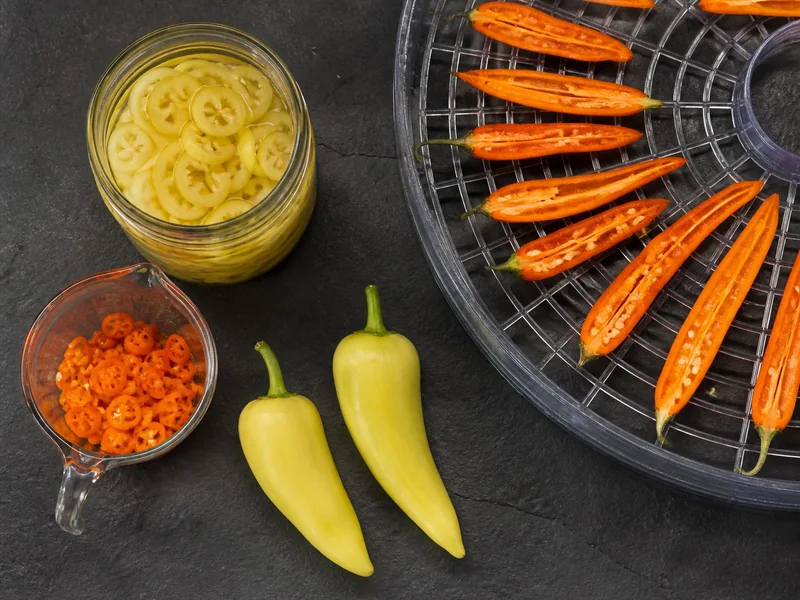
For drying, split either pepper lengthwise so moisture can escape. Bulgarian Carrot earns the stronger recommendation for flakes or powder because its narrow fruit requires less cutting and the University of Delaware specifically lists roasted and cooked applications for the cultivar, but the final choice still depends on whether the cook wants its hotter profile.
Which Should You Choose, Bulgarian Carrot or Hungarian Wax?
Pick Hungarian Wax for stuffed pods, frying, sandwich rings, and a full jar of pickled pepper. Its larger dimensions and lower published heat range make it easier to use as a vegetable rather than only as a seasoning.
Pick Bulgarian Carrot for hot relish, fine fresh slices, vivid orange garnish, and a smaller amount of hotter pepper. Its narrow fruit and 20,000-30,000 SHU listing suit recipes where heat and ripe orange color are part of the intended result.
The decision changes when availability matters. Oregon State Extension recommends both among garden cultivars, but its buying guidance notes that uncommon specialty peppers may require purchased seed and home-grown transplants.
If only one is available, adjust the amount and preserve the missing bulk with a mild pepper instead of pretending the two pods are a direct one-for-one swap.
Can You Substitute Bulgarian Carrot for Hungarian Wax?
For a recipe written around Hungarian Wax, begin with one-third to one-half as much Bulgarian Carrot by volume. This is a conservative kitchen starting point derived from the published heat ranges, not a guarantee that every pod will match the ratio exactly.
Replace the missing pepper volume with bell pepper, sweet banana pepper, or another mild fleshy pepper. That keeps the jar's pepper-to-brine balance closer to the original while avoiding a large, unmeasured jump in heat.
When replacing Bulgarian Carrot with Hungarian Wax, add Hungarian Wax until the recipe regains the required pepper bulk. Expect less heat and a less concentrated ripe-orange character, then correct heat with a separately measured hot ingredient if the recipe truly requires it.
Do not use pod count as the conversion. Cornell's cultivar records show that Hungarian Wax fruit is substantially longer and wider, so one pepper on each side does not represent equal mass, surface area, or heat.
| If the recipe calls for | Use instead | Correction |
|---|---|---|
| 1 cup Hungarian Wax | 1/3 to 1/2 cup Bulgarian Carrot | Add mild pepper for missing bulk |
| 1 cup Bulgarian Carrot | Hungarian Wax to desired bulk | Expect less heat and less orange fruit character |
| Fresh sandwich rings | Hungarian Wax | Keeps the deli-style bite |
| Orange flakes or powder | Bulgarian Carrot | Dry split pods until brittle |
How Can You Tell Bulgarian Carrot and Hungarian Wax Apart?
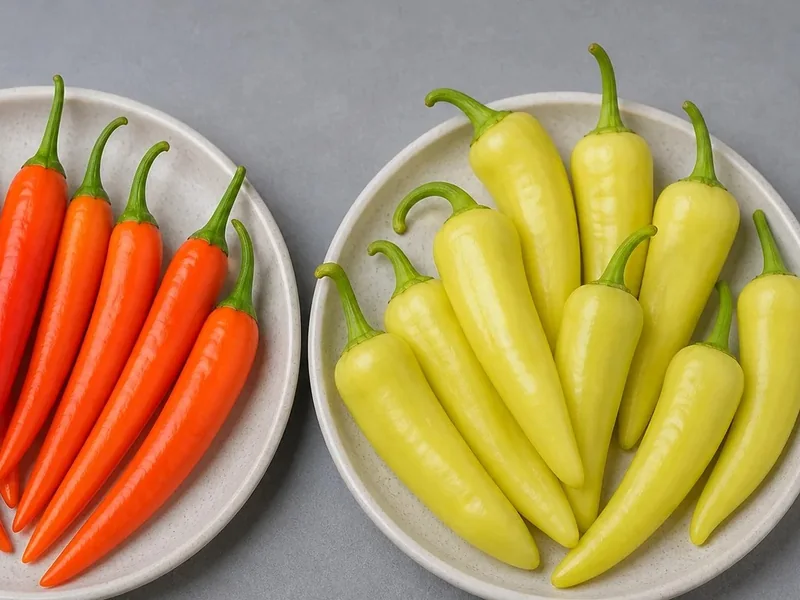
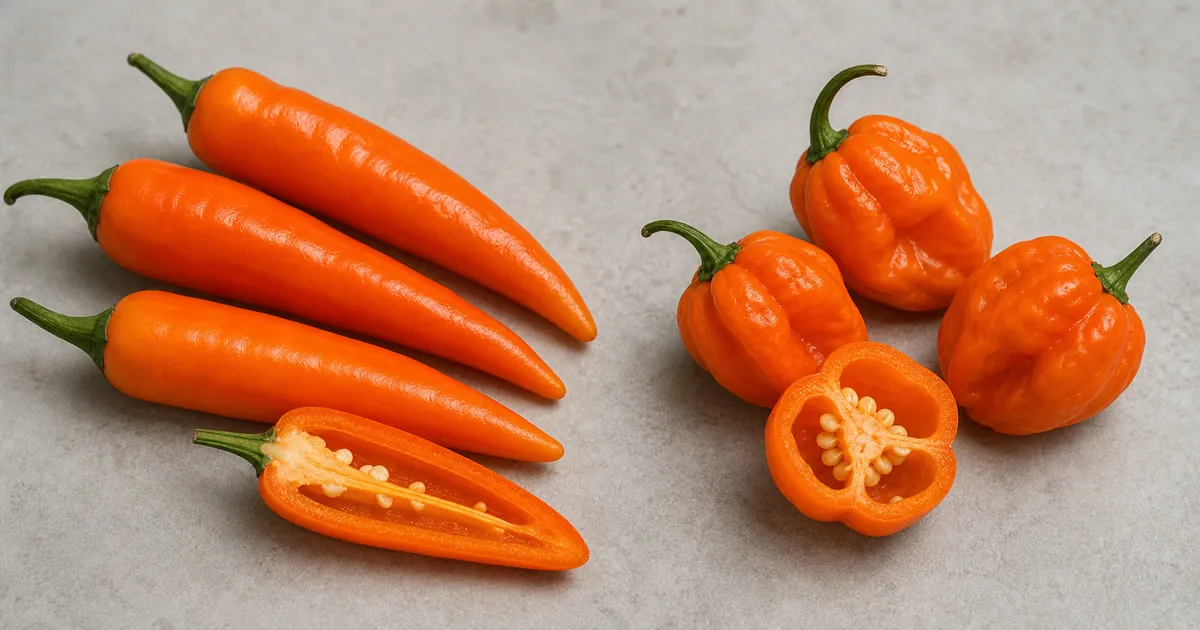
The fastest identification check is size plus ripening color. Cornell describes Bulgarian Carrot as a thin-walled, tapered orange fruit about 1.5-3.5 inches long on an 18-inch plant, while Hungarian Hot Wax is about 6-8 inches by 2 inches on a 20-24-inch plant and ripens from light green through waxy yellow to red.
A pale yellow pod can still be Hungarian Wax even though red is its fully mature color. Bulgarian Carrot should be narrower and fluorescent orange at maturity, so a broad yellow pod sold under that name deserves a closer look at the seed packet or seller description.
For seed buying, match the full cultivar name, ripe color, pod dimensions, and days to maturity. Cornell lists Bulgarian Carrot at about 65-68 days and Hungarian Hot Wax across 58-85 days, which is more useful than relying on a generic photo labeled only "hot pepper."
In the garden, both are Capsicum annuum and share the same broad pepper-growing requirements. Oregon State Extension includes both among suitable garden cultivars, while its guidance recommends starting seed indoors or buying transplants because peppers need a long, warm growing period.
Choose Bulgarian Carrot when compact plant height, narrow orange fruit, and hot small-batch projects match the harvest plan. Choose Hungarian Wax when the household wants larger fruit that can cover frying, stuffing, fresh slicing, and pickling from the same plant.
Verify the pod before buying
- Bulgarian Carrot is narrow, vivid orange, and carrot-like when ripe
- Hungarian Wax is broader, tapered, and pale yellow before red maturity
- The seller names the cultivar and stated heat range
- Fresh pods have no wet lesions, leaking flesh, or mold
What The Records Can Prove
The strongest records support cultivar identity, fruit dimensions, maturity timing, and practical use. Oregon State's 2006 trial identifies Bulgarian Carrot as open pollinated, green-to-orange, upright, and early, while North Carolina State University's cultivar record calls it a Bulgarian landrace with clustered fruit that turns fluorescent orange.
Cornell identifies Hungarian Hot Wax as a Hungarian heirloom and records Hungarian Wax as an alternate name. USDA GRIN supplies the taxonomic frame for Capsicum annuum, but a species record alone cannot prove a detailed migration story for either cultivar.
No reliable source used here establishes claims about Ottoman trade, a specific route into North America, or seed-rack popularity preserving Bulgarian Carrot. Those stories do not help a cook choose between two pods and remain outside this comparison.
For buyers, provenance should mean a named cultivar, a seller image that matches the ripe color and shape, a plausible size range, and a disclosed heat estimate. Those checks separate Bulgarian Carrot from a generic small orange chile and Hungarian Wax from a mild sweet banana pepper.
Do Bulgarian Carrot and Hungarian Wax Differ in Nutrition?
Nutrition does not decide this comparison because no cultivar-specific nutrient analysis was located for the pair. Generic pepper nutrition data cannot establish exact calories or vitamin values for one Bulgarian Carrot pod versus one Hungarian Wax pod.
Handling and portion size do change the result. New Mexico State University reports that capsaicinoids are produced in the placental tissue inside the fruit, while the seeds themselves are not the source of pungency even though capsaicin can contact their surface.
Wear gloves when slicing a batch of either pepper, especially Bulgarian Carrot. Keep cut surfaces and hands away from the eyes and face, then wash the knife, board, and gloves before they touch ready-to-eat ingredients.
Removing the placenta can reduce the hottest tissue in a pod, but it does not create a fixed percentage reduction. The safer control is to measure the hotter pepper by volume, taste the finished mixture cautiously, and add more only after the first amount has dispersed through the dish or brine.
Bulgarian Carrot Pepper vs Hungarian Wax FAQ
- University of Delaware Botanic Gardens - Spring Sale Pepper Inventory 2024
- UF/IFAS Extension - Pepper Production in Miami-Dade County
- Cornell Vegetable Varieties - Bulgarian Carrot
- Cornell Vegetable Varieties - Hungarian Hot Wax
- Oregon State University Extension - Grow Your Own Peppers
- New Mexico State University - Measuring Chile Pepper Heat
- New Mexico State University - Growing Chile Peppers
- USDA GRIN - Capsicum annuum