Pepperoncini vs Jalapeño: Which One Fits the Dish?
Choose pepperoncini when a sandwich, salad, or braise needs gentle pepper flavor plus the sharpness of pickling brine. Choose jalapeño when the pepper must supply fresh crunch, grassy flavor, or noticeable heat. A reliable swap must account for brine, wall thickness, and a 2,000-plus-SHU heat gap.

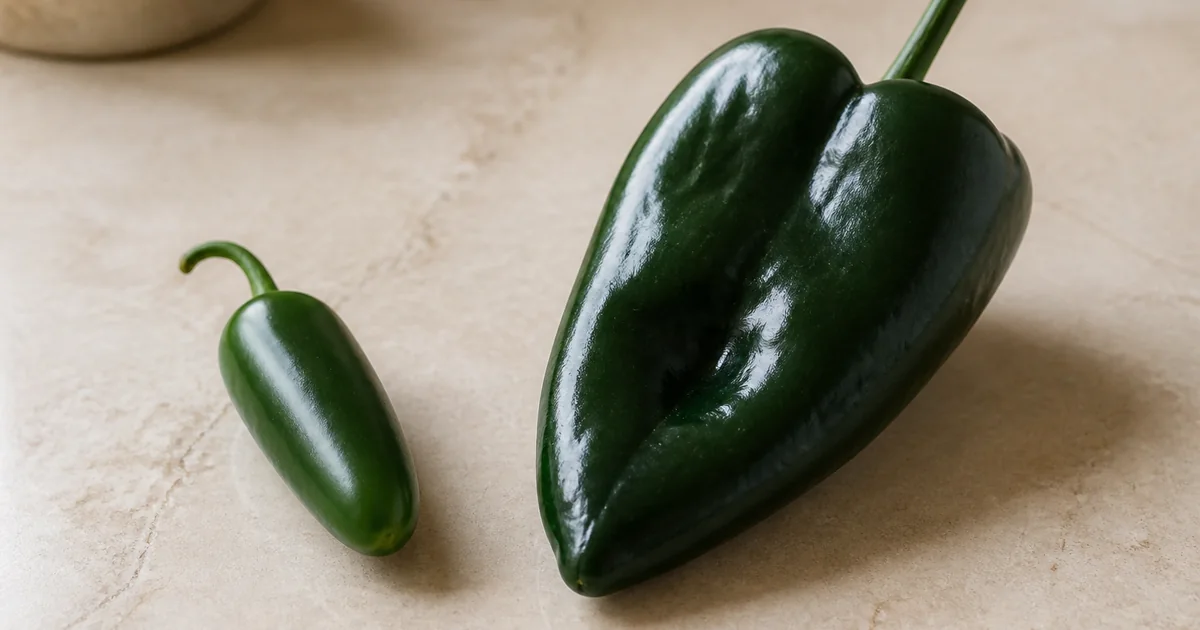
Pepperoncini
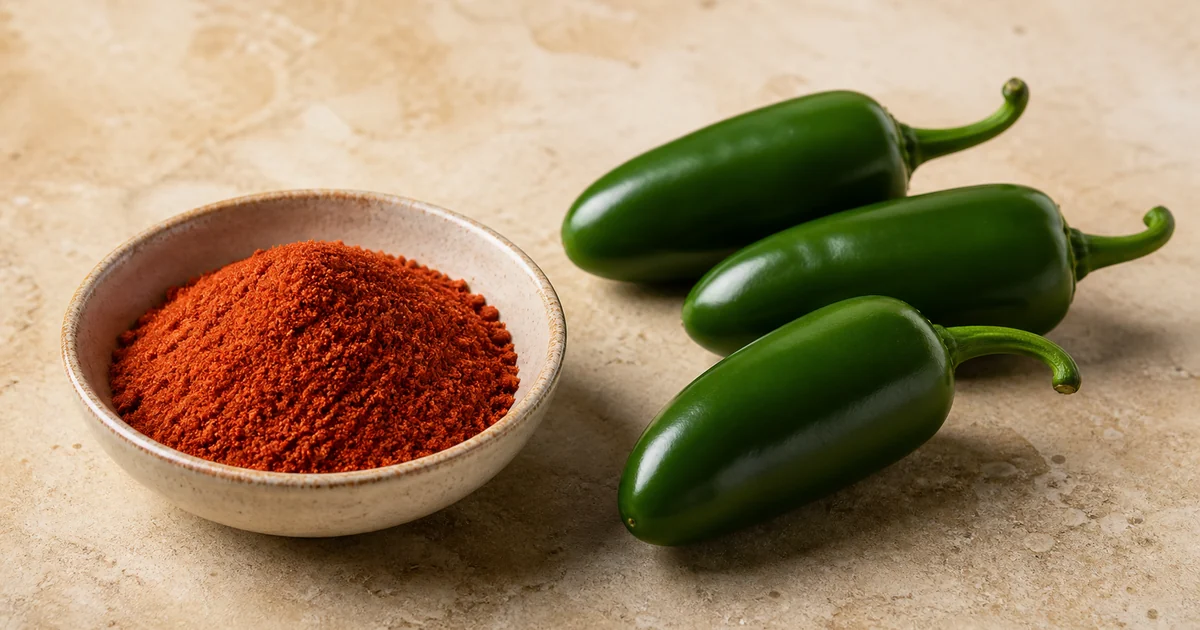
MildJalapeño
MediumQuick Comparison
| Attribute | Pepperoncini | Jalapeño |
|---|---|---|
| Scoville evidence | 100-500 SHU | 2,500-8,000 SHU |
| Heat Tier | Mild | Medium |
| vs Jalapeño | n/a | 1x hotter |
| Flavor | tangy and mild | Grassy, crisp, lightly sweet when red |
| Species | C. annuum | C. annuum |
| Origin | Italy | Mexico |
How Are Jarred Pepperoncini and Fresh Jalapeños Different?
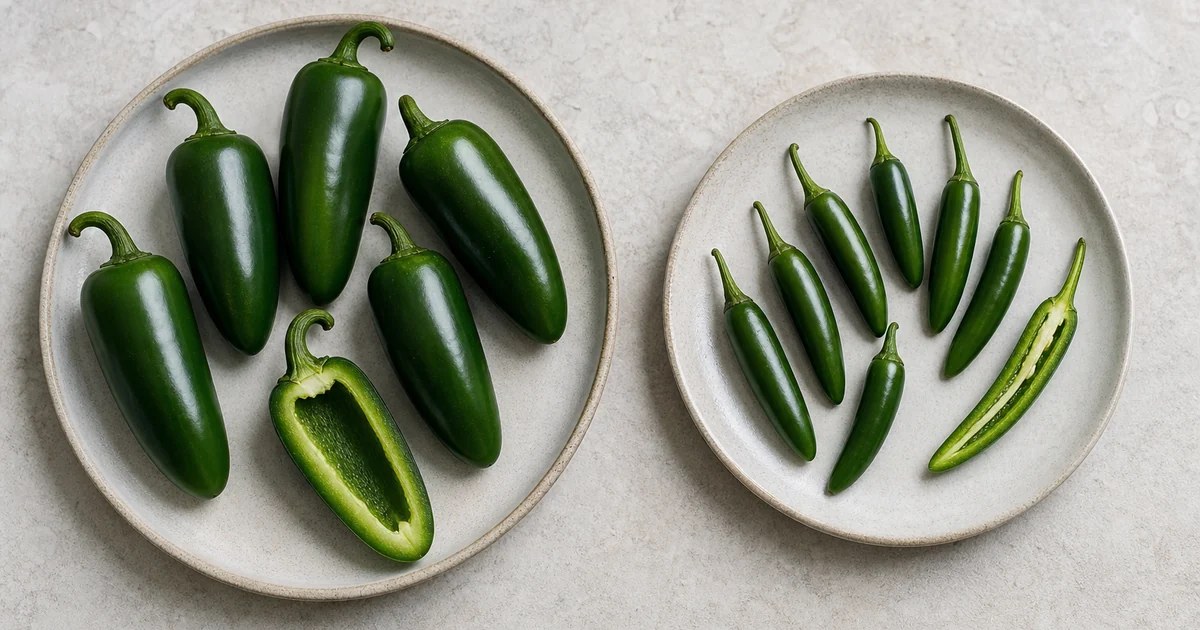
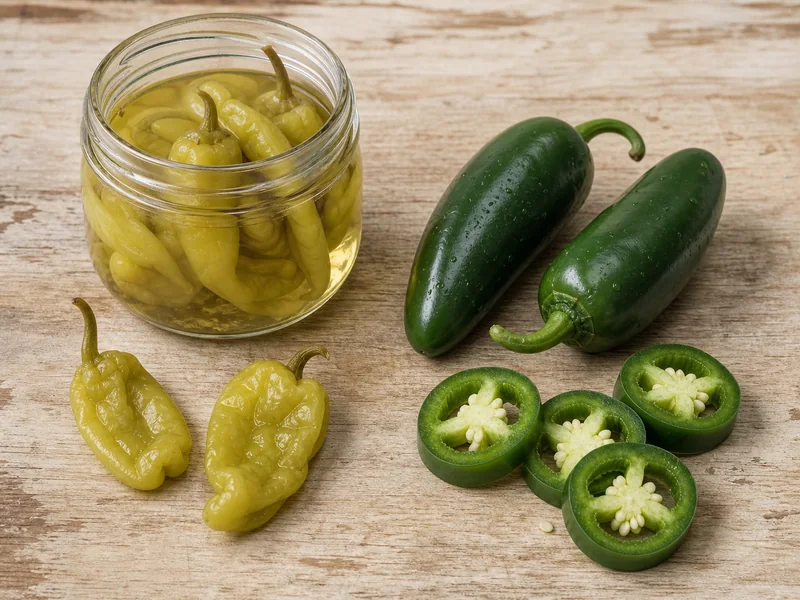
A jar of pepperoncini and a fresh jalapeño differ in more than heat. Pepperoncini bring vinegar, salt, softened flesh, and a little brine into the dish, while fresh jalapeños bring water, crisp walls, green aroma, and substantially more capsaicin.
Fresh pepperoncini are mildly sweet, slightly bitter, and only faintly hot. Most shoppers in the United States meet them after pickling, so their familiar tang comes largely from vinegar and salt rather than the fresh pod.
Pickling changes texture as well as taste. Thin-walled pepperoncini become tender and pliable in brine, while thick-walled jalapeño rings usually retain more snap and resist tearing on pizza, nachos, or a hot sandwich.
The liquid matters whenever the recipe has its own acid and salt balance. Adding pepperoncini straight from the jar can make a vinaigrette, pasta salad, or pan sauce sharper and saltier, so drain the peppers first and add brine separately only after tasting.
Pickled jalapeños solve the form mismatch but leave the heat mismatch. They supply a similar vinegar note and a firmer bite, yet even a mild jar can taste much hotter because the starting pepper sits in a different Scoville range.
Read the ingredient list, not just the pepper name
Two jars labeled pepperoncini can taste different because brands choose different vinegar, salt, firming agents, sweeteners, and spices. Calcium salts can preserve crunch, sugar can round off acidity, and garlic or turmeric can pull the flavor away from a plain brined pepper.
- Choose a short ingredient list when the pepper must blend into a Greek salad or antipasto plate.
- Choose a firmer product for pizza, hot sandwiches, and longer cooking.
- Check sodium when the dish already contains feta, olives, cured meat, or a salty sauce.
- Keep the brine only when its vinegar and seasoning fit the recipe.
Which Should You Use, Pepperoncini or Jalapeño?
The better pepper is the one that performs the job the dish gives it. Pepperoncini usually win when acidity and gentle heat must cut through rich food, while jalapeños win when the pepper needs to stay crisp, taste green, or make the finished bite clearly spicy.
| Dish or task | Better starting choice | What changes in the food |
|---|---|---|
| Italian beef, roast sandwiches, or muffuletta | Pepperoncini | Soft texture and brine brighten fatty meat without turning every bite hot. |
| Pico de gallo or fresh tomato salsa | Jalapeño | Crisp flesh and grassy heat stay distinct beside raw onion, tomato, and cilantro. |
| Greek salad or antipasto | Pepperoncini | The mild whole pod fits olives and cheese without dominating them. |
| Nachos, queso, or loaded fries | Pickled jalapeño | Vinegar cuts richness while the thicker ring keeps its shape and adds heat. |
| Stuffed and baked peppers | Jalapeño | Thick walls create a stable cavity that is less likely to split under filling. |
| Slow-cooked beef or chicken | Pepperoncini | The brine seasons the cooking liquid and the peppers soften into the sauce. |
| Guacamole, tacos, or eggs | Jalapeño | A small dice distributes fresh chile flavor without adding vinegar. |
Sandwiches show why a one-for-one answer fails. Pepperoncini give roast beef a juicy acidic accent, but fresh jalapeño creates dry crunch and concentrated hot spots unless it is sliced very thin.
Salsa exposes the same problem from the other direction. Replacing jalapeño with jarred pepperoncini reduces the heat and adds vinegar, so the tomatoes may need less lime juice and salt but still lack the green aroma jalapeño supplied.
On pizza, choose by the topping load. Pepperoncini suit sausage, olives, or rich cheese when mild acidity is the goal, while pickled jalapeño rings work better when a sturdy slice and deliberate burn should survive baking.
For stuffing, wall strength is decisive. Jalapeños are compact and thick enough to hold cheese or meat, while drained pepperoncini can split as they are opened, filled, or heated.
A braise reverses that priority because crispness disappears during long cooking. Pepperoncini and a measured amount of brine can season the pot, but fresh jalapeño mainly contributes chile flavor and heat rather than the acid a Mississippi-style roast expects.
Can You Swap Pepperoncini and Jalapeño?
Match the form and the ingredient's job before making a substitution. Then correct heat, acidity, salt, and texture separately instead of expecting one pod or spoonful to replace all four qualities.
Fresh pepperoncini for fresh jalapeño
Fresh pepperoncini can replace jalapeño when crunch matters more than heat, such as in a chopped salad, mild relish, or garnish. Use a similar volume, then add a hotter chile separately if the recipe still needs a burn.
This swap does not work cleanly when jalapeño is the main flavor in salsa or guacamole. Increasing pepperoncini adds vegetable bulk without recreating jalapeño's grassy heat.
Pickled pepperoncini for pickled jalapeño
This is the easiest exchange because both ingredients already bring vinegar and salt. Start with the same drained volume in sandwiches, pizza, nachos, or a chopped topping, then taste before adding any jar liquid.
The result will be much milder and usually softer. If a recipe depends on jalapeño rings holding shape under cheese or in a hot pan, add pepperoncini late so they do not collapse into the topping.
Jarred pepperoncini for fresh jalapeño
This cross-form swap changes the recipe most. Drain and blot the pepperoncini, reduce other acid and salt only after tasting, and expect a tangy mild result rather than fresh jalapeño flavor.
It works in tuna salad, pasta salad, sandwiches, and creamy dips because acidity already belongs in those foods. It is a poor fit for fresh salsa, cornbread, or a green sauce when vinegar would alter the intended flavor.
Jalapeño for pepperoncini
Use pickled jalapeño when the original dish needs brine as well as pepper. Use fresh jalapeño only when another ingredient can provide the missing acidity, such as wine vinegar in a salad or pickle liquid in a braise.
Reduce the amount if diners expect pepperoncini-level heat, and mince or slice it thinly so no bite receives a large piece. Removing the pale interior ribs lowers the capsaicin load more effectively than removing loose seeds alone.
When the swap should stop
Do not use thin pepperoncini as a direct replacement in jalapeño poppers. The cavity, wall strength, and heat contrast are part of the recipe, so a sturdier mild pepper is a better structural substitute.
Do not replace pepperoncini brine with jalapeño juice or water in a preservation recipe. Tested pickling formulas control acidity for safety, and changing the acid source or proportion requires a tested recipe from a canning authority.
How Much Hotter Is Jalapeño Than Pepperoncini?
Jalapeño starts at 2,500 to 8,000 Scoville heat units, while pepperoncini sit at 100 to 500 SHU. Even the mild endpoint comparison makes jalapeño five times hotter, and the widest endpoint comparison reaches eighty times.
Those ratios describe capsaicin concentration, not a promise about one pod. New Mexico State University notes that cultivar genetics, environment, and fruit development can change capsaicinoid levels, which explains why two jalapeños from one bin may not burn equally.
Heat is concentrated around the placenta, the pale tissue that holds the seeds inside the pod. Trimming that tissue reduces jalapeño heat, while removing seeds alone helps mainly because they touch the placenta and carry capsaicin on their surface.
Cut size controls distribution. Thick jalapeño rounds create isolated hot bites, while a fine dice spreads smaller amounts through salsa, eggs, or sauce.
Whole pepperoncini create a mild condiment bite, while chopped pepperoncini distribute brine and acidity.
| Control | Effect on jalapeño | Effect on pepperoncini |
|---|---|---|
| Remove ribs | Reduces a major source of capsaicin | Changes little because baseline heat is already low |
| Dice finely | Spreads heat more evenly through the dish | Spreads acidity and salt from the brine |
| Add late | Preserves greener aroma and firmer texture | Preserves pickled tang and keeps pieces intact |
| Cook a long time | Softens texture but does not reliably erase capsaicin | Softens thin walls and moves brine flavor into the liquid |
Dairy, oil, sugar, and starch can make a hot dish feel less sharp, but they do not turn jalapeño into pepperoncini. When diners need reliably mild food, start with pepperoncini and add heat separately instead of trying to dilute an unpredictable jalapeño after cooking.
How to Pick Good Pepperoncini and Jalapeños
Buy pepperoncini by brine quality and jalapeños by pod condition. Pepperoncini are usually preserved products whose labels affect the dish, while jalapeños are commonly fresh peppers whose firmness, color, and walls determine how they cook.
At the produce case
Choose jalapeños that feel firm, smooth, and heavy for their size, with no wet stem end or sunken soft patch. Green pods taste crisp and grassy, while fully red pods are sweeter and better suited to roasting, drying, or smoking.
Tan stretch marks called corking are normal growth scars, not spoilage. They are also an unreliable heat gauge because pepper heat changes with cultivar and growing conditions rather than one surface mark.
Fresh pepperoncini are less common in mainstream United States stores. When available, look for thin, firm, yellow-green pods without translucent areas, then use them as a mild fresh chile rather than assuming they will taste like the jarred version.
At the pickle shelf
Look for intact pepperoncini with bright color and enough liquid to keep every pod submerged. Whole peppers keep more structure for antipasto and braises, while sliced peppers save prep time for sandwiches but can soften faster after opening.
For either pickled pepper, compare vinegar, sodium, sugar, and firming agents on the label. That check matters more than the brand's heat adjective when the pepper will season a dressing, pan sauce, or pot of meat.
After opening
Refrigerate commercial pickled peppers according to the package directions and keep clean utensils out of the jar. Discard them if the seal was compromised or the product develops mold, an off odor, unexpected gas, or abnormal texture.
Keep fresh jalapeños dry and refrigerated, then cut only what the dish needs. Freeze extra chopped pepper for cooked dishes rather than expecting thawed pieces to retain raw crunch.
A refrigerated jar preserves an acidic condiment, while freezing preserves usable pepper flavor for cooking. Freezing softens the cell structure, so it does not preserve the crisp texture needed for salsa or garnish.