
Purple Jalapeño vs Jalapeño: Same Heat, Earthier Flavor, Color That Fades
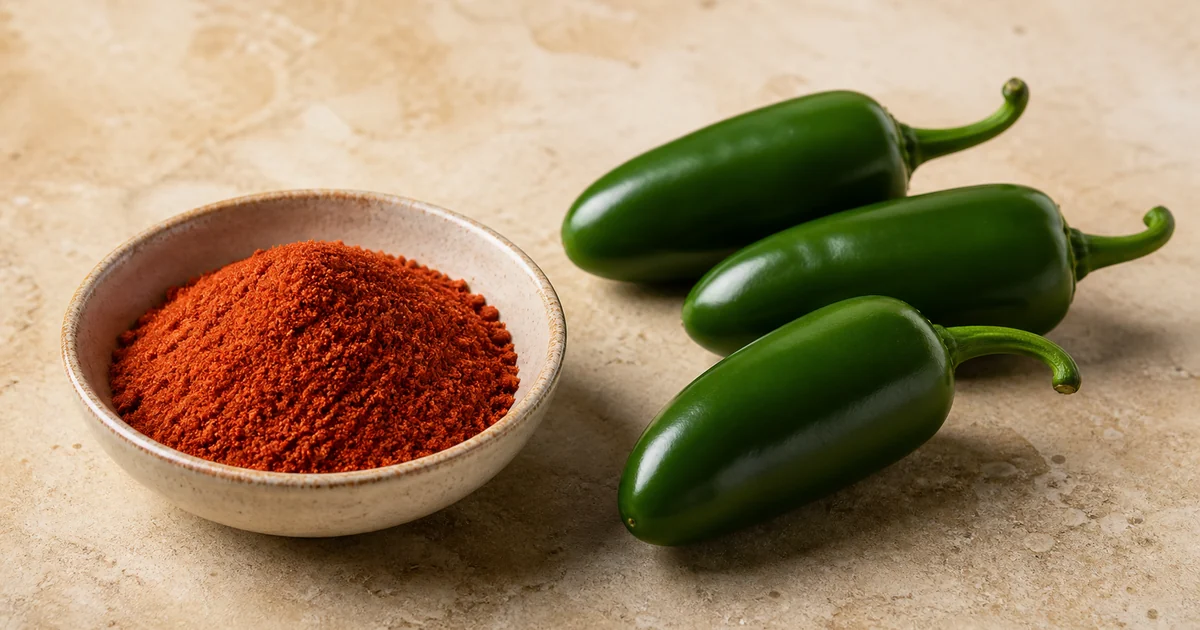
Purple jalapeños and jalapeños share identical SHU ranges (2,500-8,000) and the same Capsicum annuum species, yet they differ in ways that matter at the table and in the garden. The purple variety brings a subtly earthier, slightly less sharp flavor compared to the standard green's brighter grassiness. If you're choosing between them, the decision comes down to aesthetics and flavor nuance rather than heat tolerance.

Purple Jalapeño
MediumJalapeño
MediumQuick Comparison
| Attribute | Purple Jalapeño | Jalapeño |
|---|---|---|
| Scoville evidence | 2.5K-8K SHU | 2.5K-8K SHU |
| Heat Tier | Medium | Medium |
| vs Jalapeño | 1x hotter | 1x hotter |
| Flavor | fresh and grassy | Grassy, crisp, lightly sweet when red |
| Species | Capsicum annuum | C. annuum |
| Origin | Mexico | Mexico |
Is Purple Jalapeño Hotter Than Green Jalapeño?
The first time a seed catalog listed 'purple jalapeño' as a separate variety, the assumption was that the color signaled something different happening heat-wise. It doesn't.
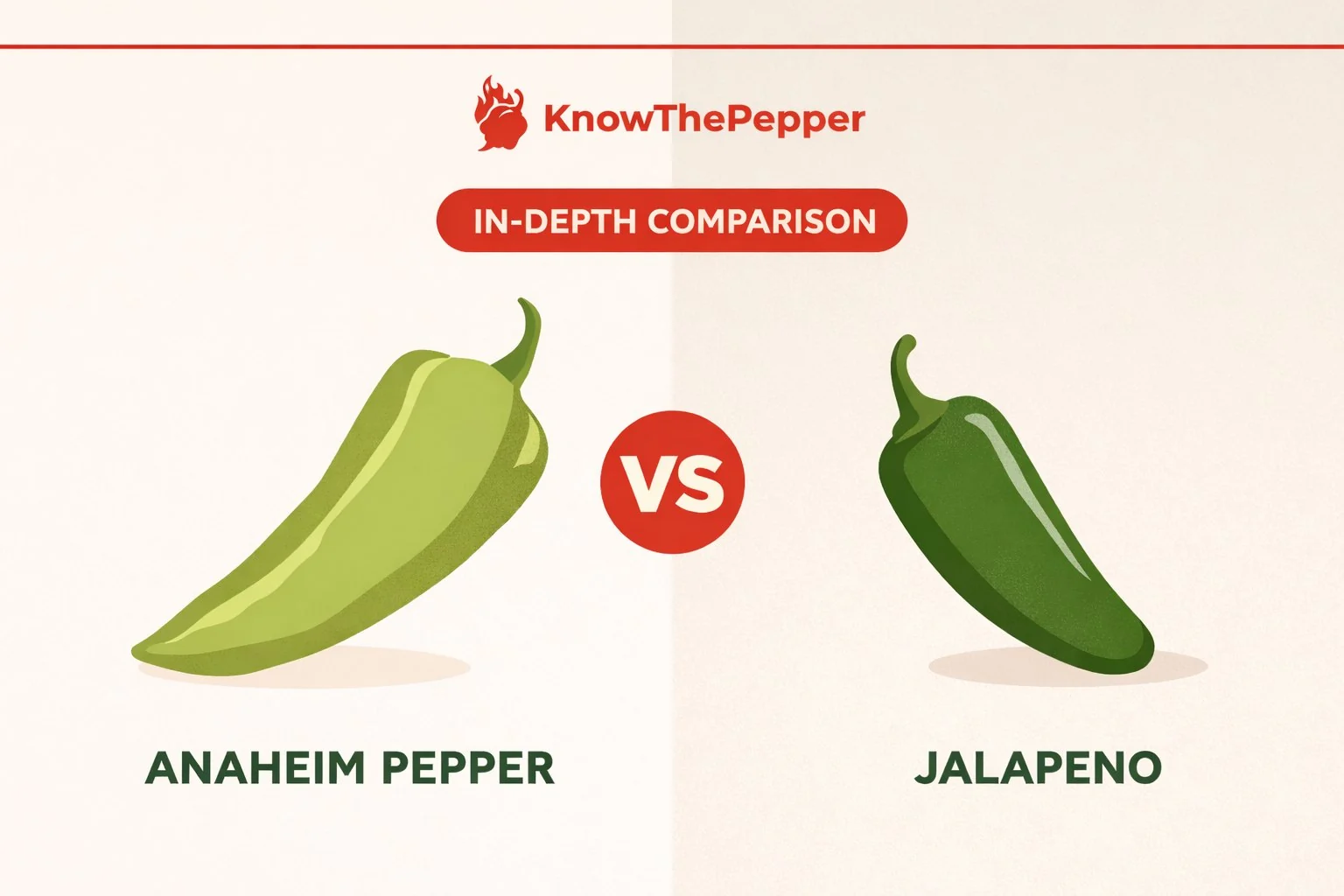
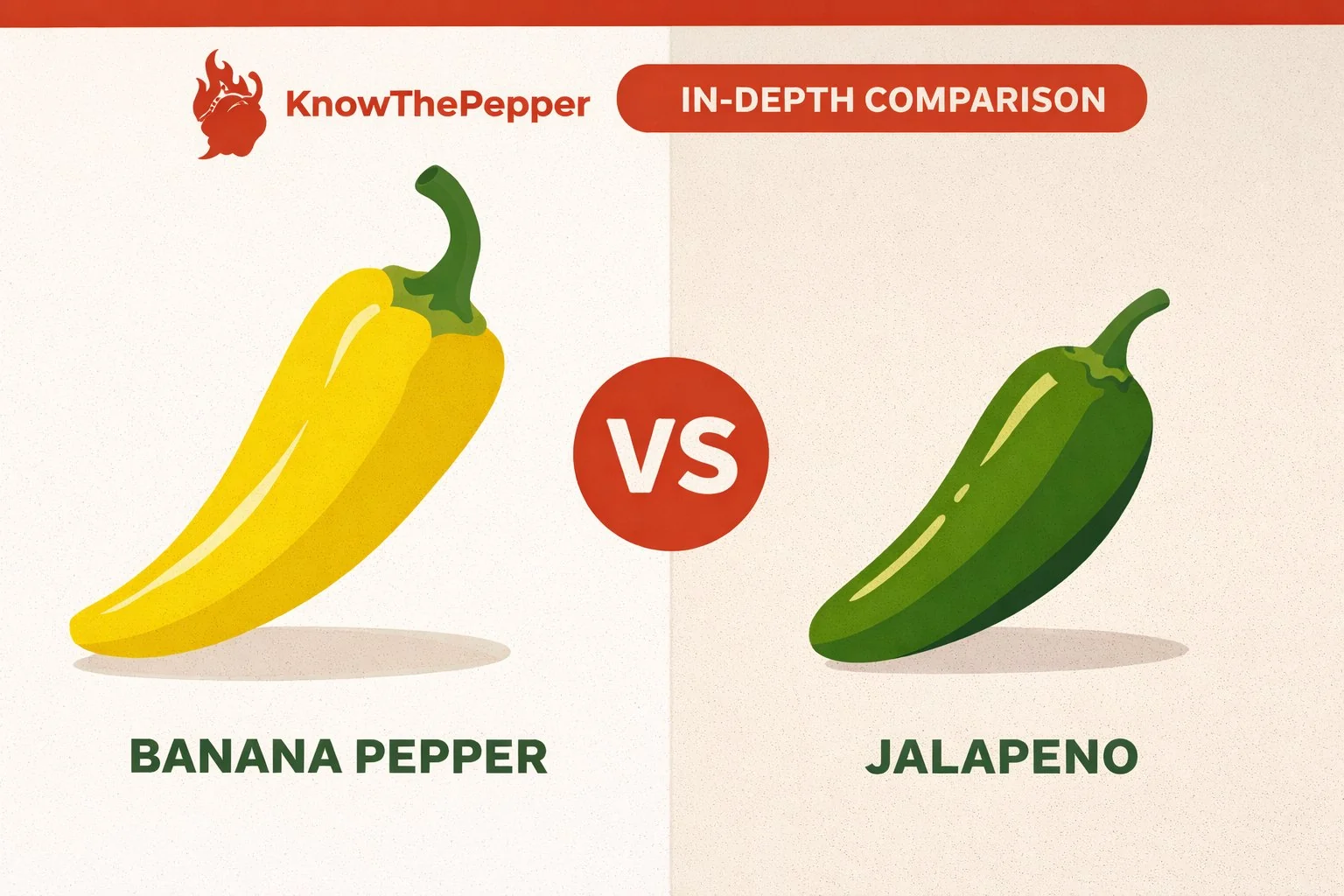
Both peppers land squarely in the 2,500-8,000 SHU range, placing them in the medium-heat pepper category alongside banana peppers and Anaheim chiles.
For context, a guajillo's dried earthiness typically registers around 2,500-5,000 SHU - so at their hottest, both jalapeño types can run slightly hotter than a guajillo, but at their mildest they're comparable. Neither variety approaches cayenne territory.
The anthocyanins responsible for the purple color in the immature pods are pigment compounds, not capsaicin relatives. They have zero effect on the heat trigger in Capsicum peppers.
What actually drives variability in both types is growing conditions: water stress, soil temperature, and sun exposure during pod development push capsaicin production up or down within that 2,500-8,000 window.
A purple jalapeño grown under stress can hit 8,000 SHU. A standard green jalapeño grown in cool, well-watered conditions might land at 2,500 SHU.
The color tells you nothing about where on that range the individual pepper falls.
If heat consistency matters for a recipe, taste before committing either way.
Does Purple Jalapeño Taste Different?
This is where the two peppers actually diverge. Standard jalapeños have a flavor profile that's easy to recognize: bright, crisp, and grassy with a clean vegetal sharpness.
That brightness is part of what makes them so versatile, it cuts through fat in guacamole, holds up to pickling, and doesn't muddy a salsa.
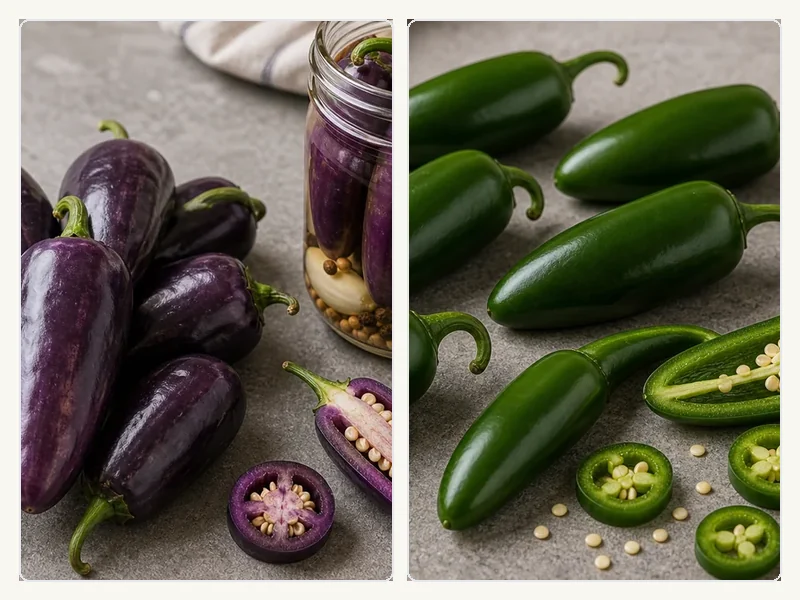
Purple jalapeños carry a subtly earthier quality. The same fresh grassiness is present, but there's a slightly deeper, almost berry-adjacent undertone when the pods are eaten raw at the purple stage.
Some growers describe it as less sharp, with a rounder finish.
The difference is real but not dramatic, these are variations on the same theme, not different instruments.
One key variable: purple jalapeños are typically harvested at the immature purple stage specifically for their color. If left on the plant, they'll ripen through to red just like a standard jalapeño.
At the red stage, both varieties taste nearly identical, sweeter, less grassy, with more fruit-forward notes.
Aroma follows a similar pattern. Standard jalapeños have that instantly recognizable sharp, green pepper smell.
Purple pods at the purple stage smell slightly more muted, with less of that aggressive vegetal punch.
For cooking applications where aroma matters, fresh salsas, garnishes, raw applications, this difference is perceptible.
Neither variety has the fruity complexity of a cayenne pepper vs jalapeno or the smoky depth that comes from drying. Both are straightforwardly fresh-tasting peppers with moderate heat.
Culinary Uses
Standard jalapeños are workhorses. Pickling, stuffing, roasting, salsas, poppers, hot sauces, the bright grassy heat of a cayenne vs jalapeño matchup shows just how much range jalapeños cover at the milder end of fresh chiles.
Their predictable flavor and wide availability make them the default choice for most applications.
Purple jalapeños earn their place primarily through visual impact. A purple pepper sliced into a ceviche, scattered across nachos, or layered into a composed salad creates a color contrast that standard green simply can't match.
Chefs and home cooks who grow them are almost always after that aesthetic payoff.
For cooking applications that involve heat, roasting, sautéing, making hot sauce, the visual advantage disappears. Purple jalapeños lose their distinctive color when cooked, turning a dull olive-green similar to any other jalapeño.
Reserve them for raw or lightly dressed preparations where the color stays intact.
Substitution is completely 1:1 in any recipe. 1 purple jalapeño = 1 standard jalapeño with no adjustment needed.
Heat levels are identical, and the subtle flavor difference is imperceptible once other ingredients are involved.
For stuffed peppers or jalapeño poppers, both work equally well structurally, the wall thickness is comparable. The cherry bomb vs jalapeño breakdown is worth reading if you want a thicker-walled option for stuffing applications.
Pickling purple jalapeños is an interesting experiment: the brine turns a striking pink-purple color from the anthocyanins leaching out of the pods. The peppers themselves fade to a more muted tone, but the brine becomes visually dramatic.
Worth trying at least once.
Growing your own is the most reliable way to access purple jalapeños consistently, they're rarely stocked in grocery stores. Growing peppers from seed covers the basics that apply to both varieties.
Verdict
If heat is your primary concern, there is no decision to make here, both peppers are identical at 2,500-8,000 SHU. Choose based on what you're actually doing with them.
Standard jalapeños win on availability, consistency, and versatility. They're the right call for pickling, hot sauce, poppers, or any cooked application.
Their mexican peppers has made them the benchmark for medium-heat fresh chiles globally.
Purple jalapeños win when visual presentation is part of the point. Raw preparations, fresh garnishes, and vibrant composed dishes benefit from that deep purple color in ways a standard green pepper simply cannot deliver.
The slightly earthier flavor is a bonus for people who notice it.
For anyone growing their own, the Capsicum annuum Varieties confirms both share identical growing requirements, same spacing, same care, same harvest timing. You can grow both in the same bed without any special treatment.
Bottom line: keep standard jalapeños as your default. Add purple jalapeños when color matters.
When Should You Use Purple or Green Jalapeño?
Choose purple jalapeno when the dish benefits from visual contrast and jalapeno-like heat. It works well in fresh salsa, pickled rings, nachos, salad garnish, and garden-focused plates where the purple stage makes the pepper stand out before it ripens red.
Choose standard green jalapeno when the recipe needs the familiar grassy bite most cooks expect. Green jalapenos are better for classic salsa, poppers, guacamole, escabeche, and any recipe where the pepper flavor should be predictable.
Purple jalapeno is mostly a color and maturity choice. Standard jalapeno is the default flavor and supply choice.
Can You Swap Purple and Green Jalapeño?
Purple jalapeno can replace standard jalapeno at a 1:1 ratio in most recipes. The heat range is similar, though individual pods vary by ripeness and growing conditions.
Standard jalapeno can replace purple jalapeno whenever color is not important. If the recipe is built around appearance, green jalapeno loses the purple contrast but keeps the same basic chile function.
Cooking can dull the purple color. Use purple jalapenos raw or lightly pickled when appearance matters.
Use standard green jalapenos for long cooking where color disappears anyway.
Where Can You Buy Purple Jalapeños?
Purple jalapenos are most common from gardens, farmers markets, or specialty seed growers. Look for firm pods with even purple skin.
Mixed green-purple color is normal during the transition stage.
Standard jalapenos are easier to buy year-round. Choose firm pods with tight stems and avoid soft shoulders if stuffing or slicing into rings.
For pickles, purple jalapenos can turn the brine slightly darker and may lose some color after heat processing. For fresh garnish, slice them close to serving time for the best visual contrast.
Quick Choice Matrix
Use purple jalapeno for color, fresh garnish, pickled rings, and garden-variety appeal.
Use standard jalapeno for classic salsa, poppers, guacamole, and reliable grocery access.
If color matters, choose purple. If consistency matters, choose standard green jalapeno.
Does Cooking Fade the Purple Color?
The common mistake is cooking purple jalapenos for color. Long heat dulls the purple, so use them raw or pickled if appearance is the reason for choosing them.
Ratio Note
Use 1 purple jalapeno for 1 standard jalapeno in most recipes. Adjust only for pod size and ripeness, not for color alone.
Why Are Some Jalapeños Purple?
Purple jalapenos are usually harvested at a color stage between green and red. The flavor can still taste jalapeno-like, but the visual signal is different enough to change how a dish reads on the plate.
Standard green jalapenos are harvested for the familiar grassy, crisp flavor. Red ripe jalapenos taste sweeter, while purple pods may sit between those stages depending on the cultivar and harvest timing.
Use purple jalapenos when the color is visible and intentional. Use standard jalapenos when the recipe depends on the classic green flavor or when color will disappear during cooking.
Do Not Use When
Do not cook purple jalapenos for a long time if color is the reason you bought them. Do not pay extra for purple pods when the recipe hides the pepper in a dark sauce.
Shopping Shortcut
Shopping shortcut: buy purple jalapenos for visible garnish and pickles, and buy standard green jalapenos for everyday recipe consistency.
Final Choice
Final choice: purple jalapeno is the better pick when color is visible and part of the dish. Standard jalapeno is the better pick when flavor consistency, grocery access, and classic green chile bite matter more.
In cooked sauces, the color advantage fades, so standard jalapeno usually wins.
Dose And Prep Note
Prep note: purple jalapenos show best in thin raw rings or quick pickles. Standard jalapenos handle roasting, stuffing, and longer cooking with less concern for color loss.
Purple Jalapeño vs Jalapeño FAQ
- NMSU Cultivars - Chile Pepper Institute
- Anthocyanins in Capsicum - Journal of Agricultural and Food Chemistry
- Scoville Scale and Capsaicin Measurement - American Chemical Society