

KnowThePepper
Hungarian Hot Wax: Hot Enough to Notice, Mild Enough to Eat Whole
The Hungarian Hot Wax is a tapered, waxy-skinned pepper from Hungary measuring 5,000 to 15,000 SHU - about a third as hot as a Thai chili. It starts pale yellow and ripens through orange to red, delivering a tangy, crisp bite that Central European cooks have relied on for generations.
Pickled, stuffed, or roasted, it's one of the most practical peppers in the medium heat range.
- Species: C. annuum
- Heat tier: Hot (10K-100K SHU)
- Comparison: the same heat range as a jalapeño because their published ranges overlap
What Is Hungarian Hot Wax Known For?
The Hungarian Hot Wax sits in an interesting middle ground, hot enough to notice, mild enough to eat whole. Its 5,000 to 15,000 SHU range puts it well below a Thai chili but usually above a banana pepper, and that positioning is exactly what makes it so useful in the kitchen.
The pod itself is tapered and elongated, typically 6 to 8 inches long with a waxy, pale yellow skin that transitions to orange and finally deep red as it matures. Each stage brings a slightly different flavor: the yellow stage is crisp and tangy, while the red stage develops more sweetness and depth.
Most cooks harvest at yellow for pickling and at red for roasting.
Botanically, it belongs to the Capsicum annuum pepper species - the same species as bell peppers, jalapeños, and paprika peppers, which explains its relatively approachable heat profile and excellent disease resistance. The waxy skin is a hallmark of the variety and contributes to its exceptional shelf life both fresh and pickled.
Heat distribution within the variety can vary noticeably. Some plants lean toward the 5,000 SHU end, delivering a gentle warmth.
Others push toward 15,000 SHU, which is genuinely spicy.
Soil, temperature, and water stress all influence where any given fruit lands on that scale. For context on where this sits among similar varieties, the Indian dried pepper with comparable heat lands in the same SHU window but with a completely different flavor character.
Where Did Hungarian Hot Wax Originate?
Hungarian pepper cultivation stretches back centuries, shaped by the Ottoman occupation of Hungary from the 16th to 18th centuries, which introduced Capsicum varieties to Central Europe. The Hungarian Hot Wax emerged from this tradition as a practical farm variety, prized for high yields, long pods, and a heat level that worked across everyday cooking.
By the 19th century, the Hungarian pepper-growing tradition had become deeply embedded in the country's agricultural identity, particularly in regions like Kalocsa and Szeged. Hungarian immigrants carried seeds to North America in the late 1800s and early 1900s, and the variety became a staple of home gardens across the Midwest and Mid-Atlantic states.
Today it's one of the most widely grown wax-type peppers in home gardens, recognized by its distinctive pale yellow pods and reliable productivity across a range of climates.
How Hot Is Hungarian Hot Wax, and What Does It Taste Like?
The Hungarian Hot Wax delivers 1.5K–15K Scoville Heat Units, placing it in the Hot tier (10K-100K SHU). That makes it roughly the same heat range as a jalapeño because their published ranges overlap.
Flavor notes: tangy and crisp.
What's in Hungarian Hot Wax? Nutrition Facts
A 100g serving of fresh Hungarian Hot Wax provides roughly 27 calories, with minimal fat and about 6g of carbohydrates. Vitamin C content is substantial, fresh yellow-stage pods deliver a significant portion of daily requirements, though red-ripe pods contain even more as sugars and nutrients concentrate during ripening.
Capsaicin, the compound responsible for the heat, has been studied for anti-inflammatory and metabolic effects. The the Capsicum annuum species group produces capsaicin in the placental tissue surrounding the seeds, removing that tissue before cooking reduces heat noticeably.
Pickled Hungarian Hot Wax retains most of its vitamins but gains significant sodium from the brine, worth noting for anyone watching salt intake.
How Do You Use Hungarian Hot Wax in the Kitchen?
Central European cooks built entire preservation traditions around this pepper.
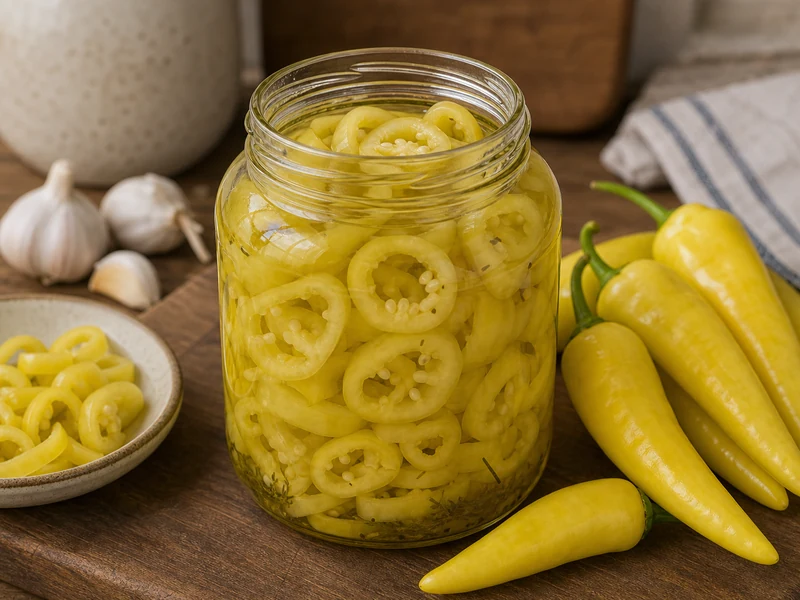
Pickled Hungarian Hot Wax - packed into jars with vinegar, garlic, and dill, is a staple condiment across Hungary, Slovakia, and Czech Republic. The waxy skin holds up beautifully in brine without turning mushy, which is exactly what you want in a pickled pepper.
Fresh applications are equally rewarding.
The crisp texture and tangy flavor make it excellent raw in salads or sliced onto sandwiches. Stuffed with seasoned ground pork or rice and braised in tomato sauce, it's the backbone of töltött paprika, one of Hungary's most beloved dishes.
For roasting, wait until the pods turn red, that's when the sugars develop enough to caramelize properly. Roasted red Hungarian Hot Wax blended into sauces adds a warm, slightly sweet heat that's more nuanced than a straight chili hit.
If you need a substitute in recipes calling for Buena Mulata, the Hungarian Hot Wax works well given its comparable SHU and versatility. For practical knife prep before cooking, the same techniques covered in how to cut jalapeños apply directly to this pepper's similar pod structure.
The pepper pairs naturally with sour cream, paprika, caraway, and pork, the flavor pillars of Hungarian cuisine.
The heat is adjustable, which is most of why this pepper suits a household where not everyone agrees about spice.
Colour is the first lever: a pale yellow pod is the mildest the plant offers, and the same pod climbs through orange to red as it ripens. The seeds and the pale ribs they sit against hold most of the burn, so removing them drops the heat further without changing the crisp texture.
Pickling is the third lever and the traditional one, since vinegar brine softens the burn while the waxy skin keeps the crunch that makes the pepper worth pickling in the first place.
Working the other way is simply the reverse: red-ripe pods with the ribs left in.
Moving the heat up or down
- Pick at the pale yellow stage for the mildest result. The same pod gets hotter as it turns orange and then red.
- Remove the seeds and the pale inner ribs, which is where most of the heat sits.
- Pickle it. Vinegar brine tames the burn while the waxy skin keeps its crunch.
- Leave pods whole rather than slicing when they go into a dish, so less of the cut surface meets the food.
- To push heat up instead, use red-ripe pods and keep the ribs in.
How Should You Buy and Store Hungarian Hot Wax?
Fresh Hungarian Hot Wax peaks at farmers markets from mid-July through September across most of North America. Look for firm, glossy pods without soft spots or wrinkling, the waxy skin should look almost polished.
Refrigerate unwashed in a paper bag or loosely wrapped. They'll hold for 1 to 2 weeks at the yellow stage.
Red-ripe pods are slightly more perishable, best used within a week.
For longer storage, pickling is the traditional method and works exceptionally well given the waxy skin. Freezing is possible, roast first, then freeze in portions, though the texture softens considerably.
Dried red pods ground into powder keep for 6 to 12 months in an airtight container away from light.
Dried form: This pepper is preserved in brine rather than dried, and the waxy skin is the reason.
That skin holds up in vinegar without turning mushy, which is exactly the property a pickled pepper needs and exactly what makes the Central European pickling tradition around this variety possible. Packed with vinegar, garlic and dill, it keeps its crunch in a way a thin-skinned pepper does not.
Drying works against that.
The pod is thick enough and moist enough that air drying is slow, and the crisp texture that survives brining does not survive dehydration.
Freezing is possible if the pods are roasted first, though pickling remains the method the variety was selected for.
Fresh pods hold one to two weeks refrigerated at the yellow stage. Red-ripe pods are more perishable and are best used inside a week.
Which Peppers Can Replace Hungarian Hot Wax?
No dedicated substitute guidance is published for Hungarian Hot Wax yet.
What Does Hungarian Hot Wax Need to Grow Well?
Start seeds indoors 8 to 10 weeks before last frost. Germination happens fastest at soil temperatures between 80 to 85°F, so a heat mat makes a real difference.
Transplant after nighttime temperatures stay reliably above 55°F.
Spacing matters with this variety, give plants 18 to 24 inches between them. Hungarian Hot Wax produces heavily and benefits from air circulation to prevent fungal issues.
It grows well in containers too, though a minimum 5-gallon pot is needed for full productivity.
The plants are notably productive compared to many wax-type peppers. For growers familiar with the Beaver Dam Pepper, the Hungarian Hot Wax offers similar low-maintenance growing with slightly more heat output.
Full sun is non-negotiable - 6 to 8 hours daily minimum. Consistent watering produces milder fruits.
Stress the plants with reduced water during the final ripening phase and heat levels climb noticeably.
For complete seed-starting guidance, the pepper cultivation covers soil mixes, hardening off, and transplant timing in detail. Days to maturity run 70 to 80 days from transplant to yellow stage, with another 2 to 3 weeks to reach full red ripeness.
Harvest frequently to keep plants producing through the season.
Hungarian Hot Wax FAQ


- Cayenne Diane - Hungarian Wax Pepper
-
Sourcing note: grower and seed-catalogue documentation only No university, government or research body publishes data on this cultivar. The figures on this page come from grower reports and seed-catalogue listings, which are the only documentation that exists for it.
Species classification: C. annuum - based on published botanical taxonomy.