Best Aleppo Pepper Substitutes for Flakes, Rubs, and Finishers
Maras pepper is the closest Aleppo pepper substitute for fruity, slightly oily flakes, while gochugaru suits bright color, Espelette gives a mild finish, and Kashmiri chili works in cooked red sauces. Use a 4:1 sweet-paprika-to-cayenne blend when the pantry is limited, then adjust heat, salt, and oil after tasting.
Heat at a glance
Choose the Substitute by What the Dish Needs
A visible garnish needs coarse, attractive flakes, which puts Maras pepper, gochugaru, and Espelette ahead of powders. The Herb Society of America lists egg dishes, meats, poultry, roasted vegetables, and avocado toast among Aleppo uses, all places where surface texture can remain visible.
Cooked sauces and braises hide texture, so Kashmiri chili or the paprika-cayenne blend can carry color and warmth without resembling Aleppo flakes. Long cooking also makes a powder less obvious, but it cannot restore the fruity flake finish that the original would add at the table.
Creamy dairy, hummus, and pale sauces expose smoke and seed-heavy heat quickly. Espelette keeps these foods gentle, gochugaru makes them brighter, and Maras keeps more regional flake character.
Dark meat rubs and warm oil can accept Urfa biber's cured depth. Delicate fish and seafood usually need Espelette, a restrained amount of gochugaru, or a light paprika-cayenne blend instead.
Aleppo Pepper Swaps Ranked by Flavor and Form
Maras pepper
Closest MatchMaras pepper is the closest overall match because its coarse flakes preserve the fruity, earthy character and soft finish that define the substitution target. KnowThePepper's sourced Maras profile places it in the same regional family while distinguishing its darker color and smokier edge.
That darker character works especially well with lamb, roasted vegetables, yogurt, beans, and warm butter. On pale fish or a raw dairy garnish, use a restrained amount so the cured flavor does not dominate.
Taste before adding salt or oil because both Aleppo-style and Maras products may already contain one or both.
Gochugaru
Runner-UpChoose gochugaru when the dish needs bright red color and an even flake texture. PepperScale identifies Korean gochugaru among the deeper-flavored options that can replace Aleppo, although its sweeter character lacks Aleppo's tart edge.
The even flakes suit eggs, noodles, roasted vegetables, marinades, and cooked sauces. In hummus or labneh, gochugaru makes a visibly brighter and sweeter variation rather than an invisible copy.
For a visible garnish, compare the flakes in Aleppo pepper versus gochugaru and begin with three-quarters as much when the grind is fine.
Espelette pepper
Also GreatEspelette pepper is the gentlest finishing substitute in this ranking. KnowThePepper's sourced profile describes a warm red-pepper character that supports eggs, fish, potatoes, mayonnaise, and creamy dips without turning heat into the main flavor.
Its usual fine grind supplies color and mild warmth but disappears into a sauce or dip. Choose it when a smooth finish matters more than preserving Aleppo's visible flake.
Kashmiri chili
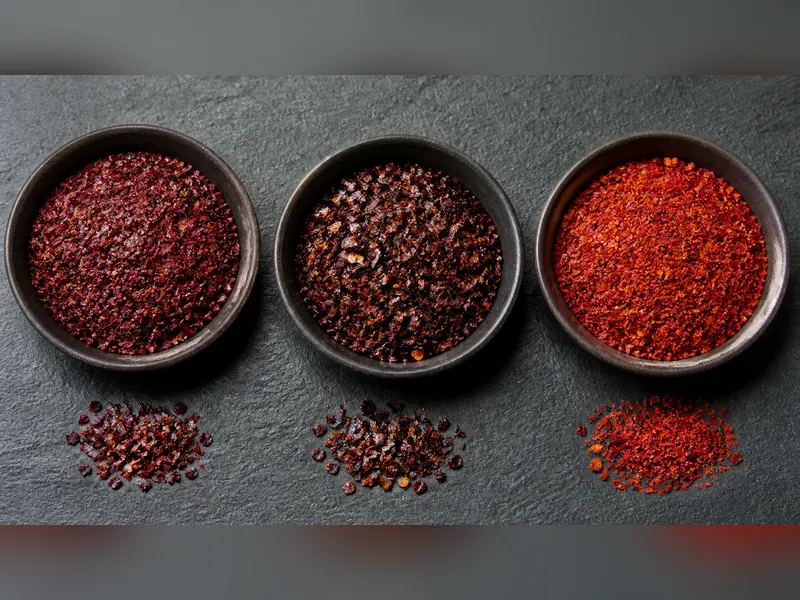
Kashmiri chili solves color better than texture. KnowThePepper's sourced Kashmiri profile supports its use when a rub, braise, or cooked sauce needs a saturated red tone with restrained heat.
A fine powder spreads more evenly than coarse Aleppo flakes, so it works best when the dish will cook long enough for texture to disappear. It is less convincing on eggs, yogurt, flatbread, or hummus where the red flakes should remain visible.
Paprika plus cayenne
A blend of sweet paprika and cayenne is the most practical supermarket fallback. PepperScale assigns color and mild fruit to paprika and heat to cayenne, which avoids the flat sharpness of using cayenne alone.
Choose sweet paprika rather than smoked paprika unless the recipe already wants smoke. Nigella Lawson gives the same sweet-not-smoked instruction for Turkish eggs because smoked paprika changes the dish before it corrects the missing heat.
Urfa biber
Urfa biber belongs in meat rubs, yogurt dips, grains, and roasted vegetables when a dark cured flavor improves the dish. KnowThePepper's sourced Urfa profile distinguishes its raisin-like, smoky depth from Aleppo's brighter red fruit.
The difference becomes helpful with lamb, beef, eggplant, or warm grain dishes. It can cover delicate dairy, white fish, or a pale sauce, so it is a deliberate variation rather than a neutral replacement.
The Aleppo and Urfa biber differences explain which flavor shift the smaller amount is controlling.
Red pepper flakes
Use red pepper flakes only when the recipe mainly needs heat. The Herb Society of America notes that prepared Aleppo is seedless and milder than crushed red pepper, which explains why generic flakes feel sharper and rougher.
That sharper burn works in pizza sauce, chili oil, and long-cooked tomato sauce. Seed-heavy flakes are a poor surface match for eggs, yogurt, whipped feta, or hummus, where their texture stays exposed.
Treat Ratios as Starting Points, Not Exact Conversions
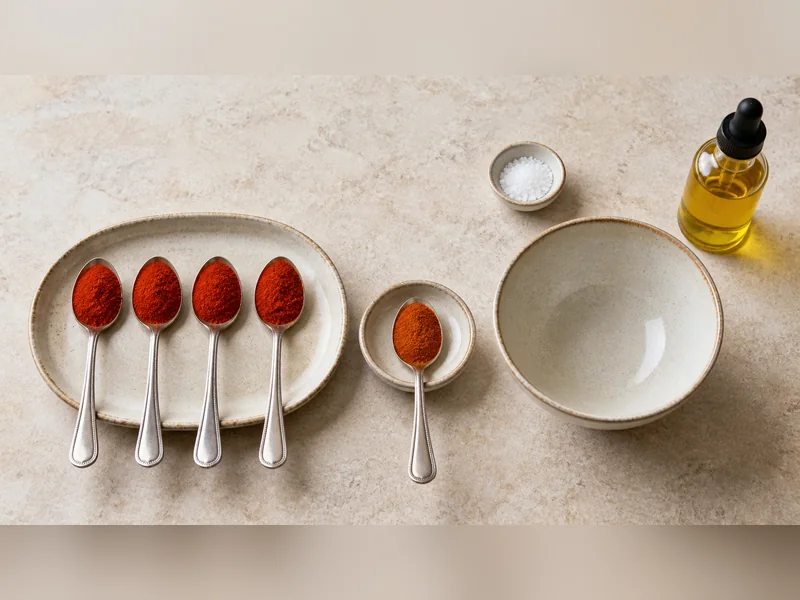
A volume ratio compares spoonfuls, not equal chile mass or equal heat. Fine Kashmiri powder packs more tightly than broad flakes, while seed-heavy crushed red pepper can deliver a sharper bite even when the spoon looks less full.
Use the listed amount for the first addition, then judge the dish after the spice has dispersed. For a cold dip or finishing garnish, reserve part of the substitute until serving because the first taste will not soften through cooking.
Recipe context can justify a smaller amount than the general ratio. Nigella Lawson replaces 1 teaspoon Aleppo in Turkish eggs with 1/4 teaspoon regular flakes plus 1/4 teaspoon sweet paprika, while PepperScale's 4:1 paprika-cayenne blend is designed as a broader pantry replacement.
Those formulas solve different problems, so they should not be averaged into one false conversion. Choose the recipe-specific amount when the dish is known, and use the general blend only when no tested recipe instruction exists.
Match Flake Size, Salt, and Oil Before Measuring
Aleppo-style pepper is usually sold as coarse flakes, while substitutes may arrive as fine powder or broad dry pieces. Measure by volume only after checking the grind because a spoonful of fine powder packs more densely and spreads through food faster.
Padma Lakshmi's Encyclopedia of Spices and Herbs describes Aleppo flakes as moister and oilier than typical dried red pepper flakes. The Herb Society of America separately warns that products labeled Aleppo-style may carry more heat than Aleppo pepper itself.
Read the ingredient list before seasoning the dish. A jar that already contains salt or oil needs a different final adjustment from a plain dry powder, even when both labels use the word Aleppo.
Color and aroma reveal quality but do not create an exact ratio. Deep burgundy flakes with a fruity aroma need less correction than pale, dusty flakes that contribute only heat.
Add the Substitute at the Stage That Protects Its Flavor
Finishing flakes belong near the end when the dish needs visible color, soft texture, and aroma. Sprinkle Maras, gochugaru, or Espelette over eggs, labneh, hummus, roasted vegetables, or flatbread after the main cooking is complete.
A cooked sauce can take Kashmiri powder or the paprika-cayenne blend earlier because both need time to disperse. Stir them into the wet ingredients or briefly into warm fat, then continue cooking before deciding whether the heat is sufficient.
Keep the fat warm rather than smoking when blooming a dry substitute. KnowThePepper's sourced Aleppo profile notes that hard cooking can flatten the fruit and make fine chile pieces taste bitter.
For rubs, mix the substitute through the other dry seasonings before it touches the food. This prevents a cayenne-heavy pocket and lets paprika or Kashmiri chile distribute color across the whole surface.
Build a Paprika and Cayenne Pantry Blend
Combine 4 parts sweet paprika with 1 part cayenne for a balanced starting blend, such as 1 teaspoon paprika plus 1/4 teaspoon cayenne. PepperScale publishes this proportion to divide Aleppo pepper's color and heat between two common spices.
Make only the amount the recipe needs until you know the paprika and cayenne brands. Their heat and grind vary, so a large premixed jar can lock in a balance that is wrong for the next dish.
Use the blend 1:1 in rubs, tomato sauce, soup, and cooked dips. For a finishing sprinkle, keep looking for Maras, gochugaru, or Espelette because fine powder cannot reproduce a soft visible flake.
Taste before adding a pinch of salt or a few drops of olive oil. Those adjustments imitate a seasoned product only when the original Aleppo pepper would have supplied them.
What Replaces Aleppo Pepper in Muhammara?
Muhammara needs more than generic heat because red pepper, walnuts, pomegranate molasses, bread, and olive oil share the flavor structure. Maras is the closest replacement when its darker edge does not overwhelm the sweet-tart molasses, while gochugaru creates a brighter and sweeter version.
The Herb Society of America's published muhammara formula separates the jobs across 1 teaspoon Aleppo flakes, 1 teaspoon paprika, and 1/2 teaspoon cayenne. That source shows why replacing Aleppo with cayenne alone increases heat without replacing its color, fruit, or garnish texture.
When Maras is unavailable, start with the 4:1 sweet-paprika-to-cayenne blend for the portion mixed into the dip. Reserve gochugaru or mild red flakes for the surface only if the garnish needs visible pieces.
Taste the completed dip with the pomegranate molasses and salt already present. Correcting the spice before those ingredients are balanced can produce a hot dip that still lacks Aleppo's rounded fruit.
Swaps That Lose Aleppo Pepper's Fruit and Texture
Avoid chipotle powder when the dish depends on Aleppo pepper's clean red fruit because smoke redirects the seasoning toward chipotle. Plain cayenne also fails as a complete swap because it adds sharp heat without the color, soft flake, or sweetness.
Sichuan pepper is a different spice with a numbing effect rather than chile warmth. Generic chili powder blends may contain cumin, garlic, oregano, or salt, so read the ingredient list before using one in muhammara, yogurt, or a finishing sprinkle.
Do not treat smoked paprika as interchangeable with sweet paprika in the pantry blend. Nigella Lawson specifically calls for sweet paprika in her Turkish eggs substitution because smoke changes the intended butter, chile, and dairy balance.
A fresh red chile is also not a direct teaspoon-for-teaspoon substitute for dried Aleppo flakes. Fresh pods bring water, vegetal flesh, and variable size, so use a recipe written for fresh chile rather than inventing a conversion.
Substitution tip: When substituting Aleppo Pepper, start with less of a hotter substitute and add more to taste. For milder substitutes, increase the quantity.
Our swap ratio calculator gives precise conversion amounts, and the heat unit converter translates between Scoville and other scales.