
Chilaca vs Poblano: Narrow Chile for Strips, Broad Chile for Stuffing
Chilaca and poblano overlap in mild heat, but their shapes give them different jobs. Choose long narrow chilaca for strips, sauce, or drying into pasilla, and choose broad fleshy poblano for roasting, stuffing, or drying ripe into ancho.

Chilaca Pepper
MediumPoblano Pepper
MediumQuick Comparison
| Attribute | Chilaca Pepper | Poblano Pepper |
|---|---|---|
| Scoville evidence | 1K-2.5K SHU | 1K-2K SHU |
| Heat Tier | Medium | Medium |
| vs Jalapeño | n/a | n/a |
| Flavor | earthy and rich | earthy and rich |
| Species | Capsicum annuum | C. annuum |
| Origin | Mexico | Mexico |
Which Is Hotter, Chilaca or Poblano?
Chilaca and poblano are both mild fresh Mexican chiles with overlapping heat, so Scoville numbers are not the best way to choose between them. Shape, wall thickness, and the cooking method create the useful difference.
For a direct answer, choose chilaca for long strips, sauce, or drying and choose poblano for roasting, stuffing, and broad rajas. A poblano provides a wide fleshy cavity, while a chilaca provides a long narrow pod with less room for filling.
KnowThePepper's current profiles place chilaca at 1,000 to 2,500 SHU and poblano at 1,000 to 2,000 SHU, which means most of their published ranges overlap.
That overlap prevents a reliable promise that every chilaca will taste hotter than every poblano. Crop, ripeness, growing conditions, and the amount of inner tissue left in the dish can shift the bite.
New Mexico State University explains that modern Scoville reporting comes from measured capsaicinoids. A laboratory range still cannot predict the exact sensation from one market pod or a diluted finished recipe.
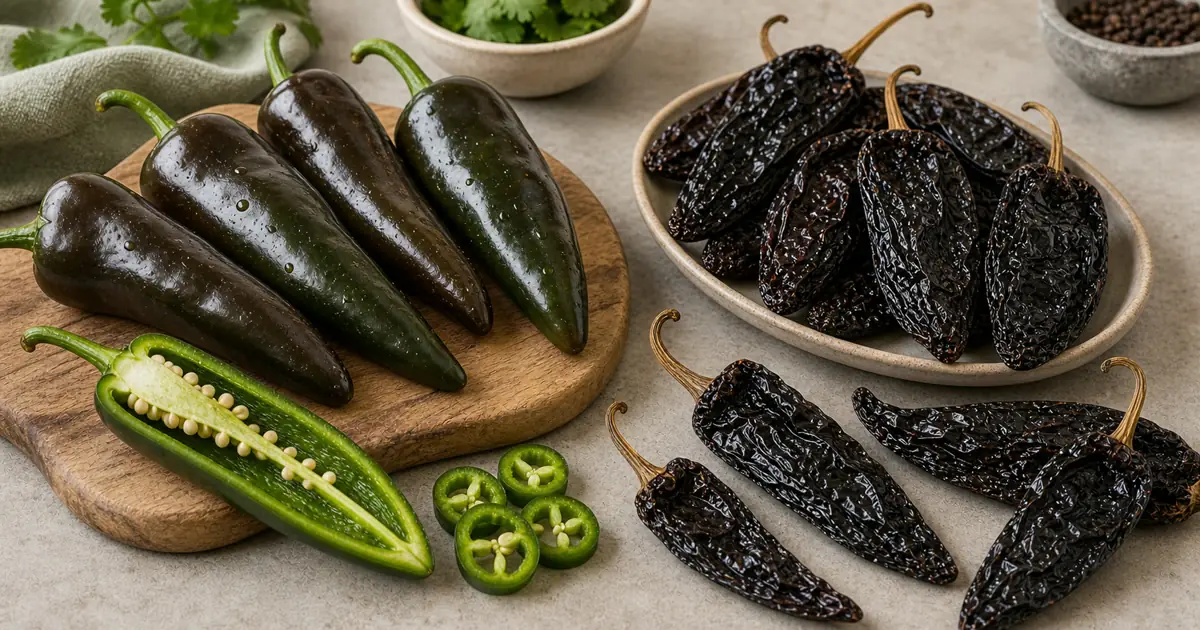
The shape difference is far less ambiguous because a Mexican government specification describes chilaca around 18 centimeters long and 3.5 centimeters wide, while poblano is broad, conical, and fleshy.
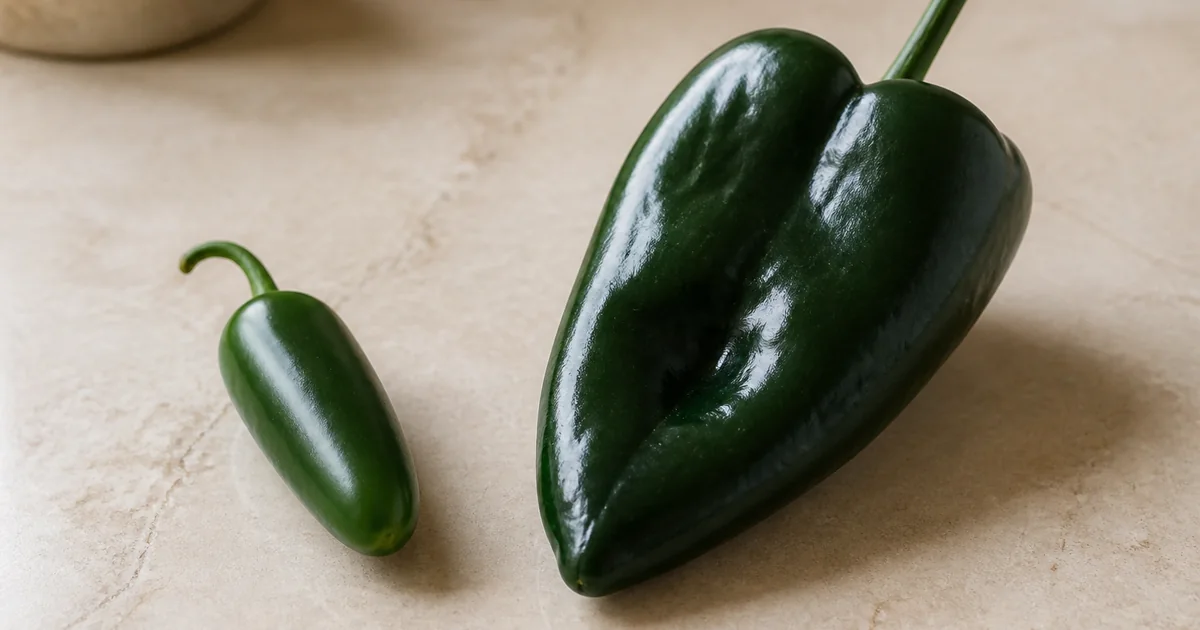
A long chilaca can look almost cylindrical or gently curved. A poblano has pronounced shoulders and a body wide enough to hold cheese, picadillo, or another filling after roasting.
Those proportions also make pod-count substitution unreliable. One broad poblano may provide more wall material and cavity space than one slender chilaca even when the peppers are similar in length.
Use trimmed weight for chopped or blended applications, but do not treat equal weight as permission to stuff the wrong shape.
Heat can become more noticeable when a sauce concentrates several chilacas. A whole stuffed poblano may taste milder because the pepper is spread across filling, batter, and sauce.
Neither chile should be described as nearly heatless in every case. Both sit above sweet bell pepper in the site data, and individual pods can surprise a heat-sensitive diner.
For most cooks, the practical split remains clear because poblano is the vessel pepper and chilaca is the slender sauce, strip, and drying pepper.
How Do Chilaca and Poblano Taste Different?
Fresh chilaca tastes green, earthy, and slightly richer than its narrow shape suggests. Its relatively thin flesh lets roasting and sauce ingredients influence the final flavor quickly.
The Colegio de Mexico dictionary describes chilaca as a slender greenish-yellow chile that reddens as it matures. The same entry connects the dried fruit with the name pasilla.
That fresh-to-dried change concentrates flavor, but fresh chilaca and dried pasilla are not interchangeable forms in a recipe.
Mexico's Agriculture Secretariat describes poblano as large, fresh, fleshy, dark green, and shiny. That thickness gives roasted poblano a substantial soft texture that can remain visible as strips or hold together around filling.
Raw poblano tastes green and vegetal with a mild earthy note. Raw chilaca feels leaner and can bring a slightly sharper green character.
Roasting softens both chiles and adds char, yet the poblano retains more body while the chilaca collapses into narrower flexible strips.
Texture changes flavor delivery. A thick poblano piece releases pepper flavor over several bites, while thin chilaca pieces integrate more completely with onion, tomato, broth, or crema.
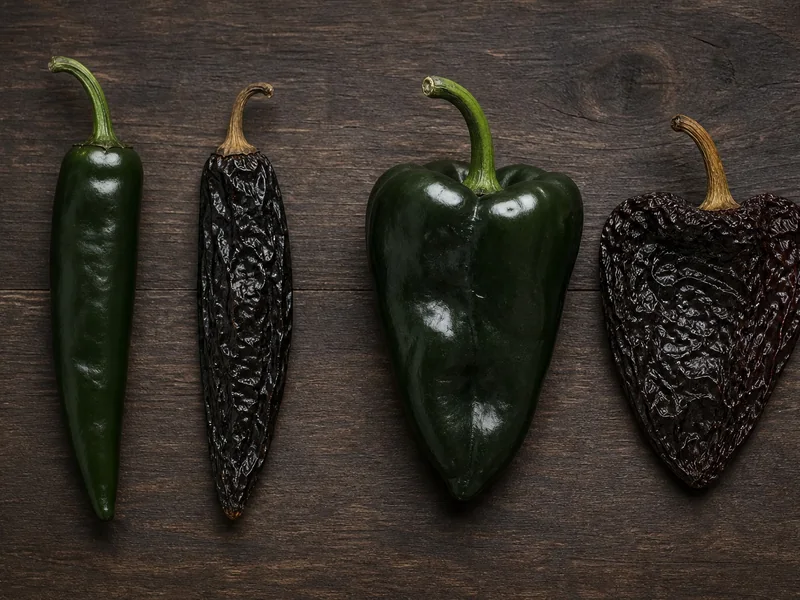
Mexico's public education resource identifies chilaca becoming pasilla and poblano becoming ancho after drying. The names describe different fresh and dried identities, not two labels for the same pod.
Pasilla becomes long, dark, and wrinkled, while ancho becomes broad, heart-shaped, and reddish to dark brown.
Drying also changes use because moisture loss concentrates flavor and removes the fresh pepper texture that stuffing or rajas require. A dried pod must usually be toasted, soaked, and blended rather than roasted and peeled like a fresh chile.
Both peppers belong to Capsicum annuum. Shared species explains broad botanical kinship but does not erase their different pod architecture or cooking roles.
Color alone can mislead because both fresh peppers are commonly dark green, and both can darken further with roasting.
At the market, identify chilaca through its long narrow outline and identify poblano through broad shoulders and a wide tapered body. Do not rely on a bin sign when the displayed shape contradicts the expected pepper.
Freshness matters too. Choose firm glossy pods without soft wet spots, deep wrinkles, or broken skin, then use thin-walled chilaca promptly because it loses firmness faster.
The flavor decision is therefore tied to texture because chilaca blends into the dish, whereas poblano can remain a distinct roasted piece or edible container.
Culinary Uses
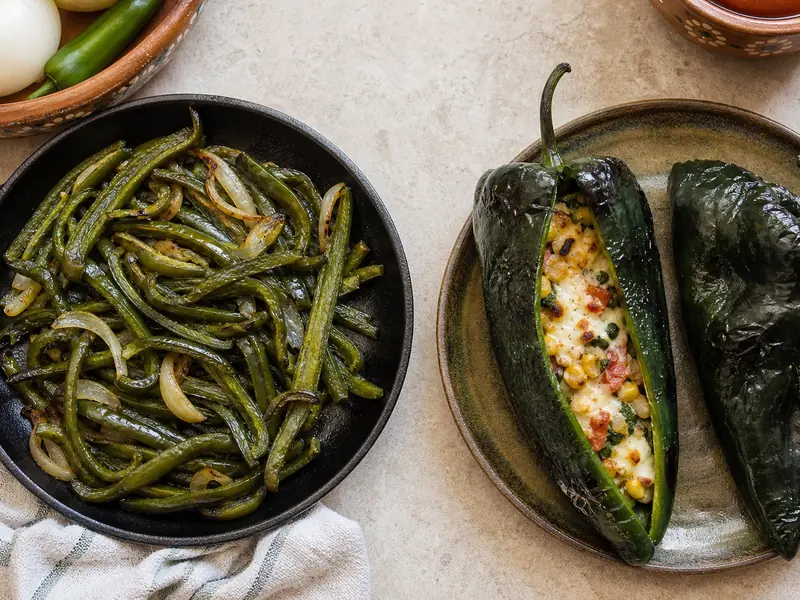
Use poblano for chiles rellenos because its broad cavity and fleshy walls survive blistering, peeling, slitting, and filling. Keep the stem attached when the recipe needs the pepper to hold together through battering or baking.
Mexico's Agriculture Secretariat lists stuffed peppers, chiles en nogada, pork or chicken dishes, rajas with cream, and salsa among poblano uses. Those examples all benefit from its size or substantial roasted flesh.
Use chilaca for long roasted strips, cooked salsa, stews, and sauces where a narrow pepper can soften and distribute through the dish.
To roast either chile, expose the skin to a broiler, grill, or flame and turn it until the surface blisters on all sides. Cover the hot peppers briefly so steam loosens the skin, then peel without tearing more flesh than necessary.
Do not chase a completely spotless surface. Small charred flecks can add flavor, while aggressive scraping can remove useful pepper flesh.
For stuffing, make one controlled lengthwise slit in a poblano and remove seeds and loose pale tissue without splitting the opposite wall.
For chilaca strips, remove the stem and open the long pod before or after roasting according to the recipe. Slice lengthwise so the pieces follow the pepper's natural shape and cook evenly.
Both peppers can make rajas, but poblano produces broader, meatier strips and chilaca produces narrower, softer ones. Choose the texture that the finished dish needs rather than assuming the two versions will feel identical.
For a blended green sauce, equal trimmed weight is a reasonable starting substitution because poblano makes the sauce thicker and softer, while chilaca can make it leaner and slightly more direct.
For a stuffed recipe, there is no useful one-to-one swap because chilaca lacks the broad cavity. Change the preparation to strips, sauce, or chopped filling rather than forcing a slender pod to hold the same contents.
Dried recipes require a separate decision because pasilla and ancho have concentrated flavors and no fresh flesh.
Use dried pasilla when the recipe asks for the dark long chile made from chilaca, and use dried ancho when it asks for the broad ripe dried form of poblano with sweeter fruit and more body.
For mole or adobo, match the named dried chile whenever possible. Substituting ancho for pasilla changes sweetness, color, and sauce structure even if both are mild dried chiles.
Shopping method can prevent the wrong purchase. A request to char, peel, and stuff points to fresh poblano, while instructions to toast, soak, and blend point to a dried chile such as pasilla or ancho.
When the recipe simply says chopped green chile, decide whether it needs poblano body or chilaca length and integration, then adjust the quantity by trimmed weight.
Which Should You Buy, Chilaca or Poblano?
Buy poblano when you want a broad roasted pepper for stuffing, chiles en nogada, thick rajas, or a substantial green sauce. Its wall thickness and cavity solve those jobs with less handling risk.
Buy chilaca when you want a long narrow pepper for strips, stews, cooked salsa, or a future batch of dried pasilla. Its shape and thinner flesh help it soften into sauces rather than remain a large container.
Remember the dried names because chilaca becomes pasilla and ripe poblano becomes ancho.
For chopped or blended fresh chile, begin with equal trimmed weight when substituting. Expect poblano to add more body and chilaca to integrate more fully, then adjust liquid only after blending.
For rajas, use the same weight as a first test but expect different strip widths and bite. For stuffing, switch the method or buy poblano because an equal weight does not create a usable cavity.
Do not add smoke automatically because neither fresh pepper is inherently a smoked chile.
Market naming can create confusion when a store calls fresh poblano a pasilla. Trust the pod shape and the recipe method, then confirm whether the recipe expects fresh roasting or dried soaking.
The Mexican fresh-chile standard lists chilaca and poblano as separate commercial varieties. That distinction supports treating them as different purchases even when a local label is loose.
For heat-sensitive diners, taste a cooked piece before adding every chopped pepper because the overlapping ranges make a small test more reliable than the cultivar name alone.
The final choice is simple. Pick chilaca for a slender pepper that becomes part of the sauce or dries into pasilla, and pick poblano for a broad pepper that can remain a strip, wall, or stuffed vessel.
If only one is available for a sauce, substitute by trimmed weight and correct texture with liquid or extra pepper body. If the recipe depends on shape, do not force the swap.
Following the cooking verb is the safest shortcut because char and stuff points to poblano, while slice, simmer, or dry can point to chilaca.
If one meal needs both a stuffed pepper and a green sauce, buy poblanos for the whole vessels and chilacas for the chopped component. That split preserves each shape advantage without asking one pepper to perform two incompatible jobs.
Roasted leftovers can be peeled, cooled, and refrigerated promptly for a later sauce or filling. Store the two peppers separately if you want to keep track of their different texture and heat.
Recipe wording such as one pepper is less reliable than a trimmed weight when a poblano is much broader than the available chilaca.
When shopping online, inspect photographs for outline and shoulders before ordering. A long narrow listing fits chilaca, while a wide dark green listing with a roomy tapered body fits poblano.
If a seller offers only dried peppers, stop and choose by the dried name instead of treating them as fresh substitutes. Pasilla and ancho need soaking or grinding, so they cannot provide a fresh roasted wall or crisp strip.
Keeping the fresh and dried identities separate prevents most mistakes because it connects each name to the texture, preparation, and final dish it can actually produce.
Chilaca Pepper vs Poblano Pepper FAQ
- Secretaria de Agricultura y Desarrollo Rural - Chile poblano, delicia del campo mexicano
- Nueva Escuela Mexicana Digital - Los chiles cambian de nombre y sabor cuando se secan
- Diccionario del espanol de Mexico - Chilaca
- Diario Oficial de la Federacion - NMX-FF-025-SCFI-2007
- New Mexico State University Circular 706 - Measuring Chile Pepper Heat