
Pasilla de Oaxaca vs Pasilla: Shared Name, Different Smoke and Heat
These chiles are easy to confuse because both carry the word pasilla, but they do very different work. Pasilla de Oaxaca is a smoked Oaxacan chile that runs about 15,000-25,000 SHU. Standard pasilla pepper, the dried chilaca, stays near 1,000-2,500 SHU and builds dark, mild body instead of smoke.

Pasilla de Oaxaca
HotPasilla Pepper
MediumQuick Comparison
| Attribute | Pasilla de Oaxaca | Pasilla Pepper |
|---|---|---|
| Scoville evidence | 15K-25K SHU | 1K-2.5K SHU |
| Heat Tier | Hot | Medium |
| vs Jalapeño | 3x hotter | n/a |
| Flavor | smoky and rich | earthy and rich |
| Species | C. annuum | C. annuum |
| Origin | Mexico | Mexico |
Which Is Hotter, Pasilla de Oaxaca or Pasilla?
Pasilla de Oaxaca runs about 15,000-25,000 SHU. Pasilla pepper, the dried chilaca, usually stays around 1,000-2,500 SHU.
One brings clear medium heat, while the other stays mild enough to use by the pod.
If a sauce already includes smoke, the heat gap may feel smaller than the numbers suggest because Pasilla de Oaxaca carries more flavor weight. In a cleaner red sauce, though, its extra heat shows up fast.
That is why the smoked chile fits the medium heat tier while standard pasilla behaves more like a dark, mild builder.
In a long braise, smoke often registers before raw burn does. That timing is another reason these two dried chiles stop acting alike once the pot simmers for a while.
How Do Pasilla de Oaxaca and Pasilla Taste Different?
Smoke makes this comparison easy to sort out. Pasilla de Oaxaca tastes woody, rich, and a little sharp after toasting.
Pasilla tastes darker and quieter, with raisin, cocoa, and earth instead of campfire.
A pot of mole negro can take that smoke and build around it. An enchilada sauce or table salsa that wants dark chile body without smoke usually reads better with pasilla.
Both sit inside the wider Mexican dried chile tradition, but they do not land in the pan the same way.
The wood-fire smoke-drying method used in the Sierra Juarez is the direct cause of that woody sharpness. Standard pasilla skips a smoke stage entirely, air-drying or kiln-drying the chilaca so its cocoa and raisin notes stay uncovered by any campfire character.
Which Dishes Suit Pasilla de Oaxaca or Pasilla?
Pasilla de Oaxaca belongs in mole negro, smoky beans, black salsas, and braises that can carry a harder edge. One or two pods can change the whole pot.
Pasilla pepper fits smoother red sauces, tamale fillings, and dishes where dried-fruit depth matters more than smoke. It rounds a blender sauce instead of taking it over.
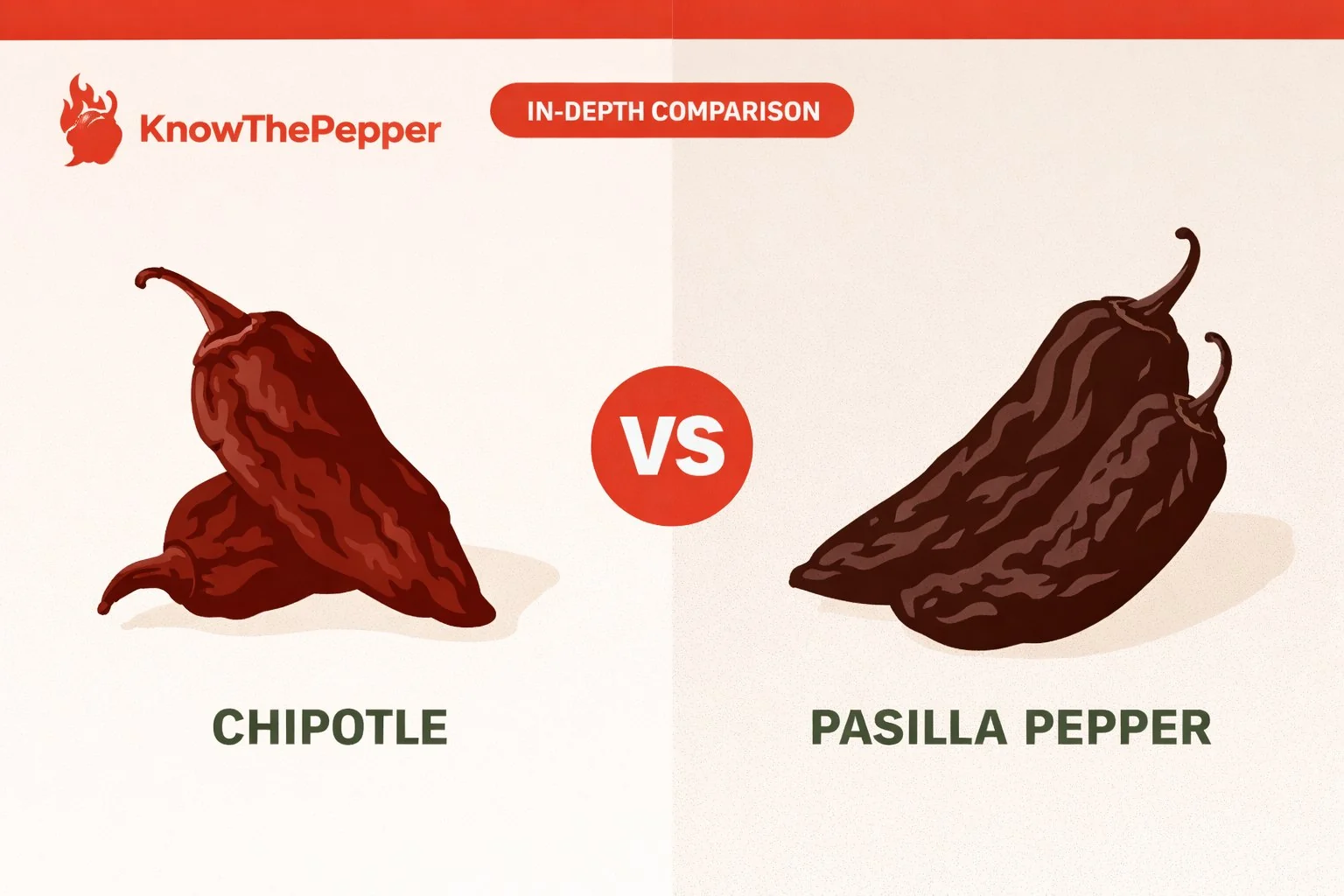
If you need a nearby smoky benchmark, chipotle versus pasilla is the better next stop. If you are sorting fresh versus dried naming, the chilaca versus pasilla explanation clears that up.
Mole negro's status as one of Oaxaca's seven canonical moles is part of why Pasilla de Oaxaca stayed a regional specialty rather than a national export crop: the dish and the chile developed together, and neither traveled far from the Sierra Juarez until relatively recently.
Which Should You Choose, Pasilla de Oaxaca or Pasilla?
Use Pasilla de Oaxaca when the recipe wants smoke from the chile itself. Use pasilla when you want dark body and mild heat without that smoked edge.
Both are dried Capsicum annuum chiles, but the jobs do not overlap. Treat them like different pantry tools, not like two labels for the same pod.
The regional-versus-national distribution history behind each chile is a useful shortcut for buying: a Pasilla de Oaxaca that's easy to find outside a Mexican specialty grocer is worth double-checking, while standard pasilla shows up reliably in most well-stocked supermarket dried-chile sections.
Is Pasilla de Oaxaca a Smoked Pasilla?
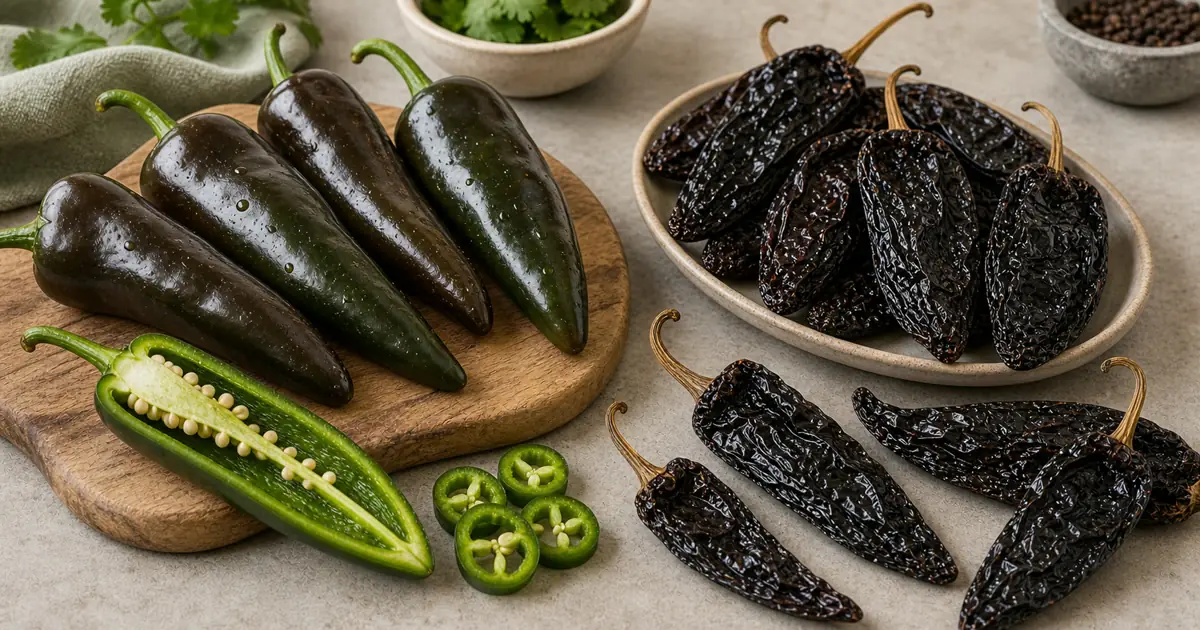
The word pasilla causes most of the confusion. In common market Spanish, pasilla pepper means the dried form of chilaca.
Pasilla de Oaxaca is a separate regional smoked chile, not a smoked version of every pasilla bag.
If the seller cannot tell you whether the pod was smoked, trust the smell before anything else. Smoke should be obvious before the pod ever hits the skillet.
The confusion runs the other direction too. In California and parts of the American Southwest, fresh poblano peppers are sometimes mislabeled "pasilla," which has nothing to do with either chile in this comparison.
Traditional Mexican usage reserves the name for the dried chilaca, full stop.
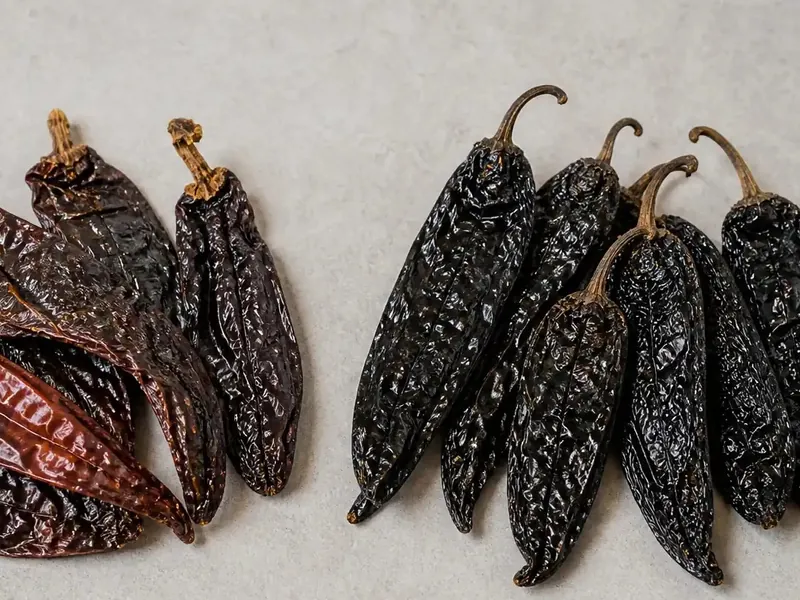
Toast And Soak
Prep matters here. Pasilla de Oaxaca needs a short toast and a soak because its smoke can turn bitter if you hold it over the pan too long.
Pasilla also benefits from toasting, but it gives you a little more room. Its job is usually to soften, blend, and thicken the sauce instead of hitting the pot with smoke.
When the recipe uses more than one dried chile, toast them separately. The smoked pod and the plain dried pod do not finish at the same speed.
That bitterness risk traces directly to how the chile was made. Wood-fire smoke-drying leaves resin and tar compounds on the pod's surface, and a hard sear pulls those compounds out fast, which is why a gentler toast protects the chile's flavor better than it would for a plain dried pod.
| Step | Pasilla de Oaxaca | Standard pasilla |
|---|---|---|
| Smell before prep | Smoke should be obvious | Raisin-like dried chile aroma |
| Toast | Brief and gentle | Brief, with slightly more margin |
| Soak | Use a separate bowl | Use a separate bowl |
| Blend decision | Add for smoke and stronger heat | Add for mild dark body |
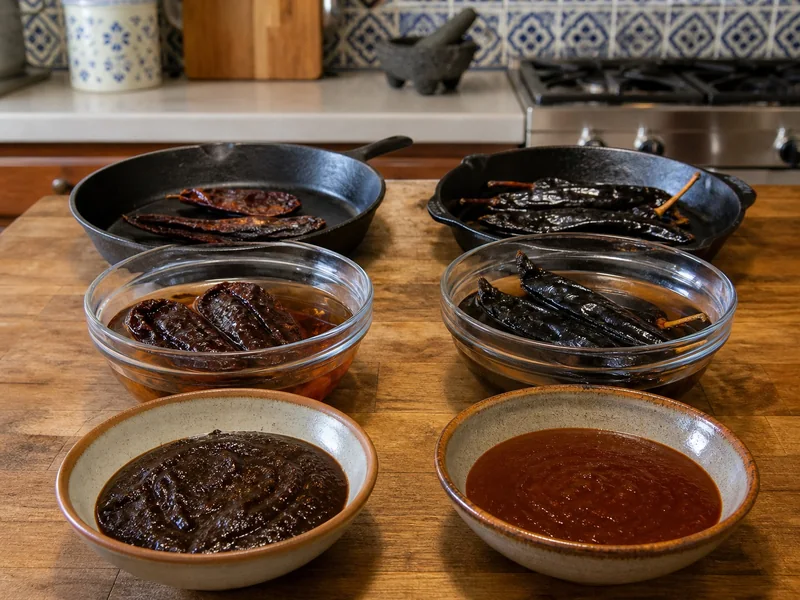
What to Look for When Buying Each Chile
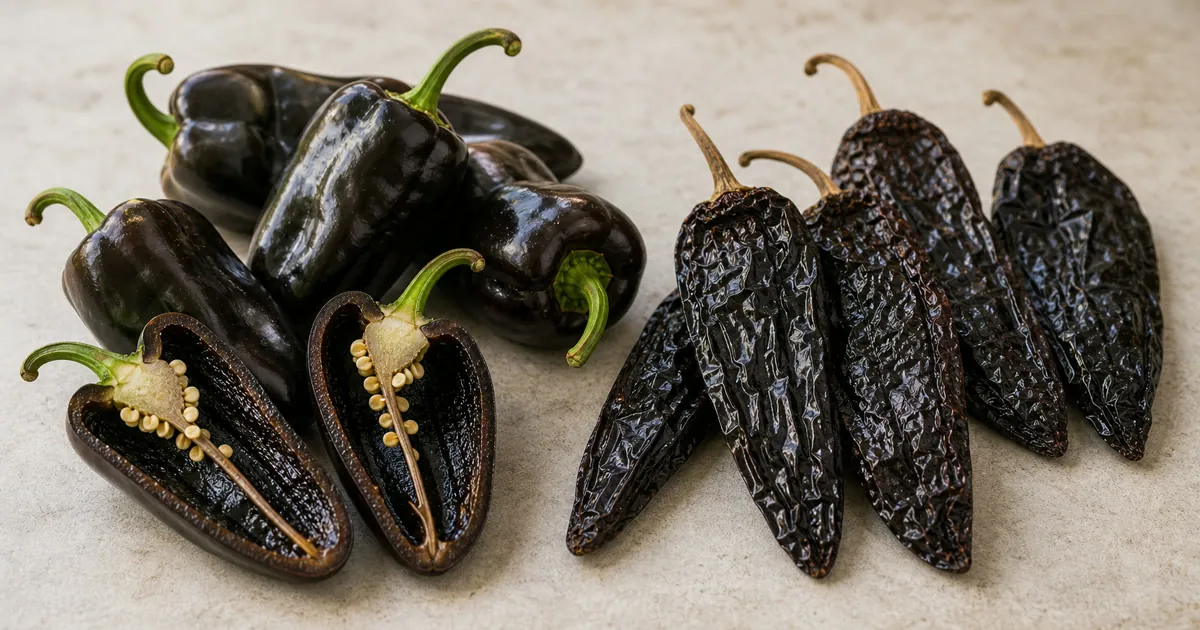
Buy Pasilla de Oaxaca by aroma and flexibility. Good pods smell smoky and bend a little instead of snapping.
Buy pasilla by color and size. Long, dark pods with a raisin-like skin usually make a cleaner sauce than dusty, brittle bags.
Smallholder production explains the batch variation buyers notice with Pasilla de Oaxaca. Farmers in the Sierra Juarez still smoke-dry it by hand rather than through industrial processing, so one bag can run smokier or milder than the next even from the same region.
What Is Known About Pasilla de Oaxaca's Origin?
Pasilla de Oaxaca is sold as a smoked regional dried chile, while standard pasilla is the dried form of chilaca. The stored cooking and chile references support that market distinction and the different sauce jobs, but they do not establish every former historical claim.
The old assertions about pre-contact smoke drying, an exact Sierra Juarez production timeline, national distribution history, monastery adoption, and mole development have been removed. None is necessary to choose smoke-forward depth or mild dried-fruit body.
Buy by identity evidence that can be checked: a smoky aroma for Pasilla de Oaxaca, long dark dried-chilaca form for standard pasilla, flexible skin, clean smell, and a seller who can name the product rather than using pasilla for a fresh poblano.
Is Pasilla de Oaxaca or Pasilla More Nutritious?
No product-specific nutrient comparison in the stored sources supports the old calorie, vitamin, mineral, capsaicin-stability, or anti-inflammatory claims. Different serving units also made the former tablespoon-versus-ounce comparison misleading.
Sauce role is the useful measure. Pasilla de Oaxaca supplies smoke and stronger heat in a smaller amount, while standard pasilla can supply more dark chile body without making smoke the dominant flavor.
Wear gloves when handling a hot batch and taste the soaking liquid before using it because either chile can release bitterness. Toast briefly, soak separately, and blend only after each pod is soft enough to process cleanly.
Pasilla de Oaxaca vs Pasilla Pepper FAQ
- Varieties & Plant Breeding - Chile Pepper Institute, NMSU
- Capsicum annuum L. - USDA GRIN Taxonomy
- Kennedy, Diana. The Essential Cuisines of Mexico. Clarkson Potter, 2000.
- DeWitt, Dave & Bosland, Paul. The Complete Chile Pepper Book. Timber Press, 2009.