Best Peppers for Dehydrating: Thin-Walled Pods That Dry Evenly for Powder
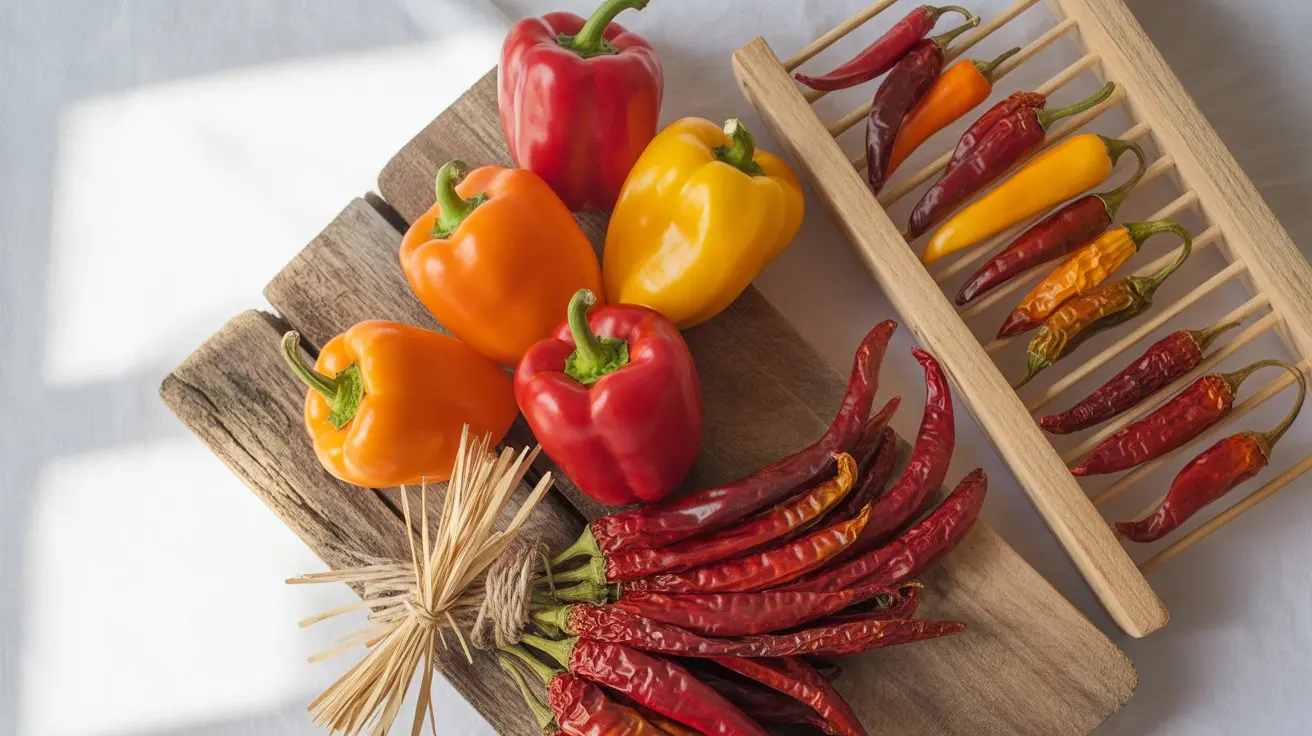
The best dehydrating peppers are thin-walled enough to dry evenly and flavorful enough to stay useful once the moisture is gone. Cayenne, Thai chiles, and de arbol cover everyday heat, cascabel and mirasol bring sauce body, and the super-hots need different handling at the grinder rather than a different drying schedule.
Which peppers dehydrate well, and why wall thickness decides it
Wall thickness is the trait that changes how a pepper behaves in a dehydrator. Thin-walled pods let moisture out along a short path, so they dry evenly and spend less time in the range where mold can start.
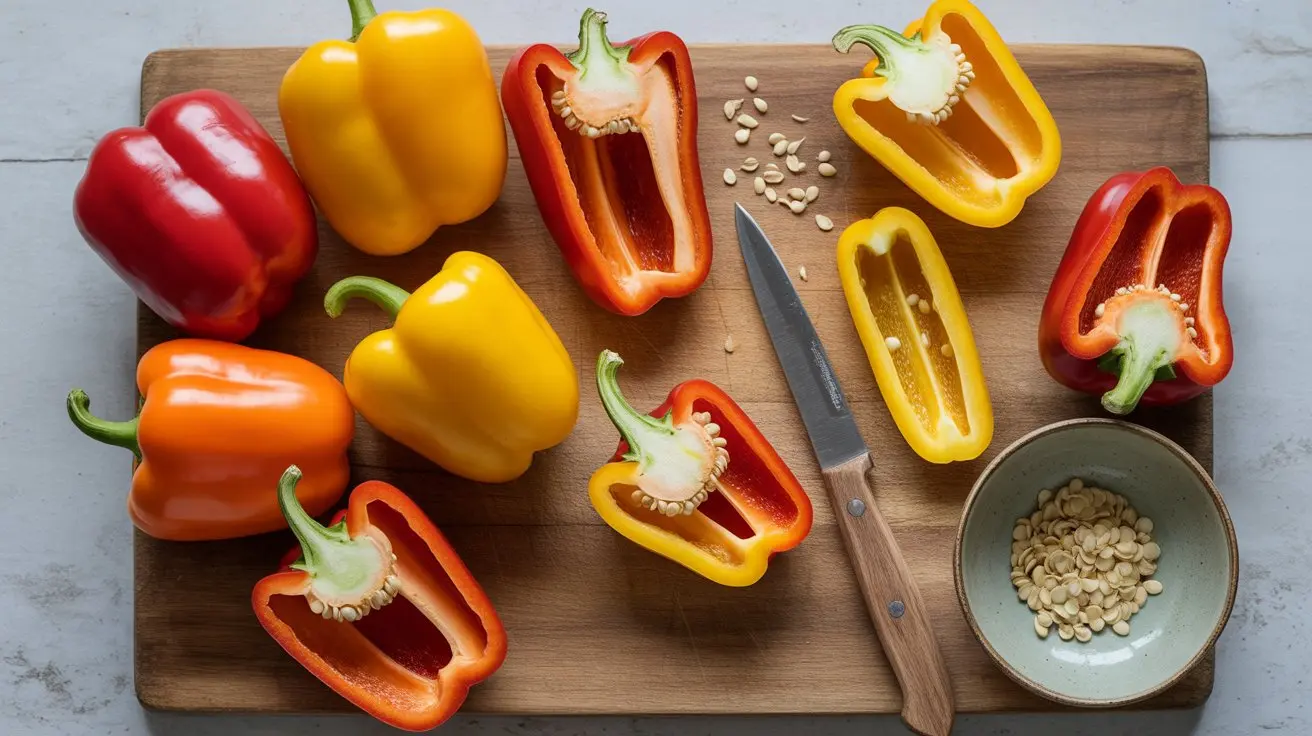
Thick-fleshed peppers such as bell or pimento still dry, but they hold water around the seed cavity and need to be cut open to release it.
Rushing those with heat is the trap. Penn State Extension calls the result case hardening, where the outer surface hardens and stops moisture escaping from the center of the slice, which leaves a pod that looks finished and molds in the jar weeks later.
The practical reading is that thickness and cut form set your timing. They do not give each variety its own procedure, which is a distinction the next section settles.
| Pepper | SHU | Wall | What the powder is for |
|---|---|---|---|
| Cascabel | 1,000-3,000 | Thicker | Earthy body for mole and braises |
| Espelette | 1,500-4,000 | Medium | Foundational Basque seasoning |
| Mirasol | 2,500-5,000 | Medium | Mild fruity depth in cooked sauces |
| De árbol | 15,000-30,000 | Thin | Nutty heat for sauces and powder |
| Cayenne | 30,000-50,000 | Thin | All-purpose chili powder and rubs |
| Thai chili | 50,000-100,000 | Very thin | Sharp crushed flakes |
| Habanero | 100,000-350,000 | Thin | Fruity high heat, used in pinches |
| Nagabon | 750,000-800,000 | Thin | Blending heat with aroma |
| 7 Pot White | 800,000-1,000,000 | Thin | Earthy super-hot powder |
| 7 Pot Yellow | 800,000-1,200,000 | Thin | Tropical-scented extreme heat |
Every heat figure above is the range carried on this site's profile for that pepper, not a rounded estimate.
How should you prepare peppers for dehydrating?
Prep moves drying time more than the dial does, because it sets how far moisture has to travel to reach a surface.
Clemson Extension gives the sequence for peppers as wash, stem and core, then remove the partitions and cut the flesh into disks about 3/8 inch.
The partitions are the pale interior walls the seeds attach to. They hold moisture, and they hold most of the pod's capsaicin.
Taking them out shortens drying and lowers the heat of the finished powder, so it is a flavour decision as much as a mechanical one.
Thin pods are the exception worth making. A Thai chile is already close to all wall, so cutting gains little and costs you the whole-pod option for flakes.
Whatever you cut, keep the pieces one size across a tray. Mixed sizes mean the small ones over-dry while the thick ones stay damp, and the damp ones decide whether the jar molds.
What temperature should you dehydrate peppers at?
The ceiling is the number that matters, and University of California Cooperative Extension states it plainly. Set the appliance to 140 °F, because any higher temperature will cook the peppers rather than dehydrate them.
Penn State Extension allows 145 °F for the first hour only, while surface moisture is still evaporating, then drops to 135 to 140 °F to finish.
That makes the 125 to 135 °F band often quoted for peppers a slow setting rather than a safe one. It sits under the finishing range both sources give, and longer time in the damp zone is the condition mold needs.
Times depend on the appliance far more than on the pepper.
- Dehydrator, 8 to 12 hours (UC Cooperative Extension).
- Oven, roughly 16 to 24 hours, which is longer than a dehydrator rather than shorter (UC Cooperative Extension).
- Air drying, about four weeks, and only where the air is dry (UC Cooperative Extension).
- Whole chile pods, 12 to 24 hours, against 8 to 12 hours for sweet peppers (Colorado State Extension).
Notice what none of those sources do. They key drying time to the appliance and to the pepper's cut form, never to its cultivar name.
UC Cooperative Extension is explicit that it does not matter whether you are drying chili peppers, bell peppers, or other varieties. Any list offering a separate schedule for cayenne, de árbol, and cascabel is inventing precision no source supports.
Choose your drying method first, then read the pod rather than the clock.
Best dried peppers for everyday heat
These three are the workhorses, thin-walled enough to dry without fuss and useful across the widest range of dishes.
Cayenne
Cayenne runs 30,000 to 50,000 SHU and grinds into the sharp, clean heat most people mean by chili powder.
Slice whole pods lengthwise before they go on the tray. That opens the cavity and lets air reach the inner wall.
Thai chiles and bird's eye
Thai chiles sit at 50,000 to 100,000 SHU and are small and thin enough to dry whole without slicing.
The dried heat is sharper and more immediate than cayenne. That is why these anchor crushed red flake blends rather than smooth powders.
De árbol
De árbol carries 15,000 to 30,000 SHU, which is real heat by the standards of a dried-chile pantry.
Set that against guajillo at 2,500 to 5,000 and the gap runs from three times to twelve, depending where in each range you land.
Its flavor is nutty and dry rather than fruity. It holds that character better than most peppers once the moisture is gone.
Dried Mexican sauce chiles, cascabel and mirasol
These two are grown for body rather than burn, and both earn a tray on flavor alone.
Cascabel
Cascabel is named for the rattle its loose dried seeds make inside the round pod. At 1,000 to 3,000 SHU it adds earthy depth to mole bases and braising liquids without pushing heat.
Its walls are thicker than the others here, so halve the pods before drying rather than trusting them whole.
Mirasol
Mirasol is what guajillo is before it dries, which is the detail most dehydrating lists miss. Both carry 2,500 to 5,000 SHU.
Growing mirasol and drying it at home is therefore a way to produce your own guajillo, the mild fruity base under enchilada sauce and pozole.
Espelette, grown for the powder rather than the pod
Espelette comes from the Basque region of France and carries AOP protected status there. At 1,500 to 4,000 SHU it is a seasoning pepper rather than a hot one.
Basque cooking uses the powder the way Hungarian cooking uses paprika, as a base note under the dish rather than a source of heat.
That is the argument for growing it, because the fresh pod is unremarkable and the dried powder is the entire point.
Grinding super-hots, handling and ventilation
Above roughly 100,000 SHU the drying is unchanged but the handling is not, because grinding turns concentrated capsaicin into airborne dust.
Grind super-hot peppers with ventilation, in nitrile gloves and eye protection, and let the grinder stand 30 to 60 seconds before you open it. Capsaicin dust hangs in the air, and inhaling it causes coughing and airway irritation that water will not rinse away.
Habanero
Habanero runs 100,000 to 350,000 SHU. Its fruity, almost floral aroma survives drying better than most peppers at that heat.
The powder belongs in pinches rather than spoonfuls, which is worth knowing before you grind a full tray of it.
The 7 Pot family
7 Pot Yellow carries 800,000 to 1,200,000 SHU and leads with a tropical aroma.
7 Pot White sits at 800,000 to 1,000,000 and reads earthier than fruity. That makes it the better blending partner of the two.
Both belong in the super-hot tier, where a dedicated grinder you never use for anything else stops being optional.
Nagabon
Nagabon falls at 750,000 to 800,000 SHU, above habanero and just under the 7 Pot family.
It is most useful blended into milder powders. The aroma carries through at a dose that does not flatten the dish.
How do you know dehydrated peppers are done?
Penn State Extension gives the test for vegetables as tough, brittle, or crunchy. A pepper that bends without snapping still holds moisture.
Test a piece only after it has cooled, because warm pods feel more pliable than they will at room temperature.
Drying also finishes unevenly across a tray, which is why a batch is not ready for a sealed jar the moment the machine stops.
Colorado State Extension gives conditioning as the step that evens it out.
- Fill large glass or plastic containers about two thirds full with the cooled pieces.
- Cover them lightly rather than sealing them.
- Hold them somewhere warm, dry, and well ventilated for four to 10 days.
- Shake or stir the container daily so the pieces stay separate.
Condensation inside the glass during that window means the batch went in damp, so it goes back to the dehydrator.
How do you grind and store dried pepper powder?
A blade-style spice grinder handles dried pods well. A pass through a fine-mesh sieve afterwards catches the fragments that leave a powder gritty.
Grind in small batches rather than processing a whole harvest at once.
What comes off these trays is a single-chile powder. Chili powder in the American sense is a blend carrying cumin and oregano as well, which is a different product and a different shelf life.
Flakes and powder are the same thing at different grind levels. Stop early for flakes that still show seed and skin, or run the grinder out for a powder fine enough to disappear into a sauce.
How much fresh weight becomes how much powder is the question a harvest actually raises, and there is no universal count or weight equivalent because wall thickness and moisture vary so widely.
Our pepper conversion calculator gives a starting estimate across fresh pods, dried pods and teaspoons of powder, which is a better place to begin than a ratio copied from someone else's harvest.
Storage decides how long the work lasts. Colorado State Extension gives six to 12 months for properly stored dried vegetables in a cool, dry, dark place, and UC Cooperative Extension puts dried peppers at several months in the same conditions.
The multi-year figures that circulate for dried chiles have no extension source behind them, so treat a year as the planning horizon rather than the floor.
Penn State Extension adds that light fades peppers quickly, and that dried peppers held in the refrigerator or freezer keep their color best.
Whole pods outlast powder because grinding exposes far more surface to air, so keep what you are not using immediately in one piece.
Best Peppers for Dehydrating: Thin-Walled Pods That Dry Evenly for Powder FAQ
- Drying Peppers - University of California Cooperative Extension
- Let's Preserve: Drying Fruits and Vegetables - Penn State Extension
- Drying Vegetables - Colorado State University Extension
- Drying - National Center for Home Food Preservation
- Drying Vegetables - Clemson Home and Garden Information Center