Pickled Jalapeño vs Fresh: What Changes in the Jar?
Fresh jalapeño gives a dish crisp texture, green chile aroma, and concentrated bursts of heat. Pickled jalapeño trades some of that freshness for vinegar, salt, a softer bite, and heat that spreads through the brine, so the better form depends on whether the recipe needs raw pepper character or an acidic condiment.

Pickled Jalapeño
Pickled formFresh
Fresh form- Texture: Tender to crisp-tender, brand dependent vs Firm, juicy, thick-walled
- Heat delivery: Pepper heat plus capsaicin carried in brine vs Concentrated in each piece, especially near the ribs
- Best role: Acidic topping or rich-food counterpoint vs Fresh ingredient, garnish, salsa base, or stuffing pepper
Pickled Jalapeño vs Fresh at a glance
| Attribute | Pickled Jalapeño | Fresh |
|---|---|---|
| Primary flavor | Vinegar tang, salt, rounded chile | Grassy, vegetal, lightly bitter |
| Texture | Tender to crisp-tender, brand dependent | Firm, juicy, thick-walled |
| Heat delivery | Pepper heat plus capsaicin carried in brine | Concentrated in each piece, especially near the ribs |
| Best role | Acidic topping or rich-food counterpoint | Fresh ingredient, garnish, salsa base, or stuffing pepper |
| Recipe correction | Reduce other acid and salt after tasting | Add acid separately when the dish needs tang |
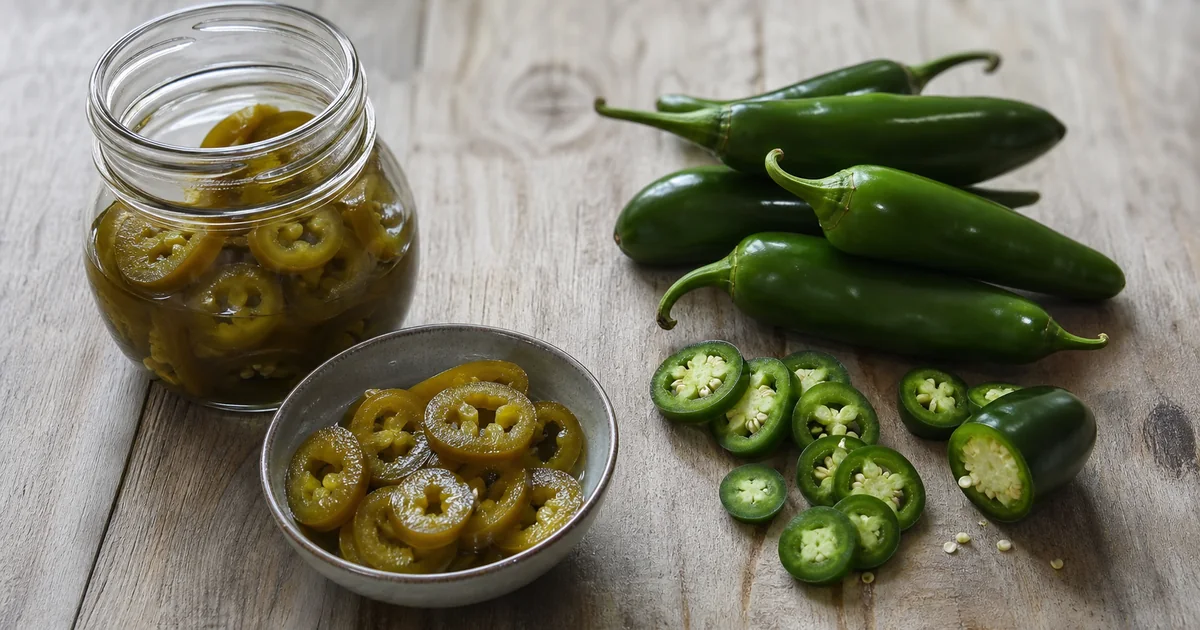
Pickled Jalapeño and Fresh side by side
Jalapeño rings preserved in an acidified brine, commonly sold refrigerated or shelf-stable.
Raw green jalapeño with firm walls and heat concentrated around the inner placenta.
What Does Pickling Do to a Jalapeño?
Pickling changes jalapeño by adding acid and salt, moving water through the flesh, and carrying some capsaicin into the surrounding liquid. The pepper remains jalapeño, but it no longer performs like a raw vegetable.
Fresh green pods taste grassy and lightly bitter, with a juicy snap from their thick walls. Vinegar suppresses some of that green aroma and replaces it with a clean sour note, while salt makes the pepper taste more seasoned before it reaches the food.
Texture depends on processing.
A short refrigerator pickle can stay crisp-tender, while heat processing for a shelf-stable jar softens cell walls further and a long-open commercial jar may lose more snap.
Color changes for the same reason.
Acid and heat can push bright green rings toward olive green, so color is a clue to processing but not a reliable measure of heat or safety.
The brine becomes an ingredient because it holds vinegar, salt, dissolved pepper compounds, and any garlic or spices listed on the package. Pouring it into a sauce changes more than moisture, which is why draining and adding the liquid separately gives better control.
Commercial, quick-pickled, and fermented are different
Commercial shelf-stable rings are acidified and heat processed according to a validated process. Refrigerator quick pickles rely on cold storage, while fermented jalapeños develop lactic acid through microbial activity and taste less like a simple vinegar pickle.
Those three products should not share one storage rule. The package directions or a tested preservation recipe own the safe method, and a flavor substitution never authorizes changing a shelf-stable canning formula.
Are Pickled Jalapeños Milder Than Fresh?
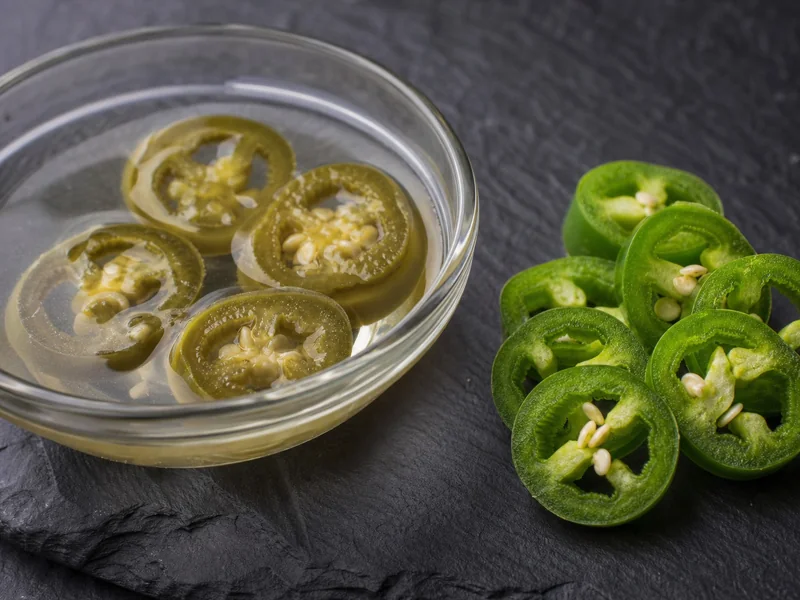
Pickling does not reliably remove jalapeño heat. Capsaicin resists ordinary cooking temperatures, and some of it moves from cut surfaces into the brine, so both the rings and liquid can burn.
Clemson Cooperative Extension places jalapeño at 2,500 to 8,000 SHU before processing. One jar can still feel milder than another because cultivar, ripeness, rib removal, slice thickness, brine volume, sugar, and serving size all change the way that heat reaches the mouth.
Fresh slices create distinct hot bites because each piece carries its own placenta and juice. Pickled rings distribute heat more broadly when brine coats cheese, tortilla chips, sandwich fillings, or a pan sauce.
| Control | Fresh jalapeño | Pickled jalapeño |
|---|---|---|
| Remove pale ribs | Lowers the largest internal capsaicin source | Helps only before pickling, not after heat has entered the brine |
| Change cut size | Fine dice spreads smaller hot pieces | Thin rings exchange flavor with brine faster |
| Drain | Not applicable | Reduces the acid, salt, and loose brine carried into food |
| Rinse briefly | Washes the surface but leaves internal heat | Removes some surface brine and seasoning, with a flavor cost |
| Add dairy or starch | Softens perceived burn without removing capsaicin | Has the same effect in the finished dish, while the capsaicin remains |
Sugar can round the sharp edge of a sweet pickle, but sweetness does not prove lower capsaicin. A candy-style jalapeño may taste balanced at first and still deliver substantial heat after the sugar fades.
Use brine as a measured hot ingredient. A teaspoon stirred into dressing is easier to correct than an unmeasured pour, especially when the same bowl already contains salty cheese or cured meat.
When Should You Use Fresh or Pickled Jalapeños?
Fresh jalapeño works best when the dish needs the pepper itself, while pickled jalapeño works best when the dish needs a ready-made acidic topping. That split explains why the two forms can share a recipe name yet produce different food.
| Dish | Better form | Reason |
|---|---|---|
| Pico de gallo | Fresh | Crisp dice and grassy aroma stay distinct beside tomato and cilantro. |
| Guacamole | Fresh | The chile seasons the avocado without adding vinegar. |
| Nachos or queso | Pickled | Acid cuts cheese richness and rings spread evenly across the tray. |
| Burger or torta | Pickled | Briny heat offsets fatty meat and mayonnaise. |
| Stuffed poppers | Fresh | Firm walls hold filling and survive baking. |
| Potato or pasta salad | Pickled | Chopped rings season a creamy base with acid and salt. |
| Eggs or breakfast tacos | Either | Fresh gives green crunch, while pickled gives a sharper condiment note. |
| Roasted salsa | Fresh | Blistering develops the pod instead of reheating a vinegar flavor. |
Pizza depends on the intended contrast.
Pickled rings stay recognizable against cheese and tomato sauce, while fresh slices taste greener and can remain firmer if added late.
A pan of cornbread usually benefits from fresh dice because the batter already has its own salt and acid balance. Pickled pieces can work, but they should be drained well and the recipe may need less salt.
Long cooking reduces the fresh pepper's crunch and aroma, which narrows the difference between forms. The acid remains the larger dividing line in chili, braised meat, beans, and slow-cooked sauces.
When both forms belong
A small amount of fresh jalapeño can build green chile flavor inside a dish, while pickled rings finish the surface with acid. Using both makes sense when they hold separate jobs, such as fresh dice in queso and pickled slices on top.
Keep the quantities independent. Reducing one form should answer heat or texture, while reducing the other should answer acid or salt.
Can You Substitute Pickled Jalapeños for Fresh?
A successful swap replaces the role that matters and corrects the properties that do not match. Start with drained volume for solid ingredients, then adjust acid, salt, heat, and moisture after tasting.
Pickled in place of fresh
Use drained pickled rings in sandwiches, creamy salads, cooked beans, pizza, and dips where vinegar already fits. Start with the same chopped volume, then hold back other vinegar, citrus, and salt until the mixture is combined.
The swap is weak in pico de gallo, guacamole, and fresh green salsa because vinegar changes their central flavor. A mild fresh chile is a better replacement when crunch and green aroma matter more than jalapeño heat.
Fresh in place of pickled
Use fresh slices when the recipe can receive acid from another ingredient. Add vinegar or lime juice separately rather than soaking the pepper briefly and assuming it has become a pickle.
This works well for burgers, tacos, eggs, and hot sandwiches when a sharper fresh bite is acceptable. It works poorly when the original recipe depends on pickle brine to season a dressing, braise, or creamy filling.
Correcting texture
Add fresh jalapeño earlier when it needs time to soften, or later when the finished dish needs snap. Add pickled rings near the end of a hot preparation when their remaining structure should stay intact.
Stuffed recipes are a structural exception.
Pickled rings cannot replace a whole fresh pod, and a whole pickled jalapeño may split or carry too much liquid for the filling.
Correcting heat
Removing the pale ribs from fresh pods offers more control than removing loose seeds alone. With pickled rings, choose a milder product or use less because capsaicin already present in the brine cannot be trimmed away.
A taste of one ring is useful before scaling. Heat varies within jalapeño, and the label rarely states a measured SHU value for that specific batch.
How to Buy and Store Each Form
Fresh jalapeños should feel firm, smooth, and heavy, while pickled jalapeños should be chosen by ingredient list, cut, processing method, and package directions. Surface corking on a fresh pod is a growth scar and does not prove extra heat.
Whole fresh pods give the cook control over ribs, cut size, and ripeness.
Pre-sliced pickles save time, but their thickness and firmness are already decided by the manufacturer.
- Check whether the first acid is distilled vinegar, apple cider vinegar, or lactic acid from fermentation.
- Compare sodium when the destination dish contains cheese, olives, cured meat, or bottled sauce.
- Look for calcium chloride when a firm ring matters on pizza or nachos.
- Check added sugar when the recipe should taste sharp rather than sweet.
- Follow the printed refrigeration direction after opening.
Store unwashed fresh pods dry in the refrigerator and cut them close to use. Moisture and exposed cut surfaces speed softening, while freezing preserves them for cooked food but destroys the raw crunch.
Keep commercial pickles submerged and use a clean utensil. Discard a jar with a failed seal, mold, an off odor, unexpected gas, or handling that conflicts with its label.
The National Center for Home Food Preservation publishes tested pickled-pepper procedures for shelf-stable storage. Use those proportions and processing instructions as written instead of converting a refrigerator recipe by guesswork.
The Practical Choice
Choose fresh when the jalapeño must taste green, stay crisp, hold a filling, or roast with the rest of the dish. Choose pickled when vinegar and salt improve the food and a ready-to-use ring is more useful than raw pepper texture.
The two forms are close enough for many toppings and mixed dishes, but the correction is never just heat.
Treat brine, salt, acid, texture, and timing as separate controls and the substitution becomes predictable.
Pickled Jalapeño vs Fresh
Reach for Pickled Jalapeño when you want Acidic topping or rich-food counterpoint.
Reach for Fresh when you want Fresh ingredient, garnish, salsa base, or stuffing pepper.