
Fermented vs Unfermented Hot Sauce: Flavor, Shelf Behavior, and Best Uses
Fermented and unfermented hot sauce can land in the same heat range, but they do not taste, move, or age the same way. Fermented sauces build tang and savory depth over time, while unfermented sauces stay brighter and more direct because the acid is added up front. The better pick usually comes down to flavor target, texture tolerance, and how much process control you want, not just raw heat.

Fermented
Microbe-souredUnfermented Hot Sauce
Vinegar-soured- Flavor: Rounder, tangy, savory, a little funky vs Brighter, cleaner, pepper-forward
- Acidity source: Lactic acid from fermentation vs Vinegar or citrus, added directly
- Texture: Often cloudier, fuller, rustic vs Can be sharper and cleaner
Fermented vs Unfermented Hot Sauce at a glance
| Attribute | Fermented | Unfermented Hot Sauce |
|---|---|---|
| How it's made | Peppers brined, acid built by microbes | Acid added from vinegar or citrus |
| Flavor | Rounder, tangy, savory, a little funky | Brighter, cleaner, pepper-forward |
| Acidity source | Lactic acid from fermentation | Vinegar or citrus, added directly |
| Texture | Often cloudier, fuller, rustic | Can be sharper and cleaner |
| Best for | Depth on wings, bowls, rich foods | Fast bright lift on tacos and eggs |
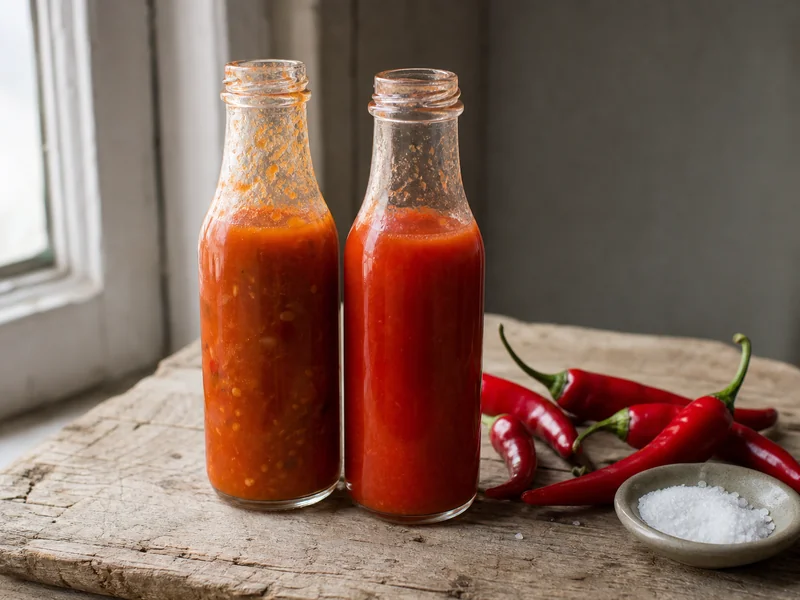
Fermented and Unfermented Hot Sauce side by side
Depth and lactic tang built by fermentation, then adjusted.
Fast, repeatable brightness from added vinegar or citrus.
What Does Fermentation Change in Hot Sauce?
If you want deeper tang, a rounder finish, and more mash character, fermented usually fits. If you want brighter acidity, faster prep, and easier repeatability, unfermented usually wins.
The mechanical difference is where the acid comes from. A fermented sauce builds acidity through microbes first, then gets adjusted after blending.
An unfermented sauce gets its acid added directly from vinegar or citrus at the start.
A useful shortcut: fermented tastes more integrated, like the peppers, salt, and acid had time to merge. Unfermented tastes more immediate, keeping a sharper edge that suits tacos, eggs, and grilled chicken.
How Each One Is Made
The two sauces diverge at step one. A fermented sauce starts by packing peppers in a salt brine and leaving them for days or weeks, while lactic-acid bacteria sour the mash and build flavor.
Only then do you blend and adjust.
An unfermented sauce skips the wait. You blend fresh or cooked peppers with vinegar or citrus, season, and bottle the same day, and the acid comes entirely from what you added.
Everything else follows from that. Fermentation trades time for depth and a little unpredictability.
The vinegar method trades depth for speed and exact control.
The bottle on the table looks similar, but the road there is completely different.
How Does Fermented Hot Sauce Taste Different?
Fermented hot sauce reads rounder, tangier, and more savory. Lactic fermentation reshapes how pepper sugars, salt, and aromatics show up, so the burn feels stitched into the flavor rather than sitting on top.
Longer ferments can pick up a briny or earthy note.
Unfermented sauce stays cleaner and more pepper-forward. A fresh jalapeno-based sauce keeps a grassy snap, and a fruitier habanero sauce stays floral because no fermentation window reshapes those aromas.
Fermentation does not automatically raise the burn. Heat still comes from the pepper and its Scoville level source notes, how much pulp stays in, and how much vinegar or water is added at the end.
The funk is a spectrum, not a switch. A short, few-day ferment stays close to fresh with just a hint of tang, while a weeks-long ferment turns deep, sour, and savory.
Unfermented sauce has no such dial.
Its brightness is set the moment you add the vinegar.
Is Fermented Hot Sauce Shelf-Stable?
The safety line is the finished product, not the method. In a fermented sauce, lactic acid bacteria create acid during fermentation.
In an unfermented sauce, the acid is added directly, usually as vinegar.
USDA and Extension guidance treat those as different preservation paths.
Fermentation is not a free shelf-stability pass. A fermented sauce still has to finish at a safe pH, and a well-acidified fresh sauce can be just as stable.
In kitchen terms, fermented sauces usually buy complexity first and stability second, while unfermented sauces buy precision first. For a bright weeknight sauce that tastes the same every batch, unfermented is easier to control.
For a layered table sauce with lactic tang, fermentation gives a wider range when the process is managed well.
If you are bottling for storage
Safety comes from the finished pH, not the label. If you plan to keep or gift a sauce, confirm it is properly acidified with a meter rather than trusting the word fermented.
And once you add fresh fruit, raw garlic, or extra water after the safe process, you have made a new formula that has to be judged on its own.
That is why the two age differently in the fridge. A vinegar sauce mostly holds its bright, fixed flavor, while a fermented sauce can keep slowly shifting as any remaining activity settles.
Neither is safer by default.
A properly acidified fresh sauce and a properly finished fermented one can both keep for months.
Why Does Hot Sauce Separate in the Bottle?
Both styles can separate, and neither method guarantees a perfectly suspended bottle. Separation depends on particle size, pulp load, and whether the sauce was strained or stabilized after blending.
Fermented sauces often look cloudier because they carry fine mash solids, which can feel fuller on the tongue but may form a loose layer as the bottle sits. USDA purchasing specs even allow minor separation that disappears with a light shake, a good reminder that settling and spoilage are not the same thing.
Common causes of hot sauce separation include too much free liquid, too few solids, or a late oil addition. Fermented sauces tend to look naturally rustic.
Unfermented sauces look sharp and clean when the formula is built that way.
Which Hot Sauce Style Suits Which Food?
Fermented
For depth and funk
Roasted meats, wings, rice bowls, beans, grilled vegetables, and rich breakfasts where the sauce has room to linger. Good for rounding rough, grassy, or very hot mashes.
Unfermented
For bright, repeatable lift
Tacos, sandwiches, vinaigrettes, seafood, and fast pan sauces. Easier to taste, adjust, and reproduce the same day when you want a house sauce.
Which One To Make At Home
If you are choosing which to make, match it to your patience. The unfermented route is the beginner-friendly one: blend, taste, bottle, done in an afternoon, and easy to repeat the same way next time.
The fermented route is a project. You manage salt, time, and clean jars, burp off gas, and accept that each batch drifts a little.
The payoff is a rounder, tangier sauce with more character.
A good first move is to make a simple vinegar sauce to learn your pepper and your ratios, then try a small ferment once you know the flavor you are chasing. For anything you plan to store or gift, check the finished acidity with a meter rather than trusting the method's name.
Does Hot Sauce Need Refrigeration After Opening?
After opening, treat both with respect for oxygen and contamination. A well-acidified sauce can stay stable a long time, but refrigeration still protects color and top-note freshness, especially for bright unfermented sauces, which is the practical side of whether hot sauce goes bad.
Fermented sauces can keep drifting in flavor if any microbial life remains.
The real risk jump comes from changing the sauce after the safe process is done. Adding fresh fruit, raw garlic, extra water, or a starch thickener guide after bottling means you are judging a new formula, not the original.
If a bottle smells wrong, grows mold, or moves from normal settling into obvious gas pressure, stop treating it as a style question and discard it. For gifting or long storage, verify acidity with a meter instead of trusting the style name.
Fermented vs Unfermented Hot Sauce
Reach for Fermented when you want Depth on wings, bowls, rich foods.
Reach for Unfermented Hot Sauce when you want Fast bright lift on tacos and eggs.