
Red Pepper vs Green Pepper: Which Color Fits the Dish?
Red pepper versus green pepper usually compares ripe and mature-green bell peppers. Use green for firmer walls and a grassy, slightly bitter edge. Use red for sweetness, mature aroma, and softer roasted texture. Both sweet bell colors measure 0 SHU, while hot-chile color must be interpreted within a named cultivar.

Red Pepper
Ripe bell pepperGreen Pepper
Mature-green bell pepper- Heat: 0 SHU for a sweet bell pepper vs 0 SHU for a sweet bell pepper
- Flavor: Sweeter, fruitier, and less grassy vs Sharper, grassy, and mildly bitter
- Texture: Softer flesh after full ripening vs Firmer walls and a crisper raw bite
Red Pepper vs Green Pepper at a glance
| Attribute | Red Pepper | Green Pepper |
|---|---|---|
| What the color usually means | A mature red bell pepper from a cultivar that ripens red | A full-size bell pepper harvested at the green stage |
| Heat | 0 SHU for a sweet bell pepper | 0 SHU for a sweet bell pepper |
| Flavor | Sweeter, fruitier, and less grassy | Sharper, grassy, and mildly bitter |
| Texture | Softer flesh after full ripening | Firmer walls and a crisper raw bite |
| Best raw use | Crudites, salads, and sweet salsas | Relishes, chopped salads, and sandwiches needing sharper contrast |
| Best cooked use | Roasting, sauces, soups, and caramelized dishes | Stir-fries, pizza, fajitas, and savory fillings |
| Direct substitution | Use the same volume, then reduce other sweet ingredients if needed | Use the same volume, then correct bitterness or sharpness if needed |
| Postharvest behavior | Already at mature color | Will not reliably become fully red after harvest |
Red Pepper and Green Pepper side by side
Choose red when the dish benefits from ripe sweetness, bright color, or a smooth roasted texture.
Choose green when the dish needs crisp walls, savory bitterness, or contrast against rich ingredients.
What Does Red Pepper vs Green Pepper Usually Mean?
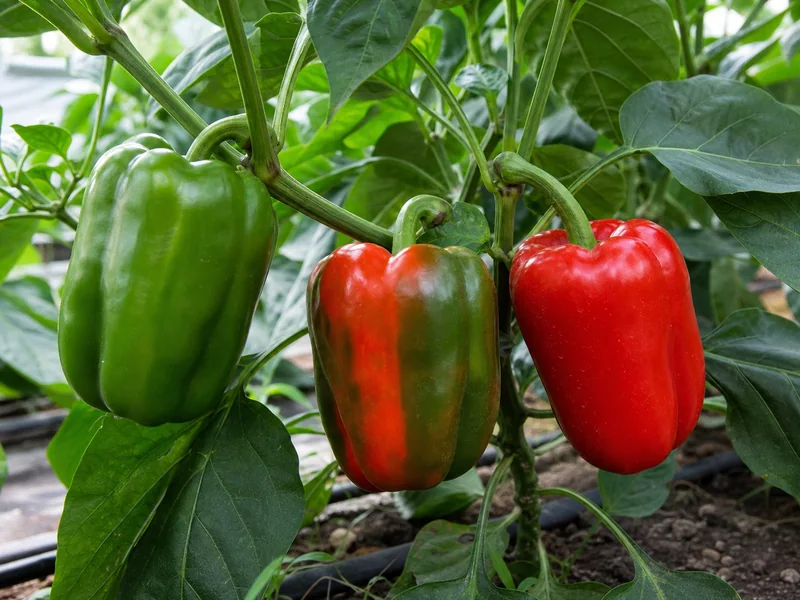
In most U.S. produce aisles and recipes, red pepper versus green pepper means red and green bell pepper. A green bell is usually harvested after it reaches full size but before its final ripe color, while a red bell has stayed on the plant until a red-ripening cultivar colored fully.
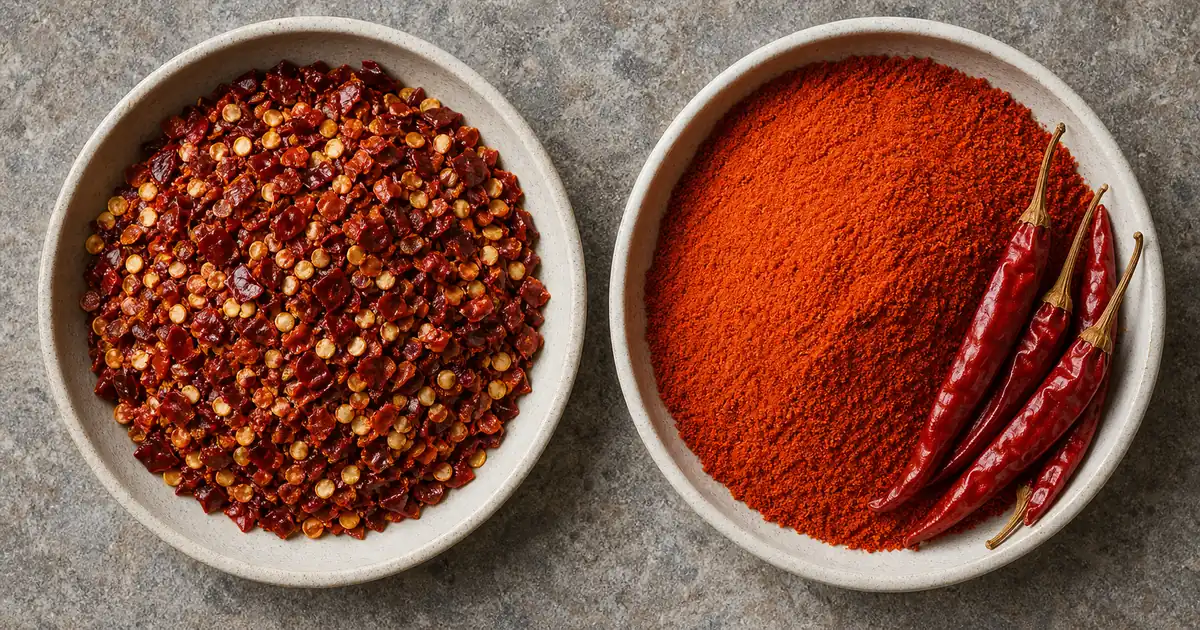
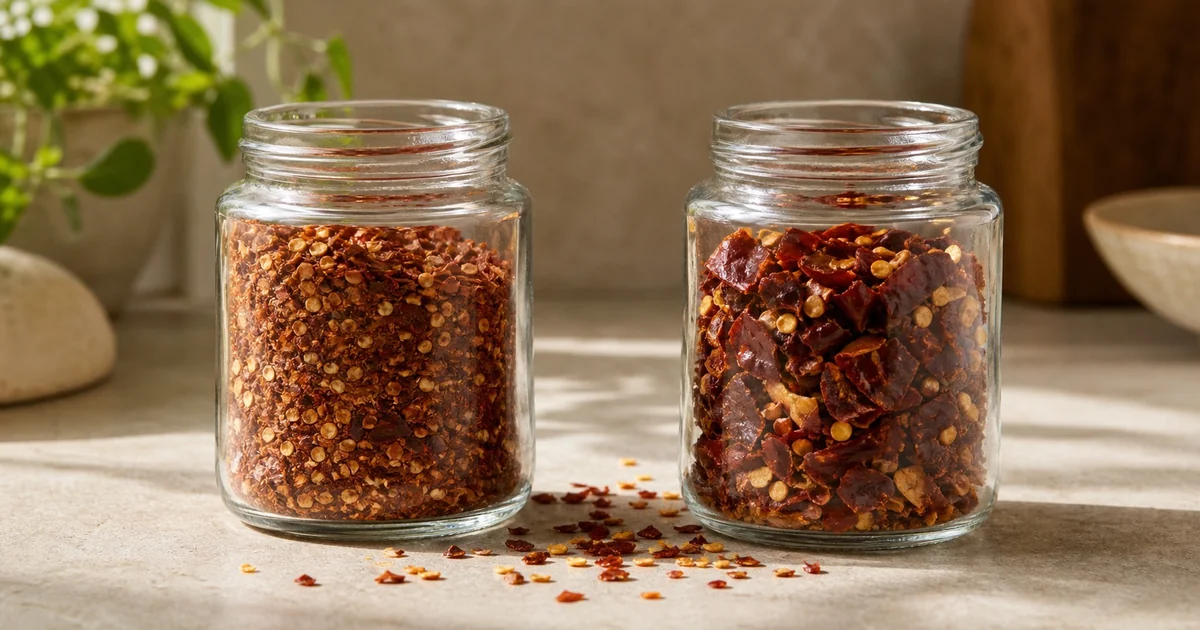
The label becomes ambiguous in chile recipes. The phrase red pepper can also mean cayenne powder, crushed flakes, paprika, or a ripe hot chile, so check whether the recipe asks for a whole fresh vegetable, a dried spice, or a pungent chile before making a swap.
For fresh bell peppers, the decision is straightforward. Choose green for a firmer, grassier bite and red for more sweetness, mature aroma, and a softer result after cooking.
Is a Red Pepper Just a Ripe Green Pepper?
Many red bell peppers began as green fruit on the same type of plant. University of Maryland Extension places the mature-green harvest around 70 to 80 days after transplanting and says full color commonly needs another two to three weeks.
That does not mean every green bell will become red. Mature color is genetic, so one cultivar may finish red while another finishes yellow, orange, brown, purple, or ivory.
Green is therefore a harvest description more often than a final cultivar color. The grocery bin combines cultivars and growing schedules, which is why two green peppers can differ in wall thickness and why a red pepper is not always the older version of the green pepper beside it.
How Do Red and Green Peppers Taste Different?
Ripening shifts the bell pepper away from green, bitter notes and toward sweetness. Maine Cooperative Extension describes green bells as fully developed but unripe and notes that vine-ripened fruit becomes redder and sweeter.
The texture changes with that chemistry. Green walls usually feel denser and crisper, while fully colored walls soften sooner under heat and release a rounder, sweeter aroma.
This difference matters most when the pepper remains prominent. A raw strip exposes bitterness and crunch immediately, while a long roast concentrates the red pepper's sugars and removes much of its remaining raw edge.
Color alone cannot prove freshness. A taut red pepper with a firm stem will eat better than a wrinkled green one, so maturity and condition must be judged separately.
When Should You Use Red or Green Bell Pepper?
Use green bell pepper when the dish needs structure or a savory counterpoint. Its firm walls hold up in quick stir-fries, pizza toppings, fajitas, chopped relishes, and rice or meat fillings.
Red bell pepper fits preparations that reward sweetness and soft flesh. Roasting, broiling, stewing, and blending deepen its ripe flavor, which suits tomato sauces, soups, romesco-style sauces, sandwiches, and eggs.
For stuffed peppers, either color works, but the outcome changes. Green shells keep a firmer, slightly bitter frame around rich fillings, while red shells soften faster and make the same rice, bean, meat, or cheese mixture taste sweeter.
Raw use follows the same split. Red strips are easier to serve alone with dips, while a green dice works best when onion, tomato, tuna, egg, or a creamy dressing needs a crisp bitter edge.
Can You Substitute Red Pepper for Green Pepper?
Replace red and green bell peppers one for one by volume when size and wall thickness are similar. The swap changes flavor more than yield, so a cup of strips can remain a cup of strips.
Changing green to red may make a tomato sauce, relish, or braise taste sweeter. Reduce another sweet ingredient first, or add a small amount of acid after cooking rather than changing the pepper quantity.
Changing red to green can sharpen a smooth sauce and make a raw filling taste more vegetal. A longer saute softens that edge, while a small amount of roasted carrot or tomato can restore sweetness without hiding the pepper.
- For crunch: keep the green pepper or shorten the red pepper's cooking time.
- For color: red remains more visible in pale grains, eggs, and cream sauces.
- For roasting: choose red when the pepper will be peeled and blended.
- For a missing bell pepper: match wall thickness and heat before matching color.
If neither color is available, bell pepper substitutes need a separate decision. Poblano adds heat and thinner walls, while Cubanelle and sweet frying peppers cook faster than a blocky bell.
Is Red Pepper Healthier Than Green Pepper?
Red bell pepper usually supplies more vitamin C and vitamin A than green bell pepper at the same raw weight. USDA FoodData Central legacy entries list about 127.7 mg vitamin C per 100 g for raw red sweet pepper and 80.4 mg per 100 g for raw green sweet pepper.
The vitamin A gap is larger because ripe red tissue accumulates carotenoid pigments. The same USDA entries list about 157 micrograms RAE per 100 g for red and 18 micrograms RAE for green.
Those figures compare standardized raw samples, not every pepper in a store. Cultivar, field conditions, storage, serving size, and cooking all change the amount on the plate.
Both colors remain low-calorie vegetables and useful vitamin C sources. The better choice for one meal is the color that fits the dish and will actually be eaten, not the color with the larger isolated nutrient number.
Why Do Red Peppers Cost More Than Green?
Red bells often cost more because the grower keeps them on the plant through the final color stage. The additional two to three weeks documented by Maryland Extension occupy field space and expose the fruit to more weather, pests, sun injury, and handling loss.
A plant harvested at the green stage can move marketable fruit sooner. Waiting for mature color reduces that scheduling advantage, so retail price reflects production time and risk as well as consumer demand.
The premium does not prove that a red pepper is fresher. Compare firmness, glossy skin, stem condition, and soft spots within each color before comparing price.
Will a Green Pepper Turn Red on the Counter?
A fully green bell pepper does not reliably turn into a sweet red pepper after purchase. UC Davis classifies bell peppers as nonclimacteric fruit with very low ethylene production, so the paper-bag method used for bananas does little for a pepper picked before color break.
A partially colored fruit can continue changing at 68 to 77 F under high humidity, according to UC Davis, but color improvement does not recreate weeks of vine development. Buy the color the recipe needs instead of planning to finish a green pepper on the counter.
For storage, UC Davis recommends about 45 F and humidity above 95 percent for maximum commercial shelf life. A home refrigerator runs colder and drier, so keep whole peppers in the crisper, avoid washing before storage, and use any pepper once the skin begins to wrinkle.
Cut pieces should be refrigerated in a covered container. Freeze excess strips only for cooked uses because thawing breaks the crisp texture that gives green peppers much of their value.
Are Red Chiles Hotter Than Green Chiles?
With hot chiles, red still usually signals a later ripening stage, but it does not identify heat by itself. A green jalapeno and a red jalapeno belong to one cultivar range, while a red cayenne and a green serrano are different cultivars with different genetics.
A 2023 study of eleven Capsicum annuum varieties found that capsaicin content carried a strong genetic effect, while ripening stage had more influence on several other phytochemical traits. Color alone is therefore too broad as a heat-buying rule.
Compare hot peppers by cultivar and published heat range first, then use color to judge maturity within that cultivar. Capsaicin can change during ripening, but genetics, fruit position, and growing conditions prevent color from acting as a universal heat scale.
Bell peppers avoid this uncertainty because common sweet bells register 0 SHU. Red and green change sweetness, aroma, texture, field time, and nutrient composition, while neither color adds chile burn.
Red Pepper vs Green Pepper
Reach for Red Pepper when you want Crudites, salads, and sweet salsas.
Reach for Green Pepper when you want Relishes, chopped salads, and sandwiches needing sharper contrast.
Red Pepper vs Green Pepper FAQ
- University of Maryland Extension - Growing Peppers in a Home Garden
- University of Maine Cooperative Extension - Bell Peppers
- UC Davis Postharvest Research and Extension Center - Bell Pepper
- USDA FoodData Central - Pepper Fact Sheet
- Lahbib et al. 2023 - Pepper variety, fruit position, and ripening stage