
Jimmy Nardello vs Sweet Italian: Frying Choice

Choose Jimmy Nardello for a pan-fried sweet pepper that caramelizes fast and eats almost like a finished side dish. Choose Sweet Italian pepper when you need a larger, more forgiving pepper for roasting, stuffing, or market cooking. Both are essentially heatless, but shape and wall thickness decide the recipe.

Jimmy Nardello Pepper and Sweet Italian Pepper side by side for a heat and flavor comparison
Quick Comparison

Jimmy Nardello measures 0–500 SHU while Sweet Italian Pepper registers 0–100 SHU. That makes Jimmy Nardello about 5x hotter by upper SHU range. Jimmy Nardello is known for its sweet and fruity flavor (C. annuum), while Sweet Italian Pepper offers sweet and mild notes (C. annuum).

Jimmy Nardello
0–500 SHU
Mild · sweet and fruity
Sweet Italian Pepper
0–100 SHU
Mild · sweet and mild
  • Heat difference: Jimmy Nardello is about 5× hotter by upper SHU range
  • Species: Both are C. annuum
  • Best for: Jimmy Nardello excels in everyday cooking and salsas, Sweet Italian Pepper in fresh salsas and mild recipes

Jimmy Nardello vs Sweet Italian Pepper Comparison

Attribute Jimmy Nardello Sweet Italian Pepper
Scoville (SHU) 0–500 0–100
Heat Tier Mild Mild
vs Jalapeño n/a n/a
Flavor sweet and fruity sweet and mild
Species C. annuum C. annuum
Origin Italy Italy

Jimmy Nardello vs Sweet Italian Pepper Heat Levels

Position on the Scoville Scale
Jimmy
Sweet
0 SHU3.2M SHU

Jimmy Nardello is about 5× hotter than Sweet Italian Pepper.

Jimmy Nardello spans 0–500 SHU. Sweet Italian Pepper spans 0–100 SHU. Use the ranges to decide whether the recipe needs a measured dose, a mild overlap, or a hard substitution limit. Tools: Scoville chart and SHU calculator.

Flavor Profile Comparison

Jimmy Nardello
sweet fruity C. annuum

Pull a ripe Jimmy Nardello off the vine and you'll notice the deep crimson skin before anything else - thin, wrinkled, almost translucent in spots. Bite in raw and there's zero heat, just clean sweetness with a faint fruitiness that's closer to a sun-dried tomato than anything you'd call a pepper.

The pods reach 6–10 inches in length, tapering to a gentle twist at the tip. That thin wall is the key to everything this pepper does in the kitchen - it fries fast, caramelizes beautifully, and loses almost no volume in the pan.

Sweet Italian Pepper
sweet mild C. annuum

Bite into a Sweet Italian Pepper and you get nothing but sweetness - no slow creep of warmth, no tingle, just pure pepper flavor. That near-zero heat places it firmly in the the gentle heat range, where it sits alongside other crowd-pleasing varieties bred for flavor over fire.

The fruit grows 6–8 inches long, tapering to a blunt point, with walls thin enough to cook in minutes. Color progresses from pale lime green to a deep red at full maturity, with flavor intensifying at each stage.

Both peppers belong to C. annuum, so they share some underlying flavor chemistry. However, Jimmy Nardello’s sweet and fruity notes contrast with Sweet Italian Pepper’s sweet and mild character.

Jimmy Nardello brings sweet and fruity notes, so it fits recipes where that flavor should remain visible. Sweet Italian Pepper leans sweet and mild, which can change the sauce, filling, marinade, or garnish even when the heat range looks close.

Jimmy Nardello and Sweet Italian Pepper comparison

Culinary Uses for Jimmy Nardello and Sweet Italian Pepper

Jimmy Nardello

The standard preparation is simple: hot olive oil, whole pods, high heat. The thin walls blister in under three minutes, the sugars caramelize against the pan, and the result is something that tastes richer than the raw pepper suggests.

Raw, Jimmy Nardellos work well in salads where you want sweetness without bulk. Their flavor profile sits near the sweet, mild depth of smoked Spanish pimentón when roasted - concentrated and almost jammy.

For antipasto boards, roast them whole at 450°F until charred, then peel and dress with good olive oil and capers. They also pickle beautifully - the thin skin absorbs brine quickly, and their natural sugar balances the acid well.

Sweet Italian Pepper

Sweet Italian Peppers handle heat exceptionally well - better than bell peppers, actually, because those thin walls collapse into silky tenderness without turning mushy. Roasting over an open flame or under a broiler until charred, then peeling and dressing with olive oil and garlic, is the classic preparation.

For stuffing, the elongated shape is ideal. Fill with a mixture of seasoned breadcrumbs, anchovies, and capers, then bake until the pepper softens and the filling browns.

Raw, they add crunch to antipasto boards and hold up well in vinegar-based marinades. If you want something with a mild tang for comparison, the slightly pickled character of pepperoncini's tapered shape shows how closely related Italian pepper types can diverge in end use.

Which Should You Choose?

Best fit

Choose Jimmy Nardello if…

You want maximum heat
You prefer sweet and fruity flavors
You need a C. annuum variety

Best fit

Choose Sweet Italian Pepper if…

You want milder, more approachable heat
You prefer sweet and mild flavors
You need a C. annuum variety

Can You Substitute One for the Other?

Start near 1:1 by amount. The heat ranges are close enough that flavor, form, and recipe role matter more than a strict Scoville conversion.

Growing Jimmy Nardello vs Sweet Italian Pepper

Growing notes

Jimmy Nardello

Jimmy Nardello is a rewarding garden pepper, but it needs a long, warm season - plan for 80–90 days from transplant to ripe red pods. Start seeds indoors 8–10 weeks before your last frost date.

Transplant into full sun once nighttime temps stay consistently above 55°F. For practical guidance on pepper plant spacing, these plants get substantial - give them 18–24 inches between plants.

Soil prep matters more than fertilizer. Well-draining, slightly acidic soil (pH 6.

Growing notes

Sweet Italian Pepper

Sweet Italian Peppers are among the more forgiving varieties to grow, which makes them a smart choice whether you are starting your first pepper garden or filling out an established one. Start seeds indoors 8–10 weeks before your last frost date; they germinate best at 80–85°F soil temperature.

Transplant outdoors once nighttime temps stay reliably above 55°F. Space plants 18–24 inches apart in full sun - they need at least 6–8 hours of direct light daily to set fruit well.

The plants benefit from staking as fruit load increases; a single bamboo stake per plant usually suffices. Water deeply but infrequently, letting the top inch of soil dry between waterings.

Where They Come From

Origin & background

Jimmy Nardello

Italy · C. annuum

The story of Jimmy Nardello begins in Basilicata, the rugged southern Italian region where the Nardello family grew this pepper for generations. In 1887, Jimmy's parents immigrated to Naugatuck, Connecticut, bringing seeds with them.

After his death in 1983, his wife Carmela donated seeds to the <a href='https://www.slowfoodusa.

Origin & background

Sweet Italian Pepper

Italy · C. annuum

Sweet Italian Peppers trace their roots to the broader domestication of Capsicum annuum in Mesoamerica, but their specific character - thin-walled, elongated, and essentially heatless - was refined over centuries of Italian cultivation after peppers arrived in Europe via Spanish trade routes in the late 15th century.

Italian farmers, particularly in southern regions like Campania and Calabria, selected for sweet, fleshy varieties suited to roasting over open flames and preserving in olive oil. By the 19th century, these types had become embedded in regional cooking traditions.

Buying & Storage

Whether you’re shopping for Jimmy Nardello or Sweet Italian Pepper, the same quality indicators apply. Fresh peppers should feel firm and heavy for their size, with taut, glossy skin and no soft or wet spots. Minor stem cracks known as “corking” are perfectly normal and often indicate a mature, flavorful pod.

Selection

What to look for

  • Firm pods with taut skin and consistent color
  • Should feel heavy relative to size
  • Minor stem cracks (“corking”) are normal
  • Avoid anything soft, shriveled, or with dark wet spots

Storage

How to store them

  • Fresh: Paper bag, crisper drawer, 1 to 2 weeks
  • Frozen: Wash, dry, freeze on sheet pan, 6+ months
  • Dried: Airtight and away from light, up to 1 year

Mistakes to avoid

Common misses

Jimmy Nardello

  • Equating green with unripe. Different products.
  • Overcooking. Cell walls break down fast.
  • Sealed plastic storage. Causes rot. Use paper bags.

Common misses

Sweet Italian Pepper

  • Equating green with unripe. Different products.
  • Overcooking. Cell walls break down fast.
  • Sealed plastic storage. Causes rot. Use paper bags.
Final call

Jimmy Nardello vs Sweet Italian Pepper

Jimmy Nardello and Sweet Italian Pepper sit in the same heat tier but serve different roles. Jimmy Nardello delivers about 5× more upper-range heat with its distinctive sweet and fruity character. Sweet Italian Pepper, with its sweet and mild profile, excels in everyday cooking.

Heat gap about 5× by upper range Jimmy Nardello sweet and fruity Sweet Italian Pepper sweet and mild
Additional Jimmy Nardello and Sweet Italian Pepper comparison view

Pan Result First

The skillet answers this comparison better than the Scoville scale. Jimmy Nardello collapses quickly in olive oil, browns at the edges, and turns noticeably sweeter after a few minutes.

Sweet Italian pepper stays more structural. It can still roast beautifully, but it does not give the same quick candy-like pan result unless the pod is thin-walled and fully ripe.

Wall Thickness Changes Recipe

Wall thickness is the hidden decision. Jimmy Nardello is long, thin, and flexible, which makes it excellent for blistering but awkward for stuffing.

Sweet Italian pepper has more room inside. Breadcrumbs, anchovy, capers, sausage, rice, or cheese need that shape.

The frying mistake is crowding the pan. Jimmy Nardello wants hot oil and space so the skin wrinkles instead of steaming.

The stuffing mistake is choosing Jimmy because the flavor is better. Flavor does not hold filling. If the recipe needs a pepper boat, Sweet Italian is the more practical pepper.

Zero Heat Still Not Equal

Both sit at the bottom of the heat scale, so the mild heat tier does not decide anything here. The useful question is whether the pepper must become silky in a pan or stay large enough to hold a filling.

Market And Seed Story

Jimmy Nardello has a named heirloom story through the Nardello family and Seed Savers Exchange. That matters because seed packets and farmers market labels usually point to one specific frying pepper.

Sweet Italian is broader language. It can describe several elongated sweet types, which is useful for cooking but less precise for a gardener trying to repeat the same result.

At the market, buy Jimmy Nardello when the pods are fully red, narrow, and glossy. Buy Sweet Italian when you want thicker shoulders, more cavity space, and a pepper that can roast or bake without disappearing.

Swap By Shape

For pan-fried peppers, Sweet Italian can replace Jimmy Nardello only if you slice it thinner and cook off more moisture. The flavor will be milder and less concentrated.

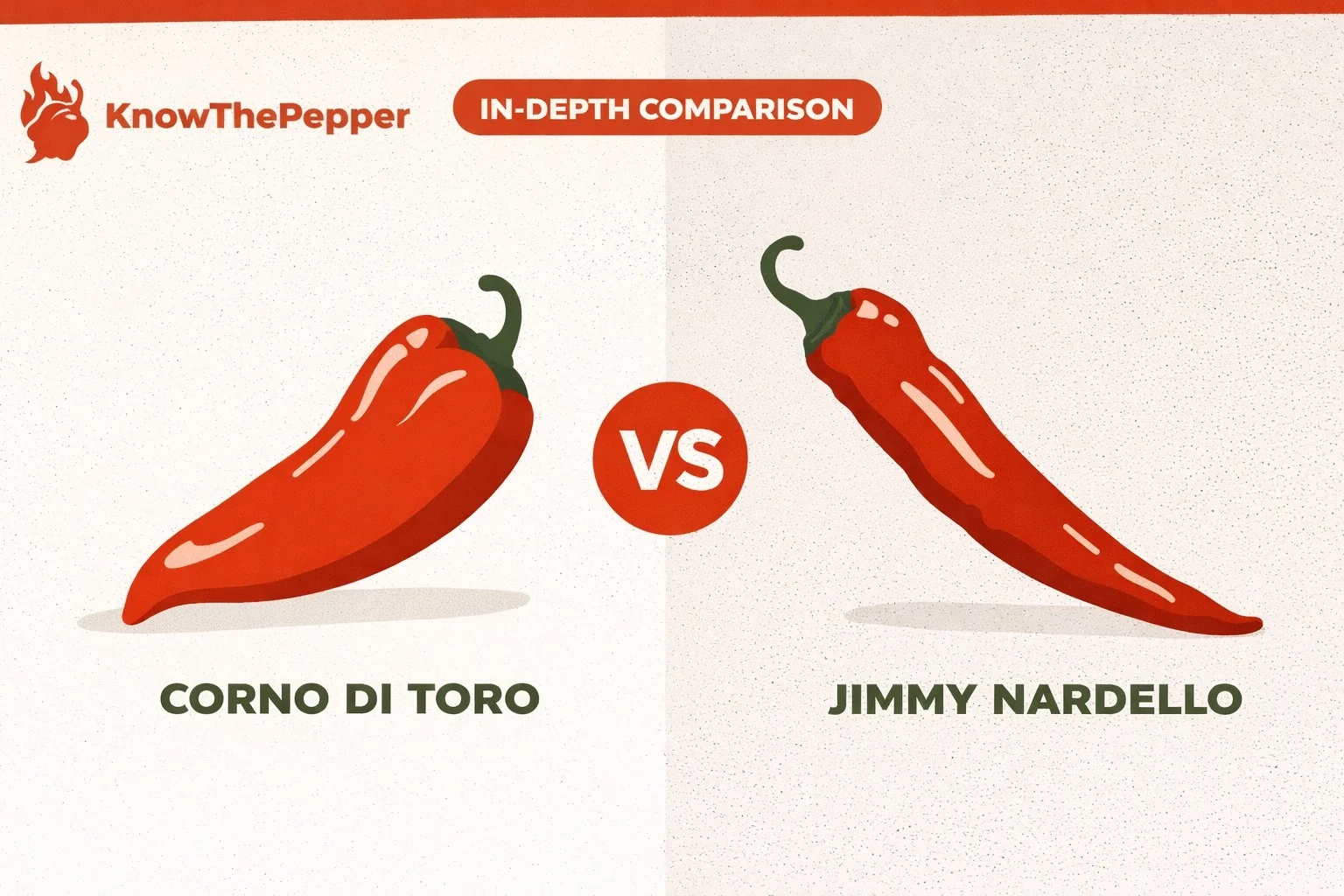
For stuffed peppers, do not force the swap the other way. Use Sweet Italian, Corno di Toro's larger frying shape, or another elongated sweet pepper with enough body to carry filling.

Fact-Checked & Expert Reviewed
Editorial Standards: Head-to-head comparisons include blind tasting when applicable. Heat levels cross-referenced with multiple sources. All substitution ratios tested side-by-side.
Review Process: Written by James Thompson (Lead Comparison Reviewer) , reviewed by Karen Liu (Lead Fact-Checker & Science Editor) . Last updated June 29, 2026.

Jimmy Nardello vs Sweet Italian Pepper FAQ
No in practical cooking terms. Both are essentially heatless sweet peppers. This DB lists Jimmy Nardello at 0-500 SHU and Sweet Italian at 0-100 SHU, but the recipe difference comes from shape and wall thickness.

Jimmy Nardello is better for fast pan frying. Its thin walls blister and caramelize quickly in olive oil, giving a sweeter, richer bite than most broad sweet Italian types.

Sweet Italian pepper is better for stuffing because it has more cavity space and structure. Jimmy Nardello is usually too narrow and thin-walled to hold breadcrumbs, cheese, rice, or sausage well.

Yes for roasting or simple sauteing, but slice it thinner and expect less concentrated sweetness. For the classic blistered Jimmy Nardello pan result, the swap is acceptable but not identical.

Sources & References
KL
Fact-checked by Karen Liu
Research Contributor
SHU Verified
Sources Cited
Expert Reviewed
All Comparisons Browse Peppers Scoville Scale