
Ancho Chili Powder vs Chili Powder: Flavor, Heat, and Best Uses
Ancho chili powder and chili powder can both bring red-chile flavor to a dish, but they are not doing the same job. Ancho chili powder is usually a single dried-chile powder made from ancho chiles, so it tastes sweeter, fruitier, and more chile-specific. Chili powder is usually a blend of chiles plus spices like cumin, garlic, and oregano, so it acts more like a ready-made seasoning base. If you want clean ancho chile character, choose ancho chili powder. If you want broader Tex-Mex seasoning, chili powder is usually the easier fit.

Ancho Chili Powder
One dried chileChili Powder
Chili blend- Flavor: Sweet, earthy, raisin and cocoa notes vs Broader, cumin-and-garlic forward
- Typical heat: Mild, about 1,000 to 2,000 SHU vs Varies by blend, no fixed range
- Best job: Chile flavor that stays clear vs All-purpose chili and taco seasoning
Ancho Chili Powder vs Chili Powder at a glance
| Attribute | Ancho Chili Powder | Chili Powder |
|---|---|---|
| What it is | Ground ancho (dried poblano) | A blend of chile plus spices |
| Flavor | Sweet, earthy, raisin and cocoa notes | Broader, cumin-and-garlic forward |
| Typical heat | Mild, about 1,000 to 2,000 SHU | Varies by blend, no fixed range |
| Best job | Chile flavor that stays clear | All-purpose chili and taco seasoning |
| Swap start | 1:1 for the chile, add spices back | About 3/4 as much ancho, add cumin |
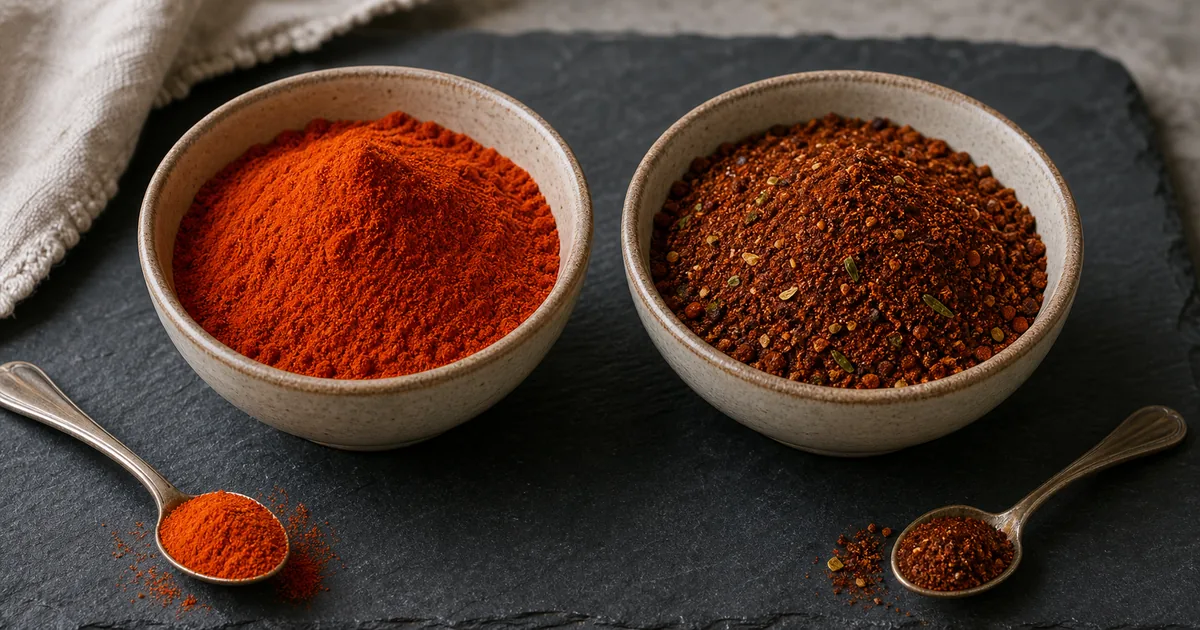
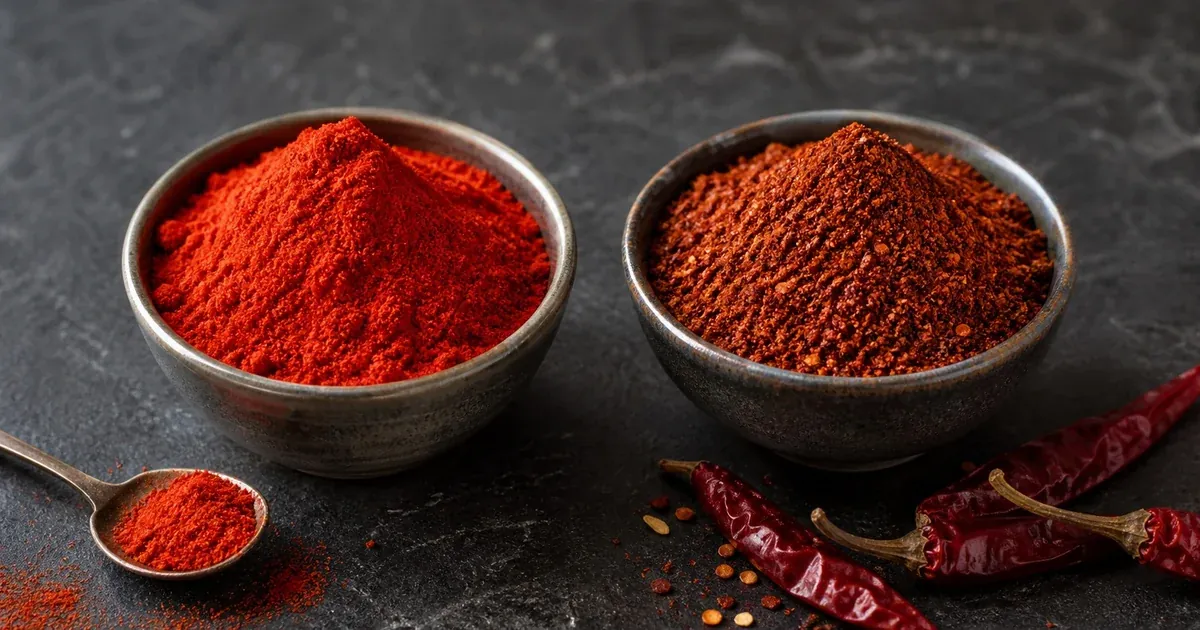
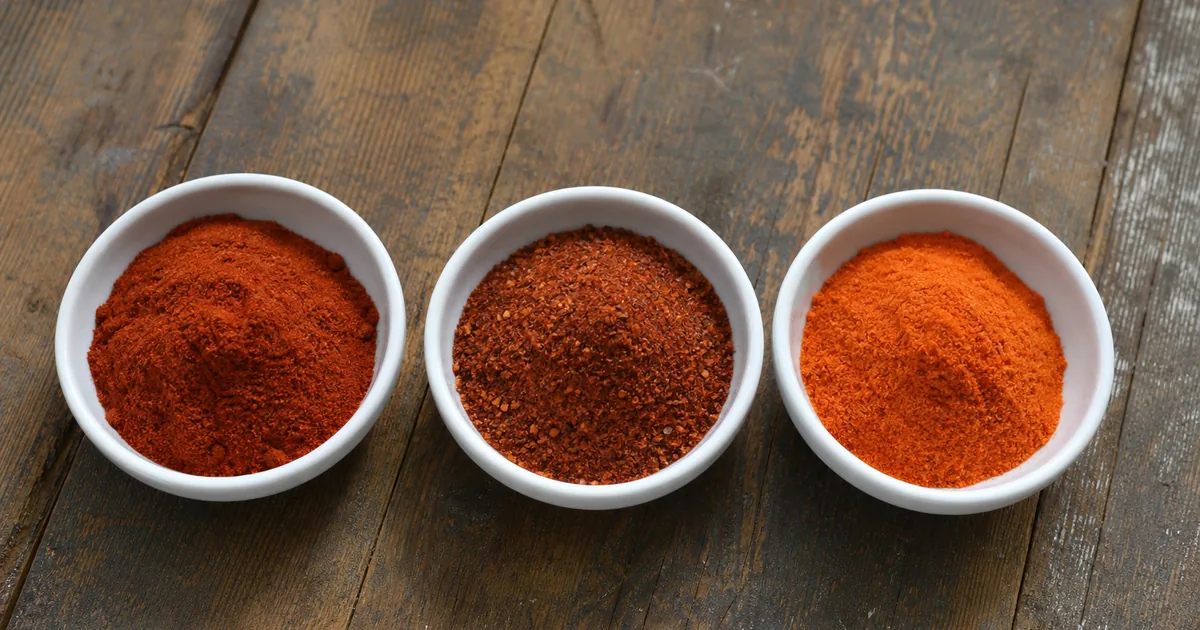
Ancho Chili Powder and Chili Powder side by side
A pepper-first ingredient with clear dried-chile flavor.
A finished seasoning base rather than a single chile voice.
Is Ancho Chili Powder the Same as Chili Powder?
This choice is not mainly about heat. It is about whether the spice should taste like one dried chile or like a full pantry mix.
Ancho chili powder is usually ground ancho, the dried form of poblano. It behaves like a pepper-first ingredient: one chile, one personality, a cleaner flavor role.
Chili powder usually means a blend, so one spoonful carries chile flavor plus seasoning support and a built-in direction for chili and tacos.
If the recipe needs a chile ingredient, ancho is stronger. If it needs a seasoning shortcut, chili powder wins.
How Does Ancho Compare With Guajillo and Pasilla?
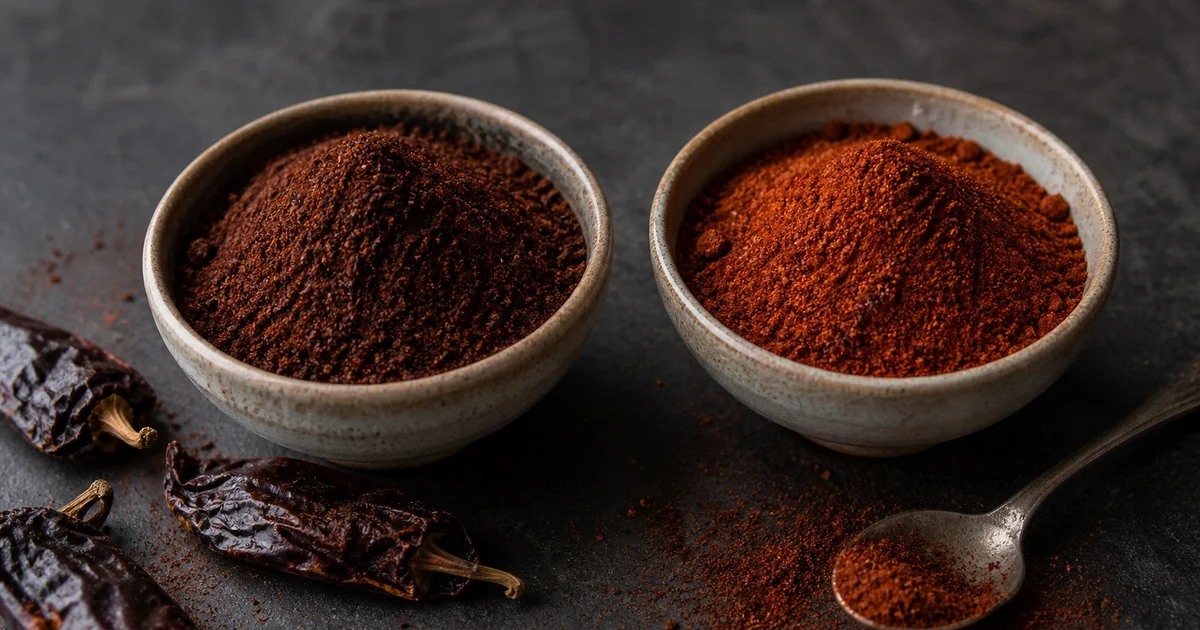
Ancho is one of the workhorses of Mexican cooking. It is a dried ripe poblano, and it forms part of the classic trio with guajillo and pasilla that builds so many red sauces.
In that trio, ancho is the sweet, fruity, gentle one. Guajillo brings brighter, tangier notes, and pasilla adds a darker, raisiny edge.
Cooks blend them to shape a sauce, which is a very different act from shaking in a pre-made chili powder.
That is the real gap. Chili powder is a finished American seasoning.
Ancho is a single ingredient a cook reaches for to build a sauce from scratch.
If a recipe names ancho specifically, it usually wants that clean, sweet chile line, not the cumin-forward blend.
How Does Ancho Chili Powder Taste Compared With Chili Powder?
Ancho tastes sweeter, softer, and more fruit-forward than standard chili powder. McCormick describes ancho as mildly hot with subtle sweetness and fruity undertones, and it can carry raisin or cocoa notes depending on freshness.
The key is that ancho still tastes like a dried chile rather than a spice mix, so it deepens sauces and rubs without steering them toward a cumin-heavy finish. That is why it disappears into an enchilada sauce as a red-chile backbone instead of announcing itself.
Chili powder tastes broader. Even when the chile base is mild, the supporting spices make it read savory and immediately chili-like.
That helps in fast dishes and can crowd out a cleaner chile profile in a slow sauce.
You can hear the difference in a braise. Ancho lets the meat and chile stay in front, while chili powder pushes the whole pot toward a familiar taco-and-chili flavor before the dish has finished cooking.
That depth has a shape you can taste. Ancho reads like dried fruit and mild cocoa with a soft, round heat, which is why it can carry a sauce on its own without help.
Chili powder's flavor is broader and busier, so it fills a dish quickly but rarely tastes like any one chile.
Is Ancho Chili Powder Hotter Than Chili Powder?
Both are usually mild to medium, so heat is a poor way to separate them. Ancho follows the ancho chile itself, roughly 1,000 to 2,000 SHU on the Scoville scale.
Chili powder has no fixed range because the blend decides it.
If the recipe truly needs fire, neither one is the sharp tool. A hotter dedicated chile does that job better.
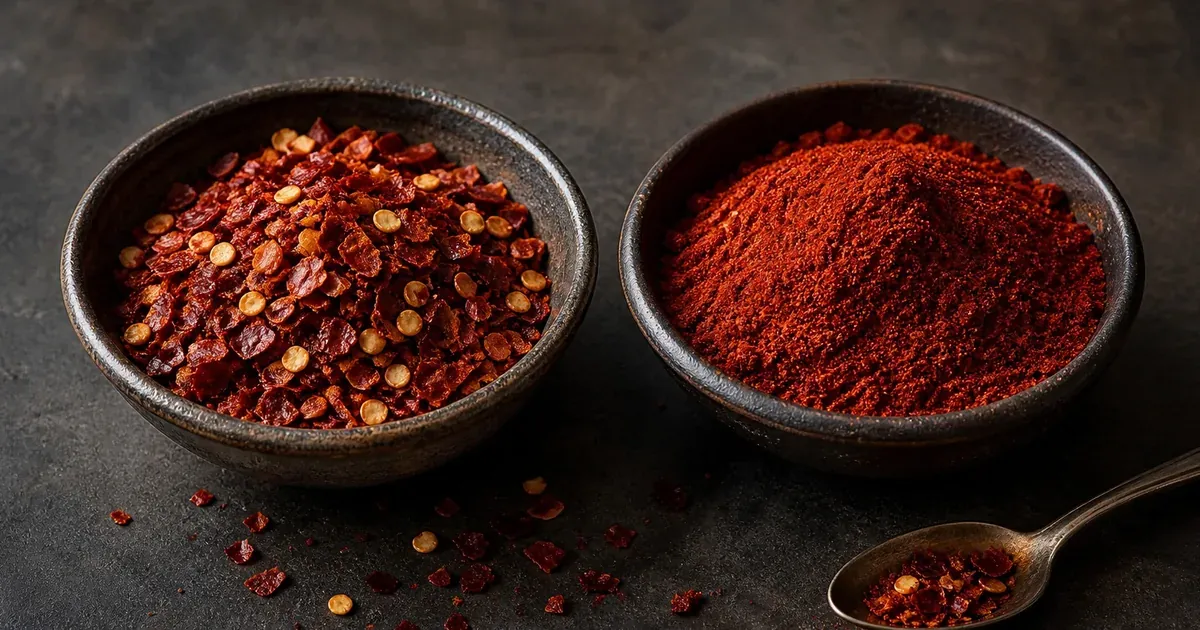
This is also why paprika vs chili powder, chipotle powder vs chili powder, and chili flakes vs chili powder each solve a different problem around the same shelf.
The one question that decides it
Should the cook taste the chile itself, or should the spice do several jobs at once? If you want a clear dried-chile line, reach for ancho.
If you want a finished chili-and-taco base from one spoon, reach for the blend.
Heat is rarely the deciding factor between these two.
Best Dishes
Reach for ancho
Deep red-chile flavor
Enchilada sauce, red chile sauce, mole-style sauces, adobo marinades, braises, beans, and dry rubs where dried-chile depth should stay clear.
Reach for chili powder
Quick seasoning base
Chili, taco meat, casseroles, soups, and weeknight ground-meat cooking, where the blend already tastes finished.
How Is Ancho Used in Mole and Red Sauces?
Ancho's home is slow red sauces. It is a backbone of mole, adobo marinades, red enchilada sauce, and braises, where its sweetness balances the heat of hotter chiles and the bite of spices.
For the deepest flavor, cooks often work from whole dried anchos rather than powder: toast the pods lightly, soak them soft, then blend them into a paste. The powder is the fast version of that, and it works well in rubs and quick sauces where you do not want to rehydrate whole chiles.
Chili powder can stand in for weeknight chili, but it will not give a mole its layered, single-chile depth. When the sauce is the star, ancho is the ingredient.
When dinner just needs to taste like chili, the blend is the shortcut.
Can You Substitute Ancho Chili Powder for Chili Powder?
Use ancho when the recipe wants a single dried-chile flavor and already controls cumin, garlic, and salt elsewhere. Use chili powder when the recipe expects the blend to do the heavy lifting.
When you replace chili powder with ancho, keep it near 1:1 for the chile base, then follow chili powder substitute ratios to add cumin, garlic powder, oregano, and salt if the recipe relied on a full blend. When you replace ancho with chili powder, start at about three-quarters as much so cumin and garlic do not take over.
If the dish turns flat after ancho, add a pinch of cumin and garlic, or build the seasoning from scratch with a homemade chili powder blend. If it turns muddy after chili powder, add a little acid and hold back on other dried spices.
When you go from ancho to chili powder, expect the dish to shift toward taco-and-chili flavor whether you want it or not. Going the other way, from chili powder to ancho, expect it to taste cleaner but thinner until you add back the cumin and garlic the blend was quietly providing.
How Do You Store Ancho and Chili Powder?
Both powders keep best sealed, cool, dry, and out of light. Ancho goes stale by losing its fruity-earthy depth and flattening into a dusty red.
Chili powder turns muddy as the chiles and spices fade at different speeds.
Freshness matters more for ancho because it trades on nuance. Once the sweet-earthy note dies, it starts tasting generic.
For the blend side, does chili powder go bad is the better companion guide.
Ancho Chili Powder vs Chili Powder
Reach for Ancho Chili Powder when you want Chile flavor that stays clear.
Reach for Chili Powder when you want All-purpose chili and taco seasoning.
Ancho Chili Powder vs Chili Powder FAQ
- McCormick Gourmet Organic Ancho Chile Pepper
- McCormick Chili Powder Product Details
- El Guapo Whole Pasilla Ancho Chili Pods
-
Sourcing note: manufacturer specifications, not a legal standard Chili powder is a blend, and no government body sets a formula for it. Each brand decides its own ratio of ground chile to cumin, garlic and salt, so the manufacturers’ own product specifications are the primary record of what is in each one. The comparisons on this page read those listings; they are not laboratory measurements.