
Best Peppers for Growing Matched to Your Skill Level and Garden Space
Starting a pepper garden? These varieties are forgiving, productive, and rewarding for first-time growers through experienced gardeners.

Related Pepper Paths
Move from broad category browsing into focused substitute guides, pairings, and recipes.
About Easiest Peppers to Grow
This collection contains 215 varieties selected for growing, with each profile documenting plant traits, pod character, and its Scoville range.
The current set runs from Bell Pepper at up to 0 SHU to Apollo Pepper at up to 3M SHU. The heat tiers show where the remaining cultivars sit between those endpoints.
Start with the characteristic that controls your choice, such as plant size, pod position, wall thickness, color sequence, or heat. Open the individual cultivar card when the collection view narrows the field to a practical shortlist.
Notable Varieties
All Easiest Peppers to Grow
Every variety in this collection, sorted by maximum Scoville heat rating. Click any card for the full profile with flavor notes, anatomy details, growing tips, and substitutes.
 Mild
Mild
Lombok Pepper
 Mild
Mild
Banana Pepper
 Mild
Mild
Bell Pepper
 Mild
Mild
Sweet Italian Pepper
 Mild
Mild
Corno di Toro
 Mild
Mild
Jimmy Nardello
 Mild
Mild
Trinidad Perfume
 Mild
Mild
Aji Dulce
 Medium
Paprika Pepper
 Mild
Mild
Habanada
 Mild
Mild
Lipstick Pepper
 Mild
Mild
Marconi Pepper
 Mild
Mild
NuMex Suave Orange
 Mild
Mild
Bullhorn Pepper
 Mild
Mild
Ramiro Pepper
 Mild
Mild
Sichuan Pepper
View profile → Mild
Mild
Gypsy Pepper
View profile → Mild
Mild
Peperone di Senise
View profile → Mild
Mild
Carmen Pepper
 Mild
Mild
California Wonder Pepper
 Mild
Mild
Melrose Pepper
View profile → Mild
Mild
Purple Beauty Pepper
 Mild
Mild
Fushimi Pepper
View profile → Mild
Mild
Tangerine Dream Pepper
View profile → Medium
Medusa Pepper
 Medium
Chilly Chili Pepper
View profile → Mild
Mild
Shishito Pepper
 Mild
Mild
Biquinho Pepper
 Mild
Mild
Pepperoncini
 Medium
Cubanelle Pepper
 Medium
Long Hot Italian
 Mild
Mild
Pimento Pepper
 Mild
Mild
Cherry Pepper
 Mild
Mild
Friggitello
 Medium
Mexibell Pepper
View profile → Mild
Mild
Choricero Pepper
 Medium
Smoked Paprika (Pimentón)
 Mild
Mild
Peppadew Pepper
 Medium
NuMex Big Jim
 Medium
Padrón Pepper
 Medium
Anaheim Pepper
 Mild
Mild
Santa Fe Grande
 Medium
Alma Paprika
 Medium
Piquillo Pepper
 Medium
Ñora Pepper
 Medium
Beaver Dam Pepper
 Medium
Cajun Belle
 Mild
Mild
Mariachi Pepper
View profile → Medium
Mad Hatter Pepper
 Mild
Mild
Holy Mole Pepper
View profile → Mild
Mild
NuMex Joe E. Parker
View profile → Medium
Kashmiri Chili
 Medium
Cascabel Pepper
 Medium
Pasilla Pepper
 Medium
New Mexico Chile
 Medium
Hatch Chile
 Medium
Ancho Pepper
 Medium
Poblano Pepper
 Medium
Guindilla Pepper
 Medium
Numex Easter
 Medium
Rezha Macedonian
View profile → Medium
Chilaca Pepper
 Medium
NuMex Centennial Pepper
View profile → Hot
Hot
Gochugaru
 Medium
Espelette Pepper
 Medium
Aji Panca
 Hot
Hot
Hungarian Wax
 Hot
Hot
Korean Green Pepper
 Hot
Hot
Hungarian Hot Wax
 Medium
Rocotillo Pepper
View profile → Medium
Cascabella Pepper
 Hot
Hot
Gochugaru Flakes
 Medium
Chilhuacle Pepper
 Medium
NuMex Heritage 6-4
 Medium
Sangria Pepper
 Medium
Mirasol Pepper
 Medium
Costeño Pepper
 Medium
Jalapeño
 Medium
Chipotle
 Hot
Hot
Fresno Pepper
 Medium
Guajillo Pepper
 Hot
Hot
Morita Pepper
 Medium
Mulato Pepper
 Medium
Red Jalapeño
 Medium
Cherry Bomb Pepper
 Medium
Cowhorn Pepper
 Medium
Purple Jalapeño
 Hot
Hot
Black Hungarian Pepper
 Medium
Maras Pepper
 Medium
Chimayo Pepper
 Medium
Jalafuego Pepper
View profile → Medium
Pretty in Purple Pepper
 Hot
Hot
Bishop's Crown
 Hot
Hot
Urfa Biber
 Medium
Puya Pepper
 Hot
Hot
Isot Pepper
 Hot
Hot
Fish Pepper
 Medium
Sandia Pepper
 Hot
Hot
Bulgarian Carrot Pepper
 Hot
Hot
Hinkelhatz Pepper
 Hot
Hot
Count Dracula Pepper
View profile → Hot
Hot
Royal Black Pepper
View profile → Hot
Hot
Ho Chi Minh Hot Pepper
 Hot
Hot
Byadgi Chili
 Hot
Hot
Lumbre Pepper
View profile → Medium
NuMex Heritage Big Jim
View profile → Hot
Hot
Serrano Pepper
 Hot
Hot
Aleppo Pepper
 Hot
Hot
Peter Pepper
 Hot
Hot
Black Pearl Pepper
 Hot
Hot
Chinese 5 Color
 Hot
Hot
Cheongyang Pepper
 Hot
Hot
Sport Pepper
 Hot
Hot
Bolivian Rainbow Pepper
 Hot
Hot
Inca Red Drop Pepper
View profile → Hot
Hot
Manzano Pepper
 Hot
Hot
Lemon Drop
 Hot
Hot
De Arbol
 Hot
Hot
Japones Pepper
 Hot
Hot
Peperoncino
 Hot
Hot
Pasilla de Oaxaca
 Hot
Hot
Togarashi Pepper
View profile → Hot
Hot
Red Pepper Flakes
 Hot
Hot
Criolla Sella Pepper
 Hot
Hot
Jwala Pepper
 Hot
Hot
Goat Horn Pepper
 Hot
Hot
Aji Colorado
View profile → Hot
Hot
Aji Pineapple
View profile → Hot
Hot
Little Elf Pepper
View profile → Hot
Hot
Calabrian Chili
 Hot
Hot
Sanam Chili
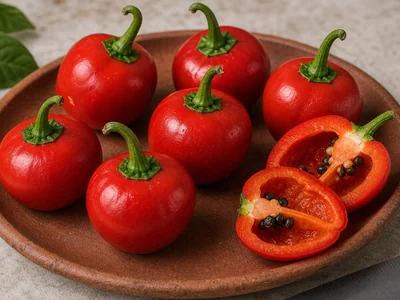 Hot
Hot
Rocoto
 Hot
Hot
Cayenne Pepper
 Hot
Hot
Tabasco Pepper
 Hot
Hot
Aji Amarillo
 Hot
Hot
Piquin Pepper
 Hot
Hot
Dundicut Pepper
 Hot
Hot
Facing Heaven Pepper
 Hot
Hot
Aji Limo
 Hot
Hot
Aji Charapita
 Hot
Hot
Aji Cristal
 Hot
Hot
Buena Mulata
 Hot
Hot
NuMex Twilight
 Hot
Hot
Aurora Pepper
 Hot
Hot
Aji Mirasol
 Hot
Hot
Aji Omnicolor
 Hot
Hot
Guntur Chili
 Hot
Hot
Guntur Sannam
View profile → Hot
Hot
Santaka Pepper
 Hot
Hot
Reshampatti Chili
 Hot
Hot
Sugar Rush Peach
 Hot
Hot
Thai Dragon
 Hot
Hot
Bird's Eye Chili
 Hot
Hot
Thai Chili
 Hot
Hot
Chiltepin
 Hot
Hot
Tien Tsin
 Hot
Hot
Cabe Rawit
 Hot
Hot
Prik Jinda
 Hot
Hot
Kanthari Chili
 Hot
Hot
Teja Chili
 Hot
Hot
Sugar Rush Stripey
 Hot
Hot
Prik Kee Noo
View profile → Extra-Hot
Piri Piri Pepper
 Hot
Hot
Malagueta Pepper
View profile → Hot
Hot
Prairie Fire
 Extra-Hot
Charleston Hot
 Hot
Hot
Yatsufusa Pepper
View profile → Hot
Hot
Siling Labuyo
 Hot
Hot
Aji Cito
 Extra-Hot
Habanero
 Extra-Hot
Scotch Bonnet
 Extra-Hot
Datil Pepper
 Extra-Hot
Madame Jeanette
 Extra-Hot
White Habanero
 Extra-Hot
Jamaican Hot Chocolate
 Extra-Hot
Wiri Wiri
 Extra-Hot
Chocolate Scotch Bonnet
View profile → Extra-Hot
Yellow Scotch Bonnet
View profile → Extra-Hot
Pimenta de Neyde
View profile → Extra-Hot
Fatalii
 Extra-Hot
Orange Habanero
 Extra-Hot
Aji Chombo
 Extra-Hot
Congo Trinidad
 Extra-Hot
Hot Paper Lantern Pepper
View profile → Extra-Hot
Caribbean Red Habanero
 Extra-Hot
Red Savina Habanero
 Extra-Hot
Chocolate Habanero
 Extra-Hot
Nagabon
 Super-Hot
7 Pot Primo
 Super-Hot
Trinidad Scorpion Butch T
 Super-Hot
Dorset Naga
 Super-Hot
7 Pot Red Giant
 Super-Hot
Bhut Jolokia Chocolate
 Super-Hot
Bhut Jolokia Yellow
 Super-Hot
7 Pot Jonah
 Super-Hot
7 Pot Yellow
 Super-Hot
7 Pot White
 Super-Hot
Bhut Jolokia White
 Super-Hot
Ghost Pepper
 Super-Hot
Naga Viper
 Super-Hot
Bedfordshire Super Naga
 Super-Hot
7 Pot Douglah
 Super-Hot
7 Pot Brain Strain
 Super-Hot
7 Pot Barrackpore
 Super-Hot
Chocolate Bhutlah
 Super-Hot
Jay's Peach Ghost Scorpion
 Super-Hot
Naga Morich
 Super-Hot
Infinity Chili
 Super-Hot
Trinidad Moruga Scorpion
 Super-Hot
Carolina Reaper
 Super-Hot
Komodo Dragon Pepper
 Super-Hot
7 Pot Katie
 Super-Hot
Dragon's Breath
 Super-Hot
Apollo Pepper
 Super-Hot
Pepper X
Heat Level Distribution
How easiest peppers to grow distribute across the Scoville scale. Click any tier to browse all peppers at that heat level.
Heat Range Comparison
Visual breakdown of where each variety falls on the Scoville scale. Wider bars show a larger documented SHU spread between individual pods.
The causes of pepper heat variation explain why pods from one cultivar do not always measure alike.
Related Comparisons
Side-by-side breakdowns of heat, flavor, and cooking uses. Each comparison covers Scoville ratings, pod anatomy, and substitution options.
 500 SHU
vs
8K SHU
500 SHU
vs
8K SHU
Banana Pepper vs Jalapeño: Which Fits Your Dish?
Choose sweet banana pepper for mild tang and long stuffed pods, and choose jalapeño for thick flesh and a clear medium burn. The… 500 SHU
vs
500 SHU
500 SHU
vs
500 SHU
Banana Pepper vs Pepperoncini: Sweet vs Tangy
Banana peppers and pepperoncinis look nearly identical in a grocery store pickle jar, and most people use the names interchangeably… 500 SHU
vs
15K SHU
500 SHU
vs
15K SHU
Banana vs Hungarian Wax: Mild Ring or Hot Pod?
Banana pepper is the low-risk choice for mild pickled rings, sandwiches, salads, and pizza. Hungarian wax looks similar but can run… 500 SHU
vs
1K SHU
500 SHU
vs
1K SHU
Banana vs Cubanelle: Tangy vs Sweet Frying
Banana peppers and cubanelle peppers are both mild, sweet, thin-walled peppers that sit at the very bottom of the Scoville scale, each… 500 SHU
vs
1K SHU
500 SHU
vs
1K SHU
Banana vs Long Hot Italian: Pickle or Fry?
Banana pepper is the better pickling and sandwich pepper. Long Hot Italian is the better skillet pepper when olive oil, sausage, and… 0 SHU
vs
1K SHU
0 SHU
vs
1K SHU
Bell vs Paprika: The Pepper Behind the Powder
Choose bell pepper for fresh structure and paprika for concentrated dry seasoning. Sweet paprika is usually nonpungent, but paprika…Browse all comparisons in our comparison hub, or use the pepper tools for calculators and finders.
Related Guides
Reference guides and recipes tied to the same pepper family, region, or use-case.



Frequently Asked Questions
Sources & References
Keep Reading
Jump into the wider database, heat tiers, comparisons, and substitute references without another card wall.