

KnowThePepper
Yatsufusa Pepper: Japan's 'Eight Bunches' Chile With Upright Pod Clusters
Most people assume the yatsufusa pepper is just another Asian chile, but it carries a distinct identity rooted in Japanese agriculture. These slender, upward-pointing pods are fiery by Japanese standards, used heavily in pickling, stir-fries, and spice oils.
Think of them as Japan's answer to the Thai Chili - compact, potent, and deeply flavorful.
- Species: Capsicum annuum
- Heat tier: Hot (10K-100K SHU)
- Comparison: 9-30x hotter than a jalapeño, depending on where the jalapeño falls in its 2,500-8,000 SHU range
What Is Yatsufusa Pepper Known For?
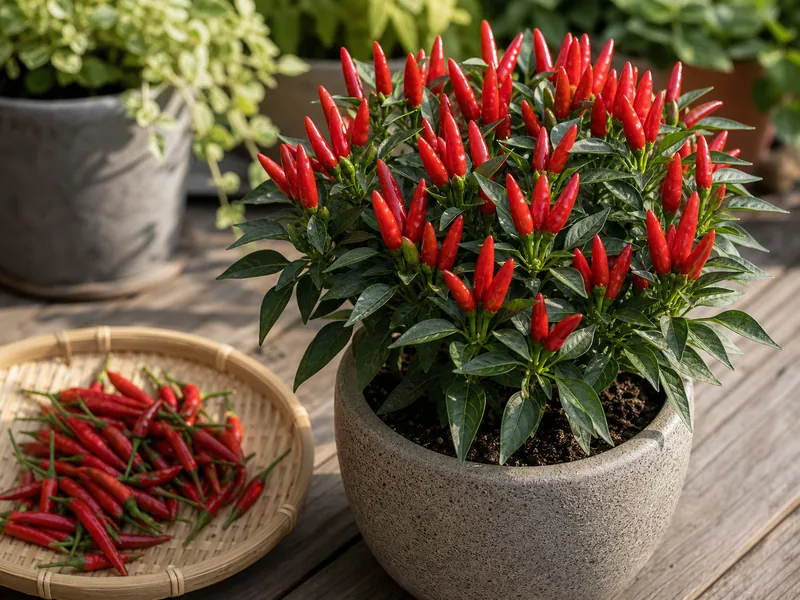
Yatsufusa is often lumped in with generic Asian red chiles, but it has a specific Japanese identity that sets it apart. The name translates roughly to "eight bunches," referencing how clusters of pods grow upright in dense groups on compact plants.
The pods are thin-walled, finger-length, and mature from green to a vivid red. That upward-facing growth habit, common in the Capsicum annuum species, makes them visually striking in the garden.
They're often compared to de arbol's dry, papery heat in terms of how they're used once dried, though yatsufusa has its own flavor profile.
In terms of heat, the best cited value for yatsufusa is about 75,000 SHU, placing it firmly in the hot range, not the screaming-face territory of superhots, but considerably more assertive than, say, Bell Pepper. The heat is clean and direct, building quickly without much lingering.
Yatsufusa is a staple in Japanese home gardens, prized for its productivity and dual-purpose use, fresh green pods for cooking, dried red pods for spice. The plant itself stays manageable in size, which makes it popular for container growing as well.
Understanding where this pepper fits in the broader regional pepper tradition helps explain why it's cultivated so differently than its Southeast Asian cousins.
Where Does Yatsufusa Pepper Come From?
Japan's relationship with chiles traces back to the late 16th century, when Portuguese traders introduced Capsicum species to the country. The yatsufusa emerged as a cultivated variety adapted to Japanese growing conditions and cooking preferences.
Unlike the fiery chiles of Southeast Asia or the complex dried varieties of Mexico, yatsufusa was shaped by a cuisine that values restraint and balance. It became a go-to chile for togarashi spice blends, the foundation of Japanese seven-spice seasoning.
The variety's upright pod orientation and clustered growth made it practical for small-scale home gardens, a trait that aligned well with traditional Japanese kitchen garden culture. While it lacks the centuries-long documented lineage of Aji Amarillo in Peru, yatsufusa has maintained consistent presence in Japanese agriculture, passed through generations of home growers and regional seed savers.
How Spicy Is Yatsufusa Pepper, and How Does It Taste?
The Yatsufusa Pepper delivers 75K Scoville Heat Units, placing it in the Hot tier (10K-100K SHU). That makes it roughly 9-30x hotter than a jalapeño, depending on where the jalapeño falls in its 2,500-8,000 SHU range.
What Nutrients Does Yatsufusa Pepper Provide?
Like most hot chiles, yatsufusa delivers meaningful nutritional value in small servings. Red-ripe pods are rich in vitamin C and capsaicin, the compound responsible for both heat and several documented anti-inflammatory effects.
Dried yatsufusa concentrates vitamin A precursors (beta-carotene) significantly, the deep red color is a reliable indicator of carotenoid content. A single dried pod contributes meaningful antioxidant activity without adding calories.
The mild-to-hot pepper classification matters here because capsaicin content scales with heat, yatsufusa delivers more bioactive capsaicin per gram than sweet peppers, supporting metabolic function in regular dietary use.
How Do You Use Yatsufusa Pepper in the Kitchen?
Yatsufusa is the backbone of shichimi togarashi, Japan's iconic seven-spice blend. That blend, combining dried yatsufusa with sesame, orange peel, nori, and other aromatics, appears on nearly every ramen shop table in Japan.
Dried pods are the primary cooking form. Split them and toast briefly in oil to bloom their heat and release a slightly smoky, grassy aroma.
This technique anchors countless Japanese stir-fries and noodle dishes.
Fresh green yatsufusa works well pickled in rice vinegar with a touch of salt, a quick refrigerator pickle that softens the heat without eliminating it. The result pairs beautifully with grilled fish or cold tofu.
For spice oil, pack dried pods into neutral oil and let them infuse at room temperature for a week. The resulting oil carries a clean heat that's far more approachable than Manzano Pepper.
Substitution-wise, yatsufusa swaps well with Thai bird's eye for sharp, direct heat in most applications, use a 1:1 ratio. For those wanting zero heat but similar visual appeal, Habanada can fill a textural role in the same dishes.
How Do You Buy and Store Yatsufusa Pepper?
Fresh yatsufusa is rarely found outside Japanese grocery stores or specialty Asian markets. Dried whole pods are more accessible, check Japanese or Korean grocery stores, or order from specialty importers.
For dried pods, look for deep red color and flexibility, brittle, pale pods have lost most of their volatile aromatics. Store dried yatsufusa in an airtight container away from light, where they keep well for up to a year.
Fresh green pods store in the refrigerator for 1-2 weeks wrapped loosely in paper. For long-term storage, freeze whole pods without blanching, they hold their heat and flavor well for 6 months.
What Can Replace Yatsufusa Pepper in a Recipe?
No dedicated substitute guidance is published for Yatsufusa Pepper yet.
How Do You Grow Yatsufusa Peppers?
Yatsufusa thrives in conditions similar to other Japanese cultivars, warm days, moderate humidity, and well-drained soil with consistent moisture.
Start seeds indoors 8-10 weeks before last frost. Germination typically takes 10-14 days at soil temperatures between 75-85°F.
For anyone working through starting peppers from transplant, the process translates directly to yatsufusa, same transplant timing, same hardening-off protocol.
Plants stay compact, typically 18-24 inches tall, making them well-suited for containers or raised beds.
Space transplants 15-18 inches apart. They perform best in full sun with at least 6 hours of direct light daily.
The upright pod growth habit means pods are highly visible and easy to harvest.
Pick green pods for fresh use or leave them to mature fully red for drying. Leaving pods on the plant too long can slow subsequent fruit set, so harvest regularly.
For those also growing heat-forward varieties, the practical guidance on growing habaneros applies here in terms of fertilization, yatsufusa benefits from low-nitrogen feeding once flowering begins to avoid excessive foliage at the expense of pods. Expect 60-80 days from transplant to first harvest.
Yatsufusa Pepper FAQ


- Capsicum annuum L. - USDA GRIN Taxonomy
- Capsicum - USDA GRIN Taxonomy
Species classification: Capsicum annuum - based on published botanical taxonomy.