

KnowThePepper
Purple Beauty Pepper: 0 SHU Sweet Bell with Purple Skin
The Purple Beauty pepper is a 0 SHU sweet bell cultivar grown for one thing most standard bells cannot offer: a deep purple exterior that holds long enough to matter on the plate. We use it when color and crunch matter more than heat.
The fruit stays mild, thick-walled, and crisp, then finishes red if you leave it on the plant longer.
- Species: C. annuum
- Heat tier: Mild (0-999 SHU)
What Is Purple Beauty Pepper?
The Purple Beauty pepper is a sweet bell-type Capsicum annuum with 0 SHU, so the real reason to grow it is not heat. It is the color.
The fruit starts green, turns a saturated purple while still immature, and can finish red if you leave it on the plant long enough.
That makes it useful in a way ordinary bells are not. You can harvest at the purple stage for contrast, then let later fruit sweeten fully on the plant.
What separates Purple Beauty from a generic bell is the combination of thick walls, compact plants, and a purple harvest window that holds longer than many novelty peppers.
West Coast Seeds describes it as a compact bush plant with thick protective foliage, big blocky fruit, and a mild sweet flavor. They also note that the cultivar was grown out from the original Purple Belle hybrid into an open-pollinated form suitable for seed saving.
In the kitchen, we treat Purple Beauty as a visual bell pepper first and a specialty sweet pepper second.
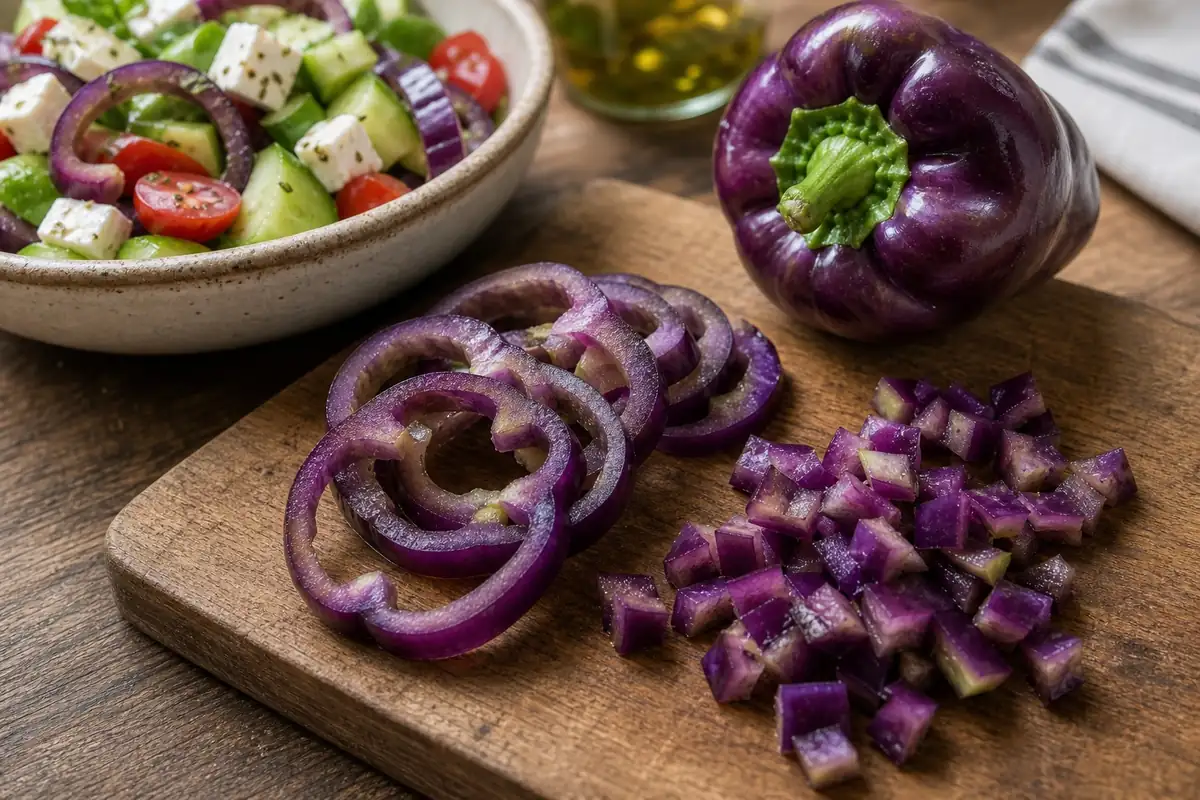
The flesh stays crisp, the flavor is mild and sweet rather than fruity, and the green interior shows up clearly when you slice it. That green interior matters because it explains why the pepper looks dramatic raw but loses some of that payoff under heat.
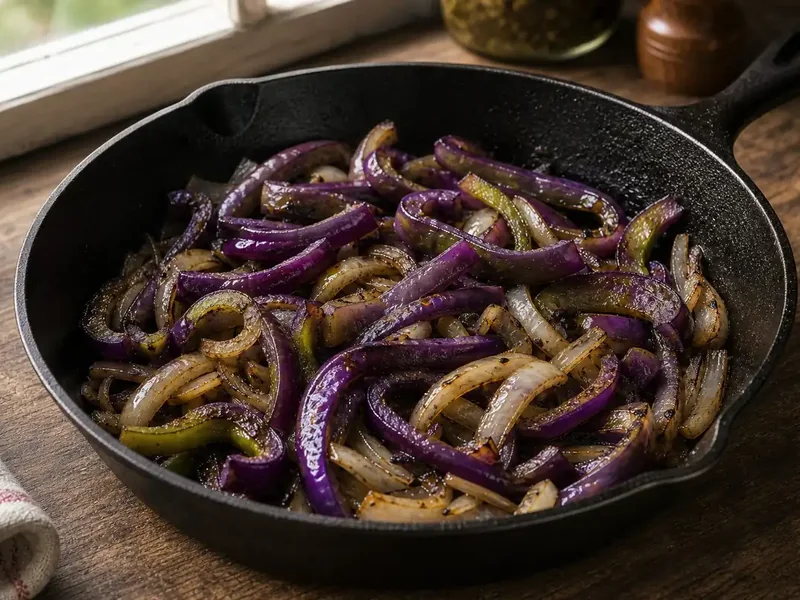
The color sits mostly in the peel, so once the fruit cooks, the purple effect dulls quickly.
At 0 SHU, Purple Beauty belongs in the same sweet pepper heat category as other no-heat blocky peppers. It also belongs to the broader Capsicum annuum family, so the growing habit is familiar if you already raise bells, frying peppers, or other sweet garden cultivars.
If your goal is a stuffing pepper with heat, choose a hotter pepper.
If your goal is a sweet pepper that looks unusual while staying easy to use, Purple Beauty earns its space.
What Is the History of Purple Beauty Pepper?
Purple Beauty is best understood as a modern garden cultivar, not an old regional landrace. The species behind it, Capsicum annuum, was domesticated in the Americas long before modern seed catalogs existed, but Purple Beauty itself belongs to the much newer tradition of breeding sweet peppers for appearance as well as yield.
The clearest cultivar note in current seed trade descriptions is that Purple Beauty was grown out from the original Purple Belle hybrid into an open-pollinated line. That matters because it explains why the variety shows up so often in home-garden catalogs: growers can save seed more reliably than they can from a hybrid novelty pepper.
It also helps explain why the variety is sold as a practical edible bell rather than only an ornamental border plant.
Purple-fruited bell peppers get their color from anthocyanin pigments in the peel. Wageningen University research on bell pepper anthocyanins notes that purple pigmentation appears in unripe fruit and disappears during ripening, which lines up with how Purple Beauty behaves in the garden.
You get the strongest purple effect before full ripeness, then the fruit trends toward red as the anthocyanin signal fades and mature pepper color takes over.
That ripening pattern is the real reason Purple Beauty stays relevant. It is not just a purple bell for seed catalogs.
It gives growers a usable sweet pepper at multiple harvest stages: green if you want maximum crunch, purple if you want color, and red if you want fuller sweetness from the same plant.
What Does Purple Beauty Pepper Taste Like, and How Hot Is It?
The Purple Beauty Pepper delivers 0 Scoville Heat Units, placing it in the Mild tier (0-999 SHU).
Flavor notes: mildly sweet and crisp.
Purple Beauty Pepper Nutrition Facts
Purple Beauty tracks with other sweet bell peppers nutritionally, so the strongest baseline source is USDA FoodData Central for raw sweet peppers rather than a novelty-pepper sales page. A raw sweet pepper serving is low in calories and contributes vitamin C, vitamin B6, and folate, with the exact totals shifting as the fruit ripens.
What makes Purple Beauty nutritionally different is not capsaicin, because there is none at 0 SHU. The main distinction is the anthocyanin pigmentation in the purple peel.
Wageningen University notes that anthocyanins are responsible for the purple color seen in certain bell peppers, and those pigments sit mainly in the peel and fade as the fruit ripens.
In practical terms, that means the purple harvest stage is the one most associated with that extra pigment layer.
Readers should not over-romanticize that difference. Purple Beauty is still a sweet bell first, not a superfood loophole.
The useful takeaway is simpler: you get the standard sweet-pepper nutrition profile plus a purple peel stage that broadens the pigment mix before the fruit turns red.
How Do You Cook With Purple Beauty Pepper?
The best use for Purple Beauty is raw or lightly cooked work where the skin color still shows. Think chopped salad, crudites, grain bowls, quick pickles, sandwich strips, and antipasto boards.
The fruit is blocky enough to dice cleanly, and the flesh is thick enough to stay crisp instead of collapsing into watery strips.
If you roast or saute it, treat it like a standard sweet bell in function, not in appearance. West Coast Seeds notes that the peppers turn green when cooked, which matches the larger anthocyanin pattern documented in purple bell pepper research.
The point is simple: if visual drama is the job, keep the heat short or skip it altogether.
If the job is stuffing, roasting, or blending into sauces, Purple Beauty still works, but you should not expect the purple finish to survive.
We would use Purple Beauty anywhere a cook wants the sweetness of a bell without the generic red-yellow-green look. It plays especially well next to orange or yellow sweet peppers because the contrast looks deliberate instead of random.
For a similar sweet-pepper role with a different shape, the elongated Italian-style sweet frying pepper gives you a thinner wall and a different roast profile.
For a no-heat aromatic option that still feels unusual, the fragrance-first sweet pepper line is the better comparison.
Purple Beauty also works as a stuffing pepper, but size matters. Some fruit run closer to compact bell dimensions than oversized market bells, so it is better for smaller rice, couscous, cheese, or quinoa fillings than for giant restaurant-style stuffed peppers.
If the reader only wants a sweet pepper for heat-free snacking and prep, practical deseeding technique is more useful than a recipe detour.
Where Can You Buy Purple Beauty Pepper, and How Do You Store It?
Purple Beauty is easier to find from garden seed suppliers, small growers, and farmers markets than from chain grocery produce departments. The reason is shelf behavior.
Purple peppers look most distinctive when the fruit is freshly harvested and still holding its dark immature color, which is a weaker fit for long commercial handling than standard red bells.
When buying, look for firm, glossy fruit with no collapsed shoulders, wrinkles, or soft patches. A good Purple Beauty should feel heavy for its size and show even color across most of the exposed skin.
Small green patches are not a defect if the fruit is still in the purple transition window.
For storage, keep the fruit dry and unwashed in the refrigerator crisper. Use it raw within about a week if color is the main point, because visual quality usually matters more than maximum shelf life on this page.
If you need to hold it longer, slice and freeze for cooked use, but treat that as a flavor-and-function move rather than a color-preservation strategy.
Once frozen and cooked, this variety behaves like a sweet bell, not a visual specialty pepper.
What Is a Good Substitute for Purple Beauty Pepper?
No dedicated substitute guidance is published for Purple Beauty Pepper yet.
How Do You Grow Purple Beauty Pepper at Home?
Purple Beauty grows like a compact sweet bell, so the winning strategy is warmth, steady moisture, and enough leaf cover to keep the fruit from scorching. Start seed indoors 6 to 8 weeks before the last frost, then move plants outside only after nights stay reliably above 55 F.
For germination, West Coast Seeds recommends 78 to 85 F soil, which is the range where pepper seed wakes up fastest and most evenly.
The plants are worth a container spot because they stay relatively compact and bushy while still protecting the fruit with decent foliage. That compact habit is one of the practical reasons to grow Purple Beauty instead of a larger bell.
You get the visual payoff without needing a sprawling plant to support it.
Use a container with real volume and drainage, or plant in a bed with compost and consistent irrigation. Pepper roots hate staying soggy, but they also punish uneven watering with stalled growth and smaller fruit.
For spacing, keep plants in the rough 12 to 24 inch range depending on whether you are in containers, raised beds, or open ground.
The point is airflow without overexposing the fruit. Too much direct sun on exposed fruit can fade the visual quality, while too little light weakens color development.
High light supports anthocyanin expression, but the plant still needs enough foliage to shield the fruit from the worst summer stress.
Harvest timing depends on what you want from the fruit. Pick green if you want firmer texture and keep the plant producing.
Pick purple when the fruit is full-sized and the color is strongest.
Leave fruit to finish red when sweetness matters more than novelty. That three-stage harvest pattern is a major advantage if you want one plant to cover raw snacking, visual garnish, and sweeter late-season cooking.
For the broader seed-starting and transplant sequence, our grow peppers from seed covers the repeatable home process.
Purple Beauty Pepper FAQ


- West Coast Seeds - Purple Beauty Pepper
- USDA FoodData Central - Sweet Peppers
- New Mexico State University Chile Pepper Institute
Species classification: C. annuum - based on published botanical taxonomy.